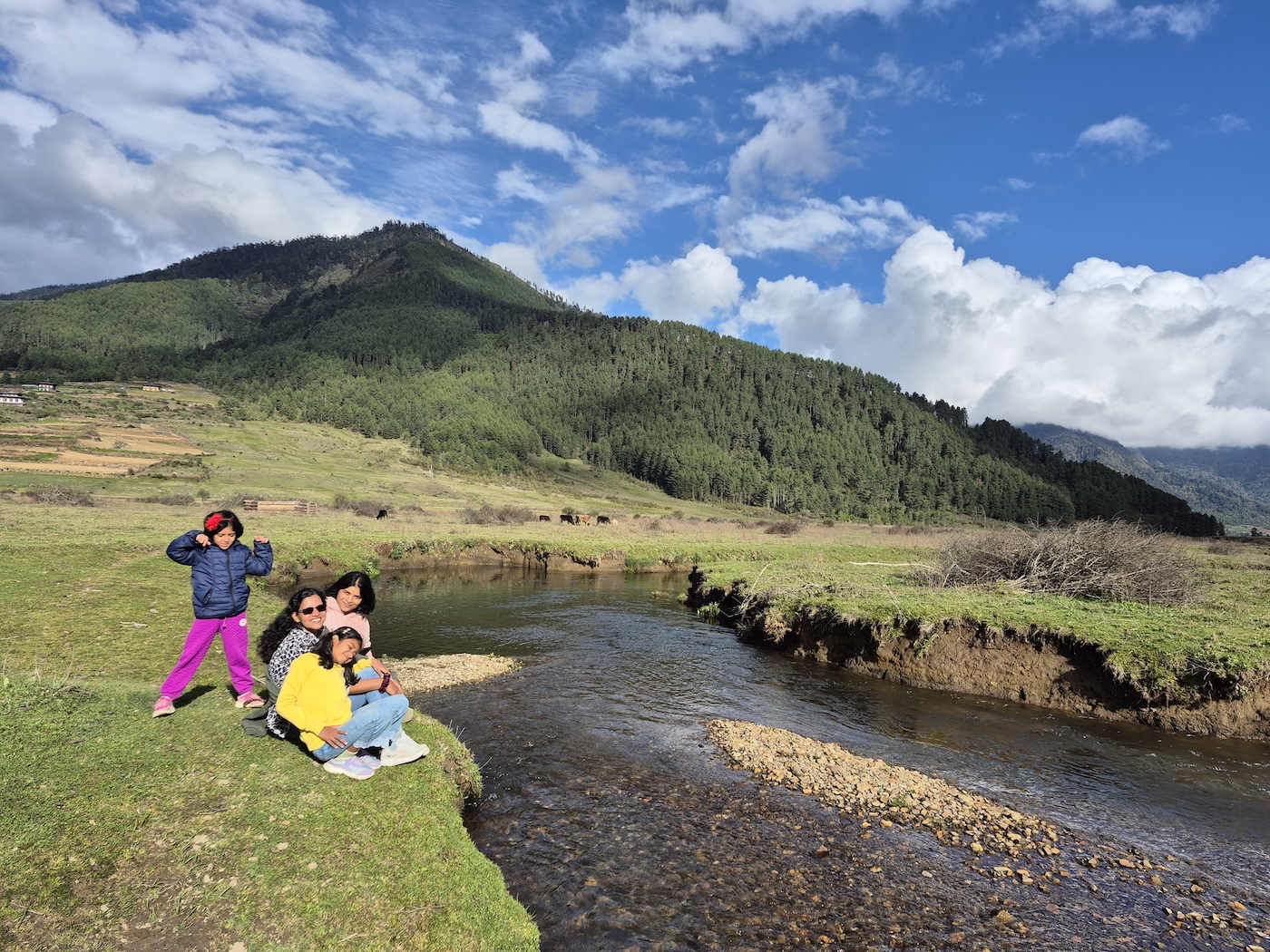
Our next destination after Thimphu was Phobjikha Valley, around 130 kilometres away. On paper, 130 kilometres does not sound like a particularly long journey. In Bhutan, however, distance has to be understood differently. Almost the entire drive was through the hills, with continuous curves and some fairly steep climbs and descents.
Motion sickness was therefore a concern from the beginning. Sreeja suffers from it quite badly, and Nandita also has the same problem. I had never taken Meera on such a long drive through the higher Himalayan roads, so I had no idea how she would react. We started from Thimphu at around 10 in the morning, knowing that this would be a long day inside the car.
A cloudy stop at Dochula Pass
Our first major stop was Dochula Pass, a high mountain pass on the road from Thimphu towards Punakha. At an elevation of roughly 3,100 metres, it is known for the panoramic view of the snow-covered eastern Himalayan range that one can see on a clear day.
Unfortunately, ours was not a clear day.
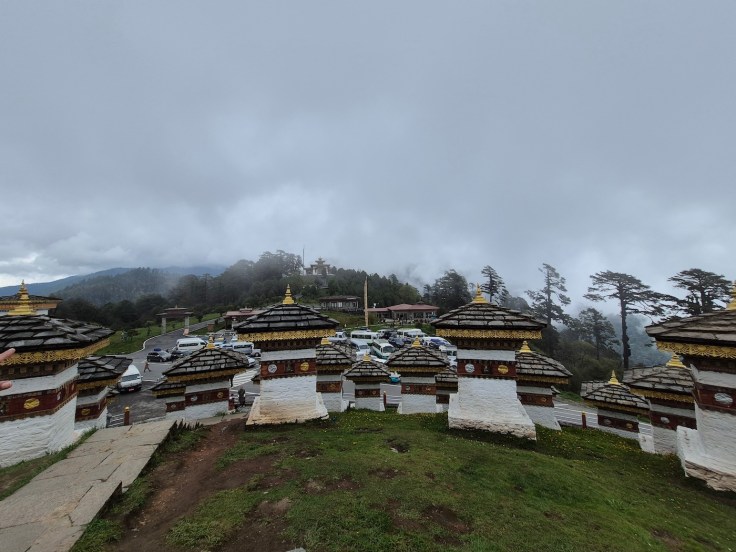
The entire pass was covered in fog and cloud, and the mountains had disappeared completely. We knew that the Himalayan range was somewhere in front of us, but we could not see even a hint of it. This was one of those occasions when the weather simply did not cooperate.
Dochula is still worth stopping at, even without the mountain view, because of the 108 Druk Wangyal Chortens built on the hillock there. These memorial stupas were constructed under the patronage of Queen Mother Ashi Dorji Wangmo Wangchuck to honour the Bhutanese soldiers who lost their lives during the 2003 military operation against insurgents who had established camps in southern Bhutan.
The chortens are arranged in layers across the hill, and the entire place has a quiet, sacred atmosphere. We walked around for some time before going into the café at the pass. It was a pleasant stop and also a welcome break from the winding road.
Lunch beside the river in Punakha
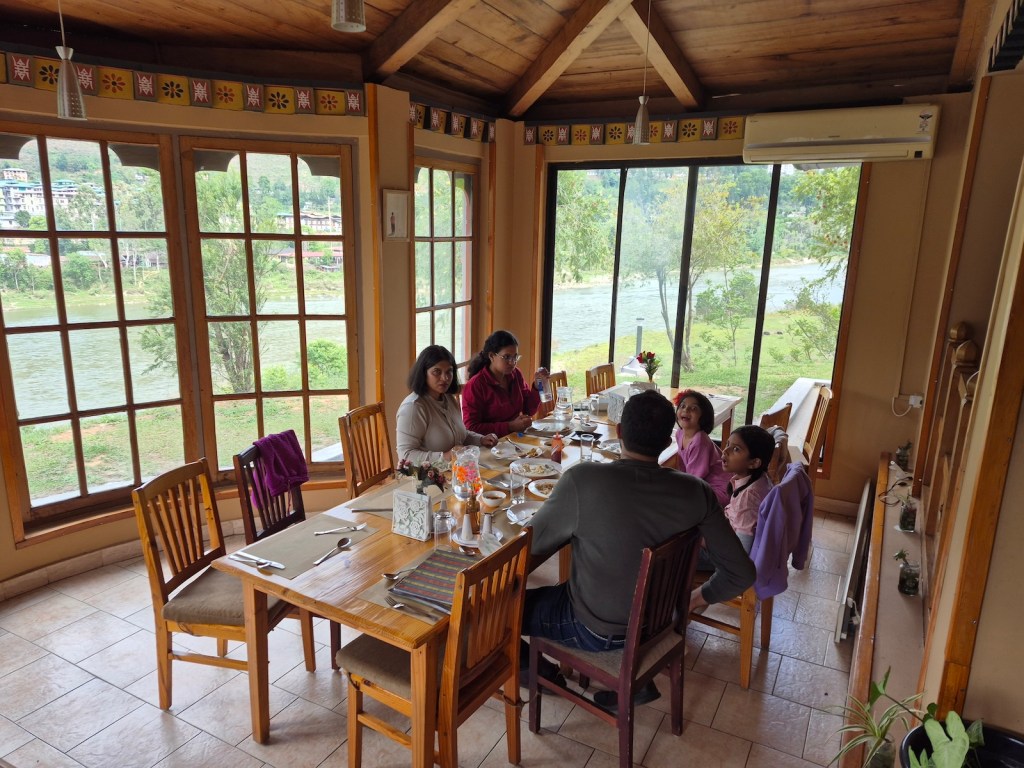
By the time we reached Punakha, it was already lunchtime. We first went to one hotel, but its restaurant was completely full. Our guide quickly found another place for us—a beautiful hotel beside the river.
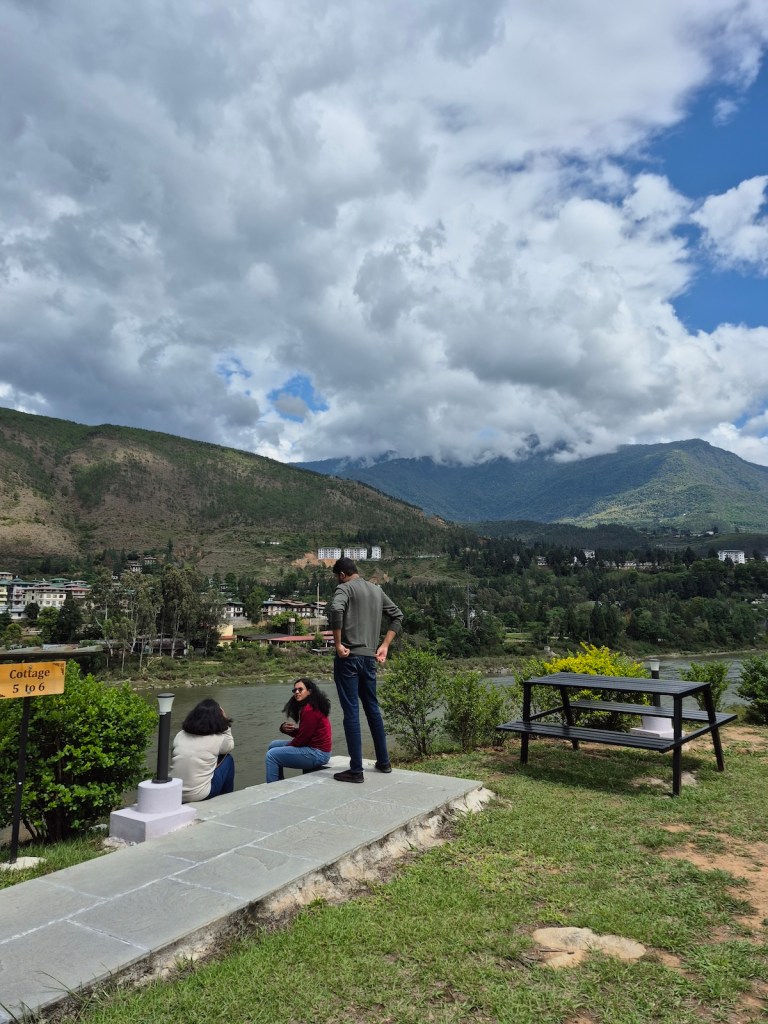
We placed our order and then went down towards the water while we waited for the food. After spending most of the morning inside the car, the children badly needed some open space. They ran around and played beside the river, and soon the adults had joined in as well. We ended up spending quite a bit of time there.
It was a simple stop, but a very enjoyable one. The river, the open space and the freedom to move around completely changed everyone’s mood. We had a good lunch and then started again towards Phobjikha.
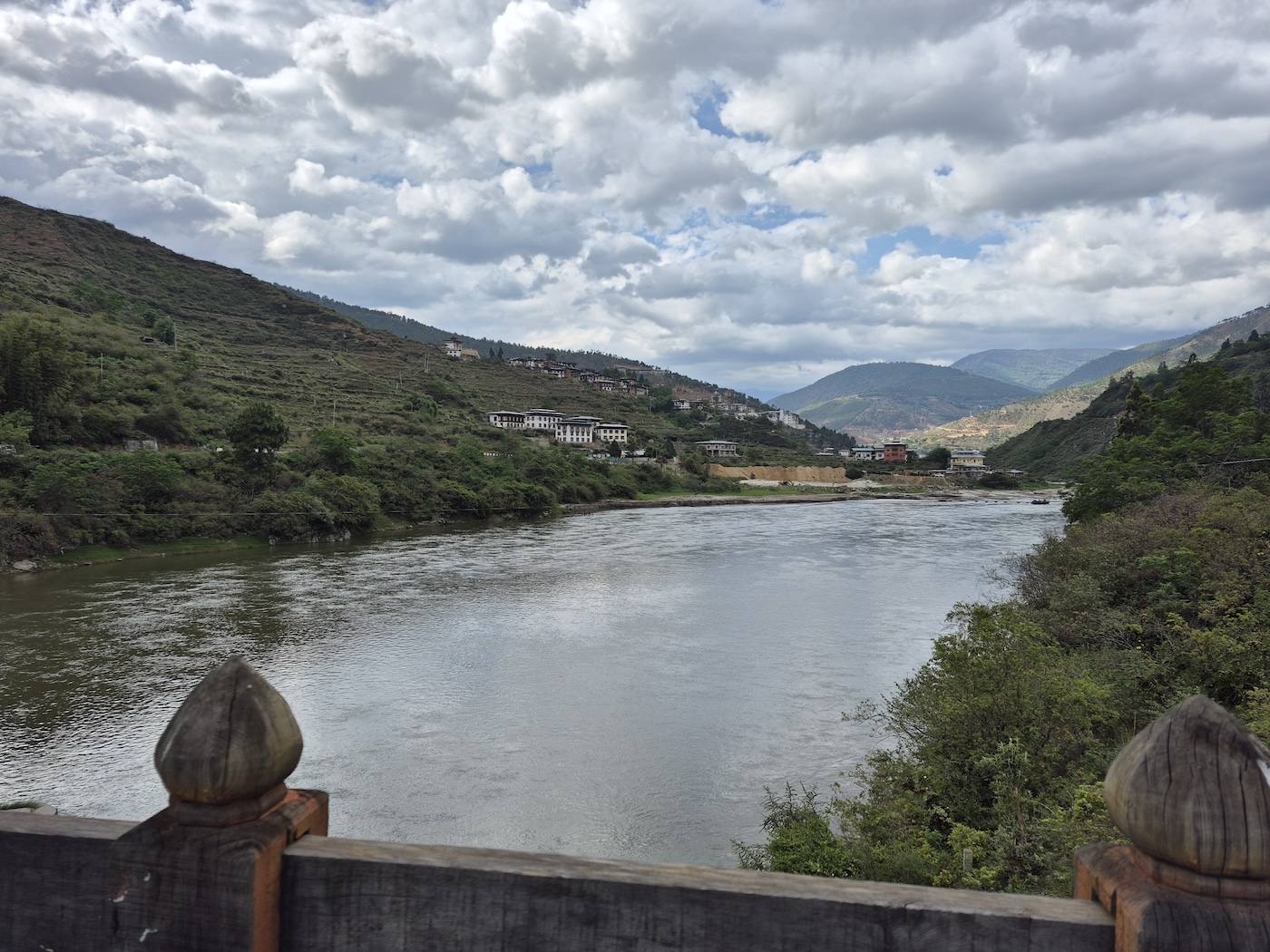
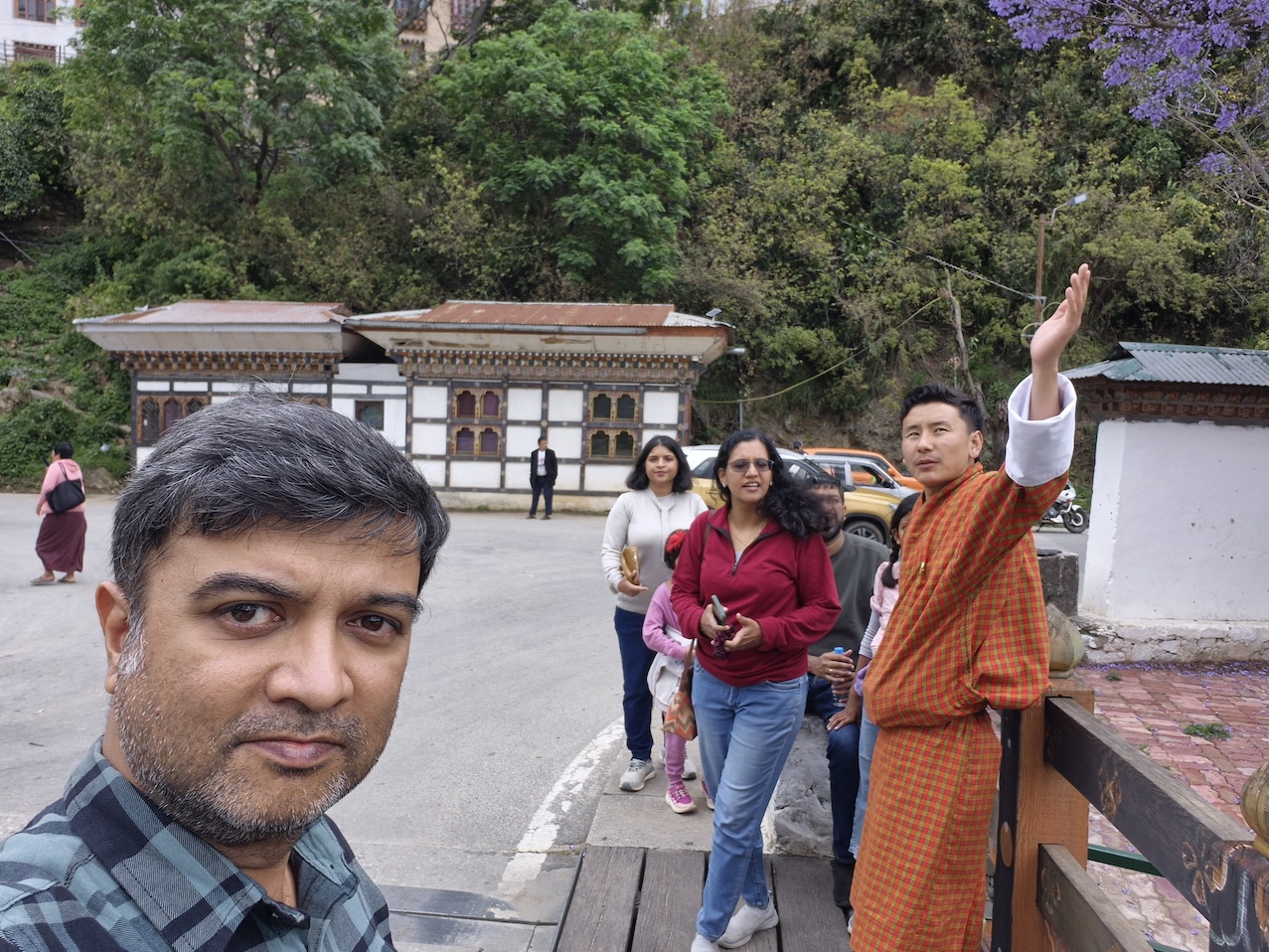
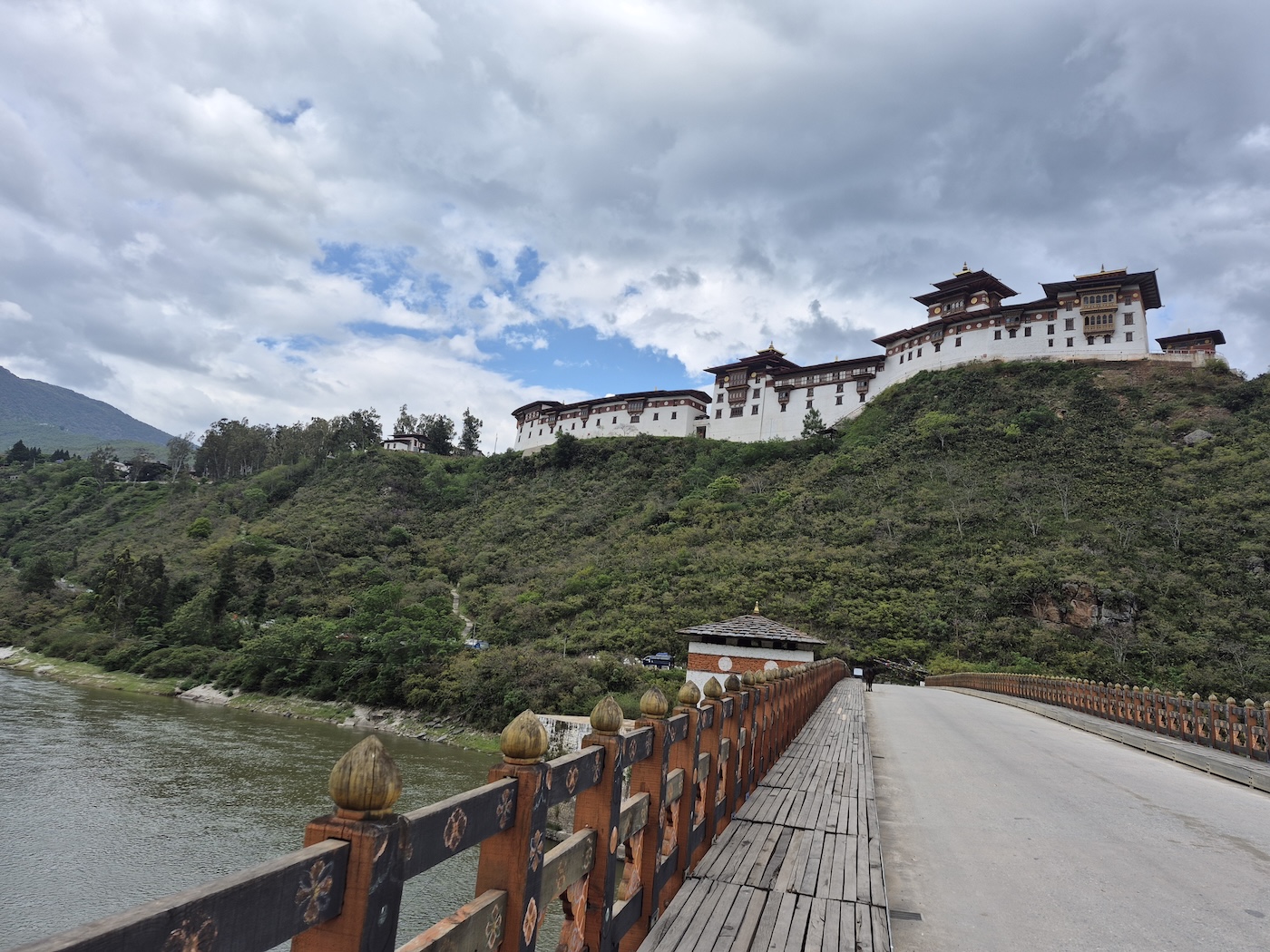
Soon after leaving Punakha, we passed Wangdue Phodrang Dzong, dramatically positioned above the Punatsang Chhu River. We saw the Dzong only from outside, and there was also a beautiful bridge nearby. We would be visiting Punakha Dzong properly later in the journey, so we did not spend too much time here. Still, the sight of the large white Dzong standing high above the river was impressive.
Our first sight of Phobjikha
By the time we began approaching Phobjikha Valley, all of us were tired. It was nearly evening, and we had been travelling for most of the day. But the last part of the journey was beautiful.
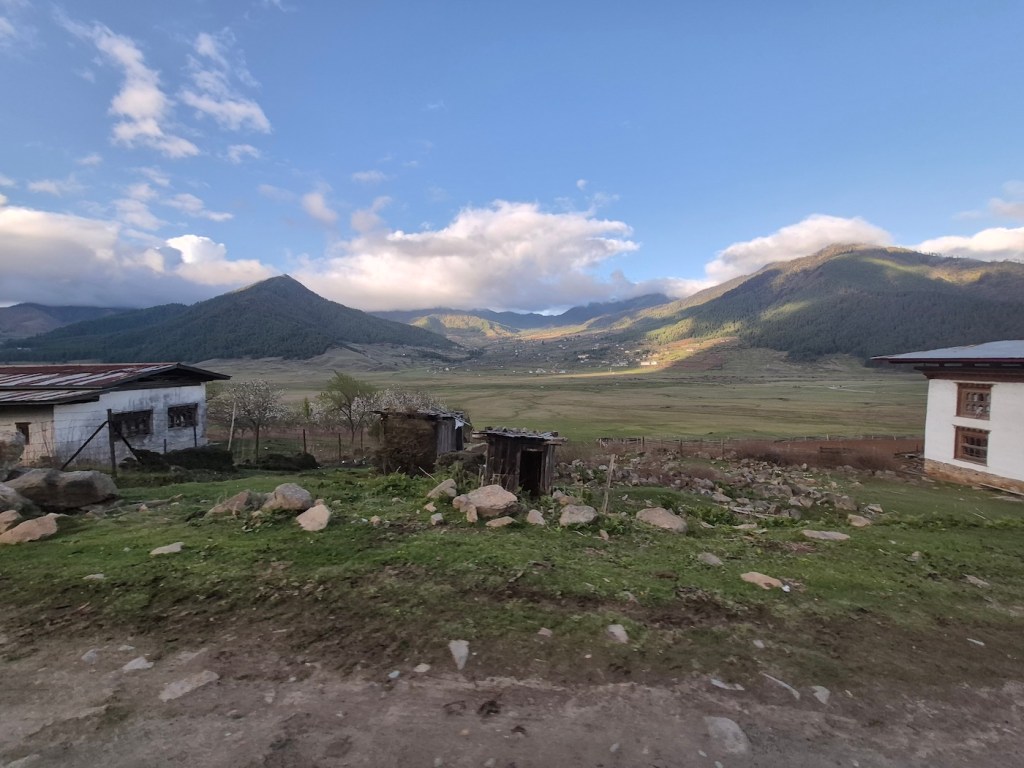
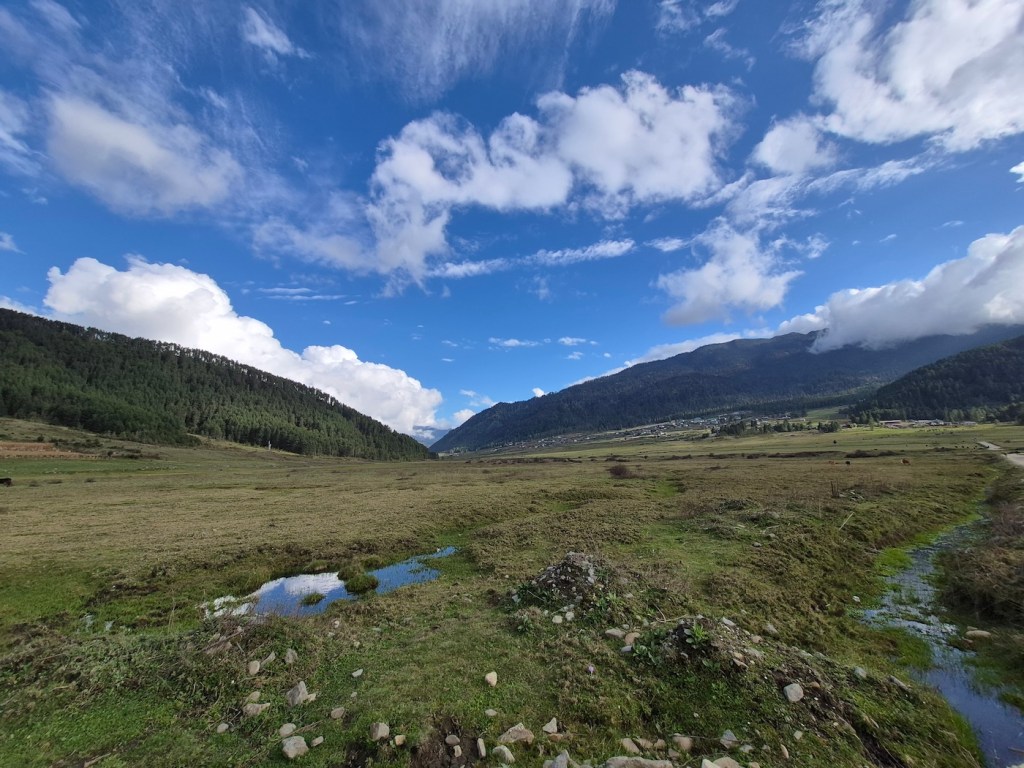
As the road entered the higher valley, we began seeing red rhododendrons along the way. They added sudden bursts of colour to the hillsides, and the landscape slowly began to open up. After hours of narrow, winding mountain roads, Phobjikha appeared as an enormous open expanse surrounded by forested slopes.
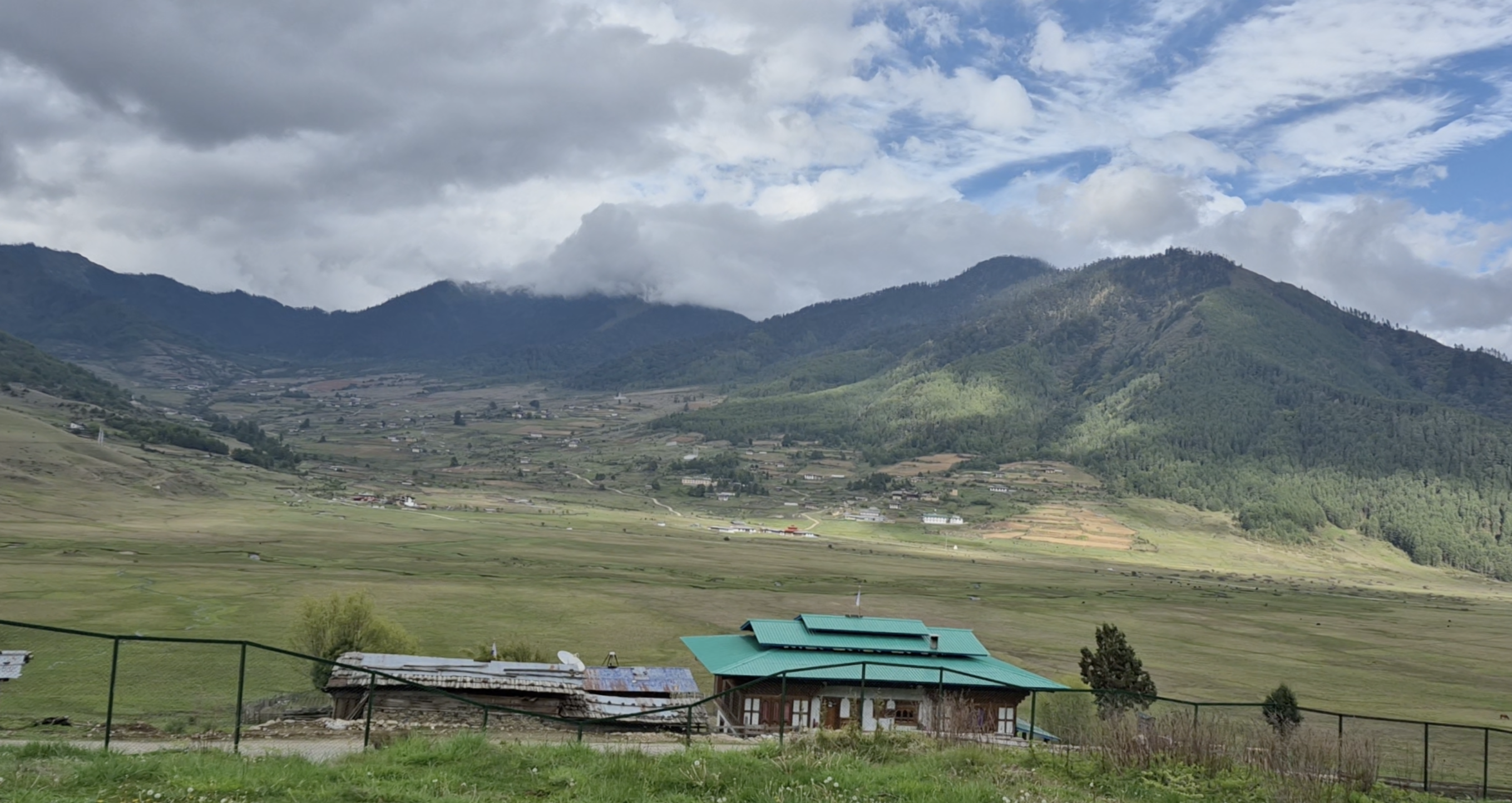
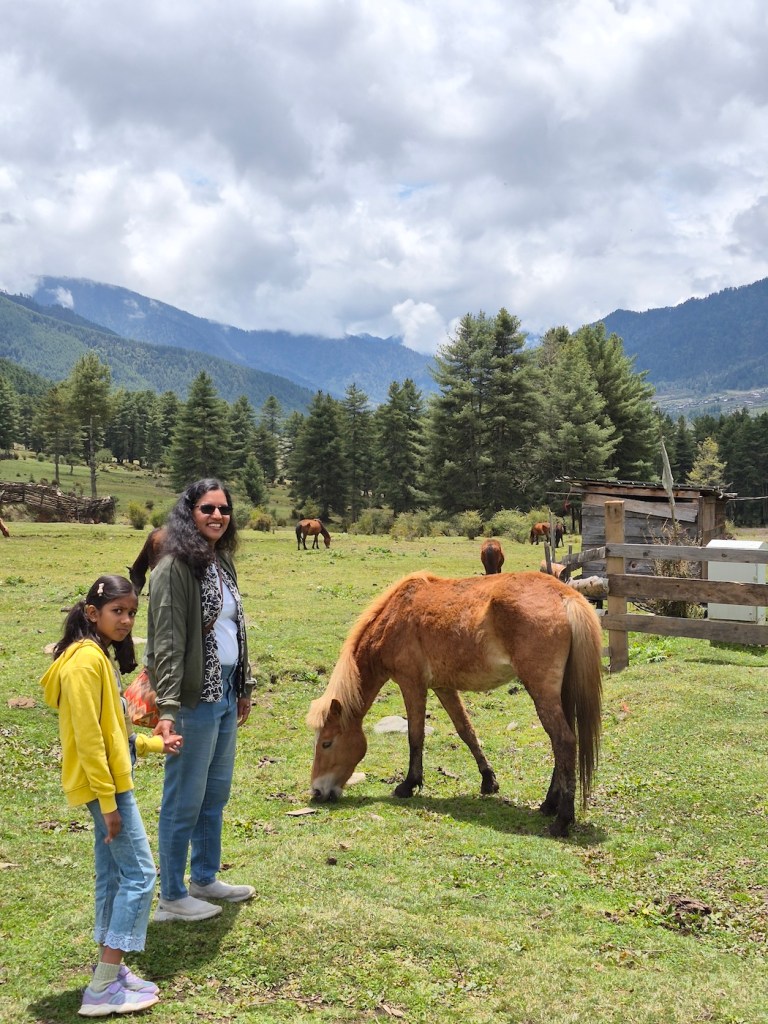
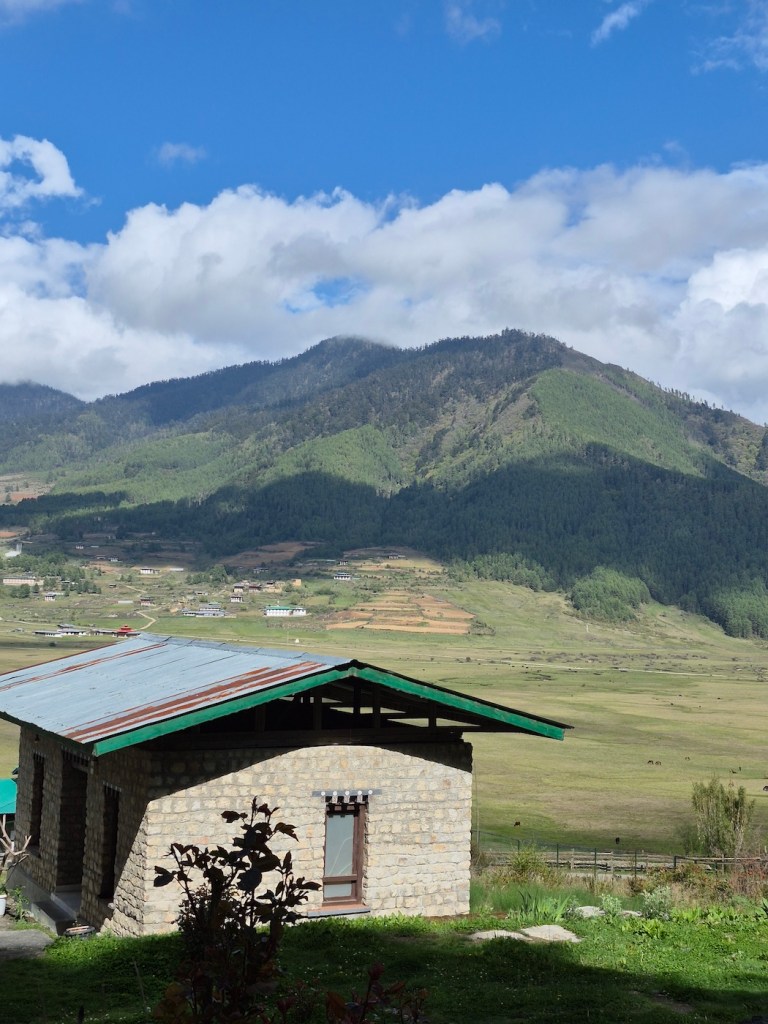
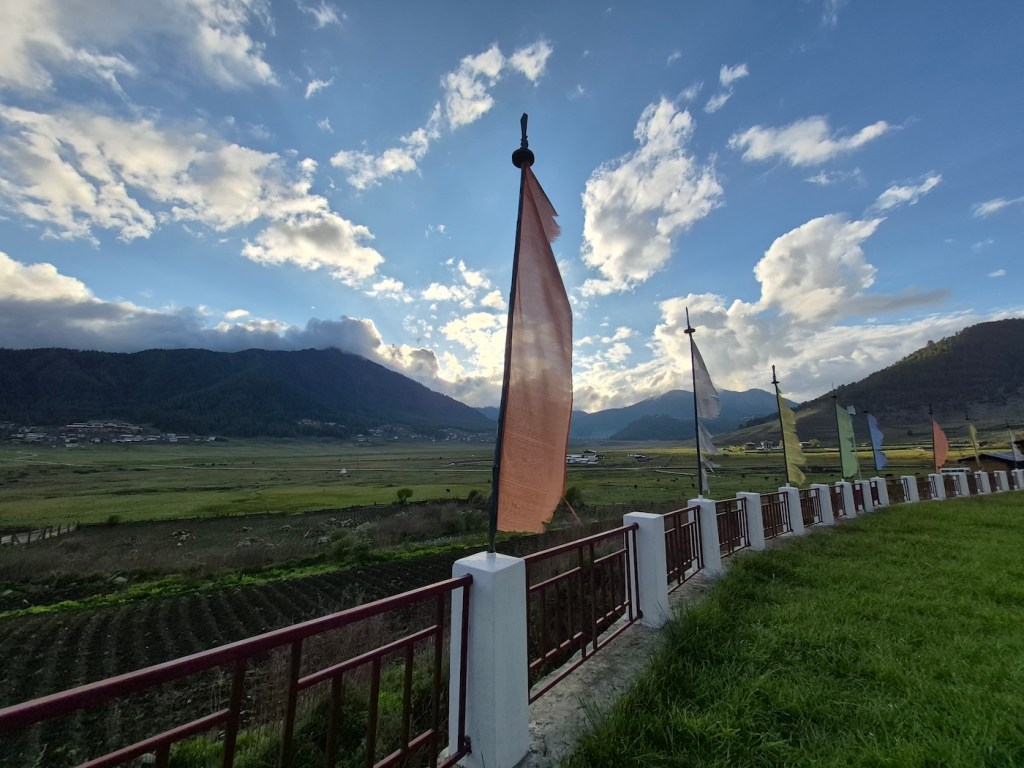
We drove directly to Hotel Phobjikha, where we were staying for two nights. The hotel opened straight onto the valley. From our rooms, we could see a huge stretch of grassland, with horses and yaks grazing freely in the distance.
It was quiet, open and wonderfully unhurried. Compared with Thimphu, it is far less touristy. There were no busy markets or long lists of sightseeing points. There was simply the valley, the mountains, the animals and a great deal of space.
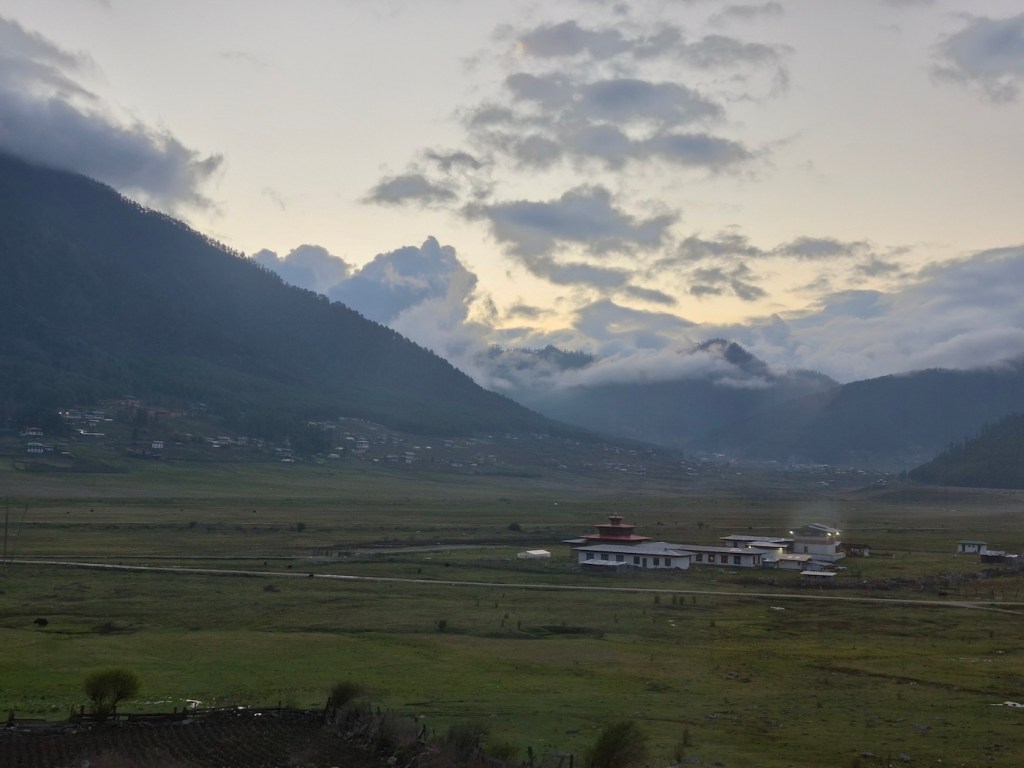
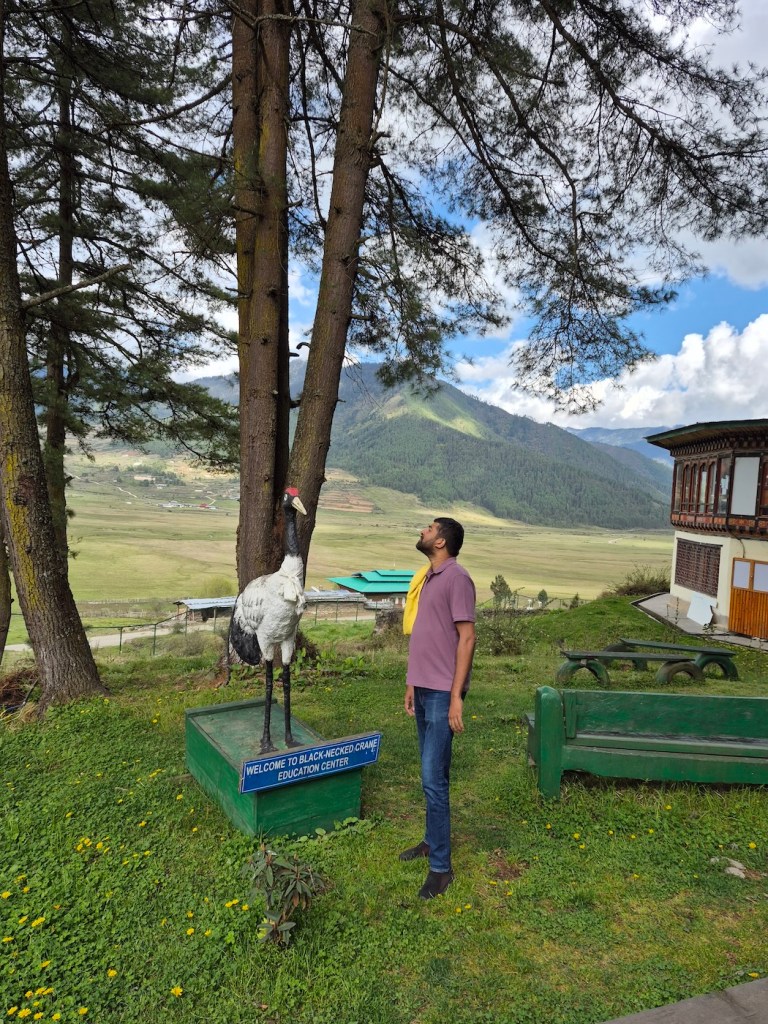
Phobjikha is best known as the winter home of the black-necked cranes. The cranes migrate here from the Tibetan Plateau during the colder months, generally arriving in late October and remaining until early March. The valley’s wetland is carefully protected, and most parts of it are kept free from unrestricted human movement so that the cranes and their habitat are not disturbed.
We were there in May, so the cranes themselves were no longer in the valley. But their presence—or even their absence—seemed to shape the entire place. The efforts to conserve their winter habitat are one of the reasons Phobjikha has remained so open and unspoilt.
After the long drive, none of us had much energy left. We had dinner at the hotel and retired early.
Walking through the valley to Gangtey Monastery
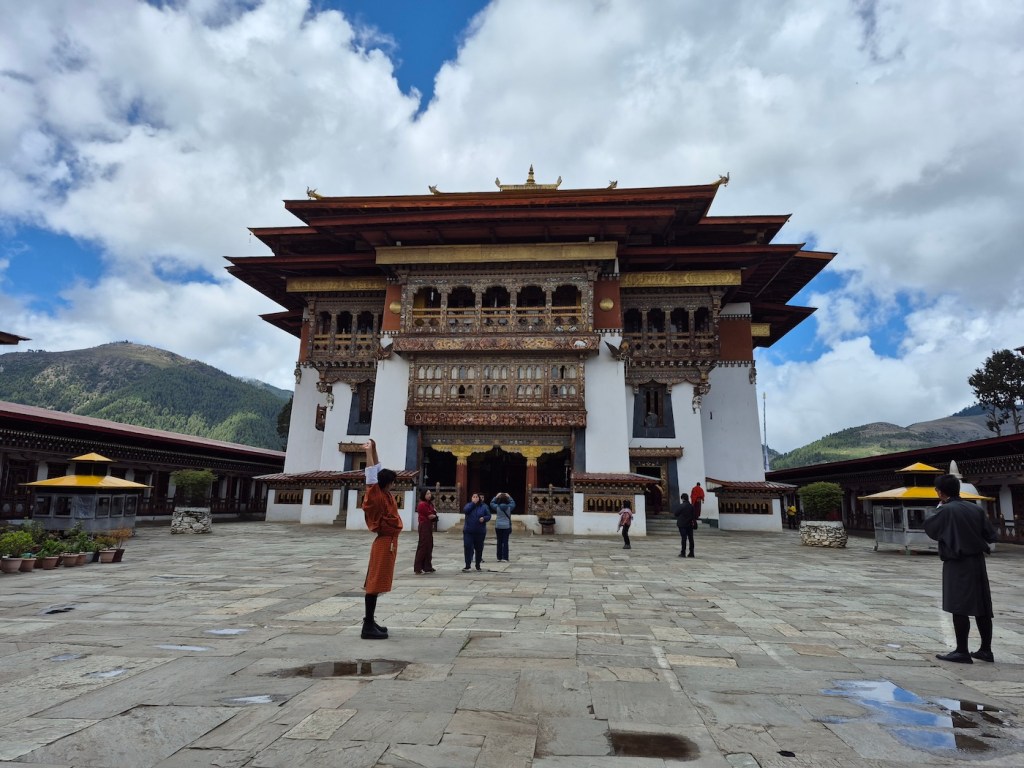
The next morning, after breakfast, we set out on a hike through the valley. The trail would eventually take us to Gangtey Monastery, also known as Gangtey Goenpa, which sits above Phobjikha Valley.
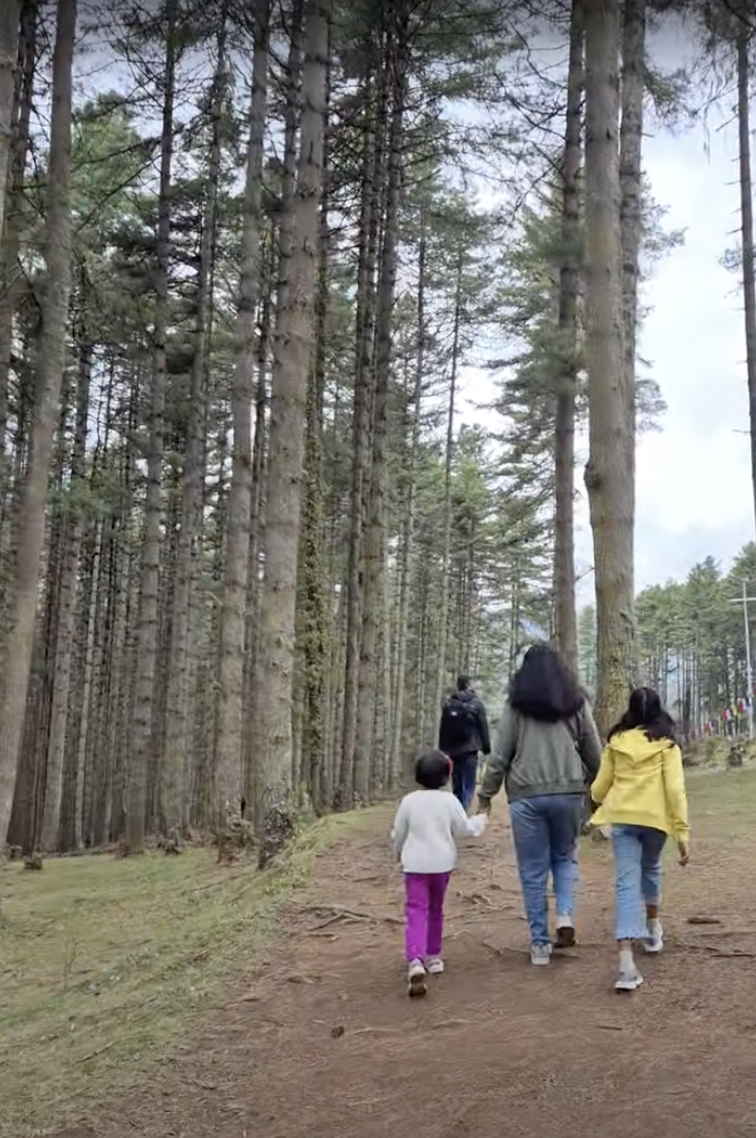
We began from the valley floor. The path first entered the forest, then passed through a village and finally climbed up the hillside towards the monastery. It was a little over four kilometres—not an extremely long hike, but long enough for the children to ask us several times how much farther they had to walk.
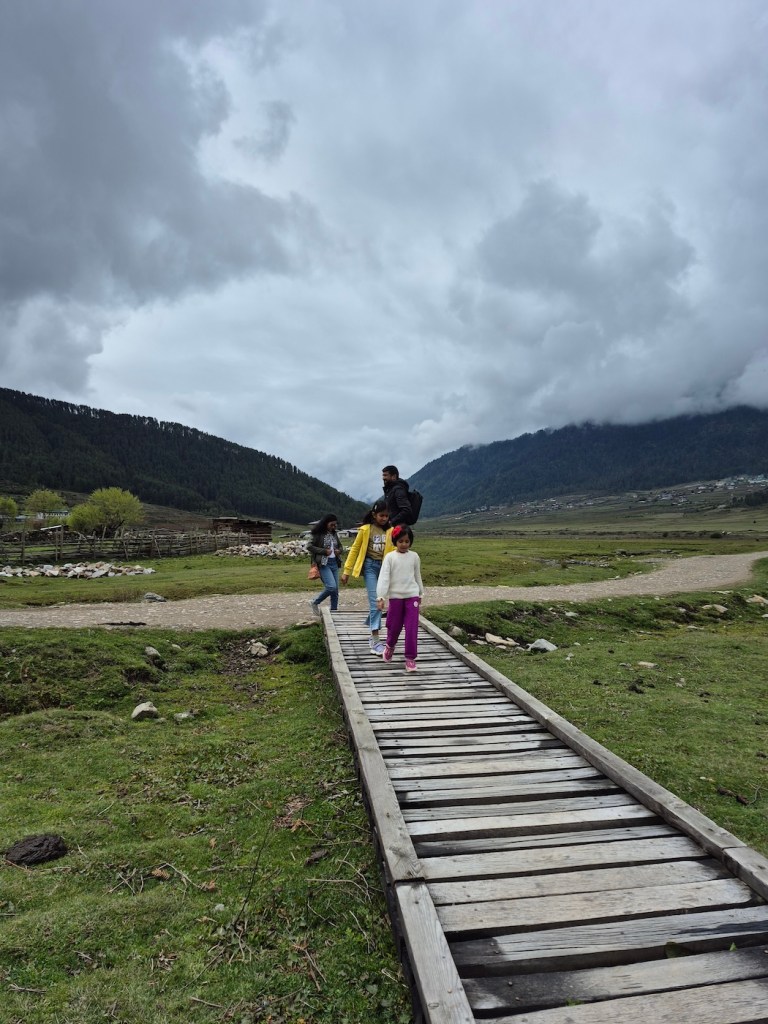
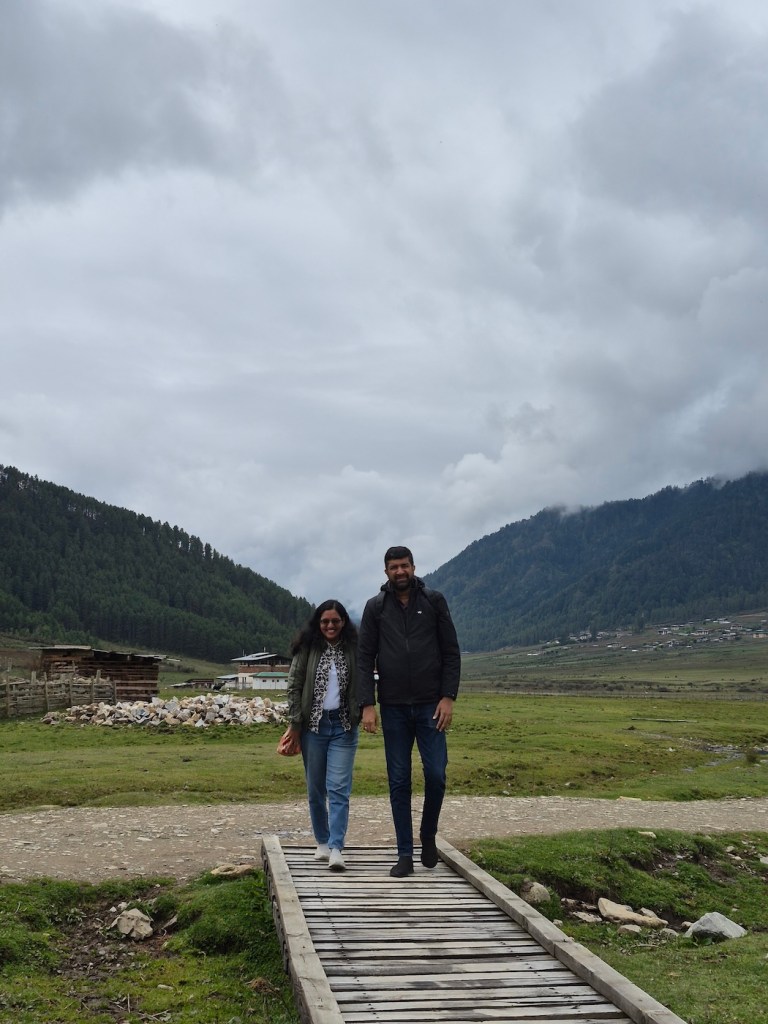
Still, Meera and Nandita were great sports. They complained occasionally, as children naturally do, but they continued walking with us and completed the entire trail.
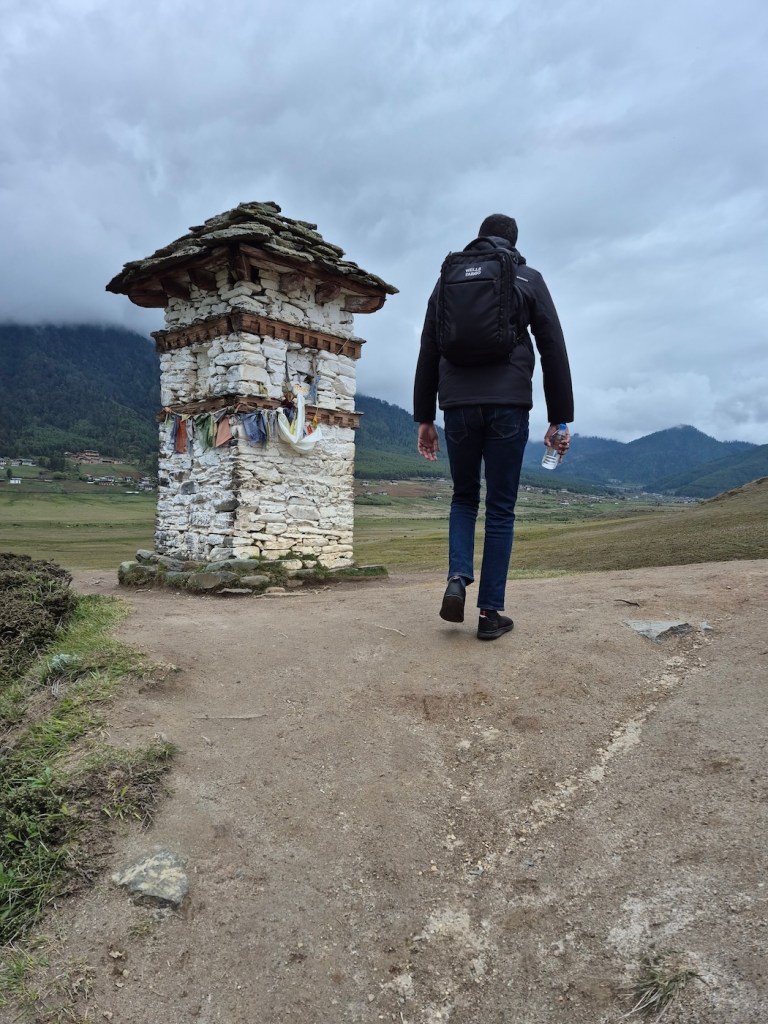
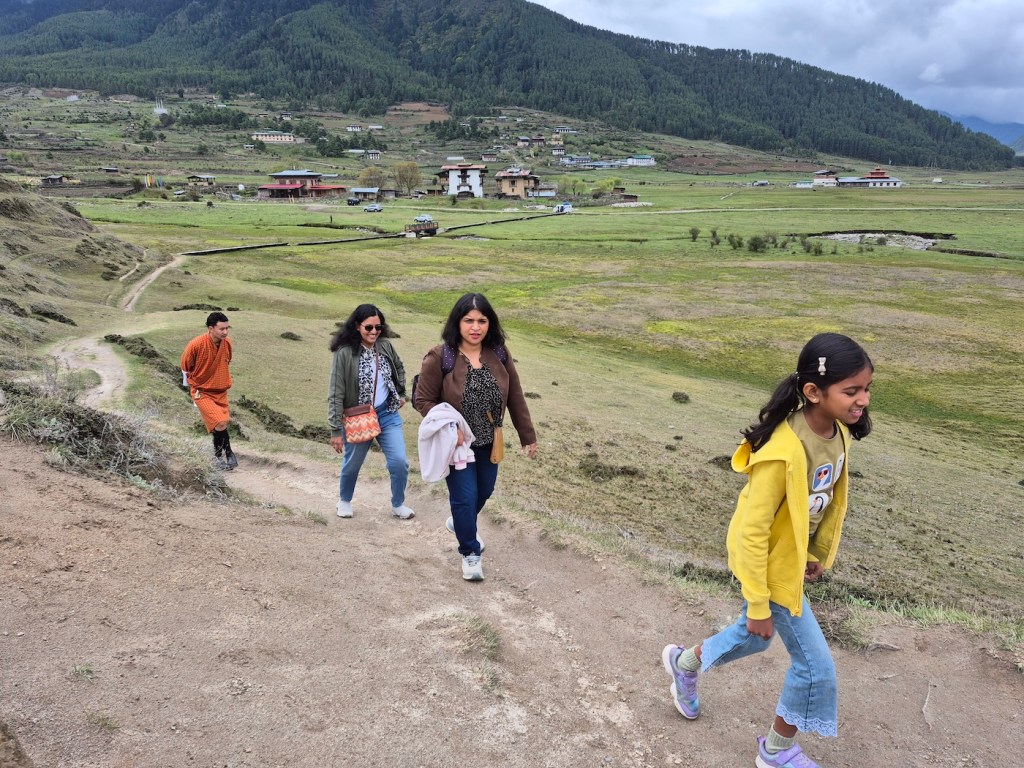
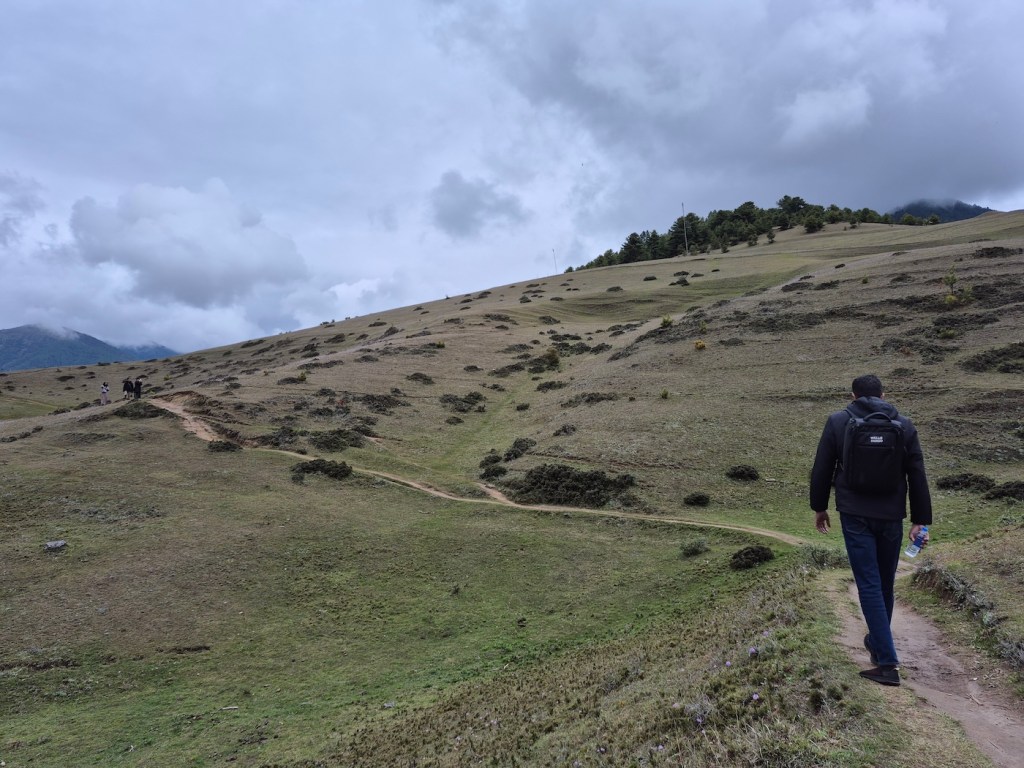
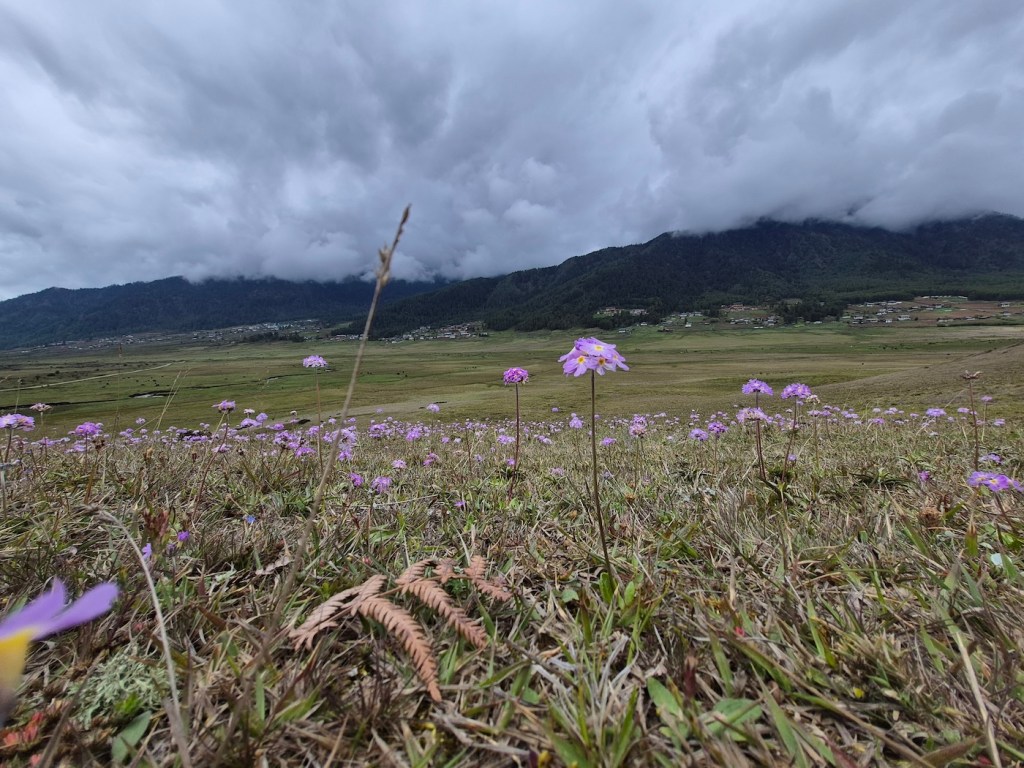
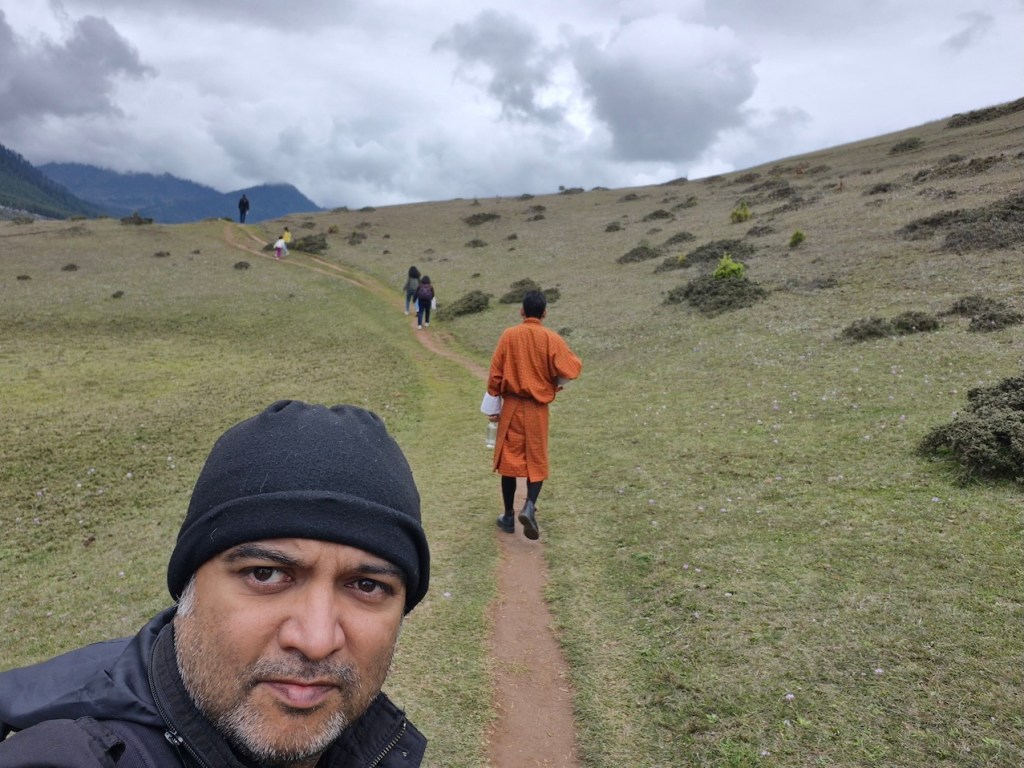
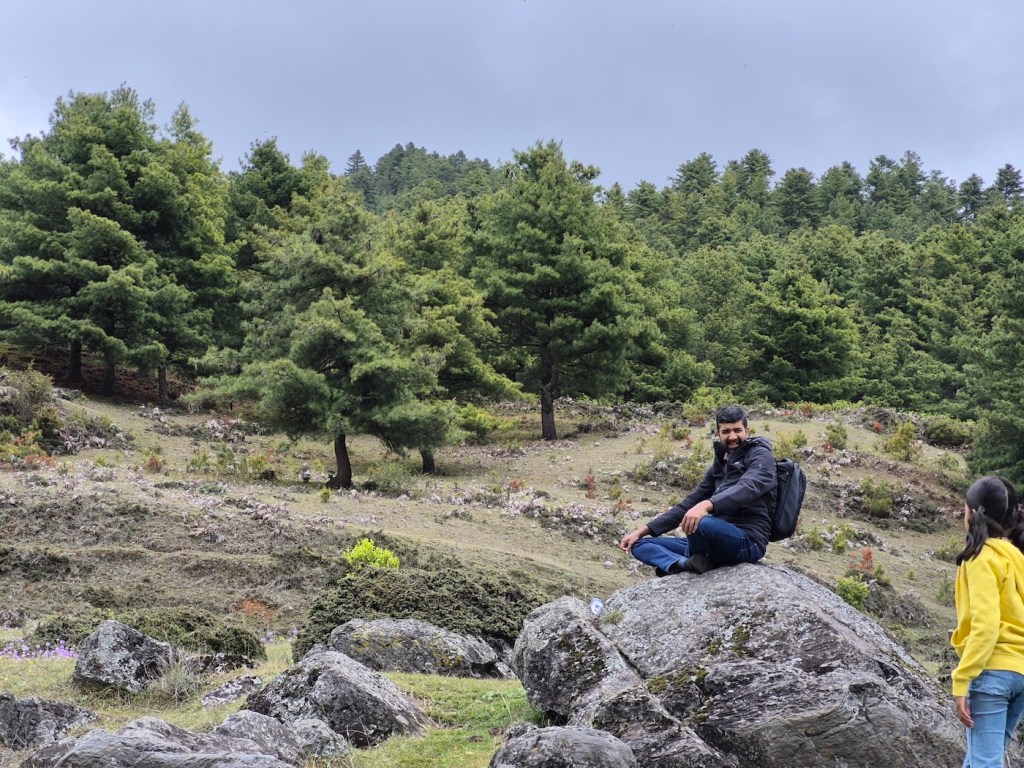
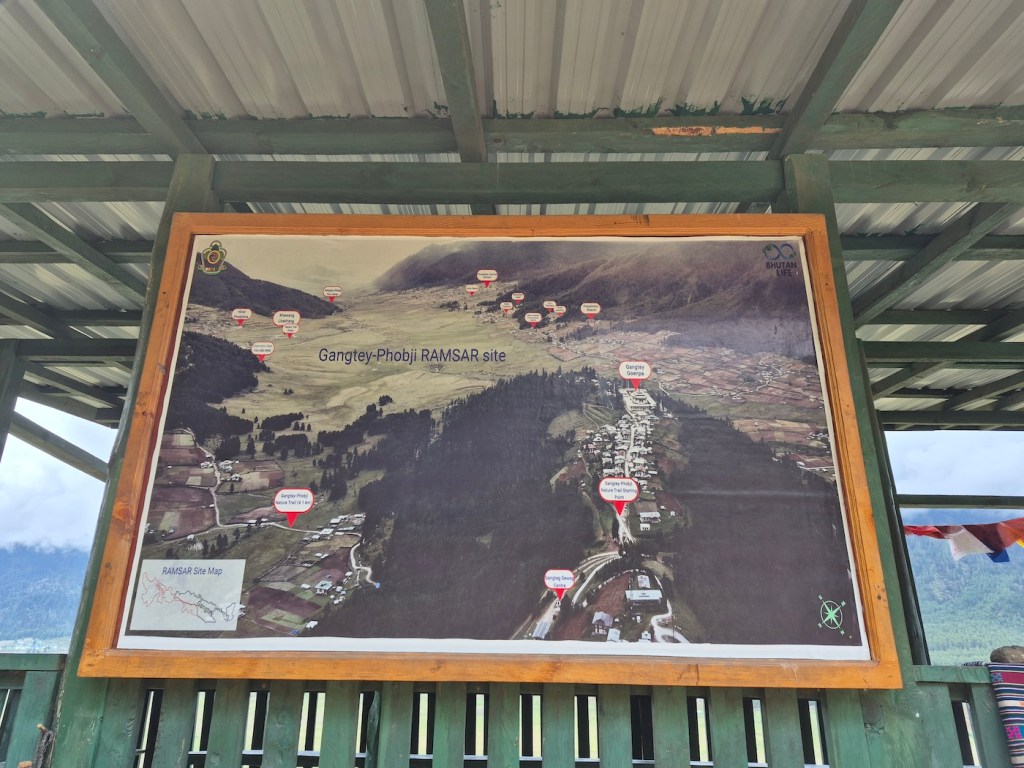
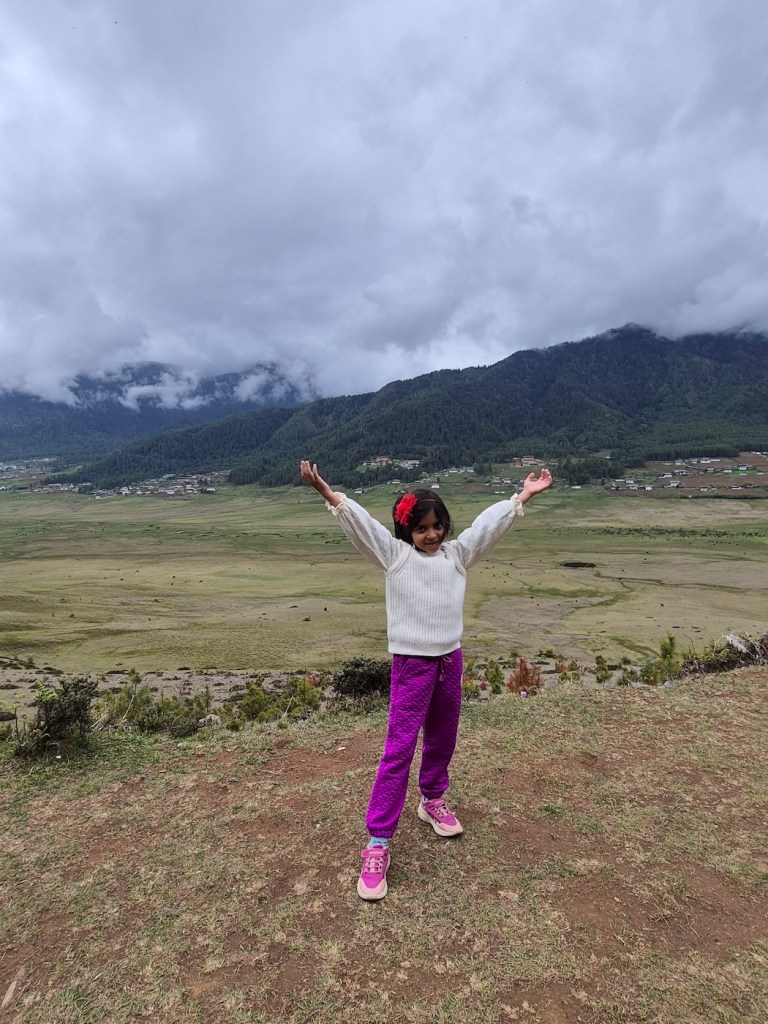
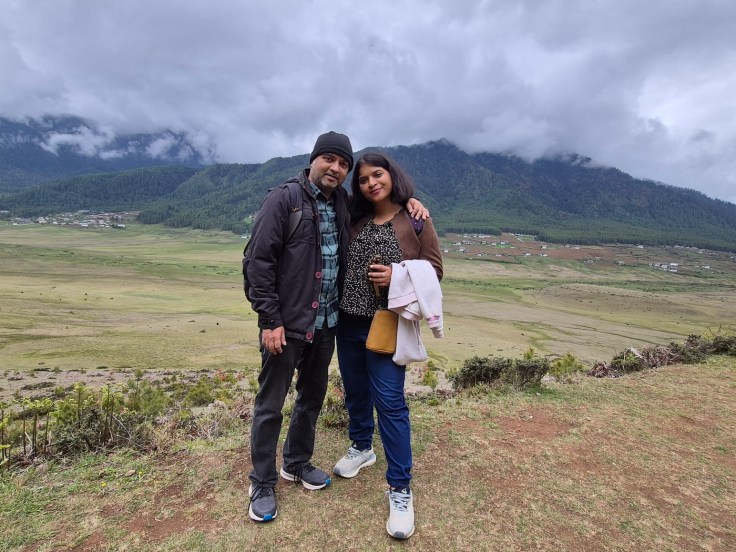
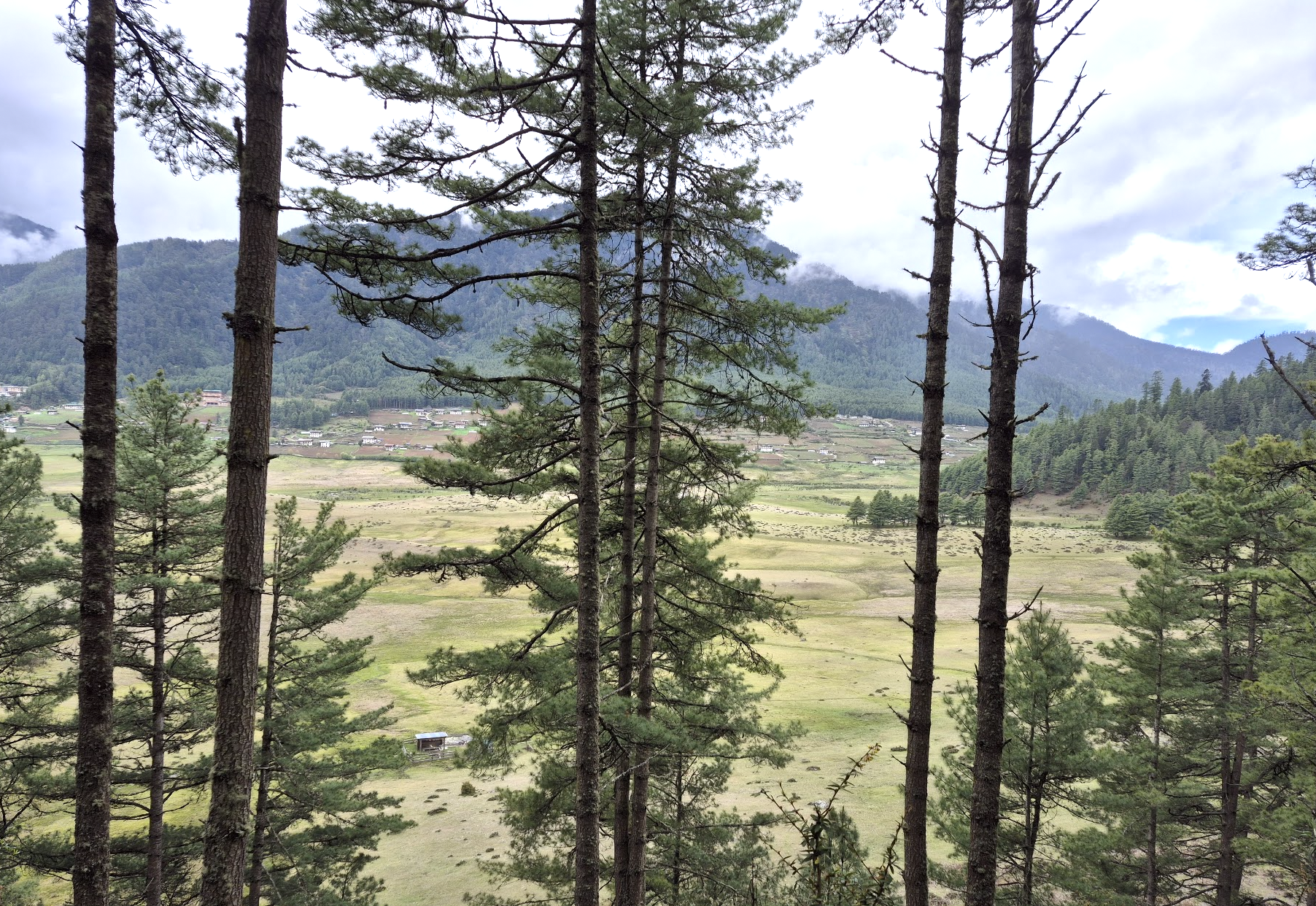
The route itself was extremely picturesque. At different points, we passed through the open valley, shaded forest paths and small village settlements before climbing towards the monastery.
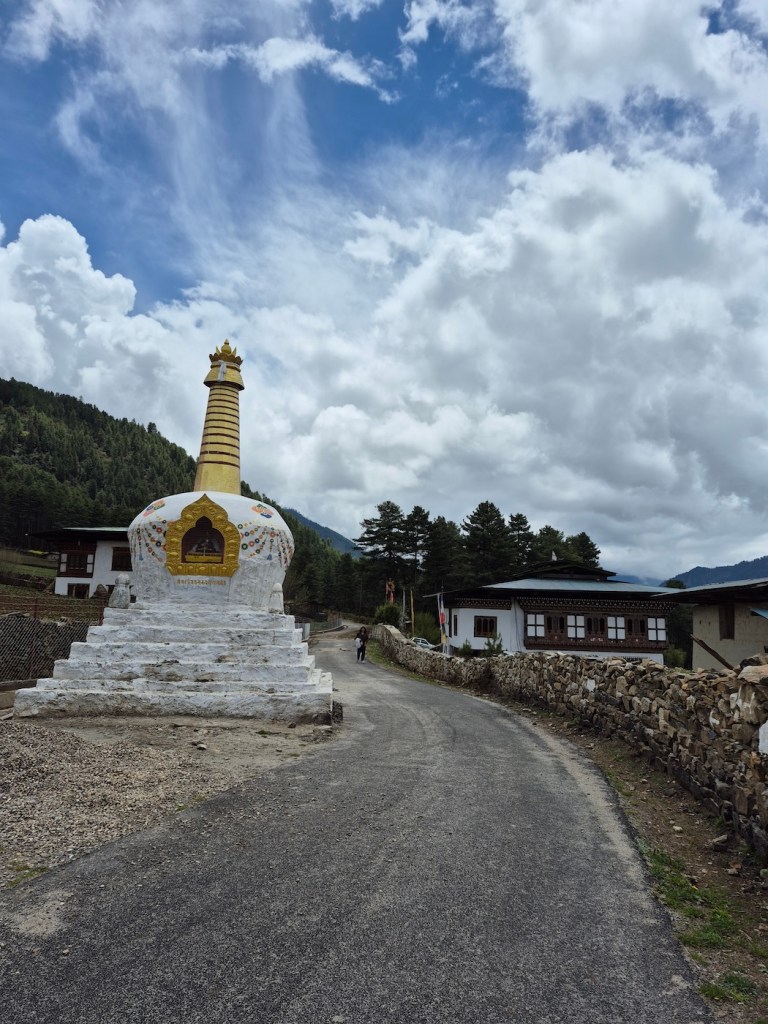
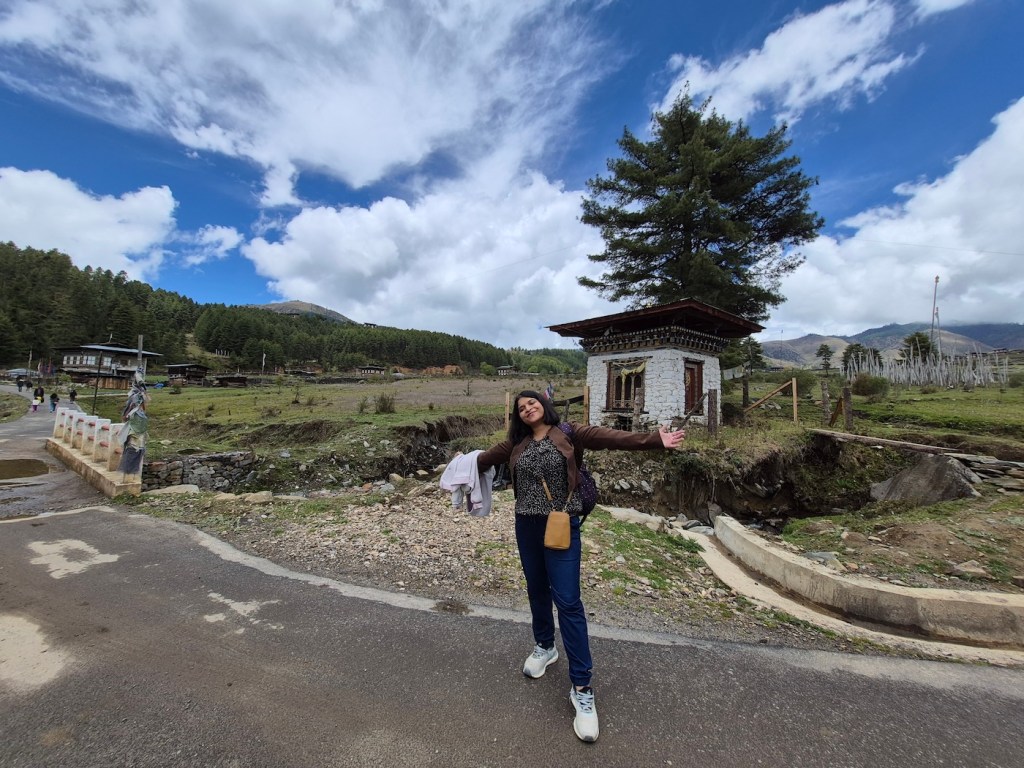
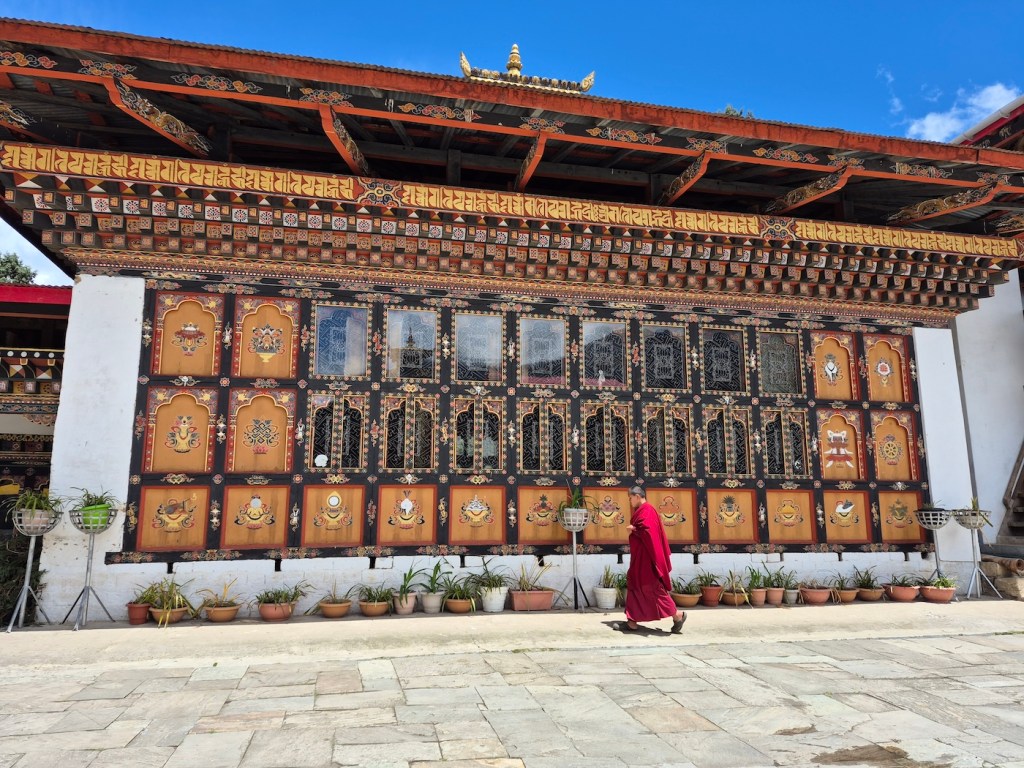
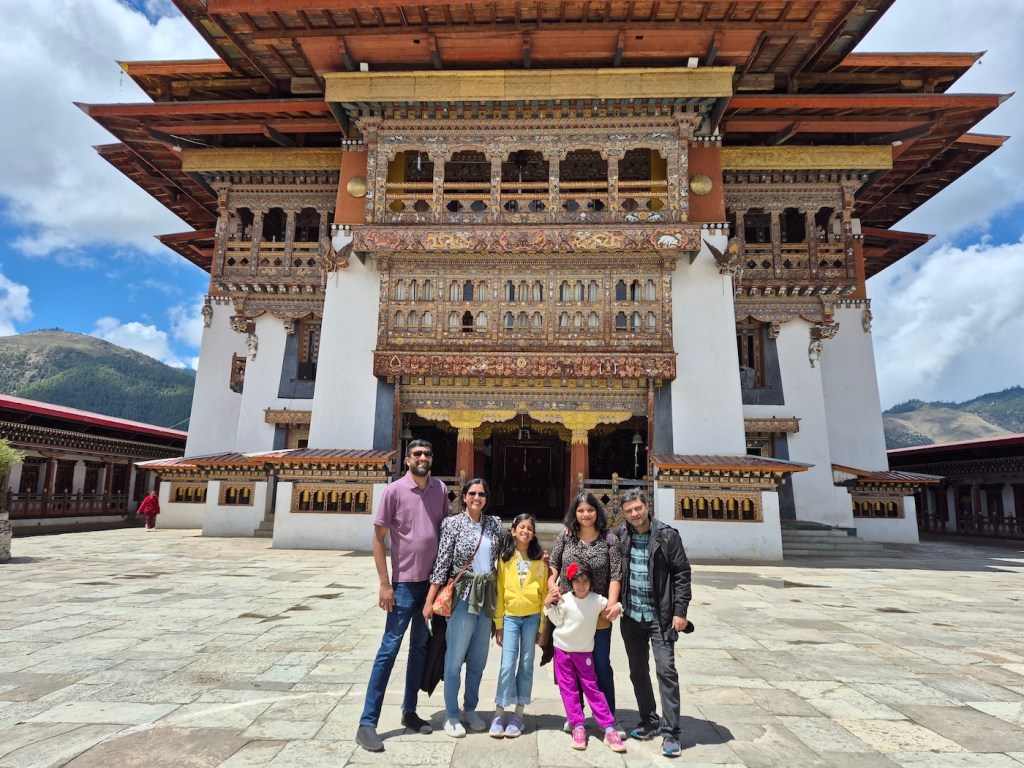
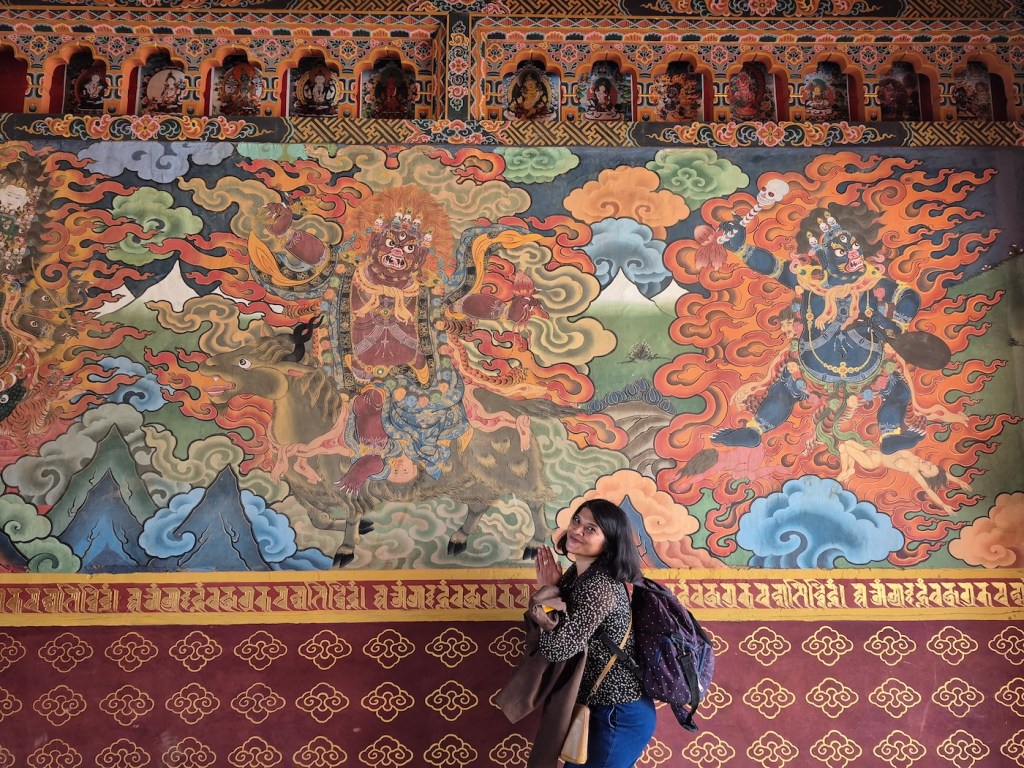
Gangtey Monastery was beautiful. As with the other monasteries we visited in Bhutan, photography was not allowed inside. The paintings, carvings and decorations were incredibly detailed and ornate. After the long walk, the calm interior of the monastery felt even more rewarding.
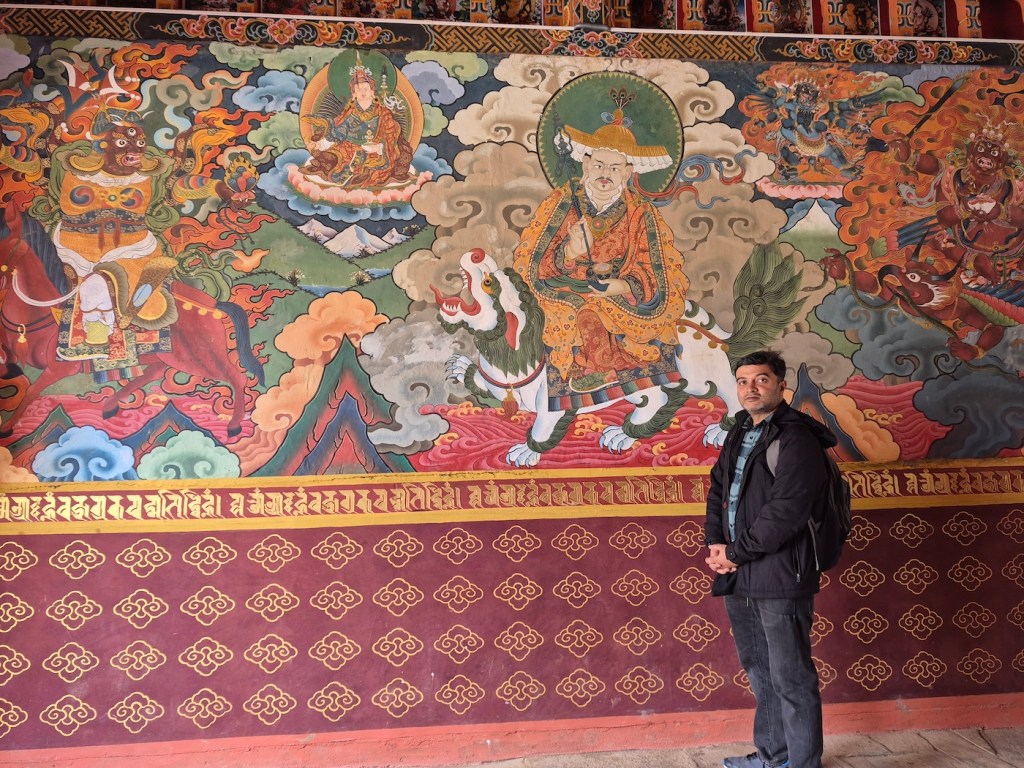
The children, however, had no intention of walking all the way down again.
Fortunately, the monastery was accessible by road. We called our driver and asked him to come up and collect us. While we waited, Meera decided that she wanted momos. We found a small shop nearby serving simple vegetable momos, and they turned out to be quite good.
This was when we made a slightly surprising discovery about Bhutan: momos were not nearly as widely available as we had expected. In the Indian Himalayan regions, one finds momo stalls almost everywhere. Since Bhutan is also a Himalayan country, I had assumed it would be the same there. It was not. We did find momos at a few places, but they were not the everyday, everywhere food that I had imagined.
Rice, datshi and a welcome chicken curry
Once the car arrived, we drove directly to the place where we were having lunch. It was a simple meal built around rice and different Bhutanese dishes.
There was ema datshi, the classic Bhutanese preparation of chillies and cheese, and shamu datshi, made with mushrooms and cheese. Datshi appeared in some form at almost every Bhutanese meal we tried. Fortunately for the children, there was also chicken curry, which saved the day for them.
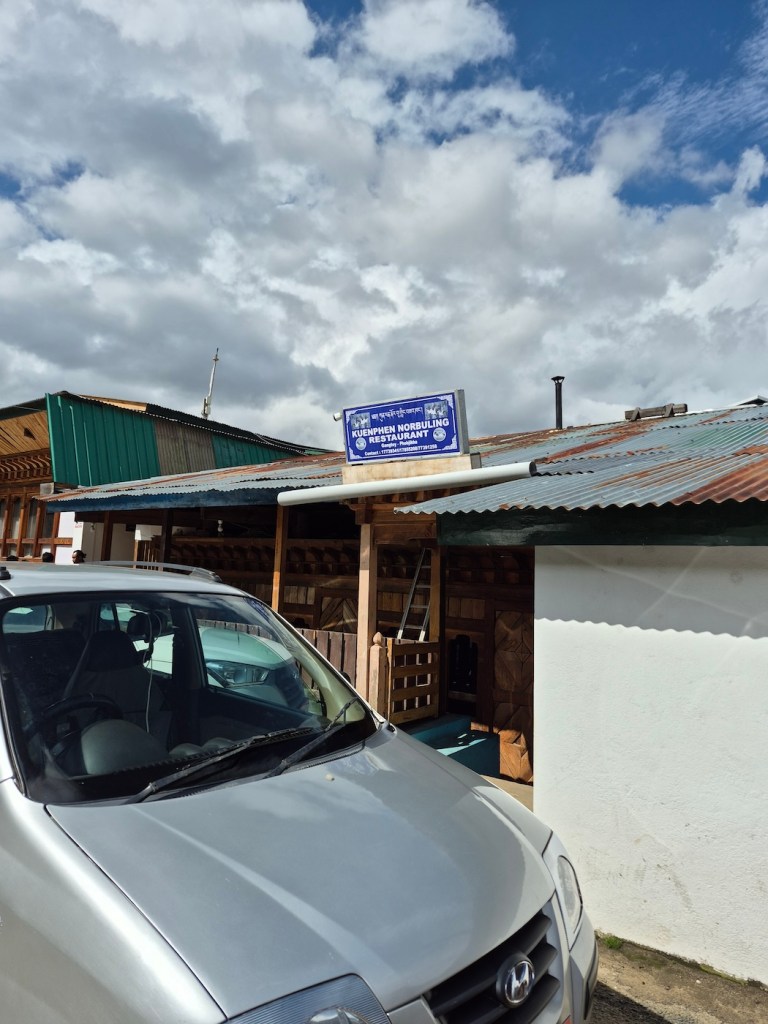
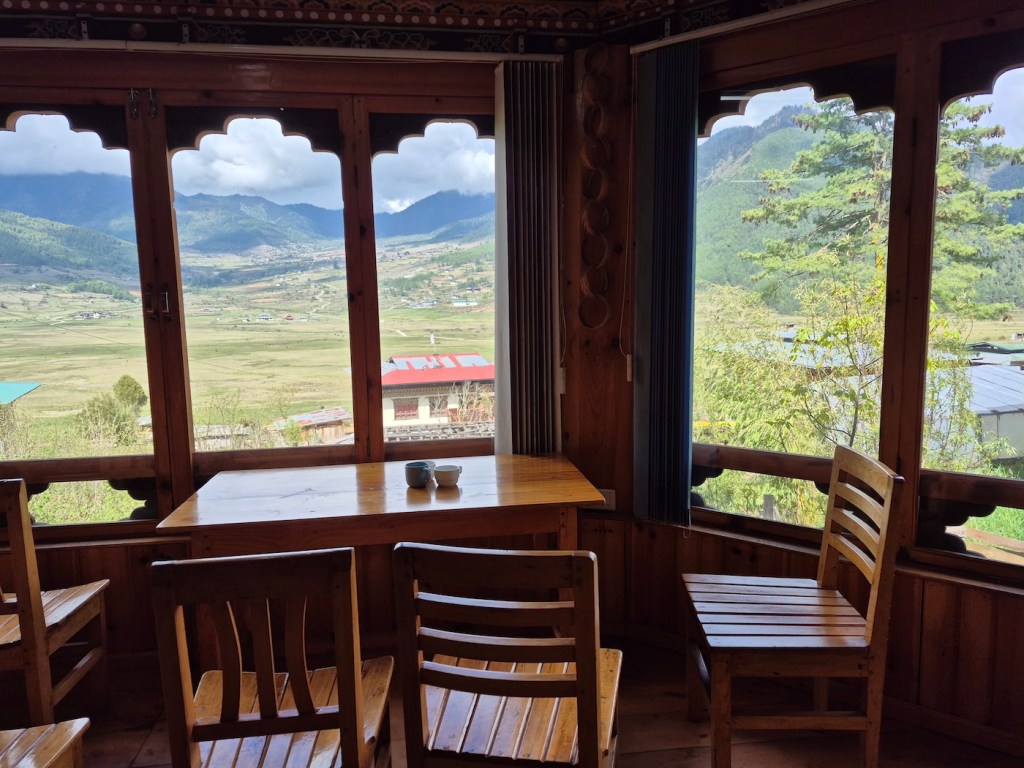
After lunch, we went to the Black-Necked Crane Information Centre. The centre explains the cranes’ migration and the work being done to protect them and the valley’s wetland habitat. Since we were visiting outside the crane season, this was the closest we came to understanding how important these birds are to Phobjikha.
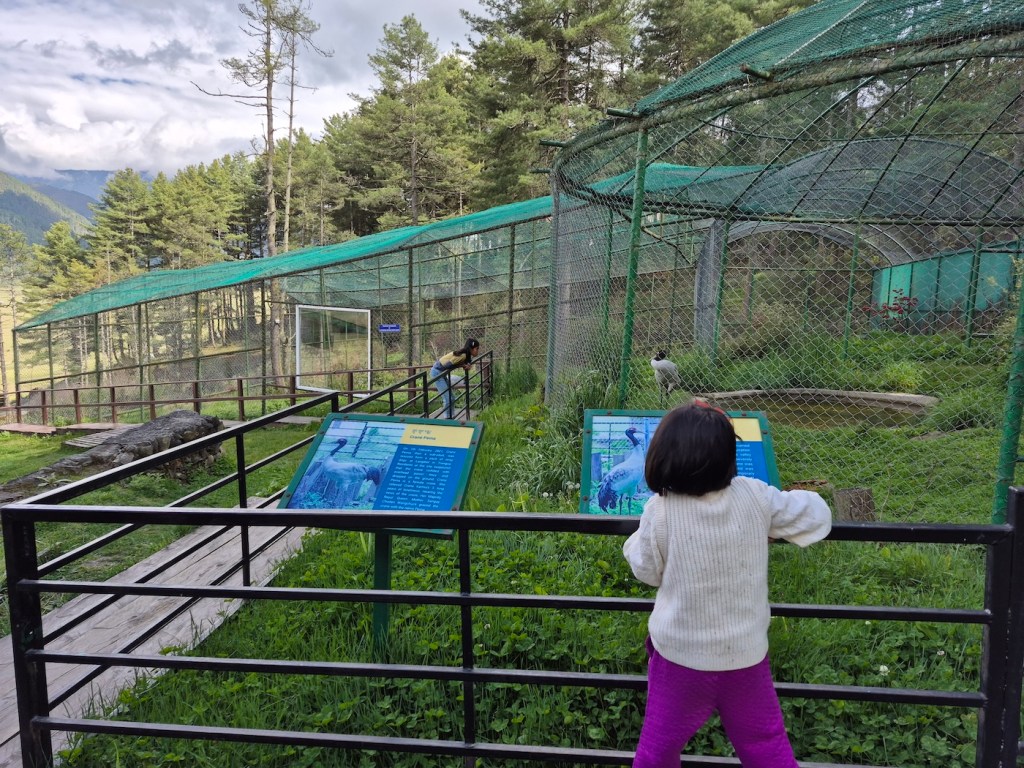
But the best part of the day came afterwards.
An unforgettable afternoon in the valley
Once we had finished at the information centre, we asked our driver to leave us somewhere in the middle of the valley.
There was no particular attraction to visit and nothing specific to do. We simply wanted to spend time in the landscape.
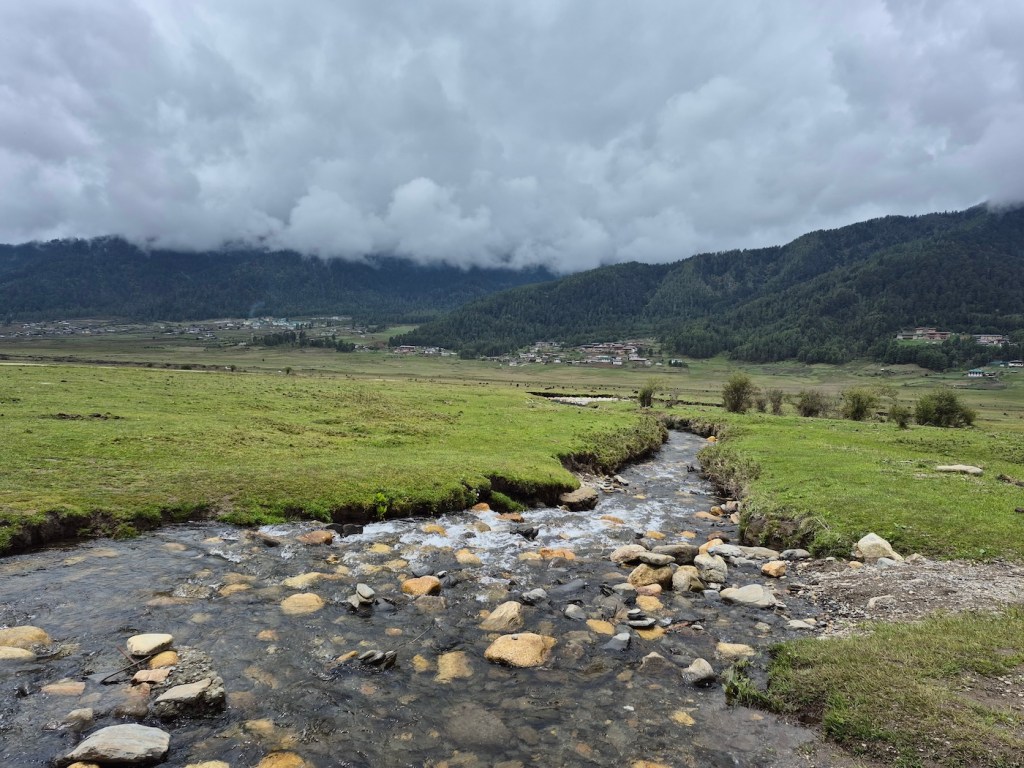
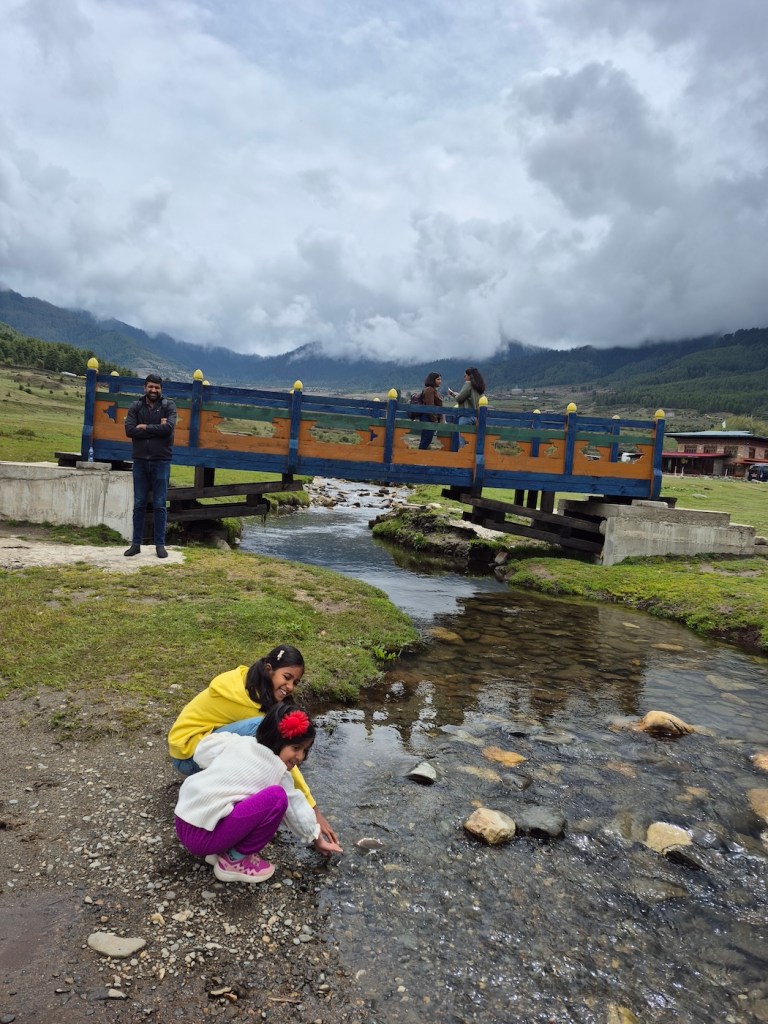
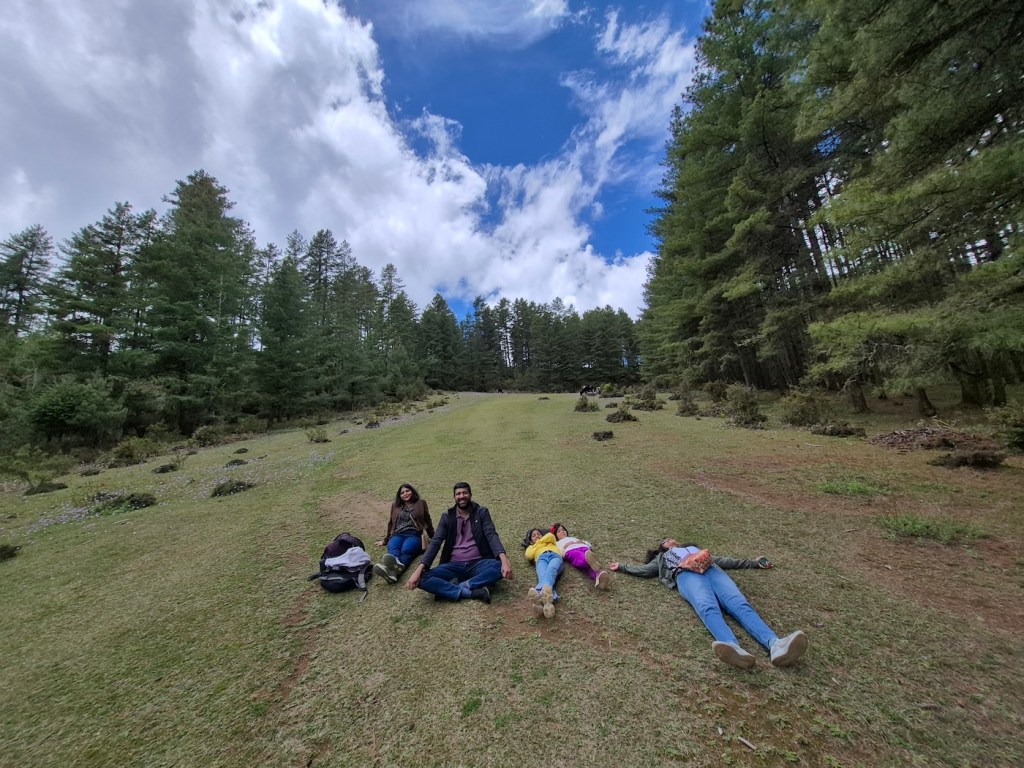
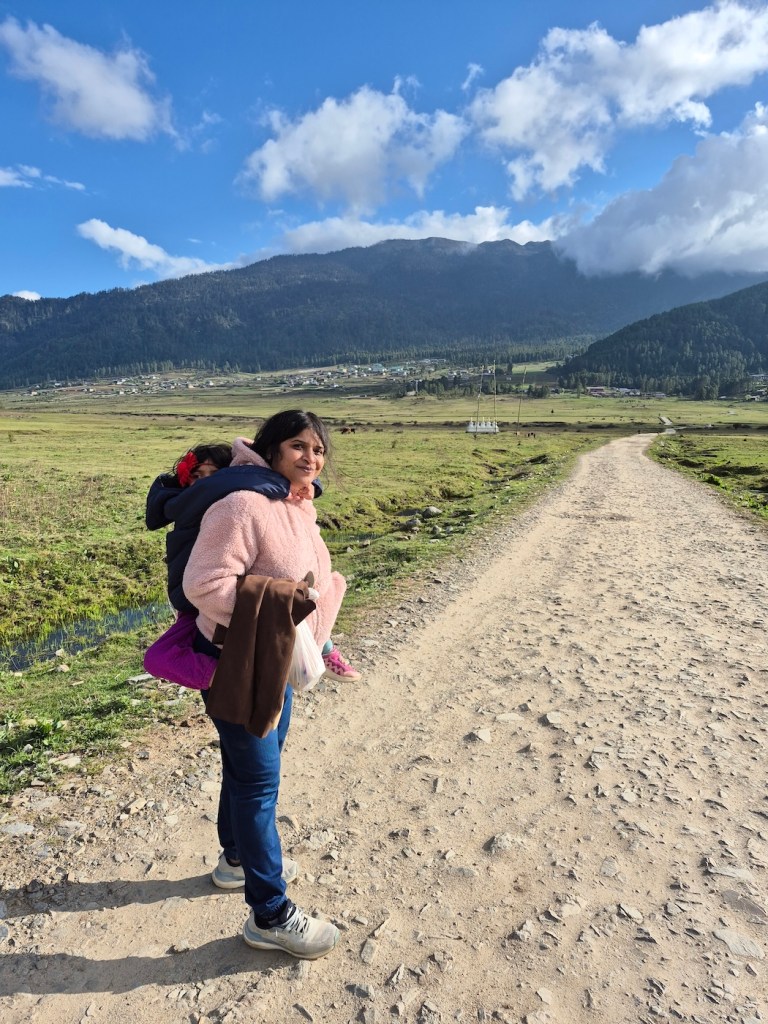
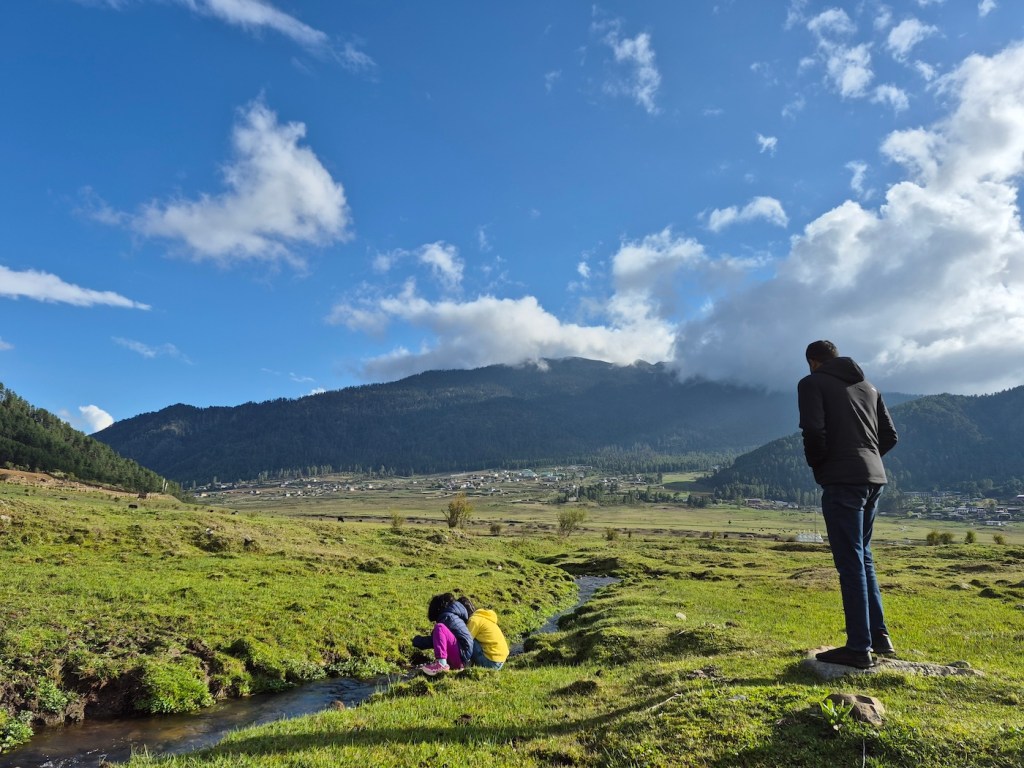
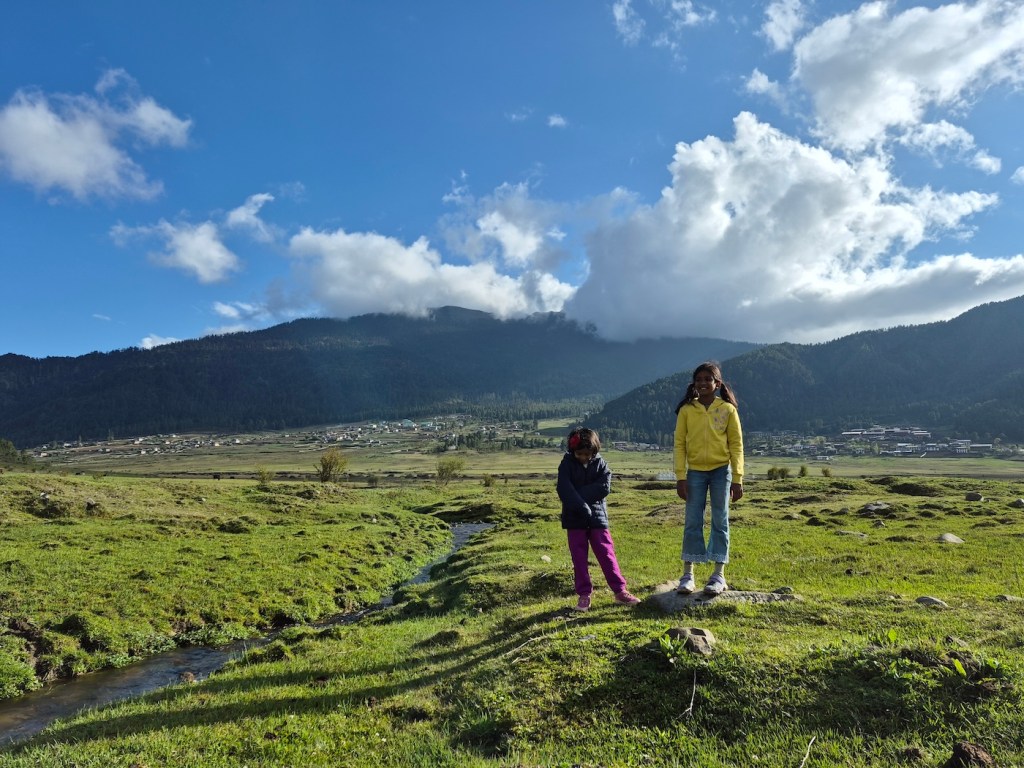
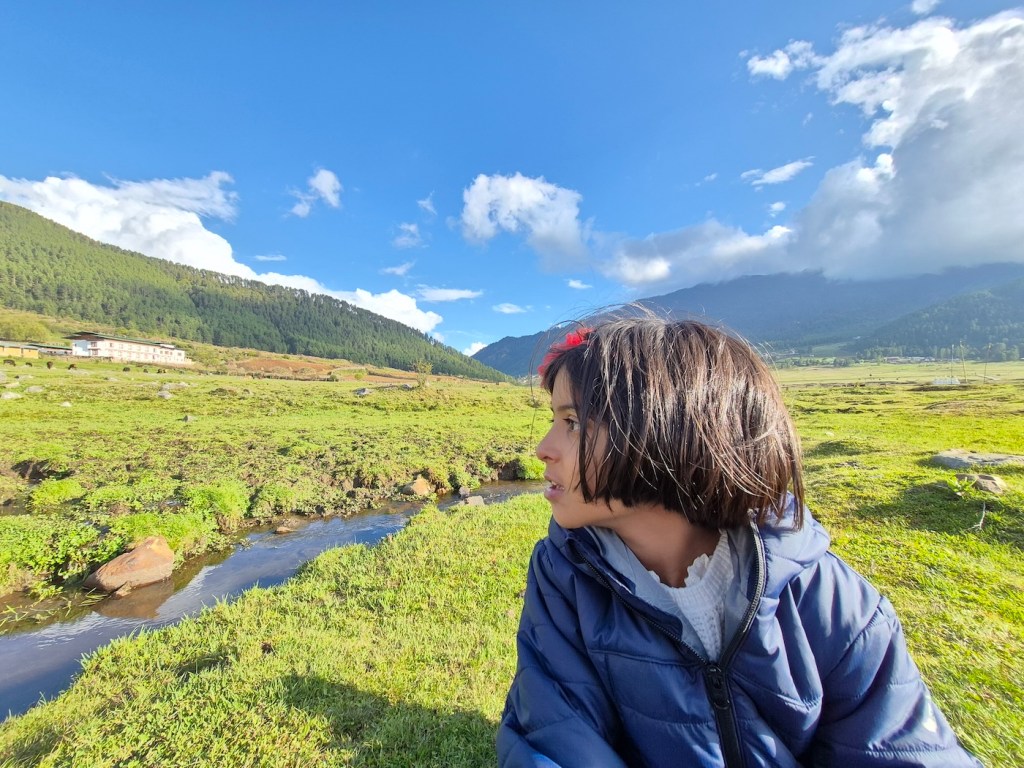
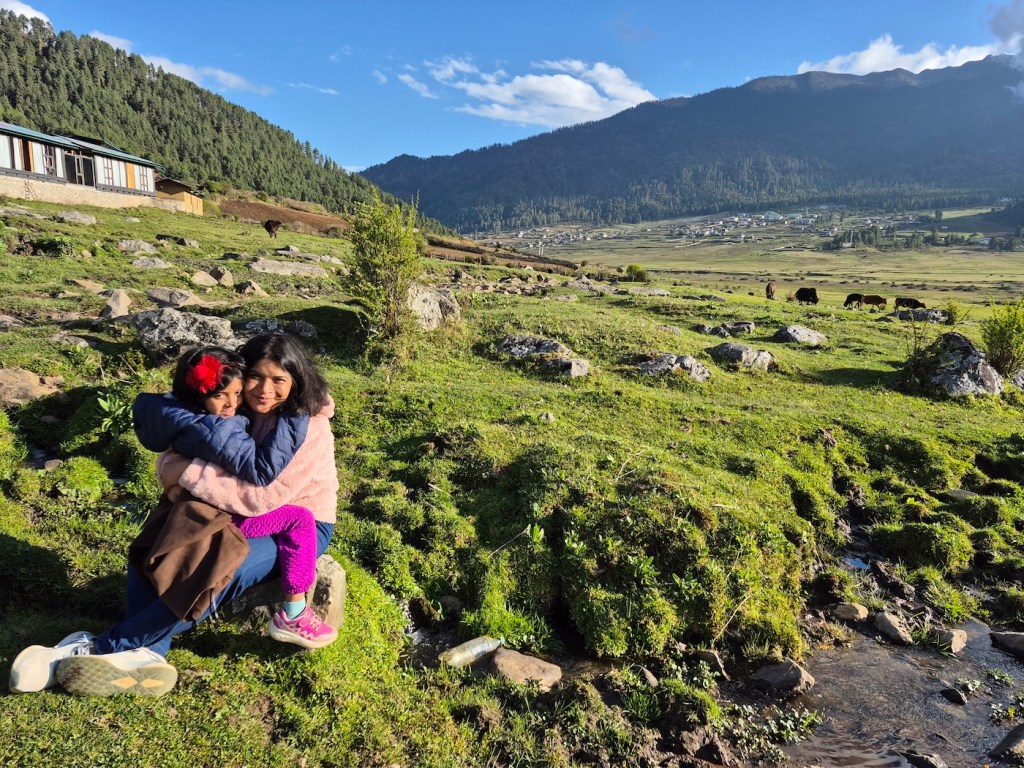
We wandered beside the stream, walked across the open valley and allowed the children to explore at their own pace. There were mountains on every side, but the valley itself was wide and open. The afternoon was quiet, and there were very few other people around.
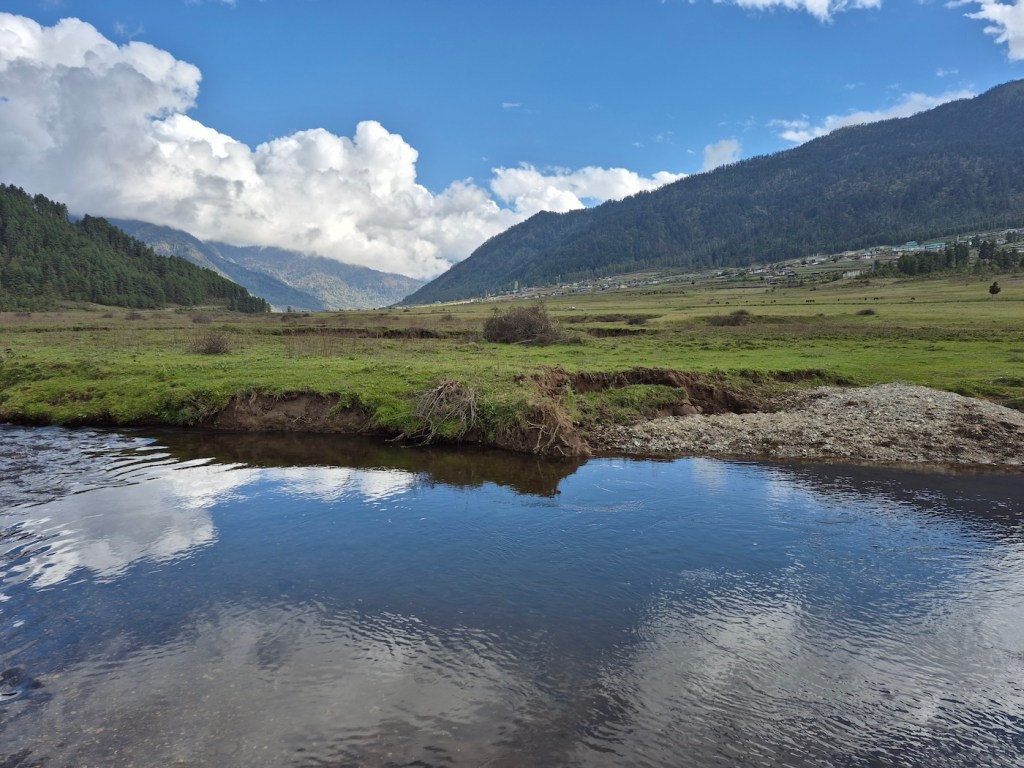
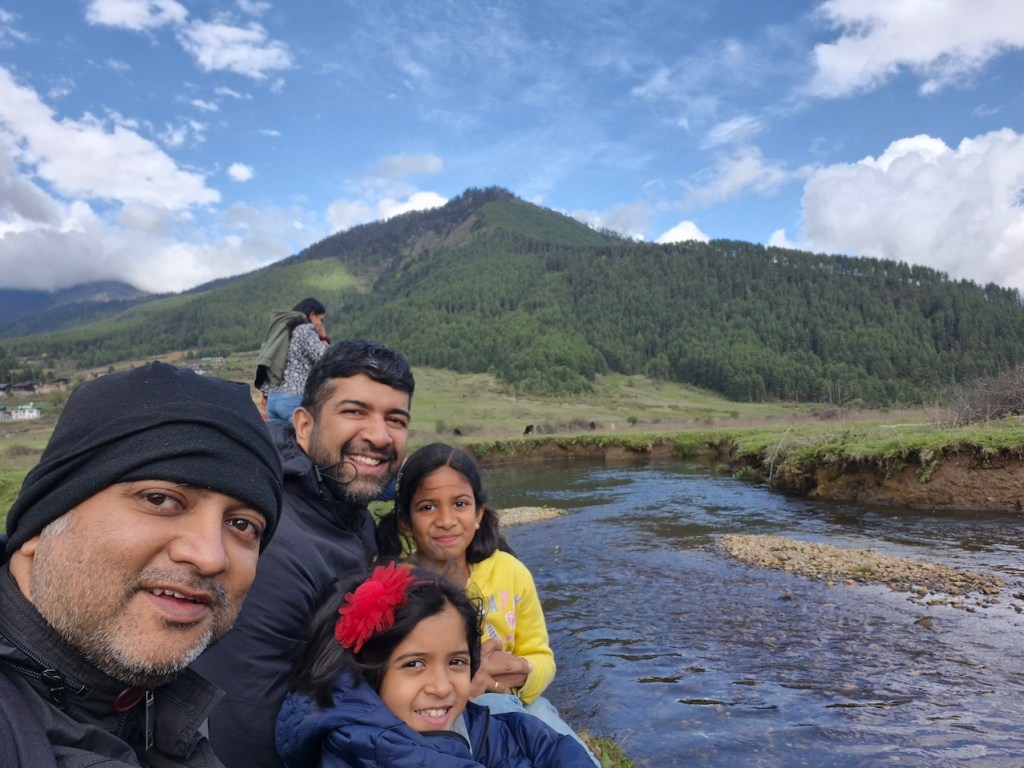
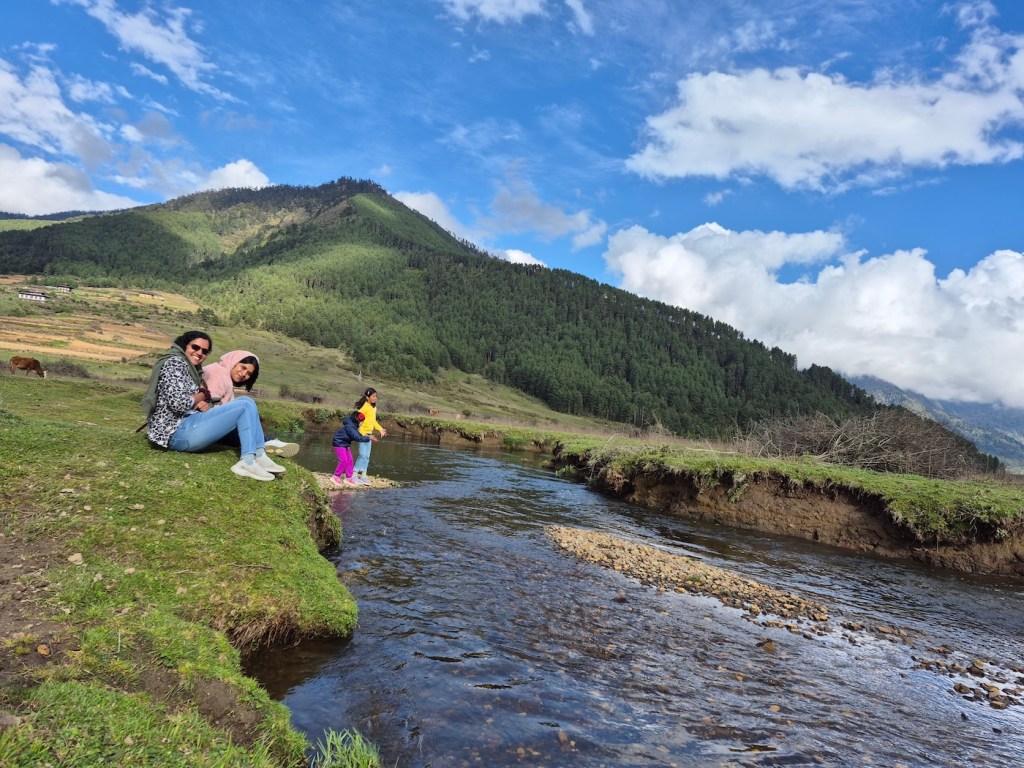
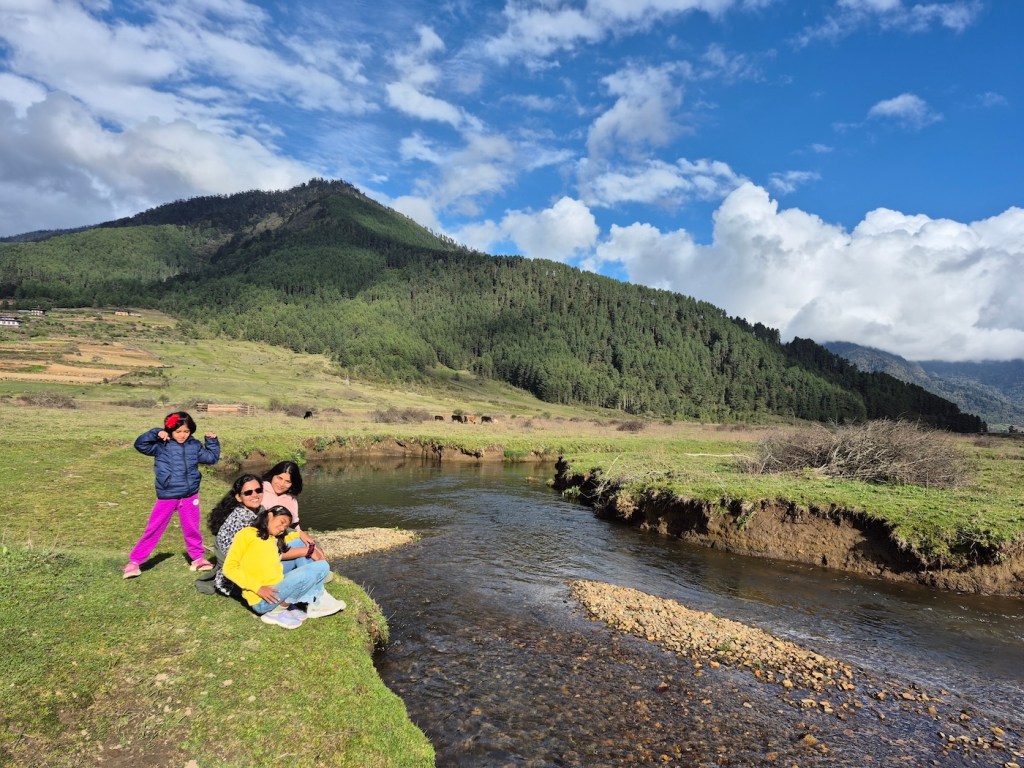
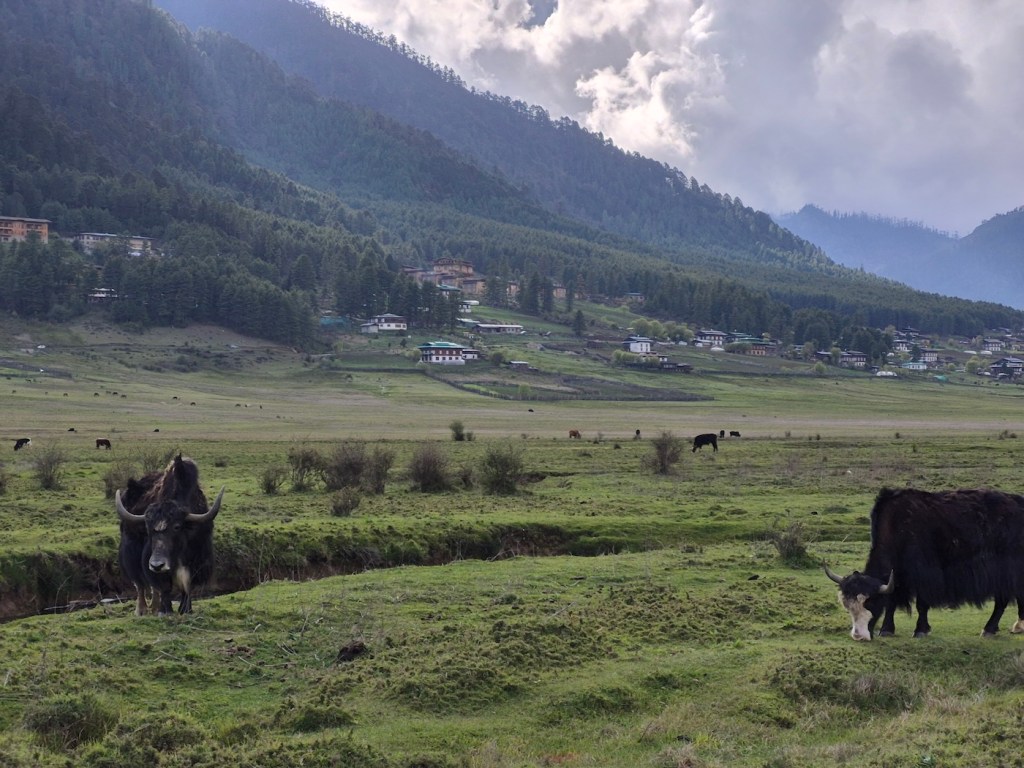
It was one of the most beautiful afternoons of the entire trip.
Travel itineraries often make places sound memorable because of a monument, a viewpoint or some activity that must be completed. Our strongest memory of Phobjikha was much simpler. It was the experience of being left in the middle of that vast valley, walking without a plan and having nowhere we needed to reach.
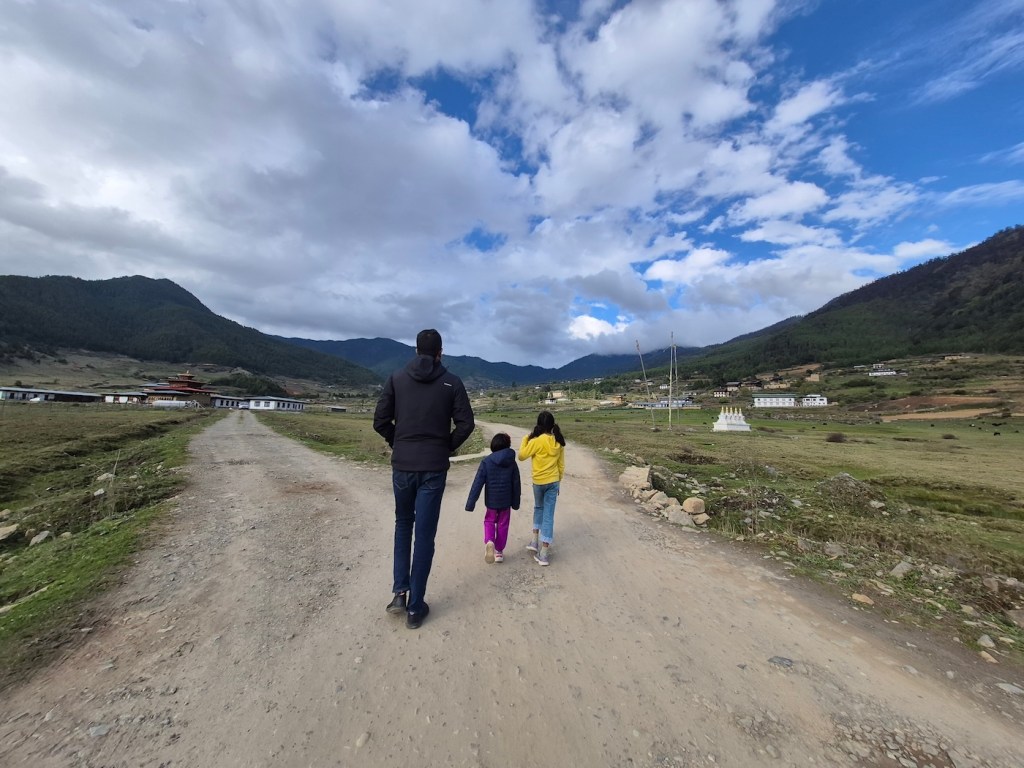
By evening, we returned to the hotel.
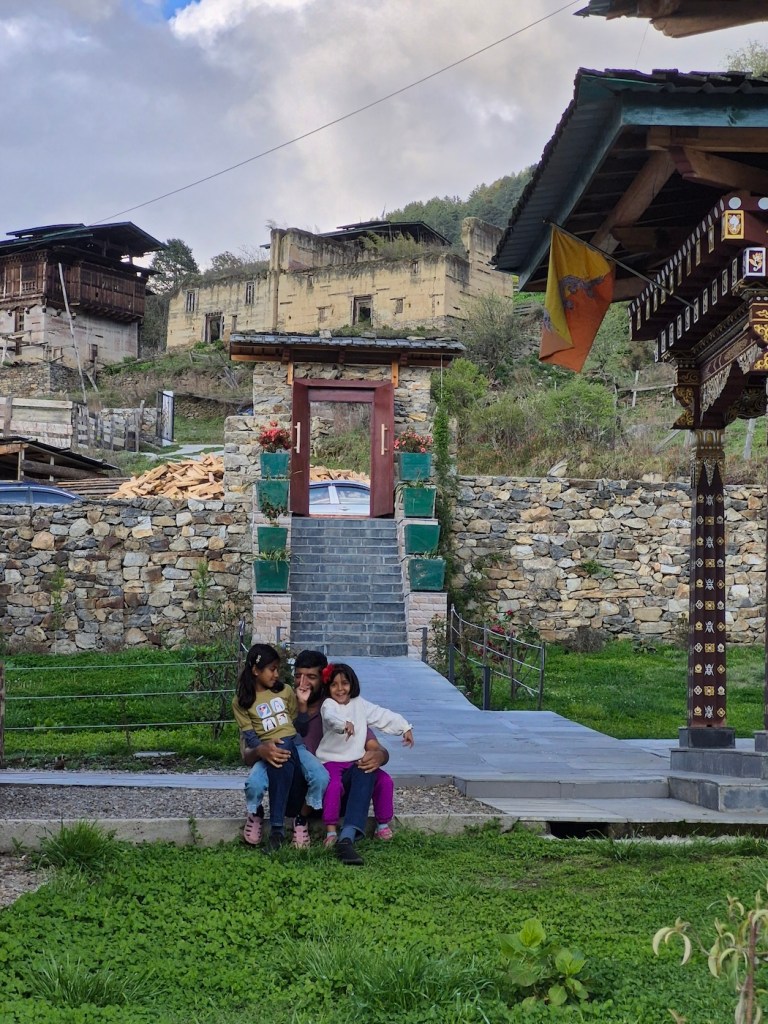
The following day was Arun’s birthday, so we had arranged a cake for him. That evening, the cake arrived and we had a small celebration at the hotel. Most of the other guests were foreigners, and when they realised what was happening, they joined us in singing “Happy Birthday” and wishing Arun.
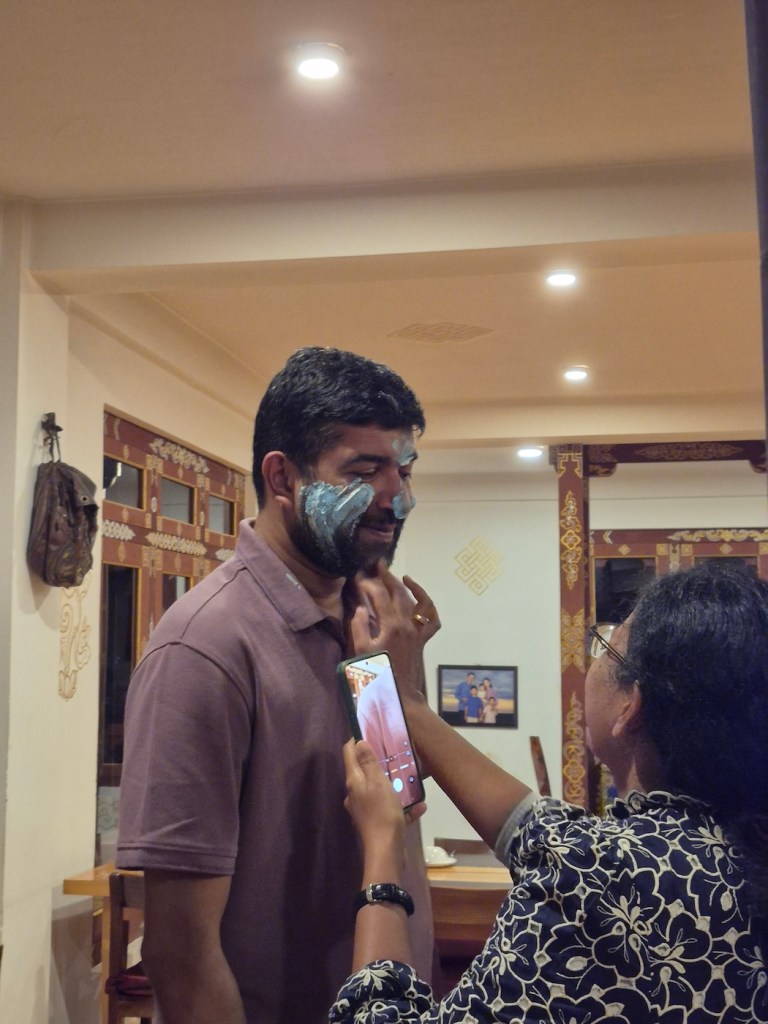
It was warm, spontaneous and a wonderful way to end our stay in Phobjikha.
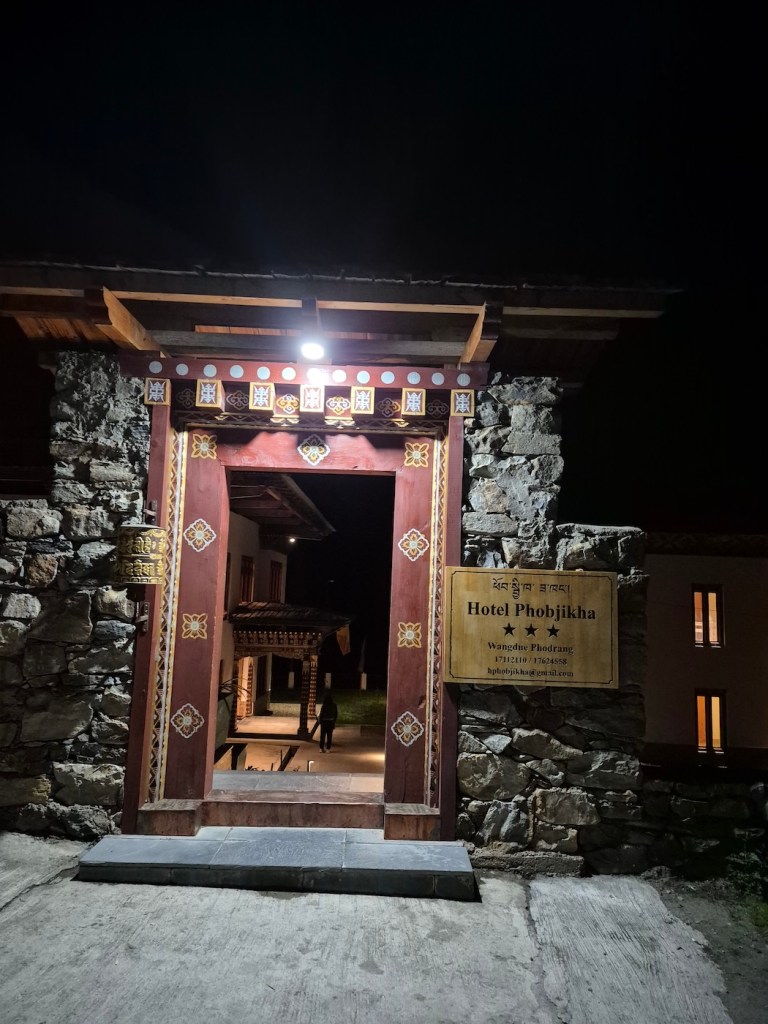
Where We Stayed: Hotel Phobjikha
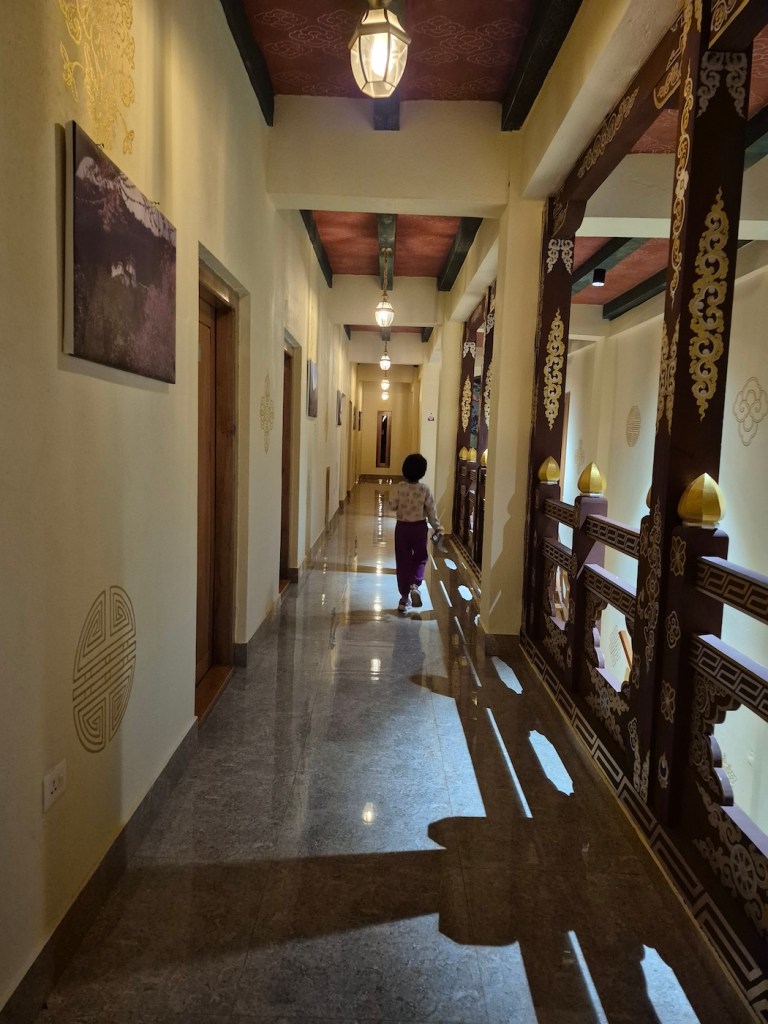
We stayed at Hotel Phobjikha, a beautiful, newly built property located right beside the valley. The hotel opens directly onto the vast grasslands, with horses and yaks grazing outside. The location was easily its biggest attraction—stepping out of the hotel and finding the entire Phobjikha Valley spread before us was a wonderful experience.
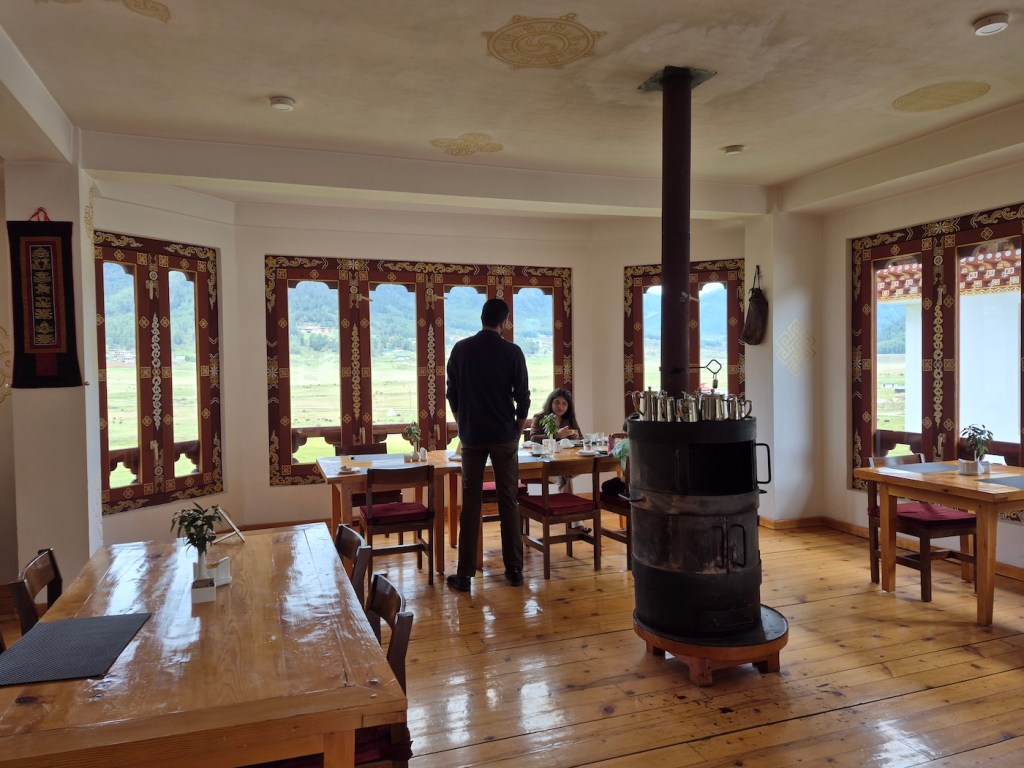
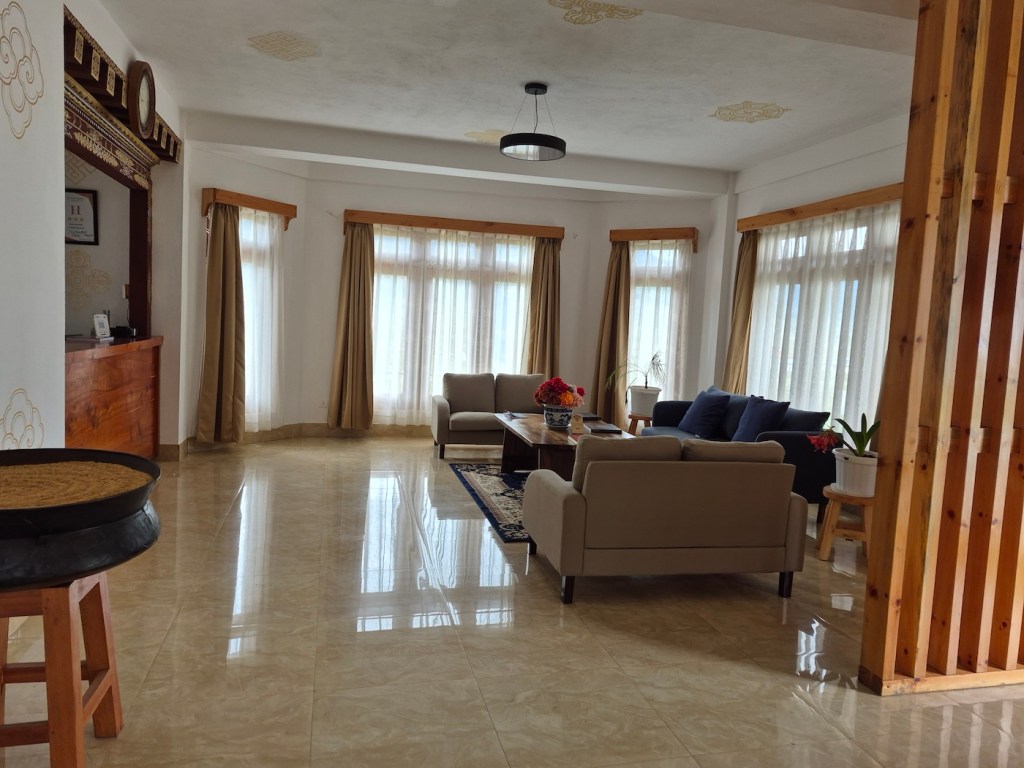
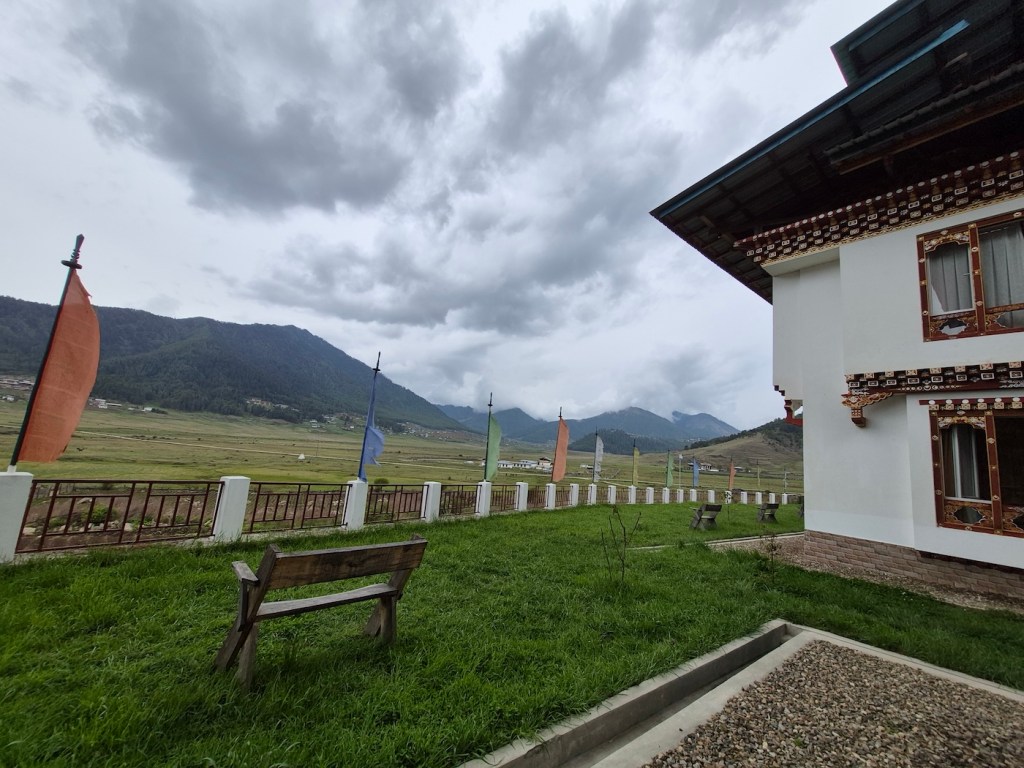
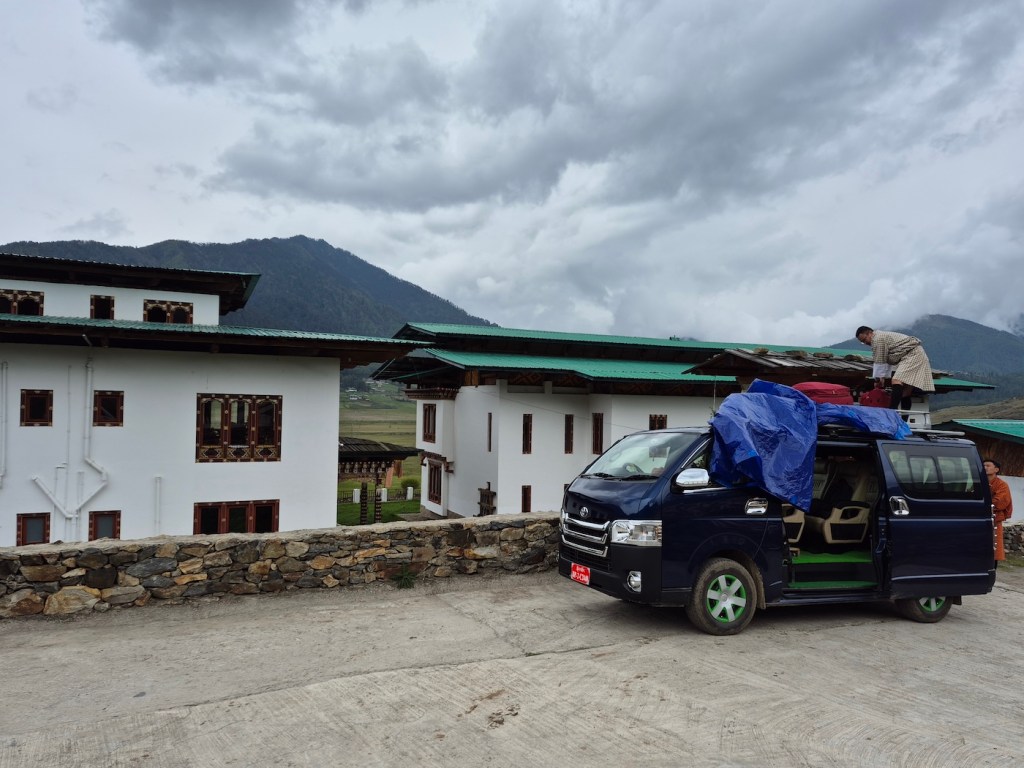
The rooms were comfortable, the property was well maintained, and overall, we had a very pleasant stay.
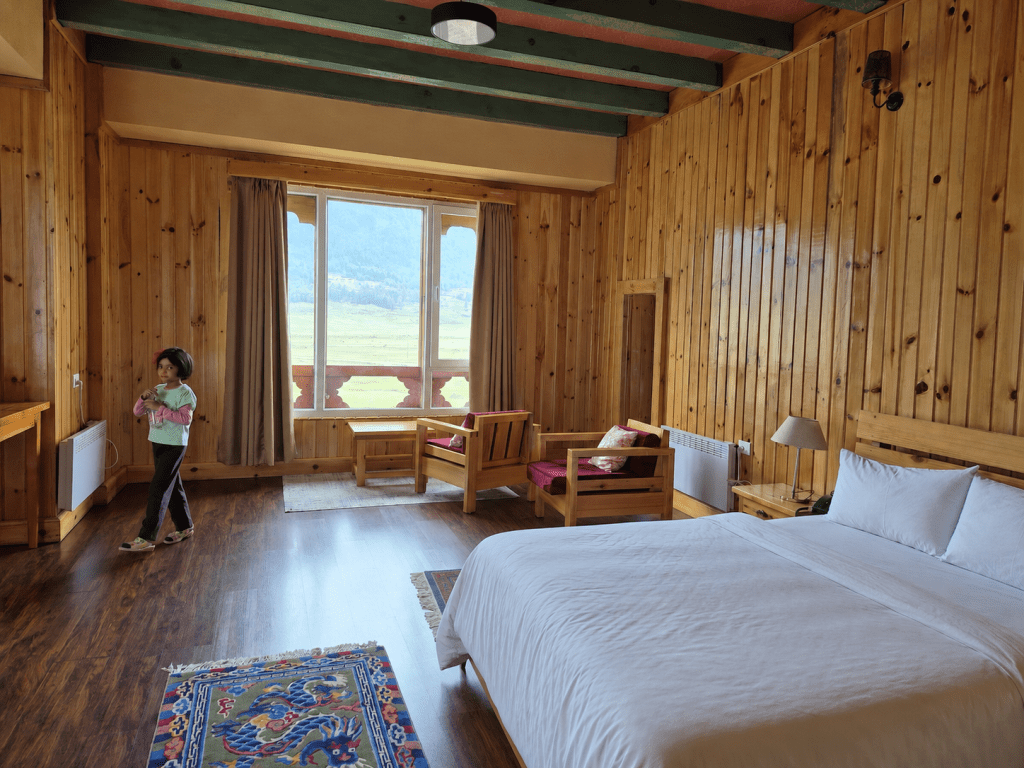
The food was also good, although the assortment was limited. On our first night, dinner was the best – consisted of one chicken preparation, a couple of vegetable dishes, rice and a few accompaniments. Breakfast and the subsequent dinners followed a similarly small spread, but was a bit disappointing as the food was not that great. Considering how remote Phobjikha is, the limited selection was understandable though and did not take away much from our experience.
Saying goodbye to Phobjikha
The next morning, it was time to check out and leave for Punakha. We had breakfast, said goodbye to the hotel and took one last look at the valley before beginning the drive back.
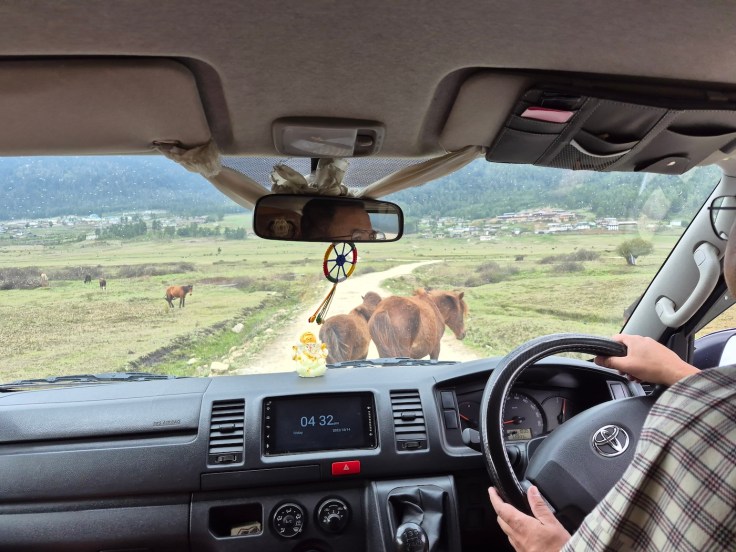
It rained for part of the journey. The distance from Phobjikha to Punakha was only around 85 kilometres, but once again the mountain roads meant that it took us close to three hours.
Phobjikha had been a detour from the more familiar Thimphu–Punakha–Paro route, but it was completely worth the extra travelling. It was not a place filled with famous attractions. Its beauty came from precisely the opposite—from how little there was to interrupt the valley itself.
By the time we reached Punakha, we had left behind the cold, open landscape of Phobjikha and descended into a warmer, greener valley. The next part of our Bhutan journey was about to begin.
Krish


Leave a Reply