Bhutan had always been one of those places I knew I would visit someday. But strangely, it had never been an aspirational destination for me. In my mind, it would probably be somewhat similar to Sikkim or the other Himalayan destinations in India. I had already been to Sikkim twice, and since Bhutan was a neighbouring country, I had always thought that that this place is going to be pretty much the same – never got the motivation to put in extra effort to plan for a Bhutan visit.
Why Bhutan?
Arun, a friend from my college days, and I had been thinking of taking a trip together with our families. Our daughters, Nandita and Meera, are close in age—Nandita is about a year and a half older—and they already knew each other. We thought they would give each other company, leaving the adults with some chance of enjoying the trip peacefully.
Our original plan was Georgia. We had worked out the itinerary and were getting ready to make the bookings when the situation in the Middle East suddenly became uncertain. IndiGo suspended its direct Delhi–Tbilisi flights, and it was not clear when they would resume. We did not want to plan an international holiday around that uncertainty, so we began looking for another destination.
That was when Bhutan came up.
Once I began researching seriously, the first surprise was the cost. Somewhere in my head, I had assumed that Bhutan would be a relatively inexpensive trip. It was not. At roughly the same cost, we could probably have completed a trip to Vietnam. But we had visited Malaysia the previous year and wanted to do something different, so Bhutan it was.
Planning the trip independently also turned out to be less straightforward than I had expected. Several hotels that looked good on TripAdvisor either did not have proper listings on Agoda, Booking.com or MakeMyTrip, or showed no availability for our dates. When I contacted some of them directly, they shared bank details. But Bhutan was not appearing as an option for an online international transfer through my bank. I would have had to visit a branch, fill out forms and then make the payment. It all began to look unnecessarily complicated.
Bhutan also requires Indian tourists to pay the Sustainable Development Fee, and a guide is needed for most sightseeing and travel beyond the border towns. It clearly was not going to be the kind of completely DIY holiday that I usually enjoy planning. So, for once, I decided to go through a travel agency.
I spoke to three or four operators, including a few based in Jaigaon, before coming across NatureWings in Kolkata. Their website mentioned tie-ups with several of the better-known hotels in Bhutan. More importantly, when I spoke to Girish Ghosh from their team, he seemed to know the country in and out. I am quite research-oriented myself, and from the way he answered my questions, I could tell that his suggestions were grounded in real on-the-road knowledge.
So we went ahead with NatureWings.
Overall, the trip was managed well. The only frustrating part was that I had to follow up repeatedly for hotel confirmations, booking details and even payment links. But once the journey began, the actual arrangements on the ground went smoothly.
Bangalore to Bagdogra, and then the long drive to the border
Our Bhutan trip began on 1 May. We took a morning flight from Bangalore and landed at Bagdogra at around 11:30 a.m. Once we had collected our luggage, we found the Innova arranged for us waiting outside the airport.
From Bagdogra, we drove towards Jaigaon, the Indian town on the Bhutan border. The journey took around four to five hours, including a halt for lunch. The road passed through the tea-growing landscape of North Bengal, but after the flight and the early start, the day was mostly about reaching the border before it became too late.
Jaigaon was crowded and congested. It had rained, the roads were muddy and full of potholes, and the traffic near the border was chaotic. Our Indian vehicle could not cross over, so we had to unload our bags and carry them through the immigration point ourselves.
Since it was already evening, no immigration formalities were completed that day. Our passports were checked, and we were allowed to cross into Phuentsholing. Our guide, Dechen—whom we soon began calling DD—met us on the Indian side and helped us cross the border.
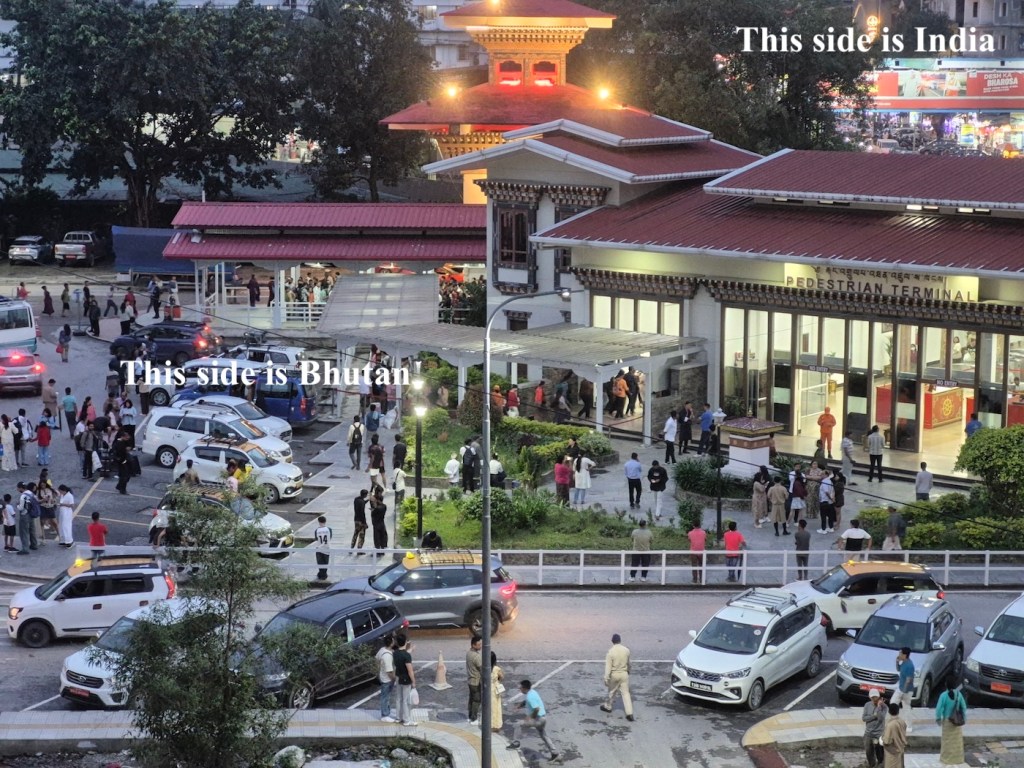
And that short walk from Jaigaon into Phuentsholing produced one of the strongest impressions of the entire journey.
The change was almost immediate. On one side, there were potholes, honking, traffic and crowded roads. A few steps later, everything looked clean, calm and orderly. The buildings had a consistent architectural style, the roads were well maintained, there were fewer people and cars, and everyone appeared to be driving slowly and following the rules. There was no honking. It almost felt as though we had walked into a small European town.
The contrast was incredible.
Our first stay was at Hotel Gamega, so close to the immigration point that it was visible from there. It was barely a minute’s walk. By the time we checked in, settled into our rooms and came downstairs, it was already time for dinner.
After eating at the hotel, we stepped out for a short walk around Phuentsholing. It is a small, well-planned town and made for a pleasant first evening in Bhutan. My wife later felt that the shopping prices here were better than anywhere else she checked during the rest of the trip. So, if shopping is part of the plan, Phuentsholing may be worth exploring before moving onward.
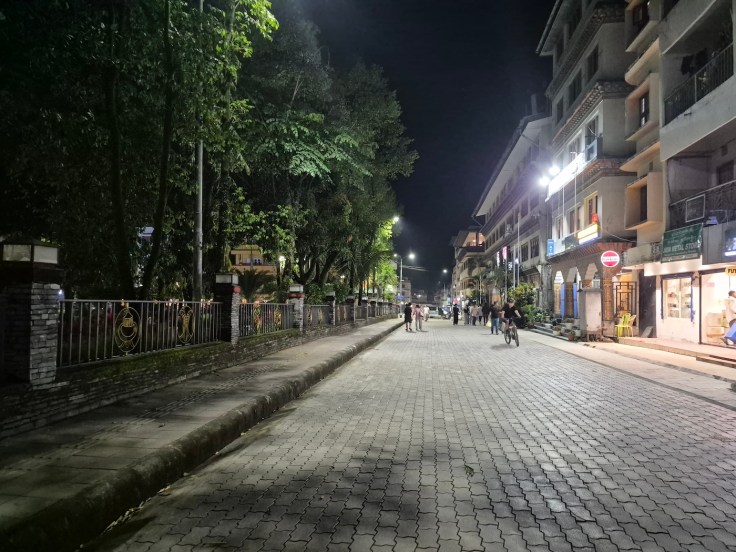
We also found a lovely little place called Kuzom Bakery. The cakes and other baked items were very good, and we packed some cookies and cakes to carry with us for the long drives ahead. Then we returned to the hotel and called it a day.
The road from Phuentsholing to Thimphu
The next morning, DD collected our passports and completed the immigration formalities for us. The process was surprisingly quick—perhaps 40 to 45 minutes—and soon we were on our way to Thimphu.
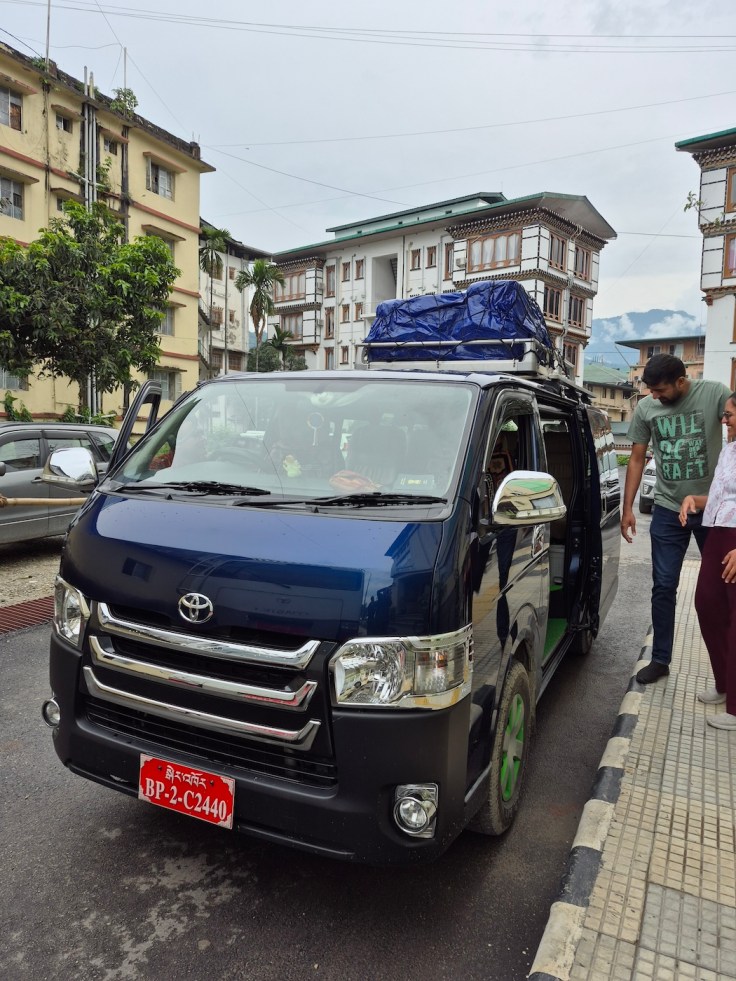
This was where the Bhutan journey truly began.
The road started climbing almost immediately, leaving the border town behind and winding into the mountains. Our first stop was at Sangye Migyur Ling, a monastery near Kharbandi. By the time we reached it, the entire area had been swallowed by fog. The mist made the monastery feel quiet and slightly mysterious.
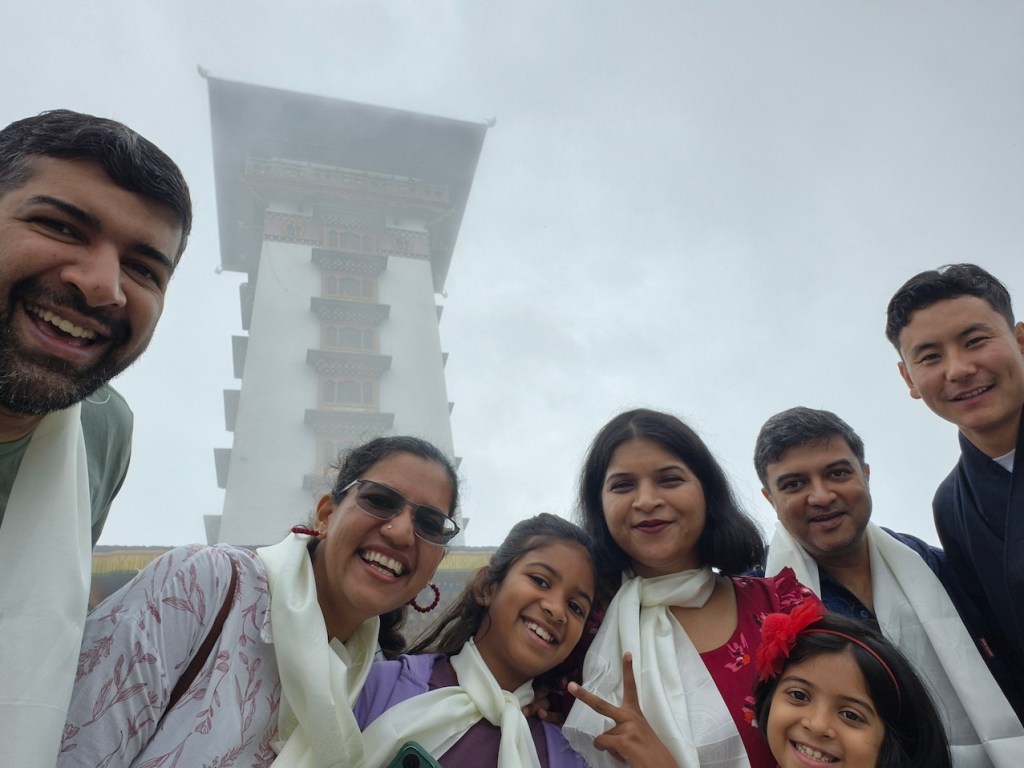
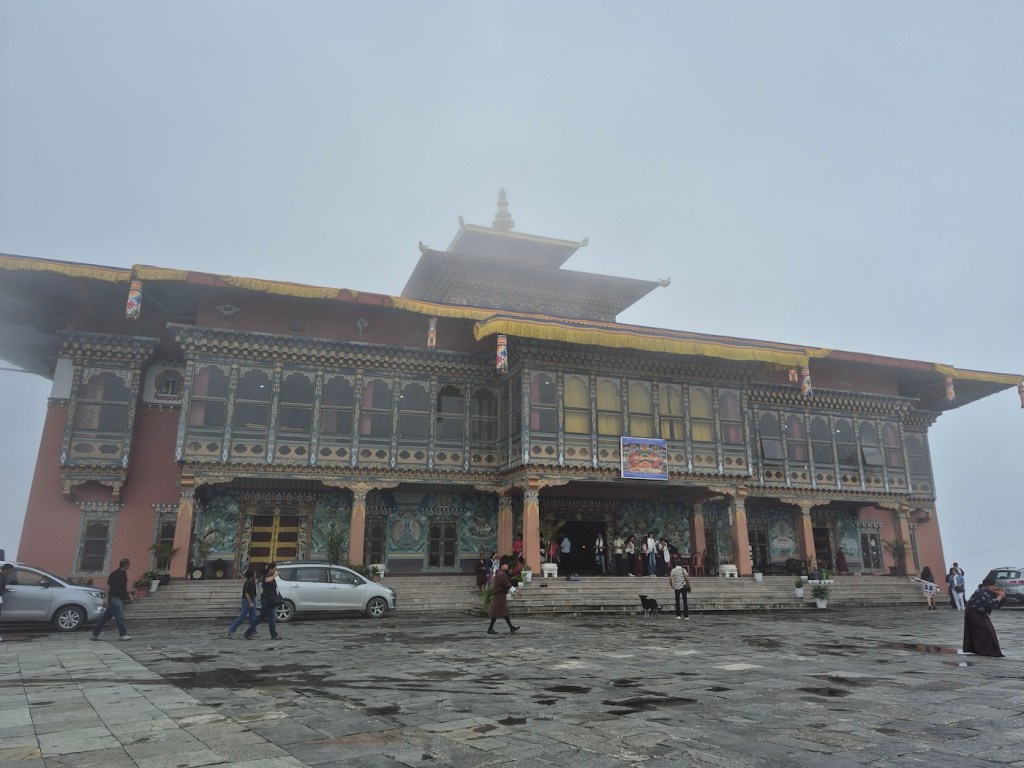
Photography is not allowed inside Bhutanese monasteries, so the most beautiful parts of them have to remain in memory. DD kept telling al through the way,”Take a screenshot in your memory.”
The walls were covered in intricate paintings, the architecture was rich with colour and detail, and Buddhist chanting played softly inside. Standing there, listening to it while fog surrounded the monastery outside, was a wonderful introduction to Bhutan.
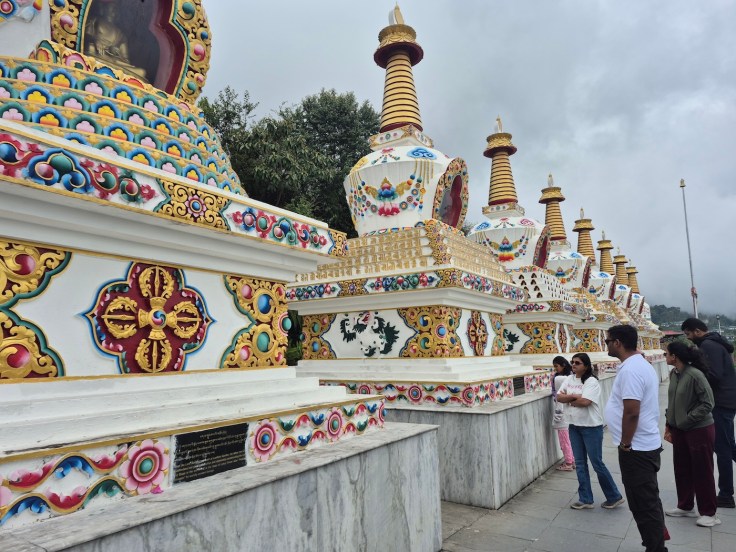
We continued through the hills, stopping again at the stupas near Chuzom, where the roads towards Thimphu, Paro, Haa and Chukha branch out. After lunch, we finally reached Thimphu.
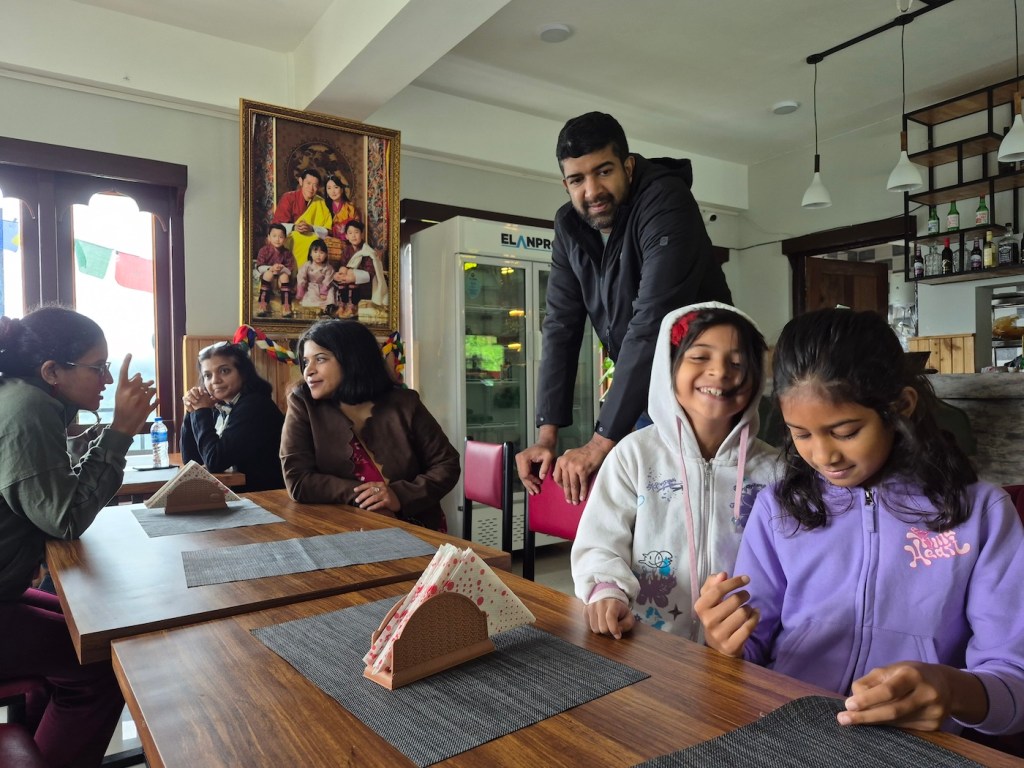
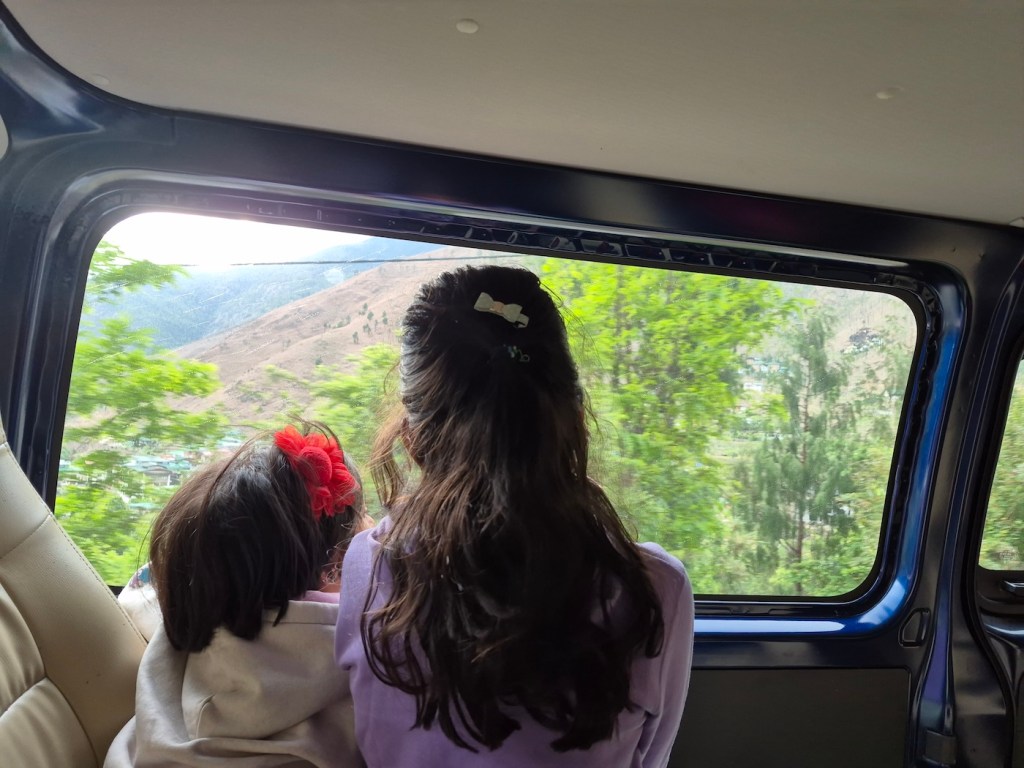
Our hotel there was the Lemon Tree Resort. On a map, it appears to be only six or seven kilometres from the city, but in the hills that distance feels much longer. The road passes through forested slopes, and the resort is quite isolated.
The property itself was nice, and the scenery around it was very beautiful. The food was also good, especially for travellers who prefer familiar Indian meals—paneer, chicken, roti and similar dishes were readily available. Unsurprisingly, almost everyone we saw staying there was Indian.
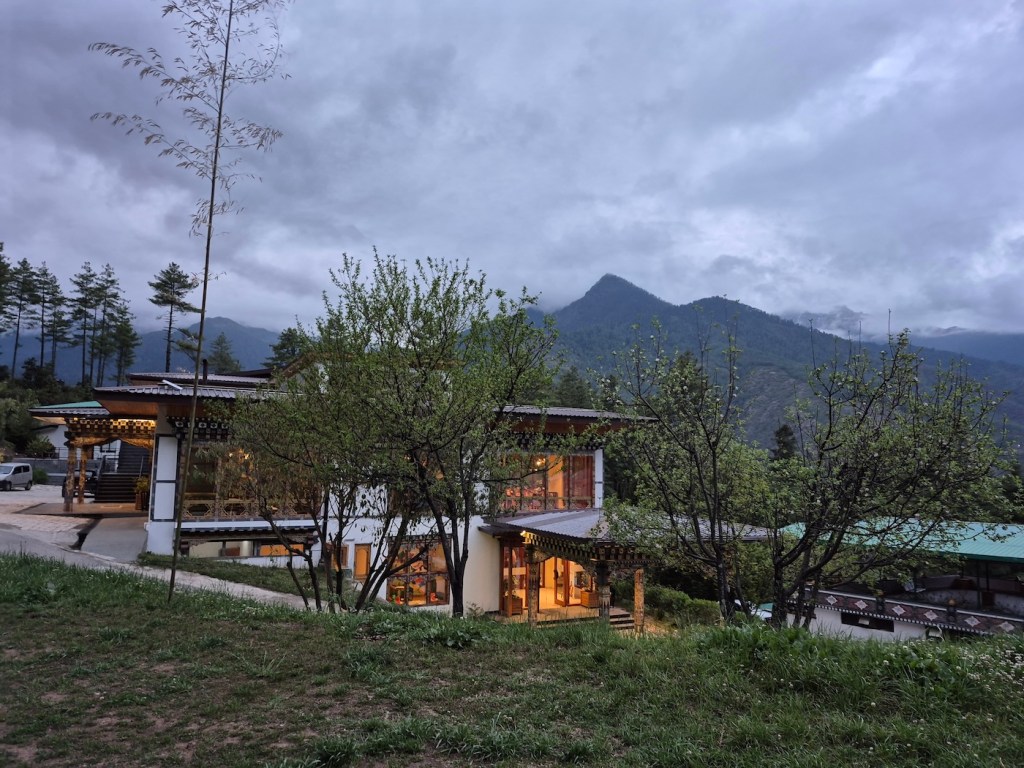
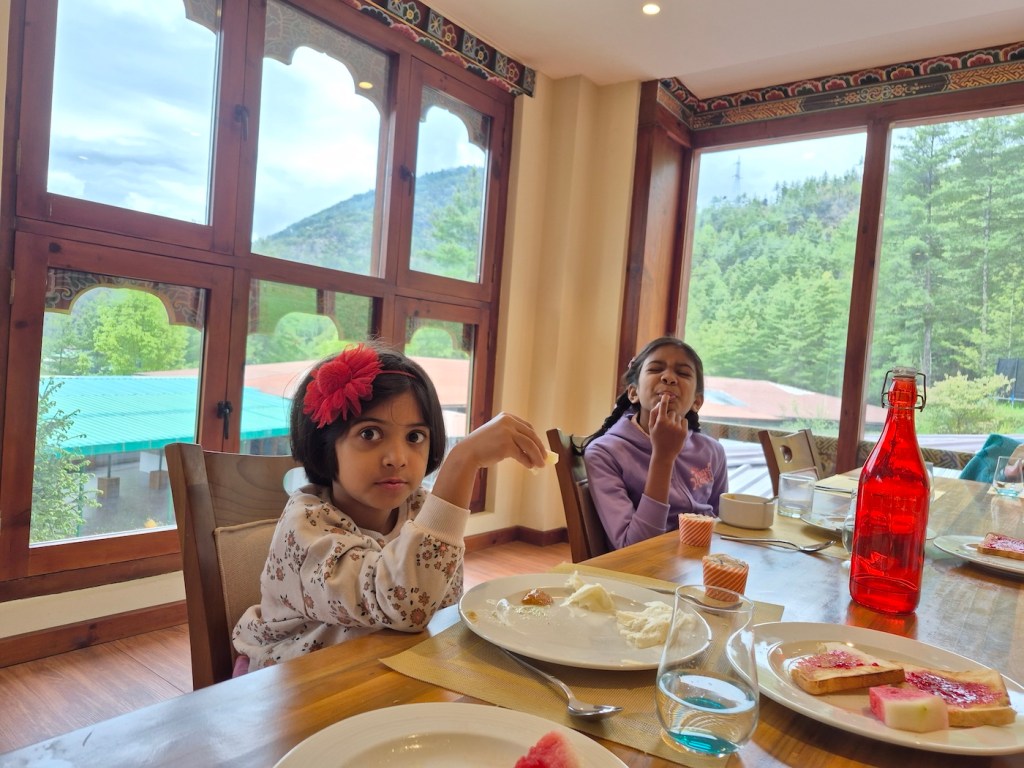
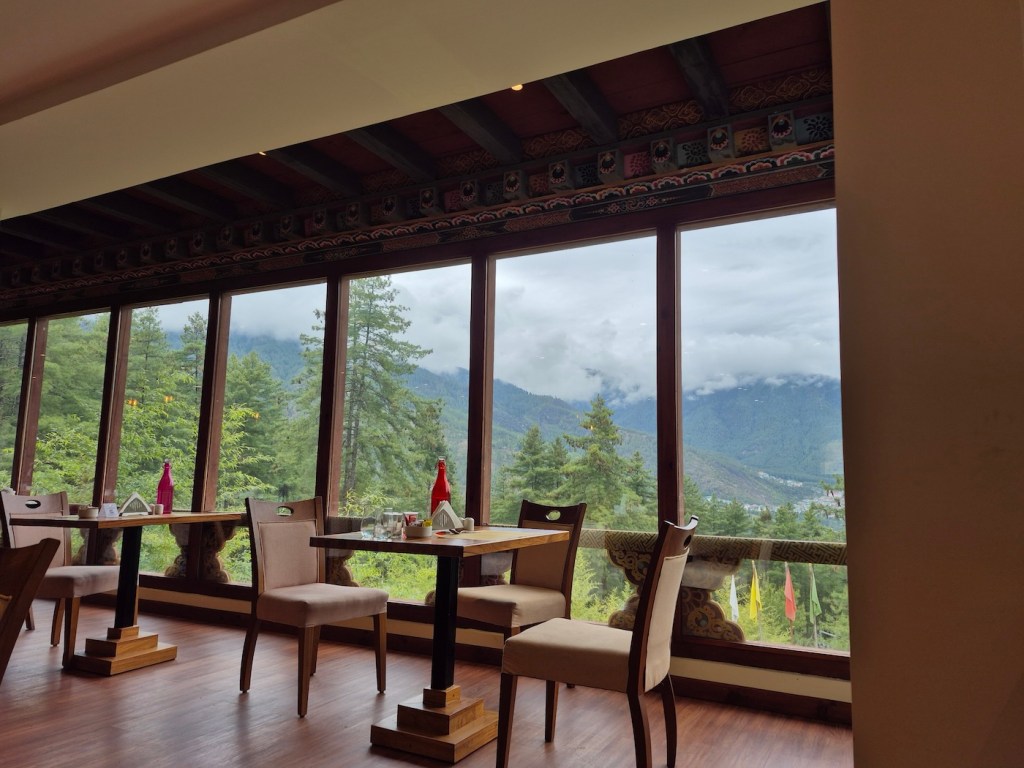
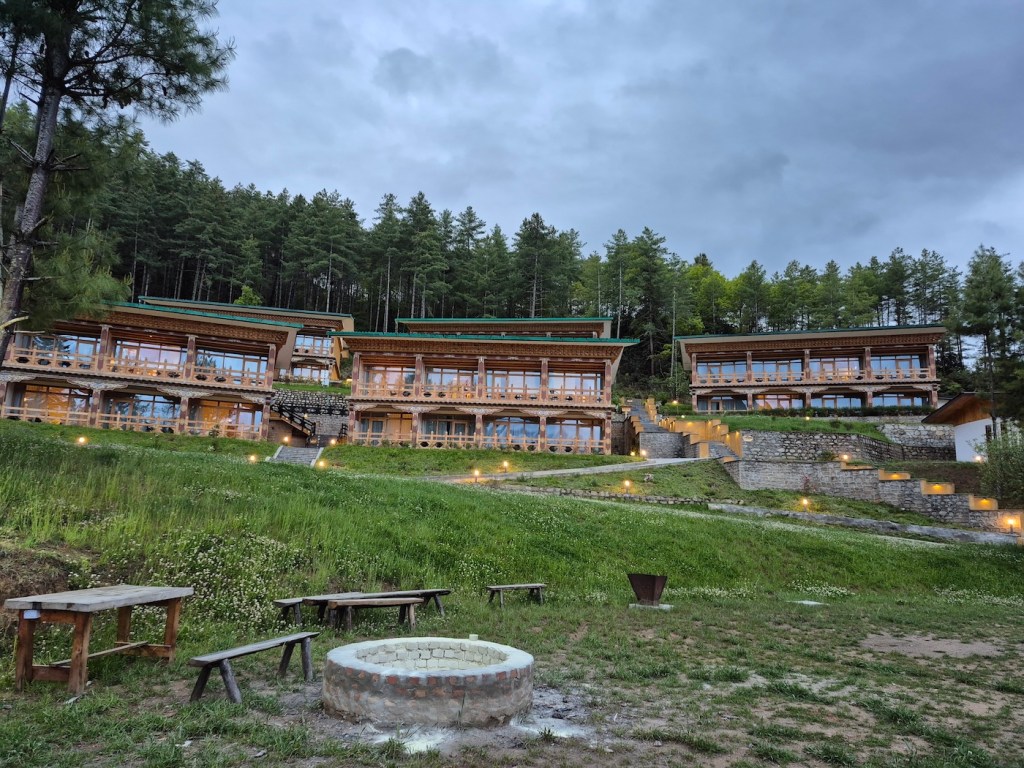
TIP FOR TRAVELLERS: Still, if I were planning the trip again, I would not book Lemon Tree Resort.
I would stay inside Thimphu city. Thimphu and Paro are among the few places in Bhutan where one can walk out of the hotel, try different cafés and restaurants, browse the shops and get a feel for everyday life. In places such as Phobjikha and Punakha, one is surrounded by nature anyway. It therefore makes sense to use the stay in Thimphu to experience the city rather than remain inside an isolated resort.
Our first full day in Thimphu
Travelling with two children meant that our mornings could never be rushed. We would wake up early, get everyone ready, have breakfast and usually manage to leave by around 10 a.m. That became our routine through most of Bhutan.
- SIMPLY BHUTAN
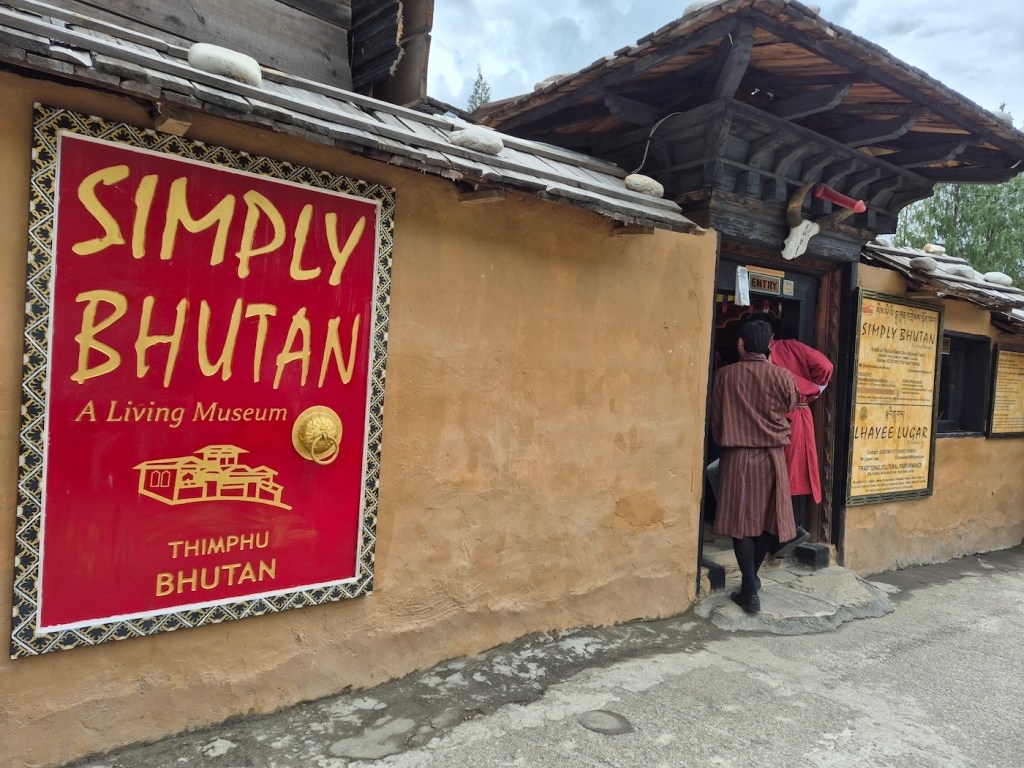
Our first stop in Thimphu was Simply Bhutan, described as a living museum. It is designed to introduce visitors to Bhutanese culture and traditions, and it turned out to be far more interactive than an ordinary museum.
We began in a room displaying photographs of Bhutan’s former kings and accounts of their achievements. From there, we moved through exhibits of traditional masks, old building styles and local customs. At one point, performers used song and dance to recreate a harvest celebration. We were also offered Bhutanese butter tea, which is traditionally eaten with puffed rice. I cannot say I enjoyed the tea very much, but it was certainly interesting to try.
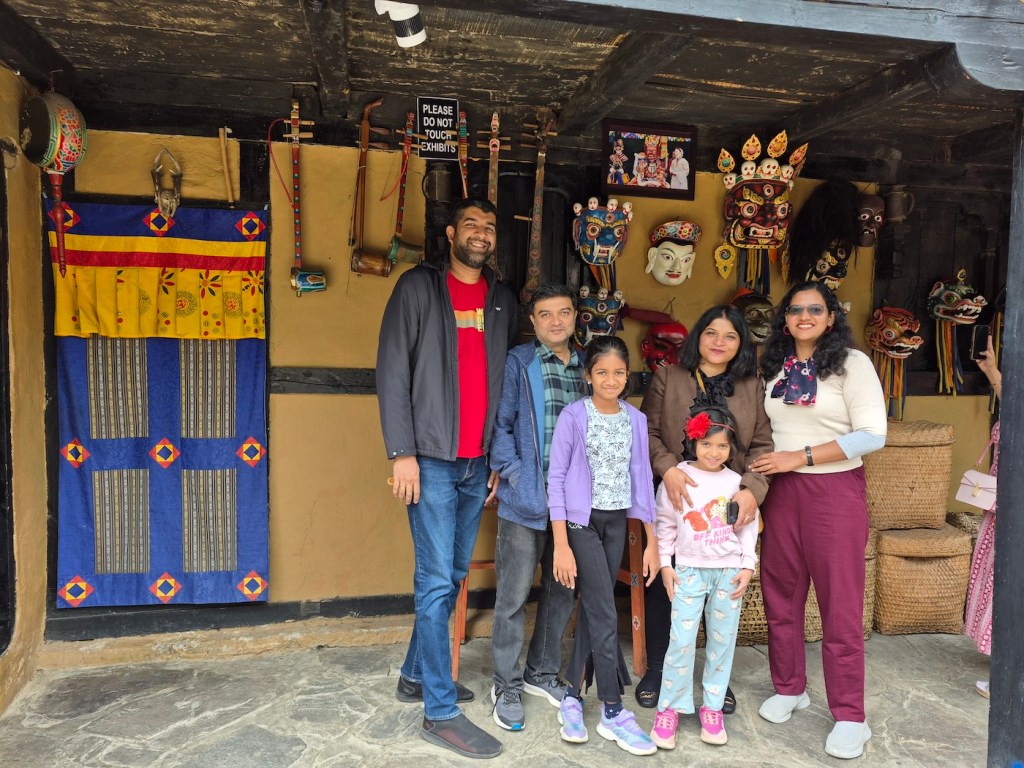
There was more traditional dancing, and Moumita joined the performers for a while. Then came archery. The children tried it, and so did we. Archery is Bhutan’s national sport, and over the following days we frequently saw groups gathered in open fields or beside roads, aiming at distant targets. At other places, people were playing darts. These were not activities arranged for tourists; they seemed to be a normal part of local social life.
2. TAKIN CONSERVATION CENTER
From Simply Bhutan, we went to the Takin Preservation Centre. The takin, Bhutan’s national animal, is one of the strangest-looking creatures I have seen. Its face looks somewhat like that of a goat, while its large body resembles a cow. There is also a wonderful local legend about how the animal was created by Drukpa Kunley, the monk better known as the Divine Madman.
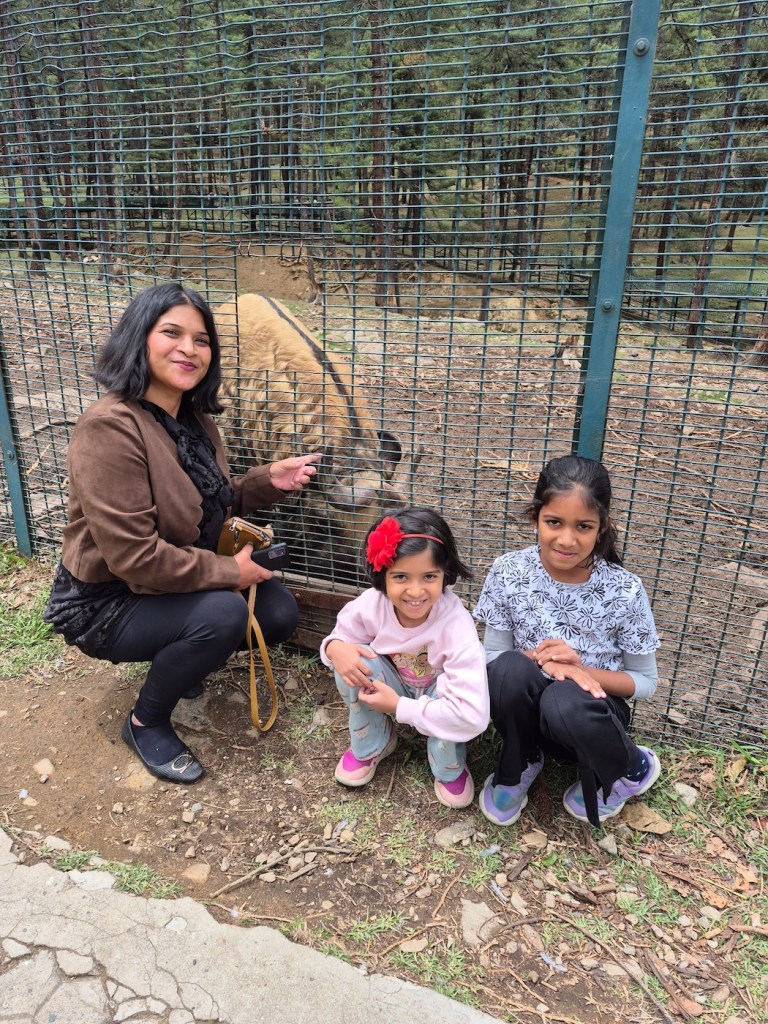
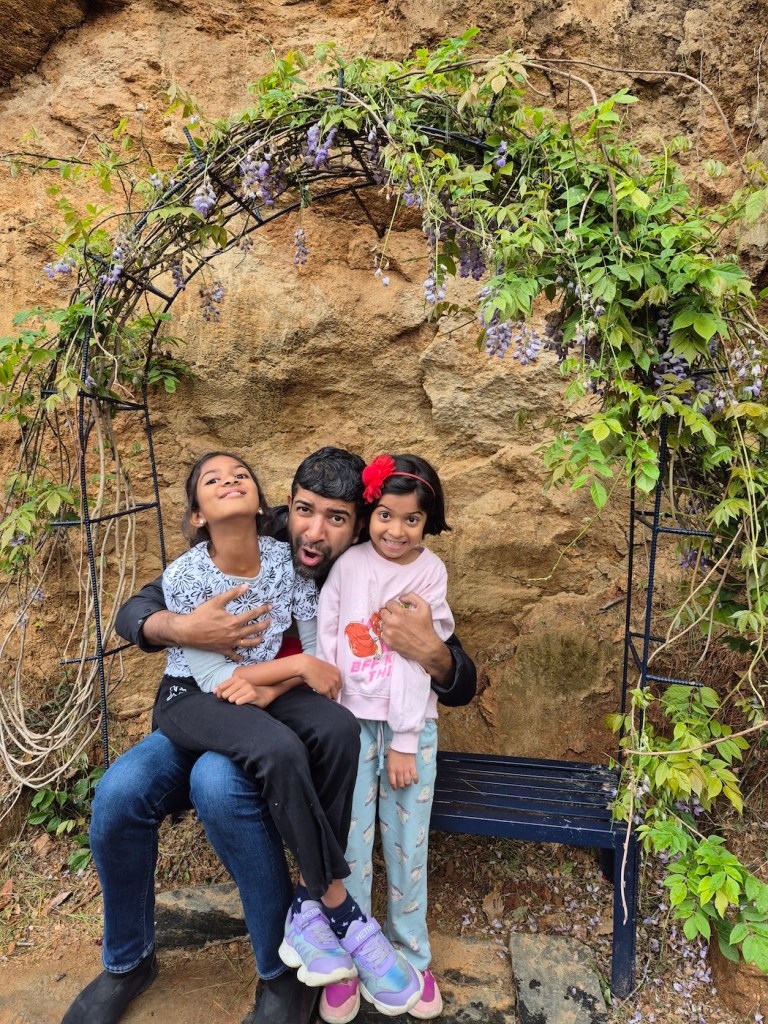
The centre itself is set in a beautiful wooded area and is pleasant to walk around. Apart from the takins, we saw deer and birds. There is a fair bit of walking, particularly towards the upper part, but there is a small café there where we stopped for momos before coming down.
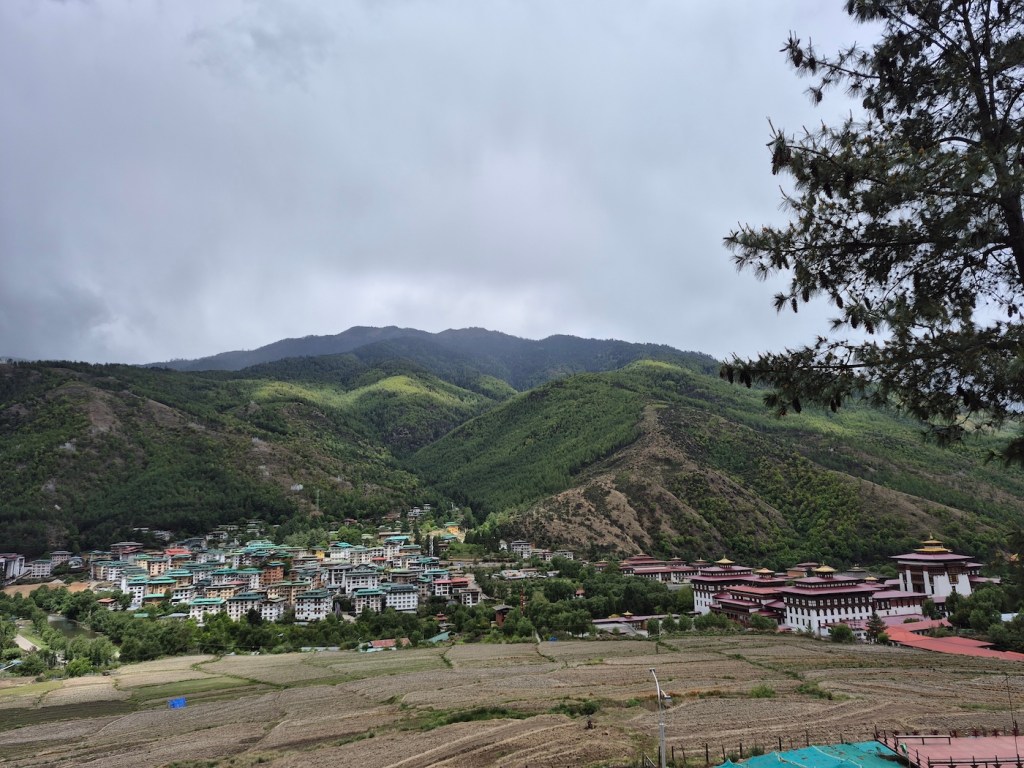
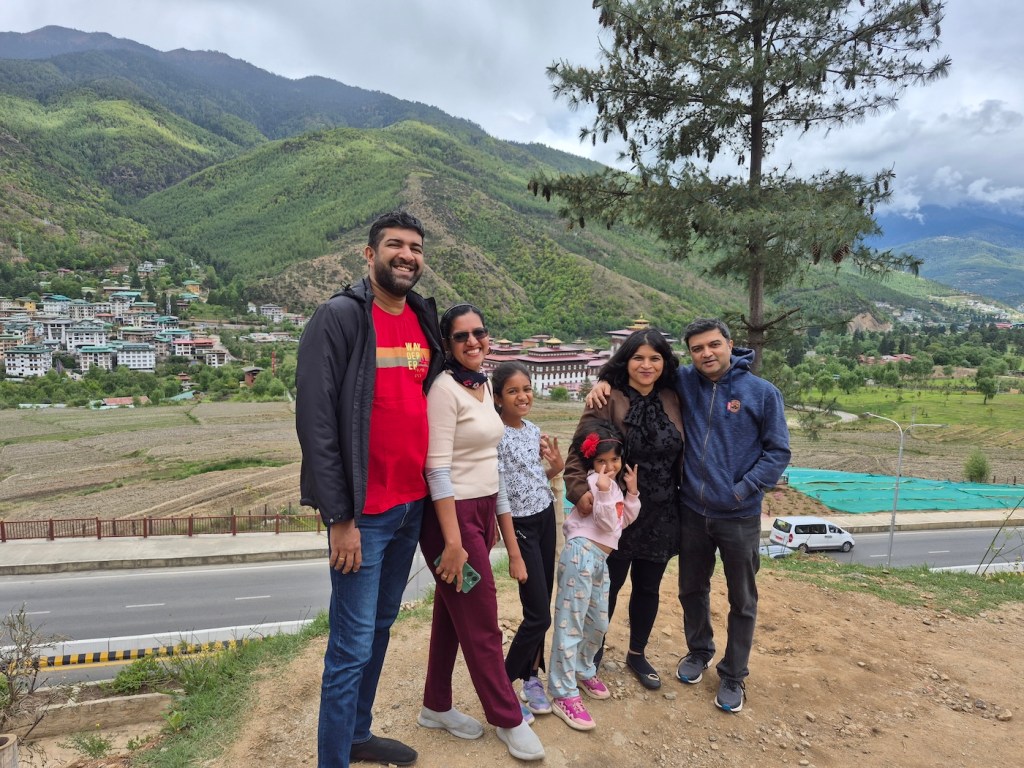
We then drove around Thimphu and stopped at a viewpoint overlooking parts of the city. From there, DD pointed out the Dzong, the High Court and some of the other prominent buildings below.
3. LUNCH – BHUTANESE FOOD
By then, we were ready for lunch. We had specifically asked DD to take us somewhere we could eat authentic Bhutanese food, and he found us a small, cosy restaurant serving a fixed local menu. The meal was built largely around rice, accompanied by vegetables, datshi preparations, pork and several other dishes. Butter tea made another appearance. Of everything on the table, the pork was easily my favourite.
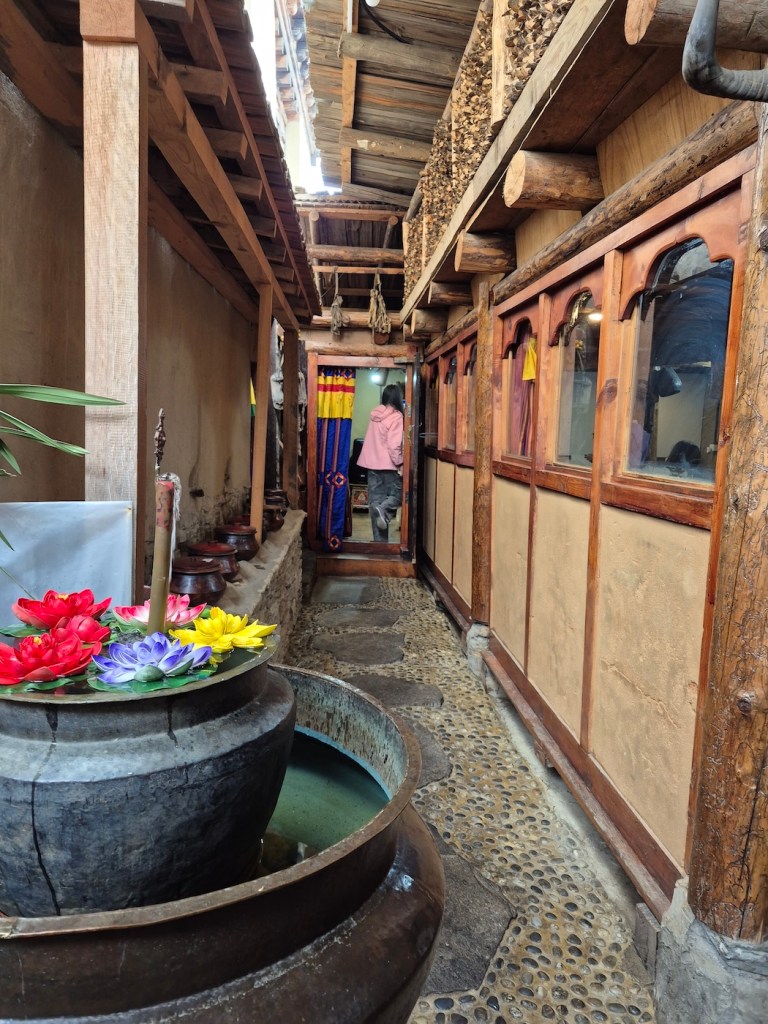
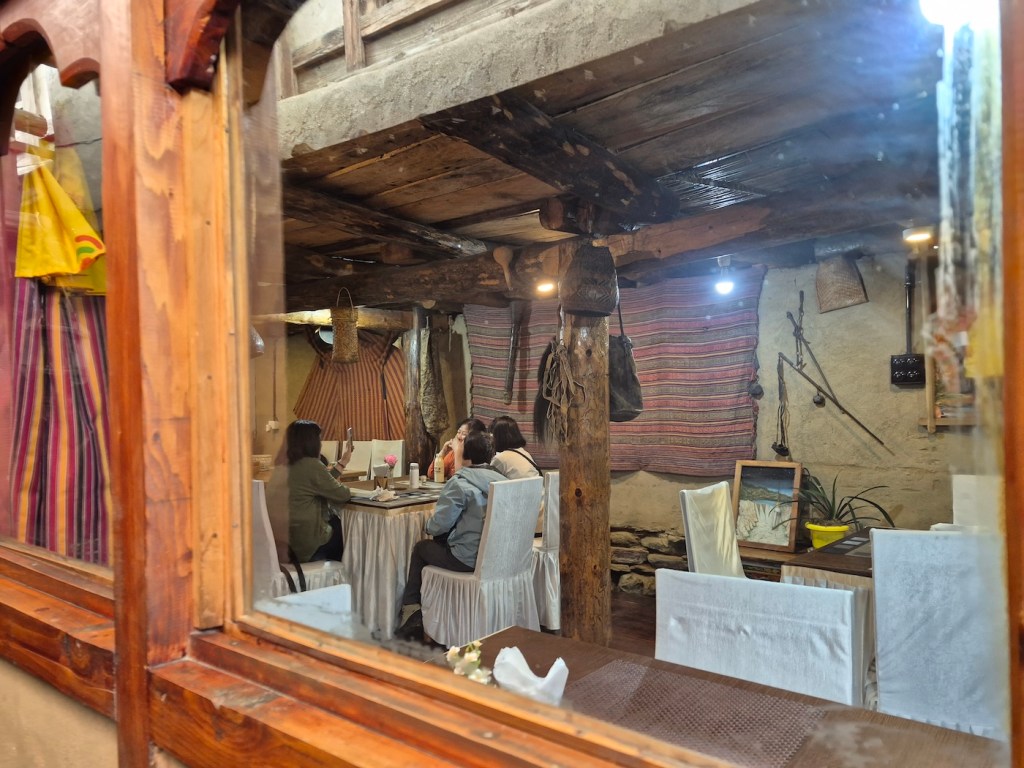
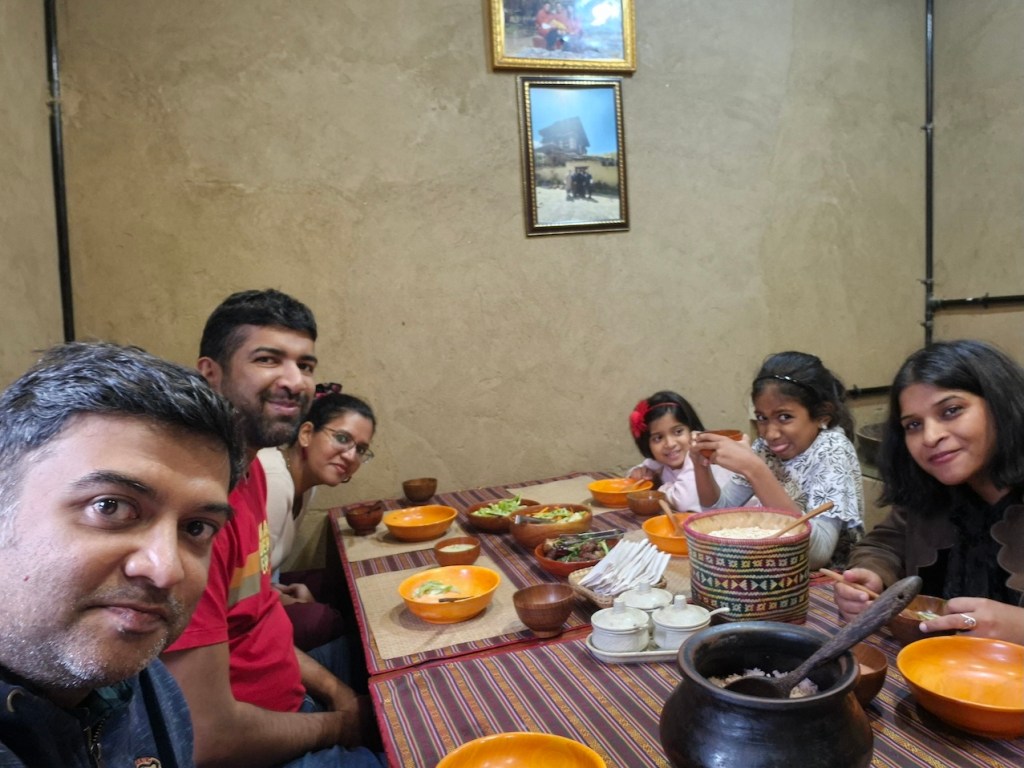
4. Buddha Dordenma: The Buddha that looked very different in Person
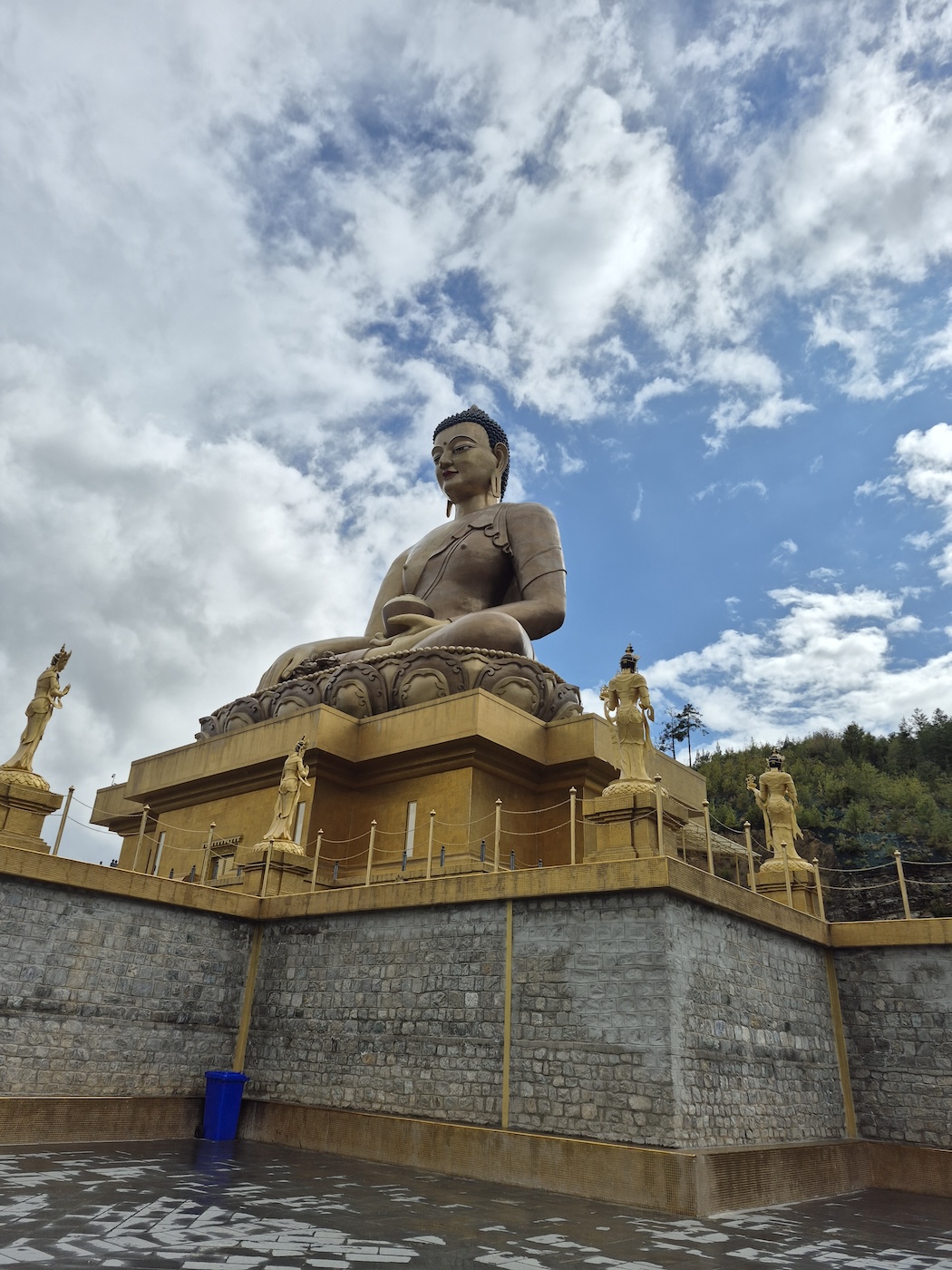
After lunch, we went to the giant Buddha statue at Kuensel Phodrang.
I had seen photographs of it before the trip and, honestly, had not found it particularly exciting. It had looked like just another large statue. But photographs do not convey its scale at all. Standing in front of it is an entirely different experience. The Buddha is enormous, seated high above Thimphu, with the valley spreading out below.
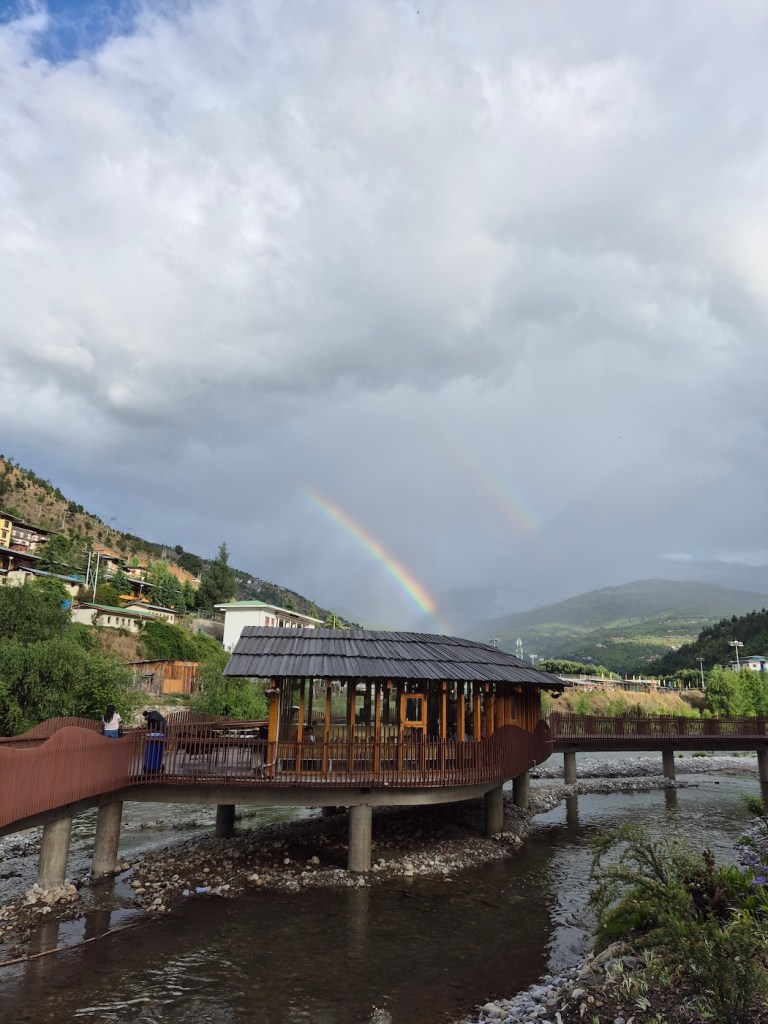
It had rained shortly before we arrived. Then, just as the sky began to clear and the sunlight returned, two rainbows appeared—one above the other. Both were sharp and complete, with every colour distinctly visible. I do not think I had ever seen a rainbow so clear before, let alone two together. That moment transformed a place I had not expected much from into one of the most memorable stops in Thimphu.
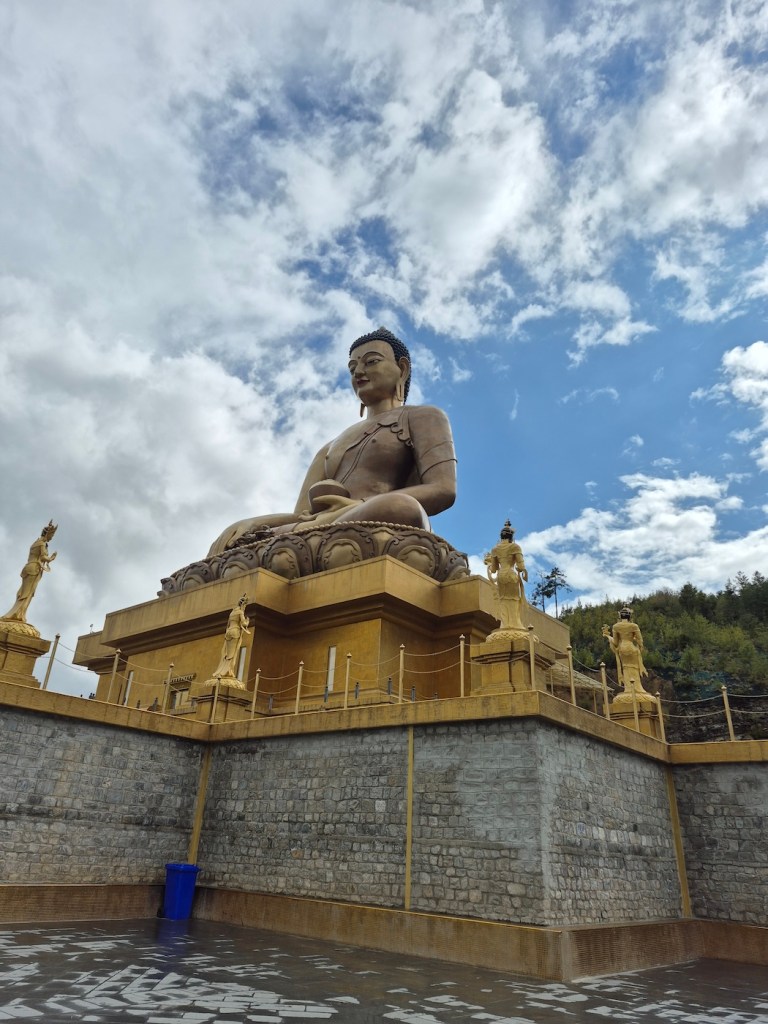
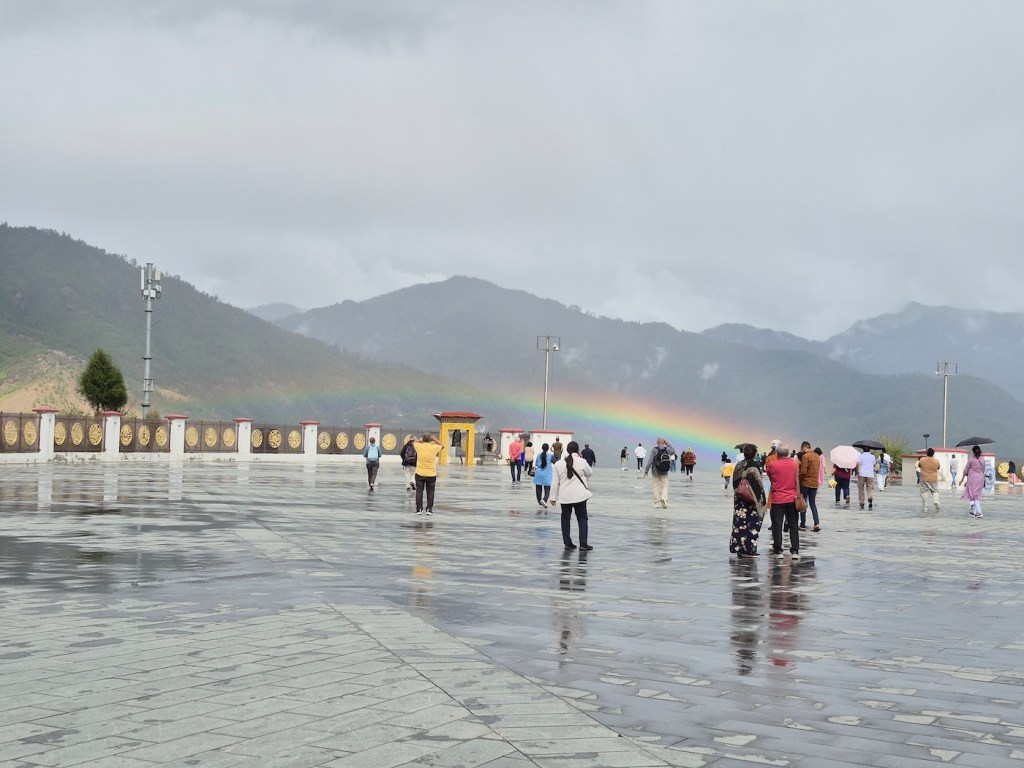
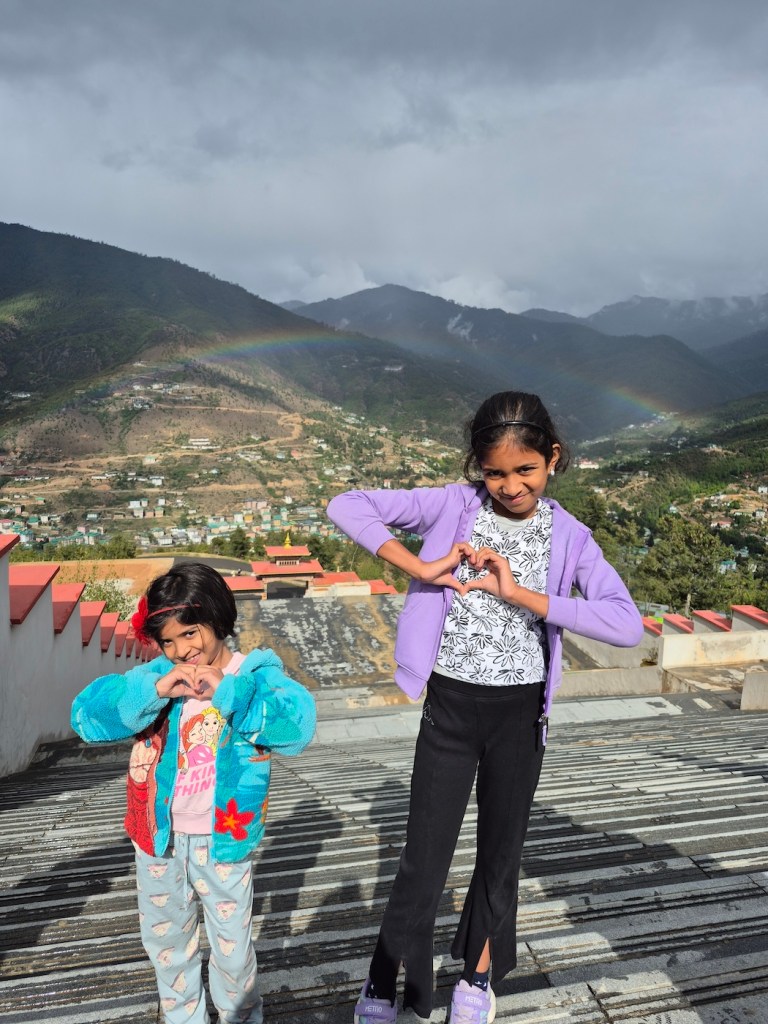
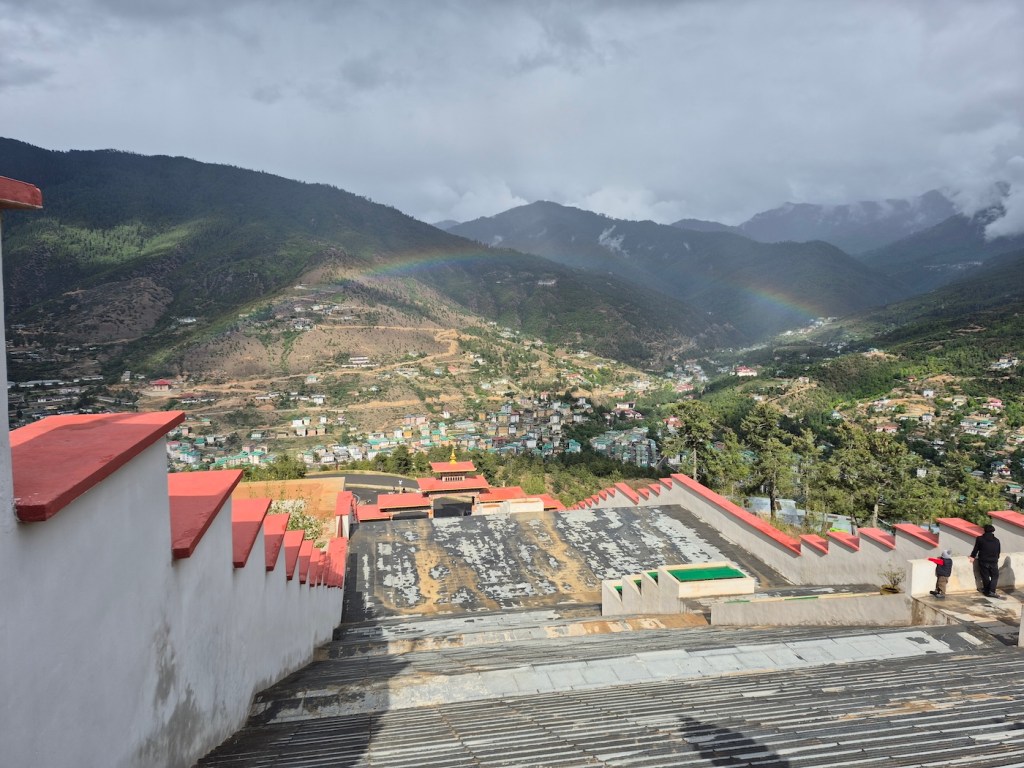
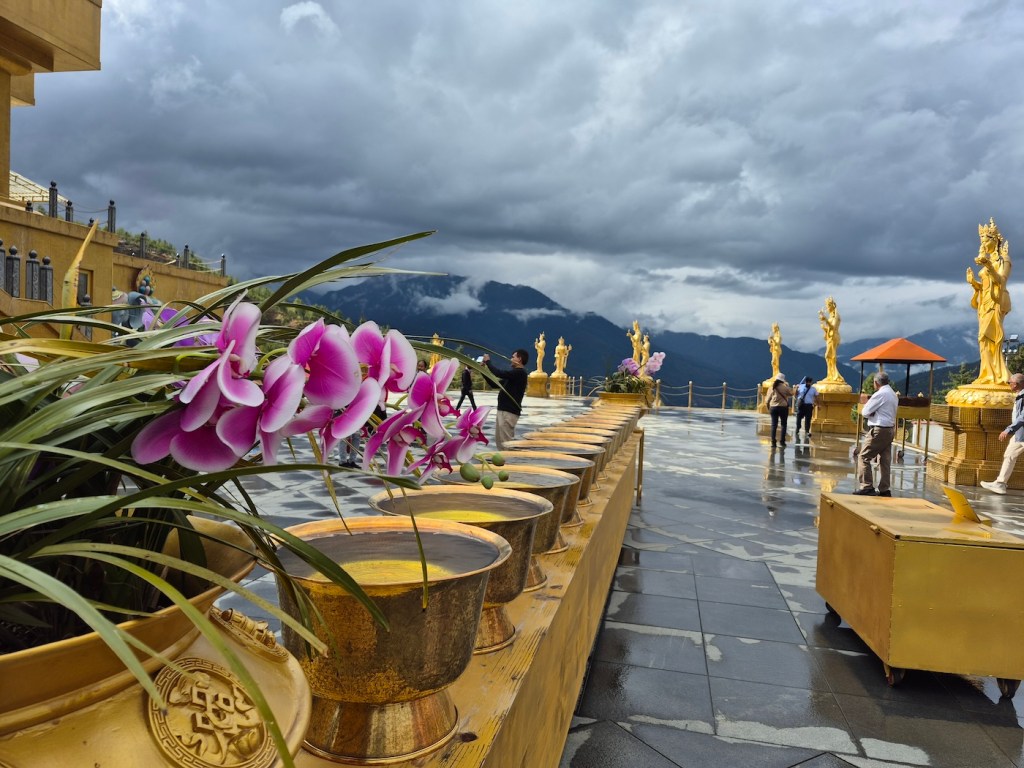
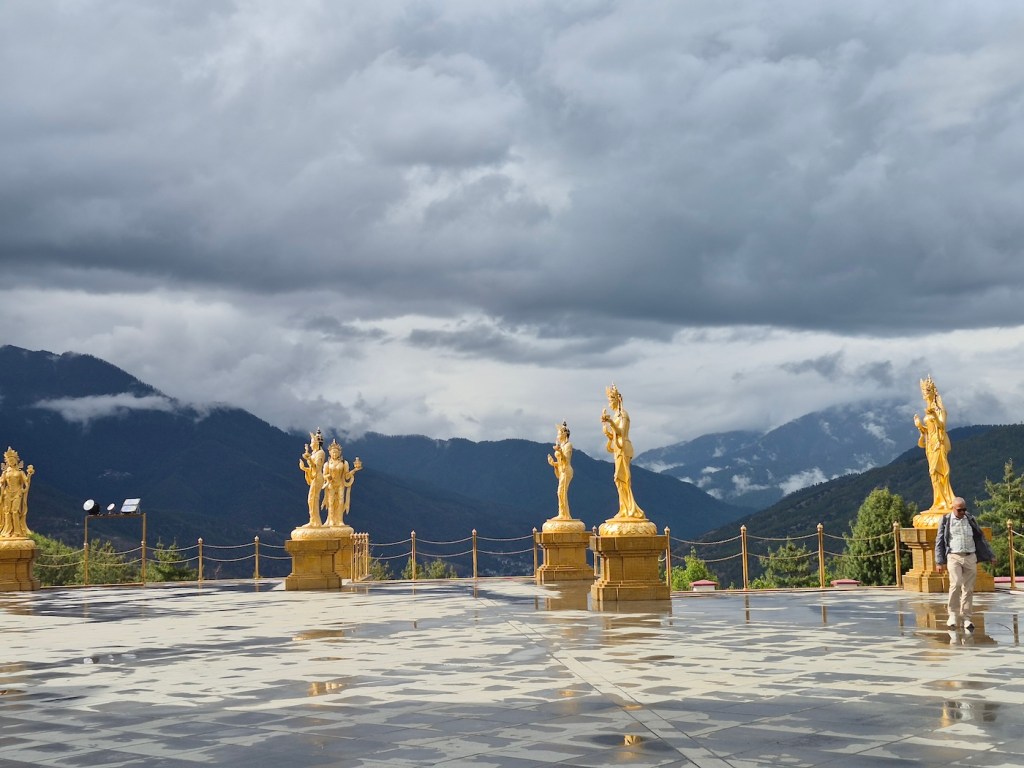
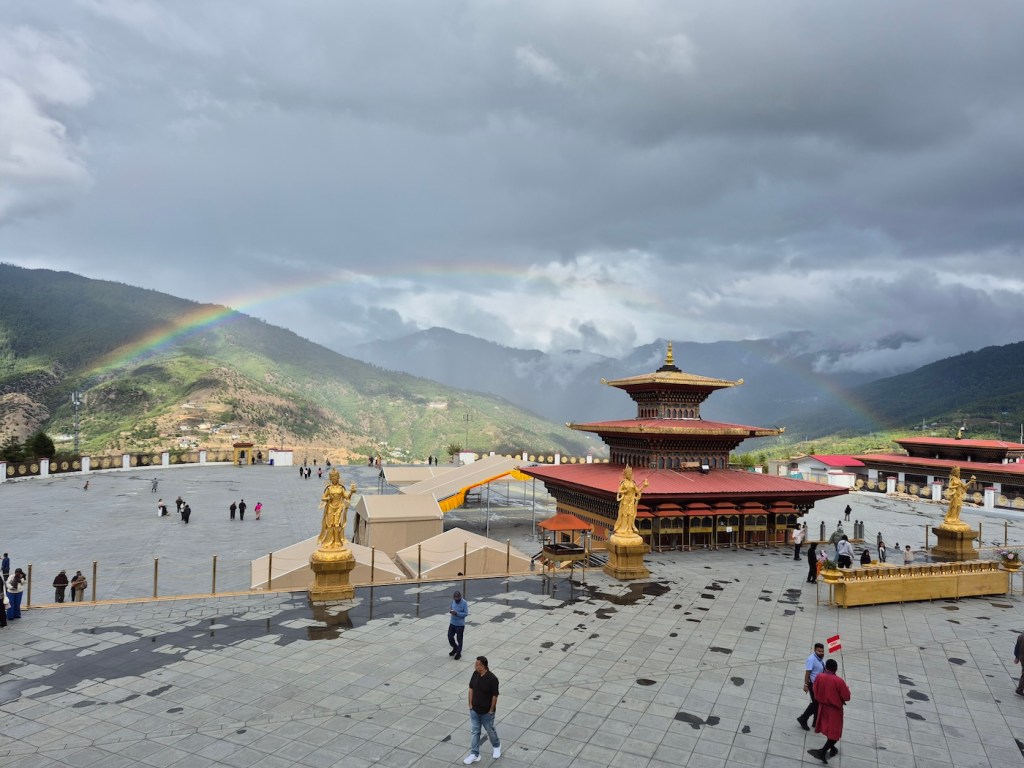
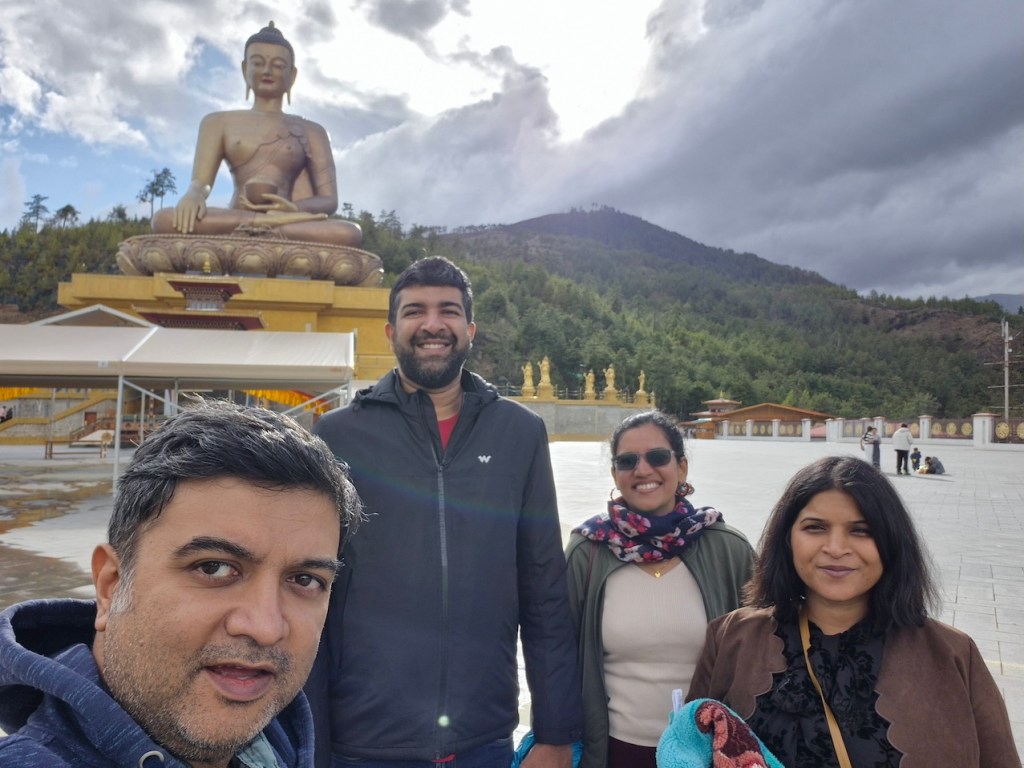
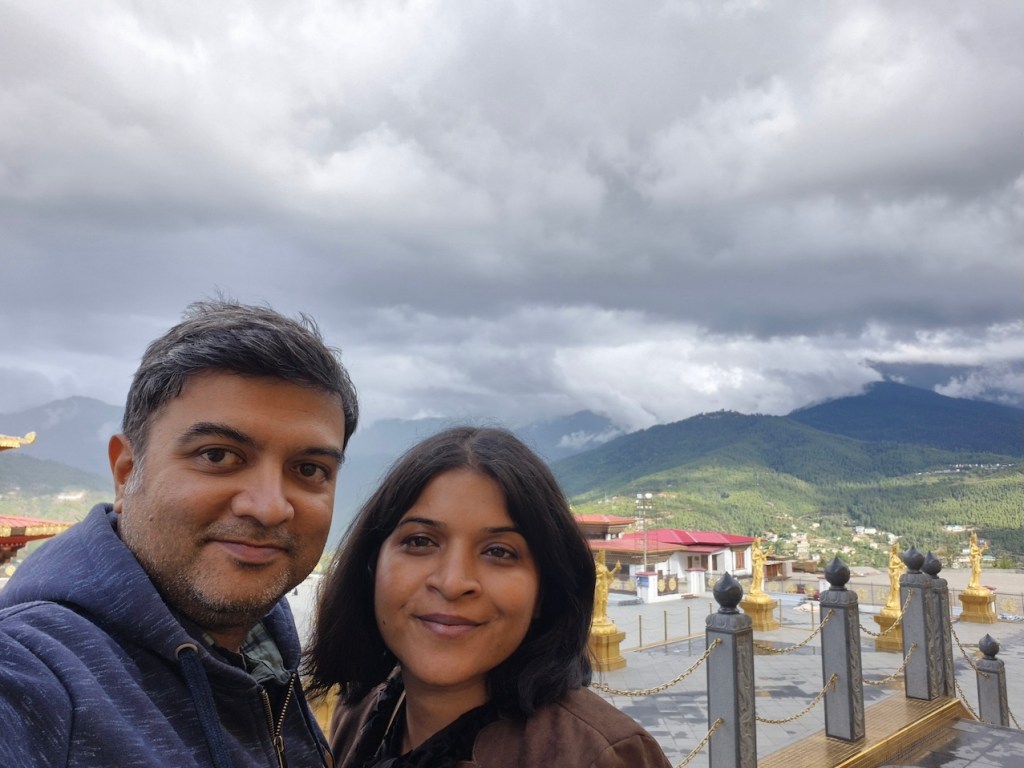
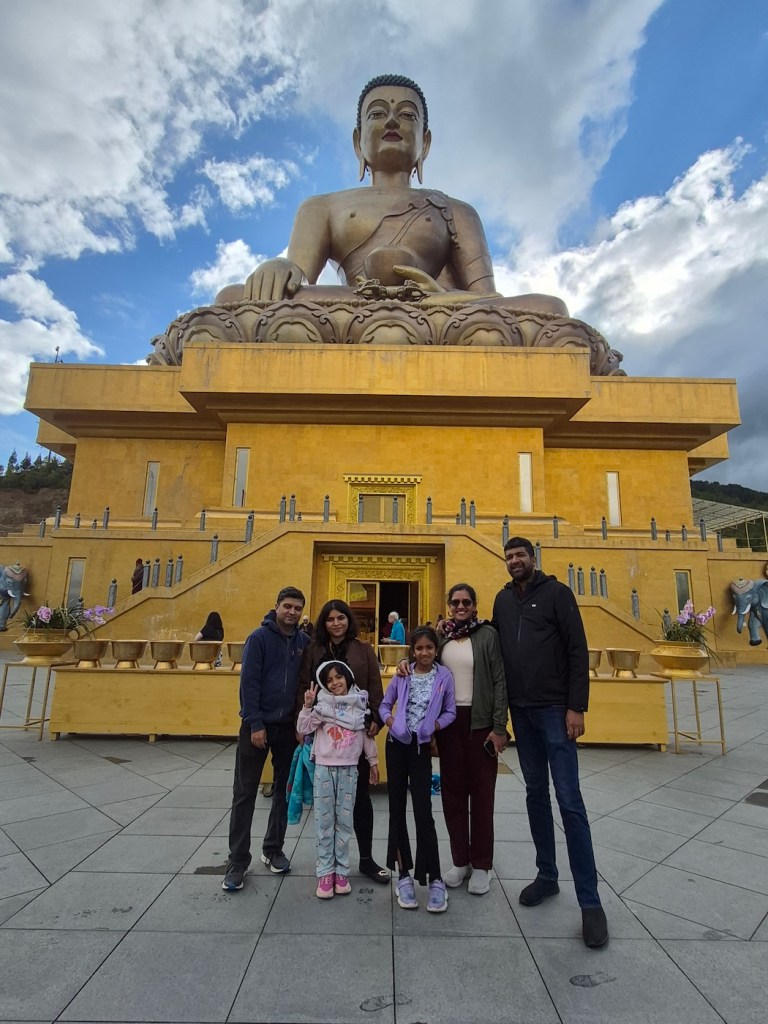
Beneath the seated Buddha, inside the structure on which it rests, is a monastery filled with detailed paintings and carvings. Once again, there were no photographs to carry back from inside. We simply spent some time taking it all in before walking down the long flight of steps. The monastry was truly amazing!
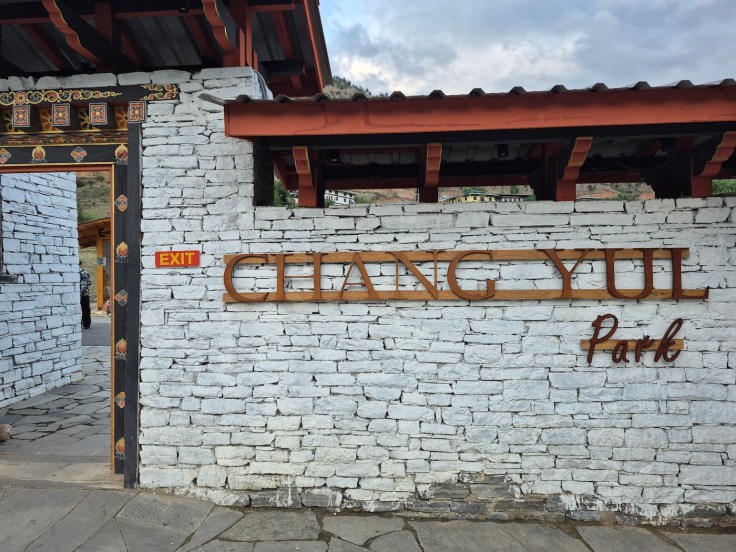
5. Chang Yul Park
Our final stop for the day was Chang Yul Park, a landscaped green space beside the Wang Chhu River. It was a relaxed, picturesque place, with areas to walk, sit and let the children spend some time outdoors.
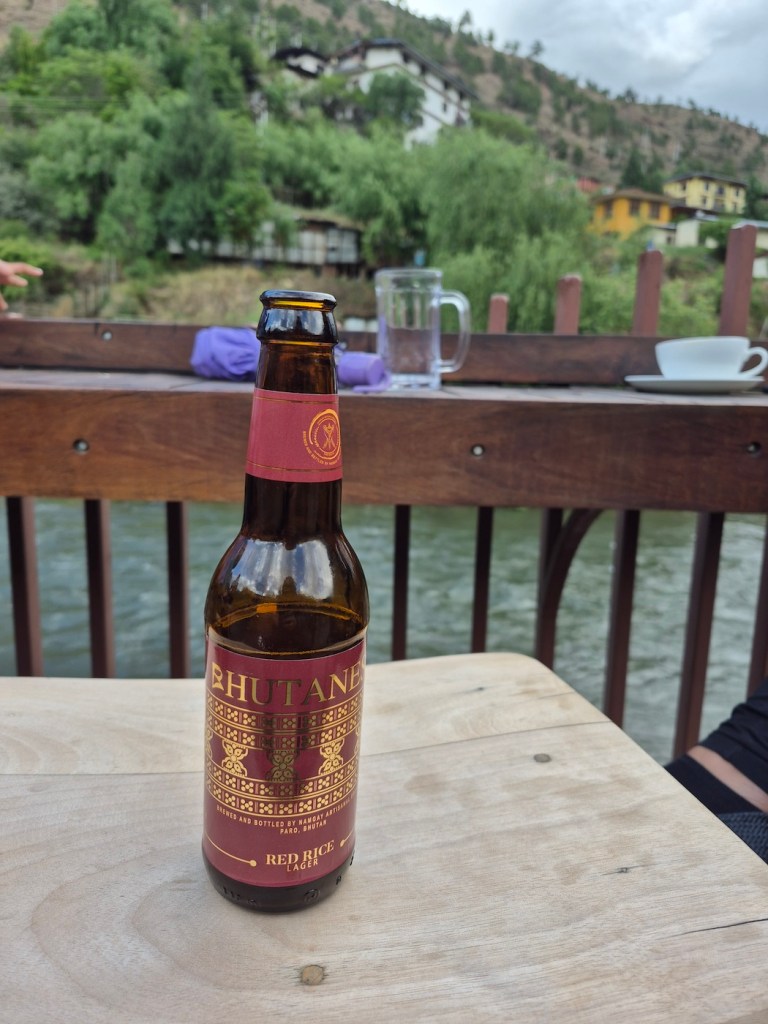
There was also a café by the river. I ordered a Bhutanese beer, the others had drinks and snacks, and we sat there for a while taking photographs and doing very little.
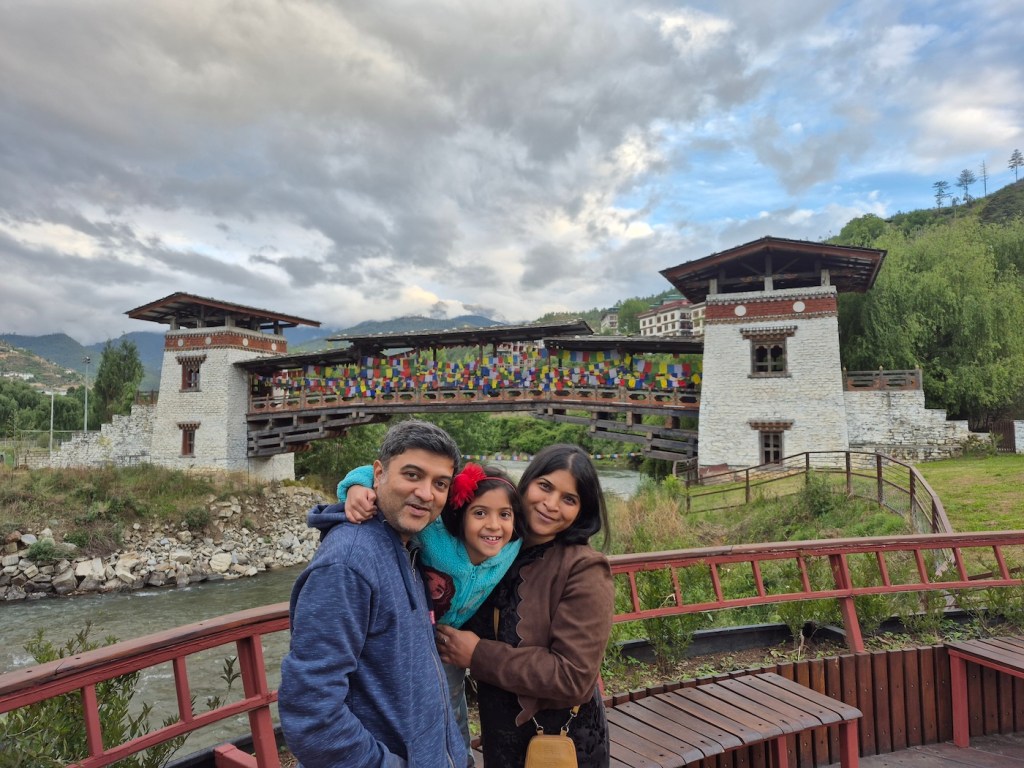
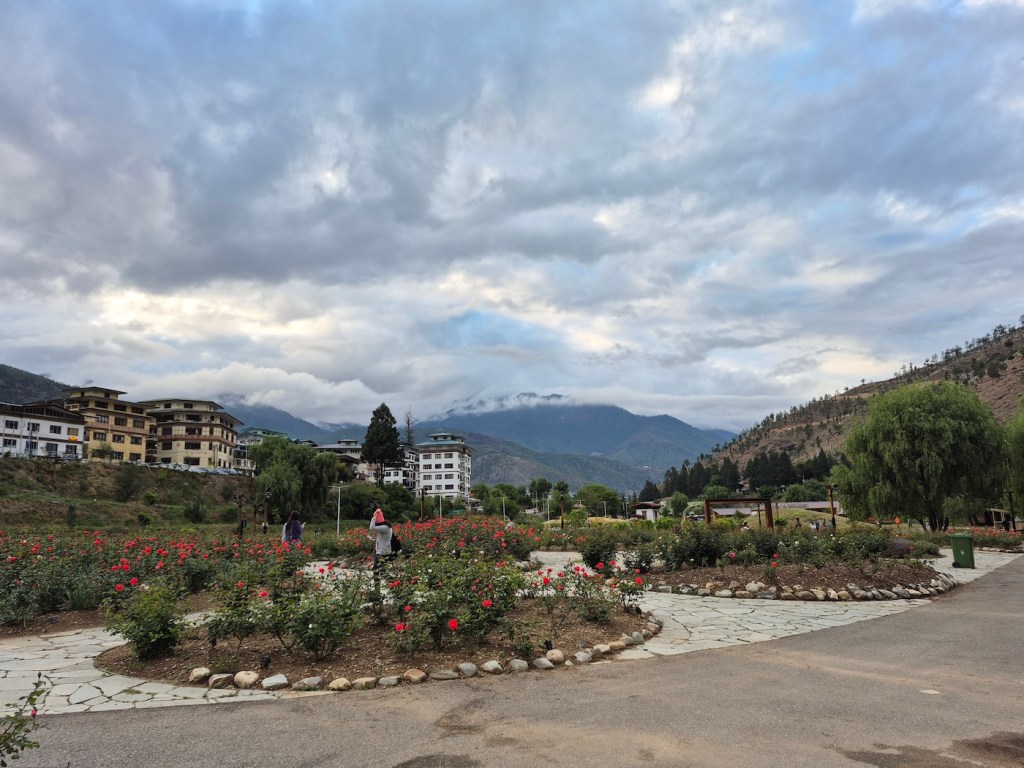
It was a peaceful end to a full day.
That evening, we returned to Lemon Tree and rested. The next morning, we would leave the small bustle of Thimphu behind and begin our journey towards the wide, quiet landscape of Phobjikha Valley.
SUMMARY OF THIMPHU
Looking Back at Thimphu
When we were planning the trip, we had briefly considered skipping Thimphu. After all, it was the capital city, and we were travelling to Bhutan primarily for its mountains, valleys and monasteries. We wondered whether it would feel like just another city.
Looking back, however, I think Thimphu was a good place to begin our journey. It allowed us to settle into Bhutan gradually and get our first taste of its culture, food, architecture and everyday life before travelling into the more remote parts of the country.
One thing I would change, though, is our choice of hotel. Lemon Tree Resort was comfortable, and the food was good, particularly for travellers who want familiar Indian dishes. But that was also the problem for me—it felt a little like an extension of India. Moreover, the resort was situated way outside the city, which meant we could not simply walk out in the evening, explore the streets, visit cafés or browse the shops. If I returned to Thimphu, I would certainly stay somewhere within the city.
Our agency itinerary had packed an enormous number of attractions into a single day—the National Memorial Chorten, Folk Heritage Museum, Changangkha Lhakhang, National Library, the Painting School or Zorig Chusum, Royal Textile Museum and the Thimphu Dzong, apart from the places we eventually visited. Technically, it may have been possible to drive past all of them and tick them off a list, but we would not have experienced any of them properly.
Our guide understood the kind of trip we wanted. He explained that we would later be spending time at Punakha Dzong, which is considered Bhutan’s finest, so it was unnecessary to visit every Dzong along the way. Similarly, Simply Bhutan had already given us a glimpse of traditional Bhutanese homes, masks, dance and everyday culture, so visiting the Folk Heritage Museum might have felt repetitive.
We do not know what we missed by leaving out those places, but we enjoyed the few places we did visit. More importantly, we had enough time at each one. The children could explore, try the activities and play without being hurried from one attraction to the next. Had we dragged them through another five sightseeing points, they would almost certainly have become tired and cranky—and none of us would have enjoyed the day.
Of the places we visited, the Takin Preservation Centre is probably the easiest to skip. Simply Bhutan was enjoyable and offered a convenient introduction to different aspects of Bhutanese culture, but I would not call it unmissable either. It is a good place to visit, particularly at the beginning of the journey, but skipping it would not mean missing one of Bhutan’s great experiences.
The giant Buddha at Kuensel Phodrang, however, is a must-do in Thimphu. Its scale, the monastery beneath it and the views across the valley make it far more impressive in person than it appears in photographs. The double rainbow we saw there made our visit even more memorable, but the place would have been worth visiting even without it.
Our Bhutanese lunch was another highlight. Until then, most of our meals had been prepared in hotels and adapted to suit tourists. This meal gave us the opportunity to taste more authentic Bhutanese home-style food, including the various datshi preparations and pork. It was one of the few occasions on the trip when the meal itself became part of the experience.
Changyul Park was a lovely place to end the day. It is not a grand tourist attraction, but that is precisely why we enjoyed it. We sat at the café beside the river, had a couple of Bhutanese beers and simply relaxed while the children had some time outdoors. Sometimes those unhurried breaks become more memorable than another monument added to the itinerary.
A note about Bhutanese wine
Bhutan also produces some surprisingly enjoyable wines. Our favourite was Zumzin, a sweet fruit wine with a distinct peach flavour. It was different from the conventional grape wines we were accustomed to, but we liked it enough to buy a bottle from a small supermarket in Thimphu. It cost us around ₹650, which felt extremely reasonable.
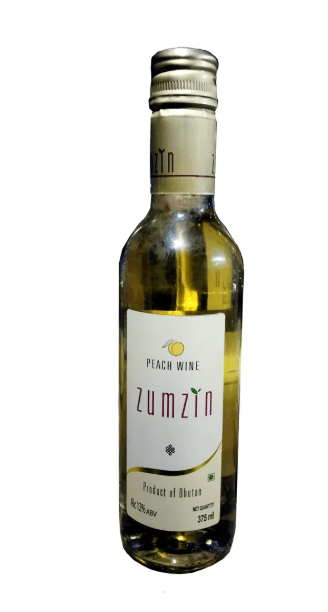
We also tried Takin red wine, which was good, and Vintria, which was fine but did not stand out for us as much as Zumzin.
If you plan to drink Bhutanese wine during the journey, Thimphu is a good place to buy it. Even the smaller supermarkets stock wine and beer. Once you travel into more remote regions, prices can increase dramatically. The same bottle of Zumzin that we bought in Thimphu was being sold in Phobjikha Valley for almost four or five times the price.
It is also worth knowing that shopping at Paro Airport was surprisingly reasonable. Unlike most airports, where wine, books and souvenirs are considerably overpriced, the shops there were fairly economical. So, if you want to carry back Bhutanese wine, books or a few last-minute gifts, you can comfortably leave some of that shopping for the airport.
Overall, Thimphu may not be the most spectacular part of a Bhutan holiday, but it is a good introduction to the country. The key is not to treat it as a sightseeing checklist. Choose a few places, allow yourself time to experience them, eat something genuinely Bhutanese and leave enough space in the day to sit beside the river with a local beer. That, for us, was the right way to experience Thimphu.
Krish


Leave a Reply