Our next destination after Phobjikha Valley was Punakha. The distance was only around 80–85 kilometres, but by then we had learnt not to judge travel time in Bhutan by distance. With the winding mountain roads, even a relatively short journey could take three to four hours.
We left Hotel Phobjikha at around nine in the morning. This was slightly earlier than our usual starting time, but we wanted to reach Punakha by lunchtime.
DD, our guide, had suggested that we have lunch at a place beside the river. There was a fixed menu rather than an à la carte menu, and he checked whether we would be comfortable with that. We told him that if he recommended the place, we were happy to go along with it.
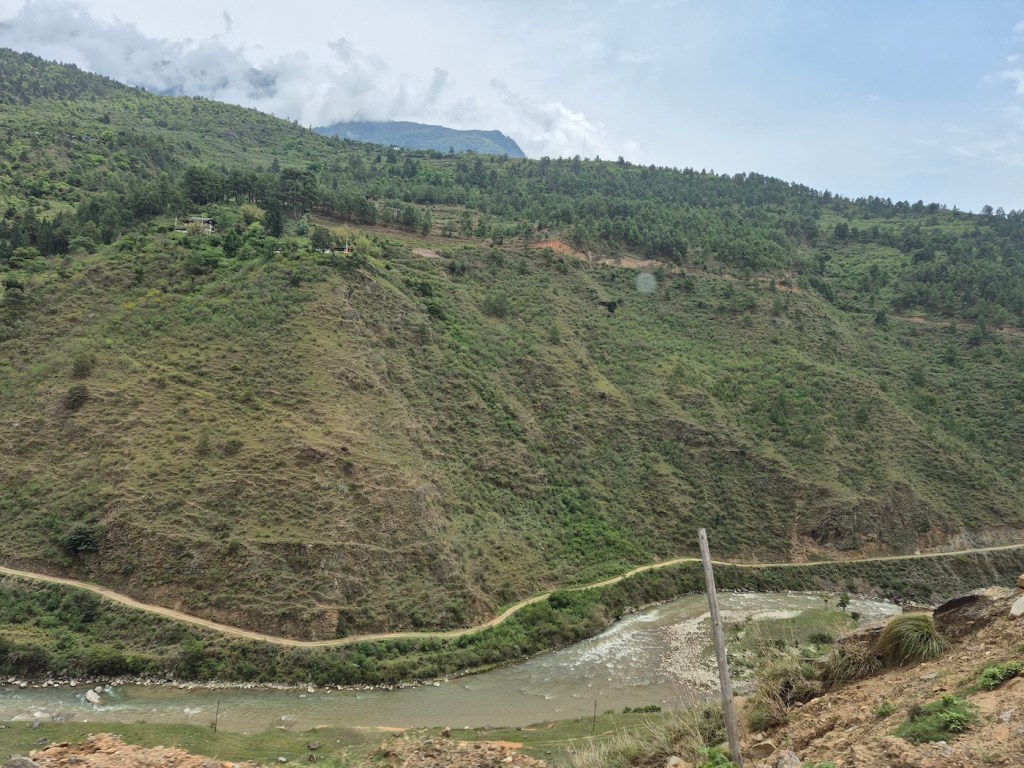
The timing worked out perfectly. By the time we reached Punakha, it was bang on lunchtime, and we drove directly to the riverside restaurant.
Lunch with Punakha Dzong across the river
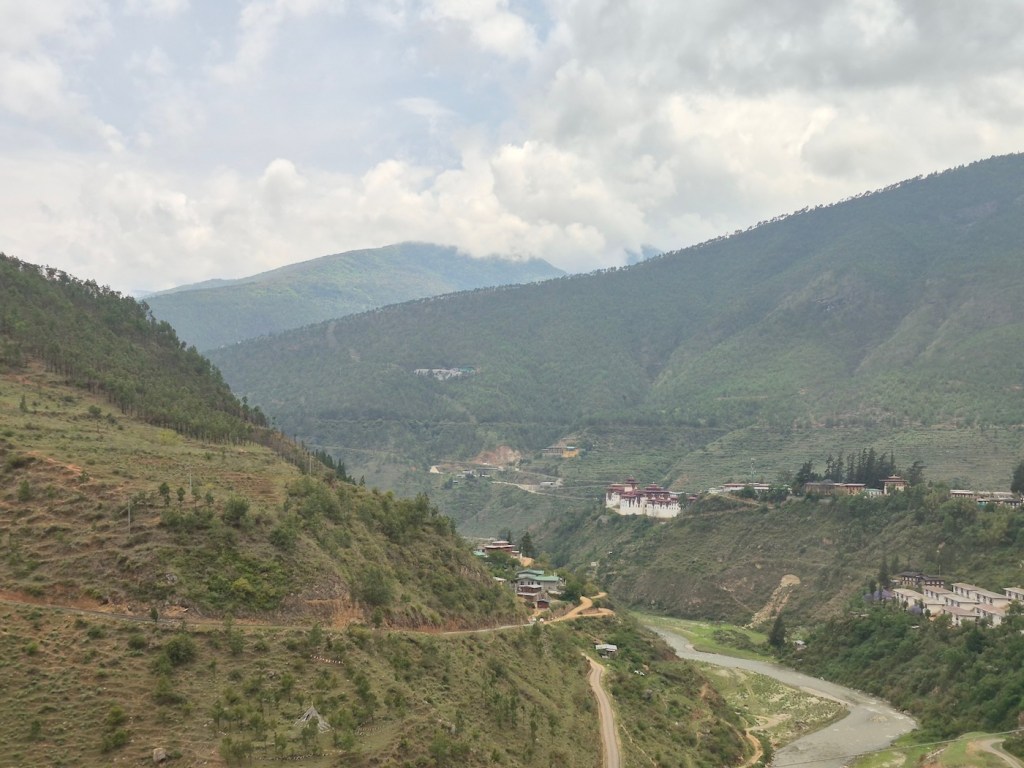
The setting was fantastic. We sat beside the river, with Punakha Dzong clearly visible on the opposite bank. After the long journey from Phobjikha, it was a lovely way to arrive in Punakha.
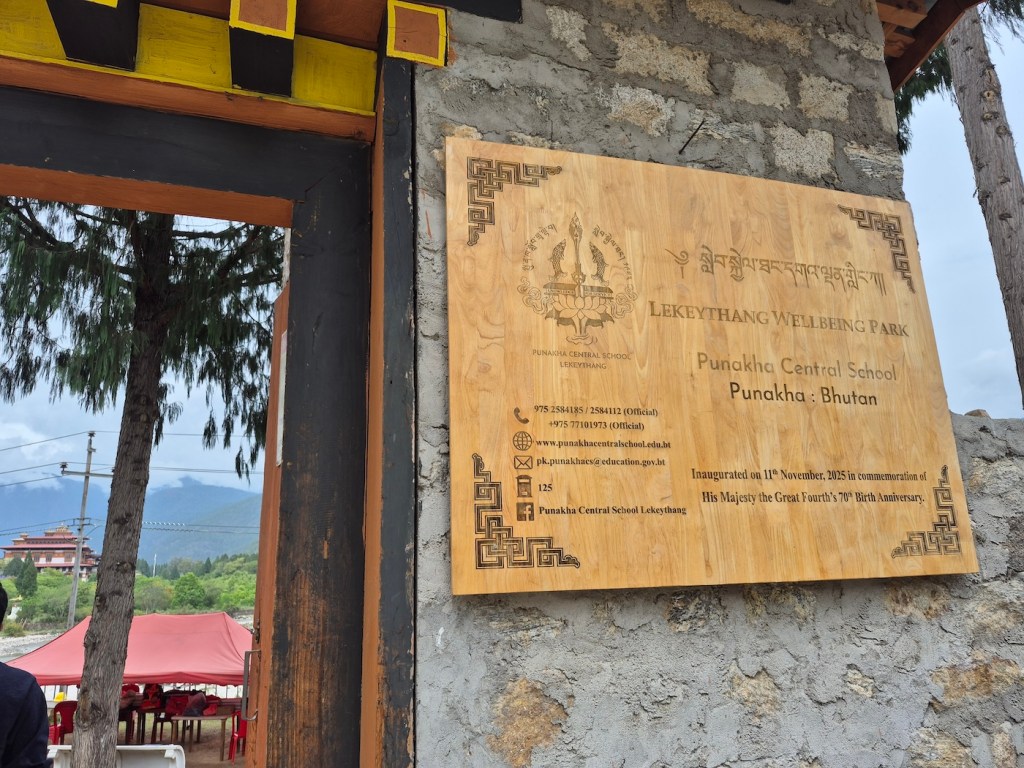
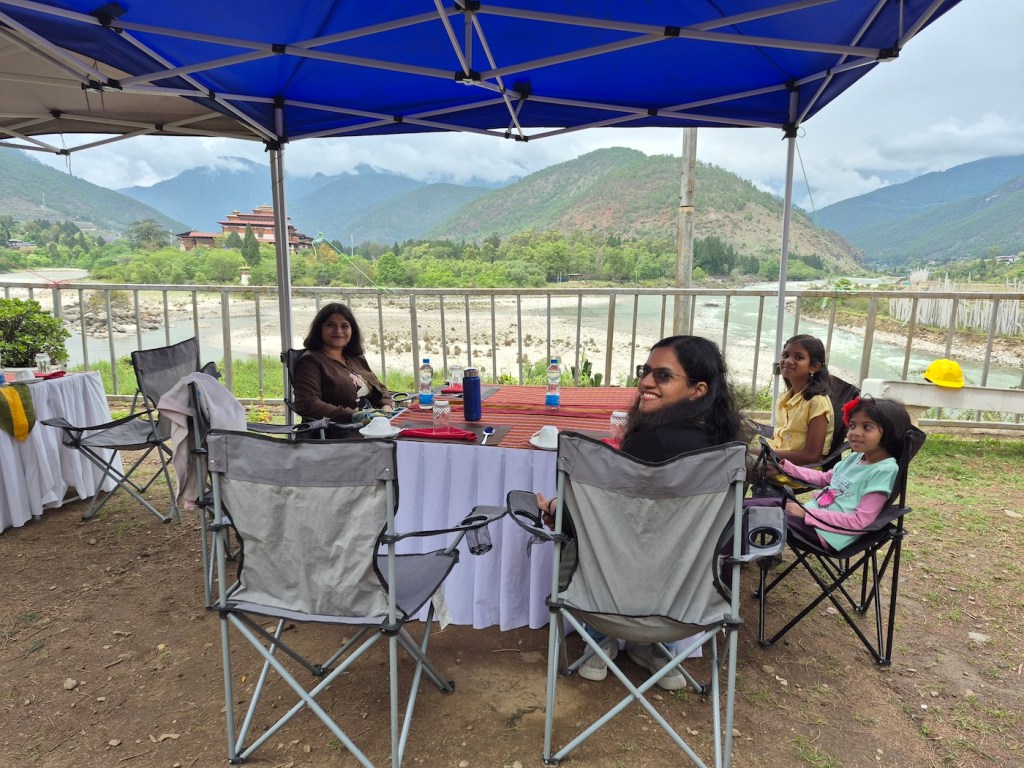
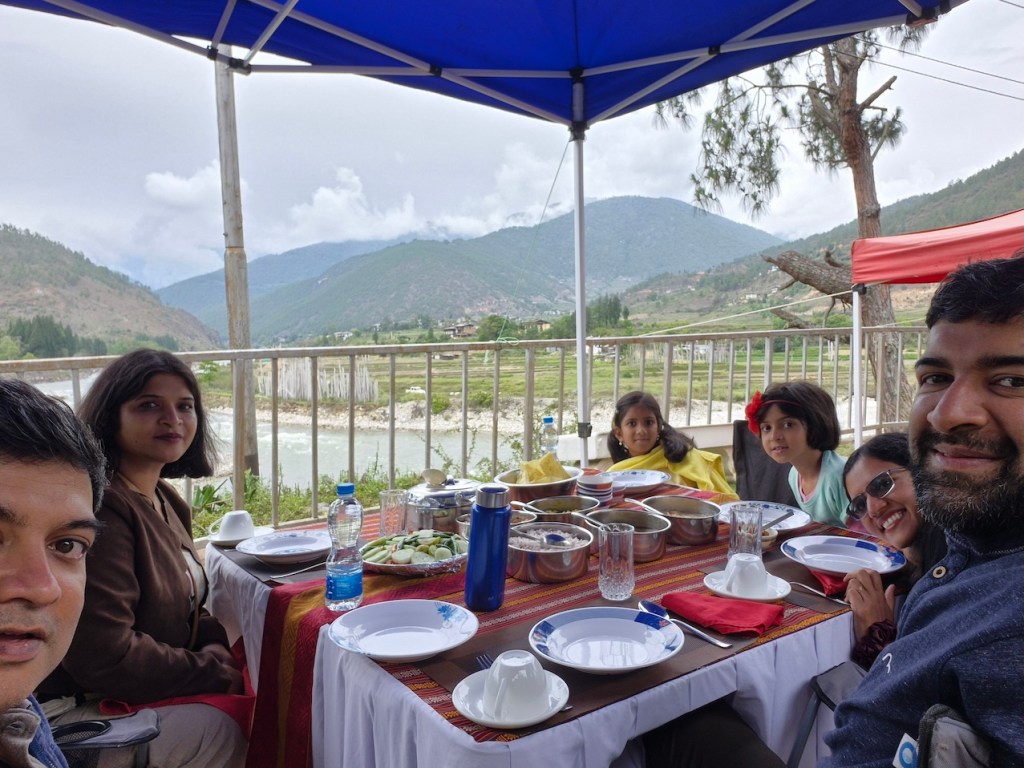
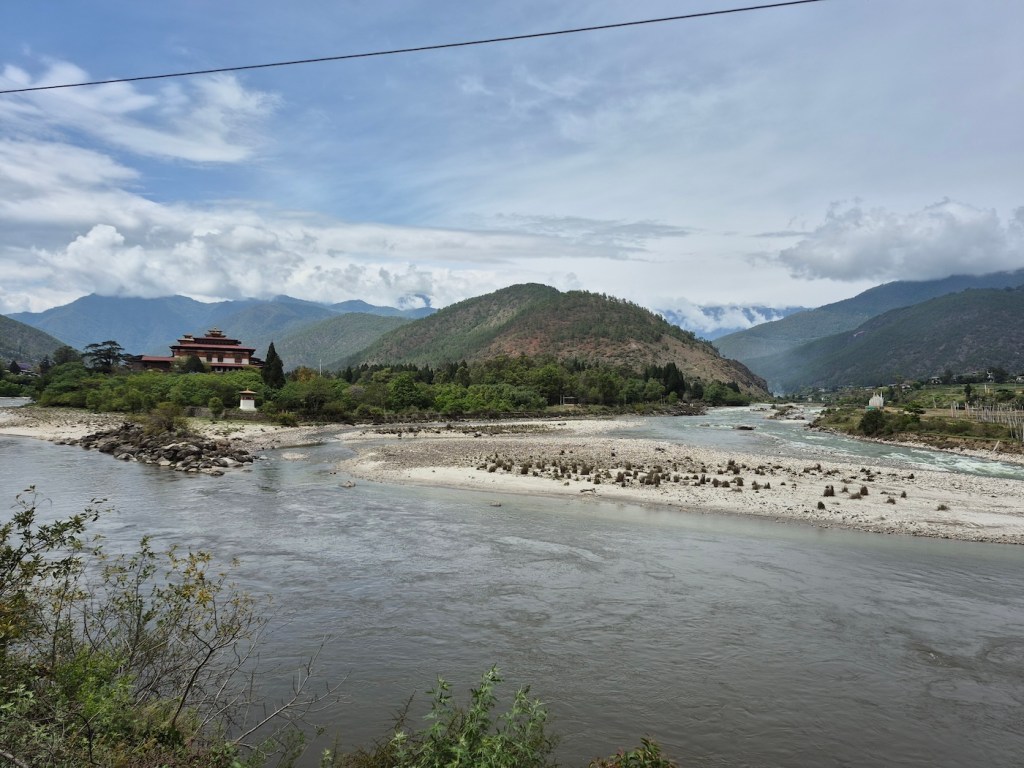
The food was simple—rice, chicken, vegetables and a few accompaniments—but everything was tasty. The meal cost around ₹600 per person, which felt slightly expensive for what was served. I cannot remember whether the children ate free or were charged half the adult rate. Still, the location and the view made the lunch feel special.
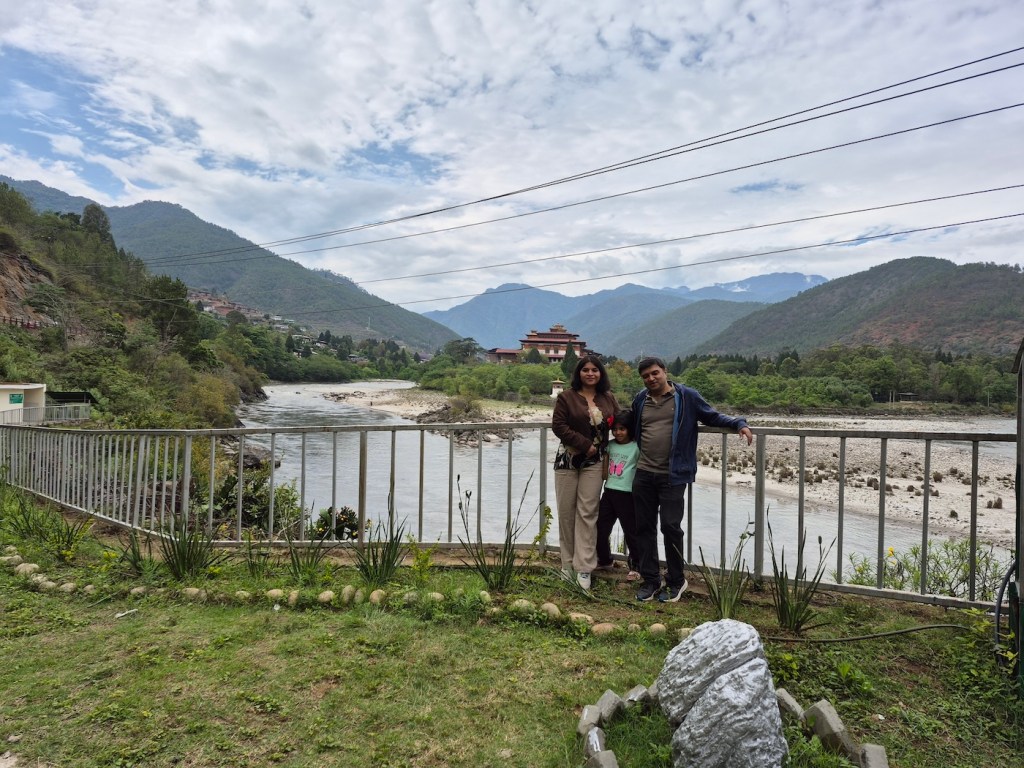
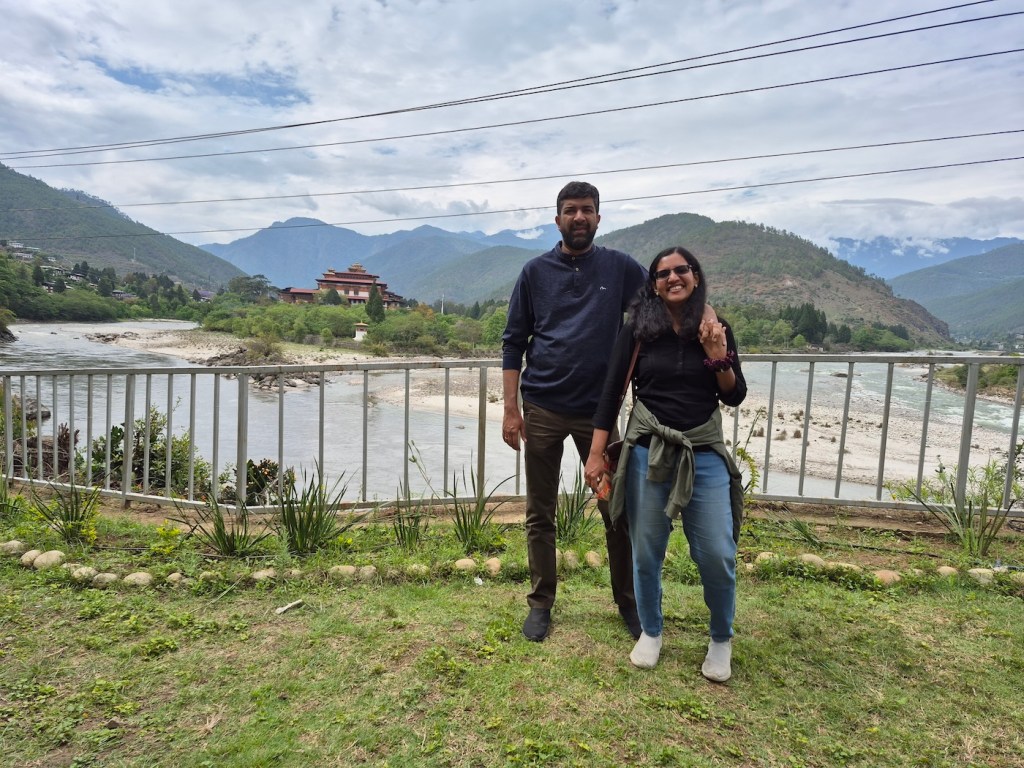
Once we had finished, Punakha Dzong was only about five minutes away by car.
The magnificent Punakha Dzong
We had deliberately skipped some of the other Dzongs on our Bhutan itinerary because DD had told us that Punakha Dzong was the one in which we should spend time. Once we reached it, we understood why.
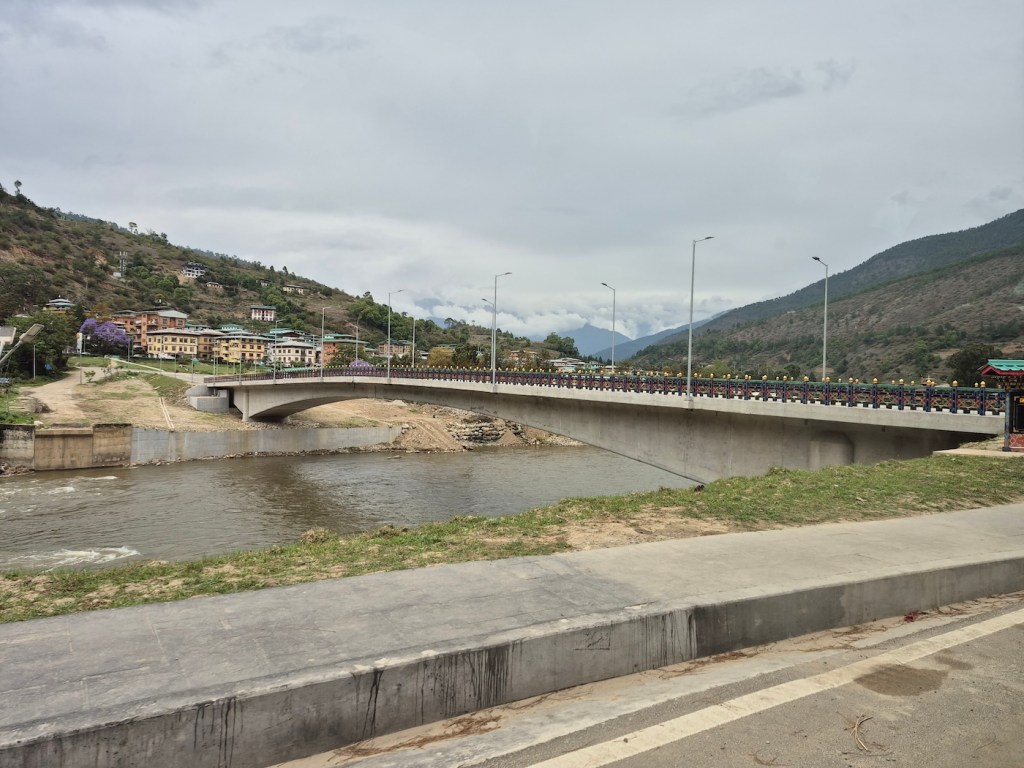
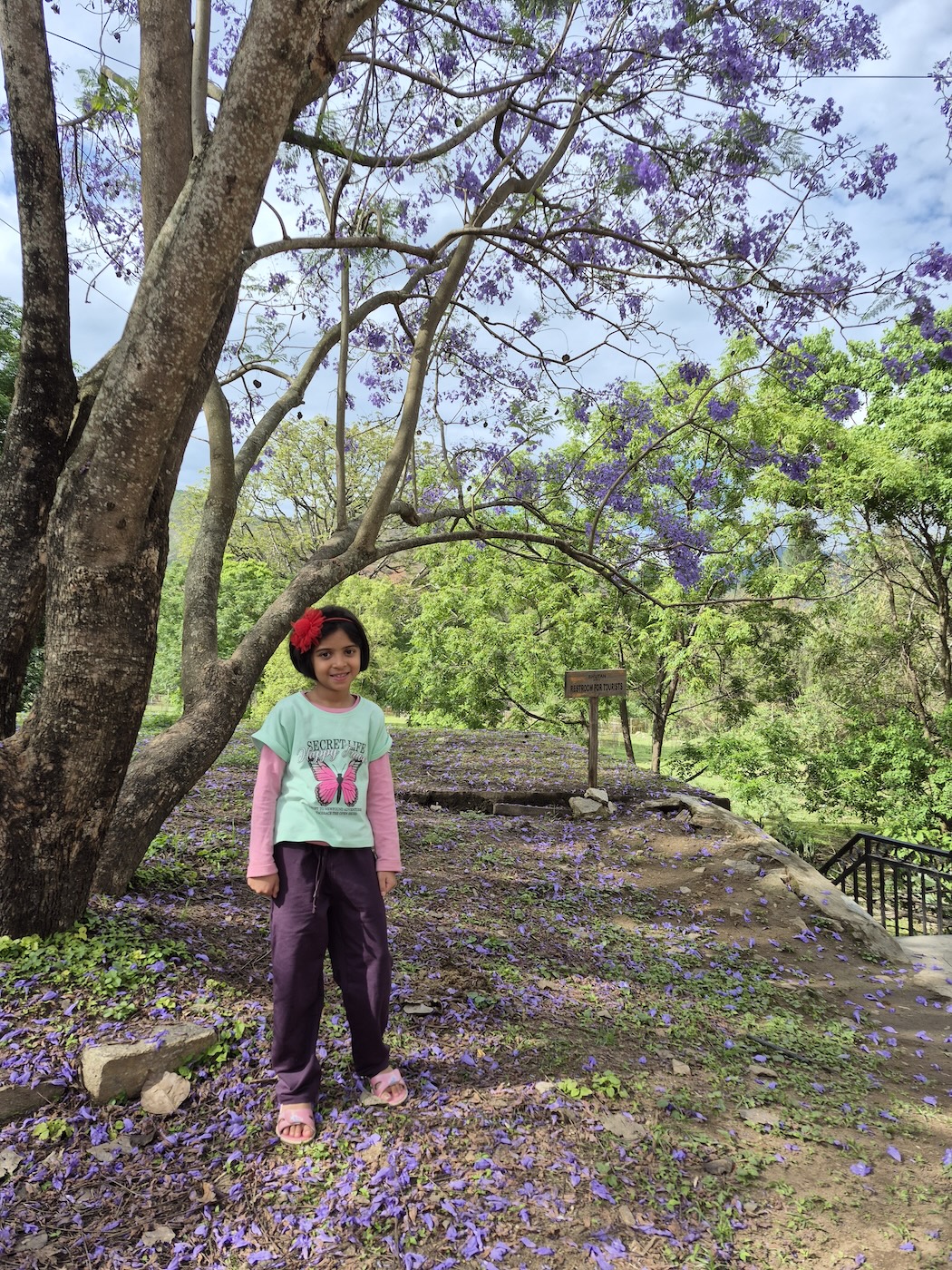
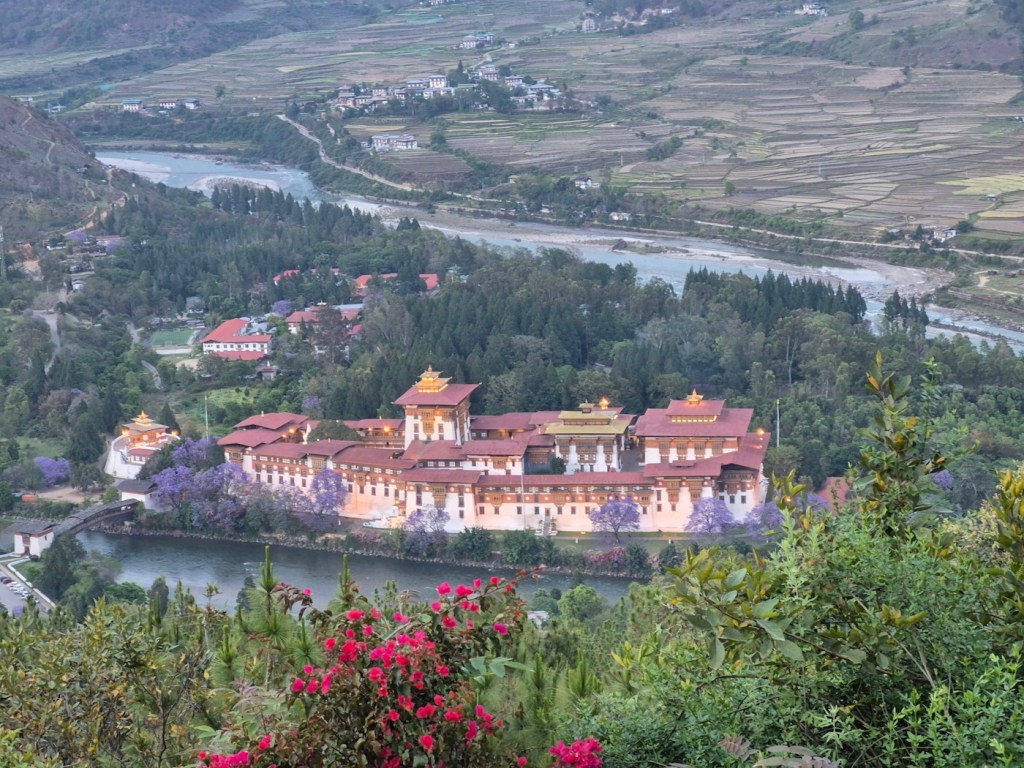
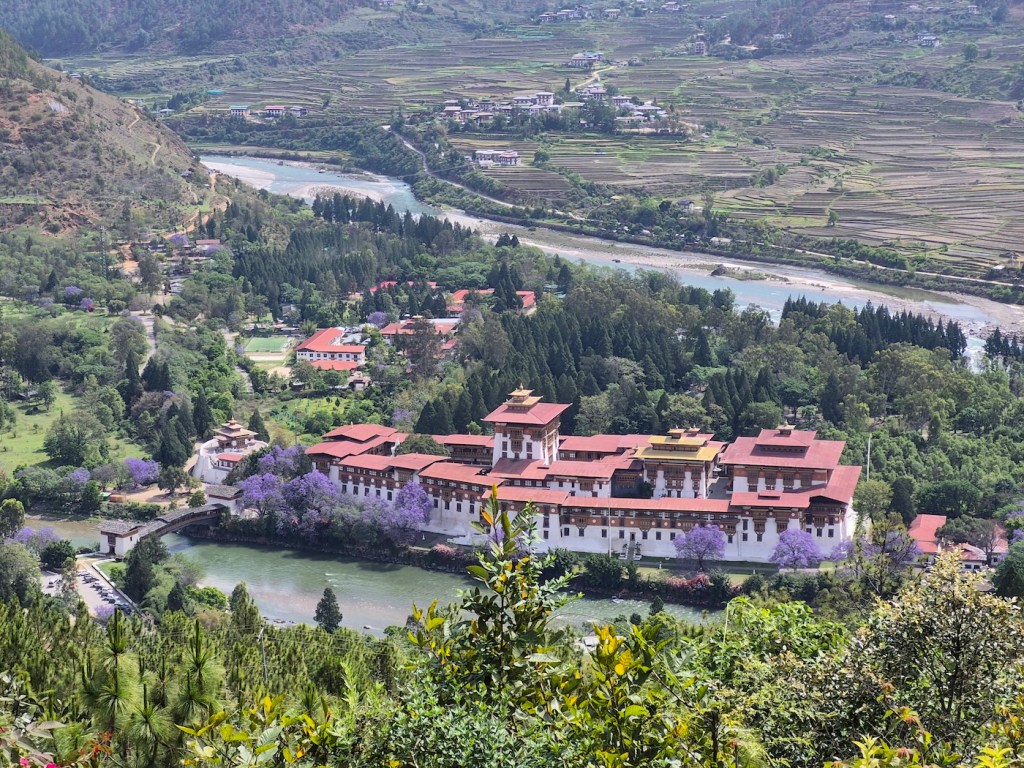
The approach itself was beautiful. We crossed a traditional wooden cantilever bridge over the river, and the enormous white walls of the Dzong rose in front of us. Since we were visiting in spring, the jacaranda trees around it were covered in purple flowers. The combination of the white Dzong, dark carved wood and purple blossoms was mesmerizingly beautiful.
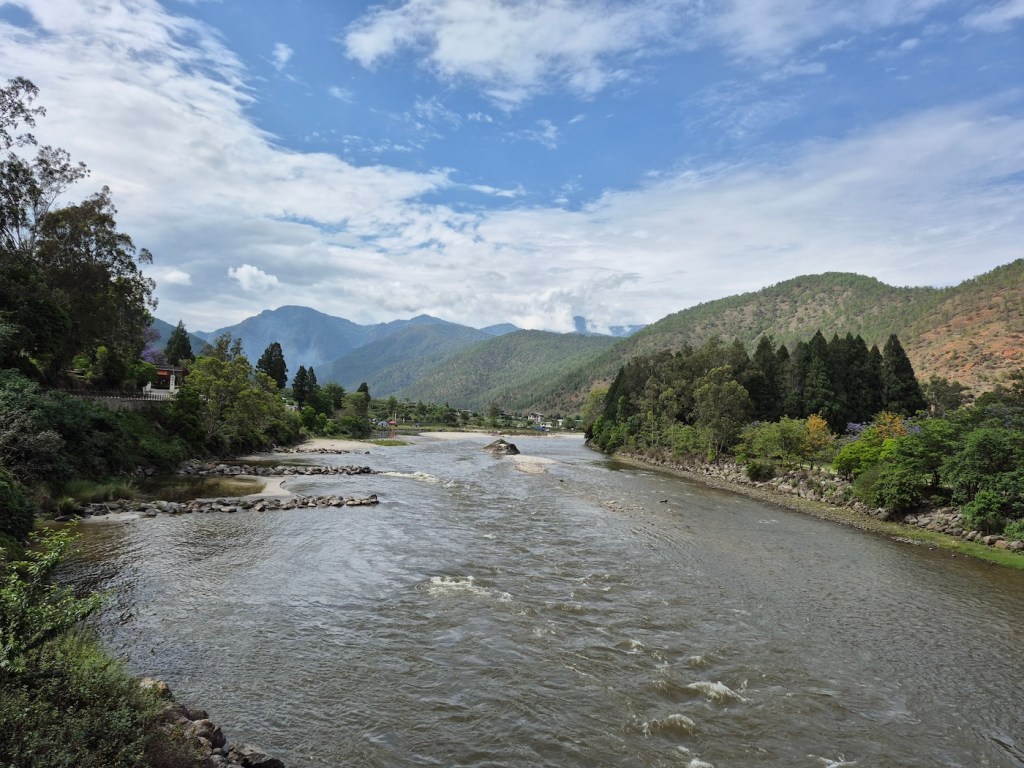
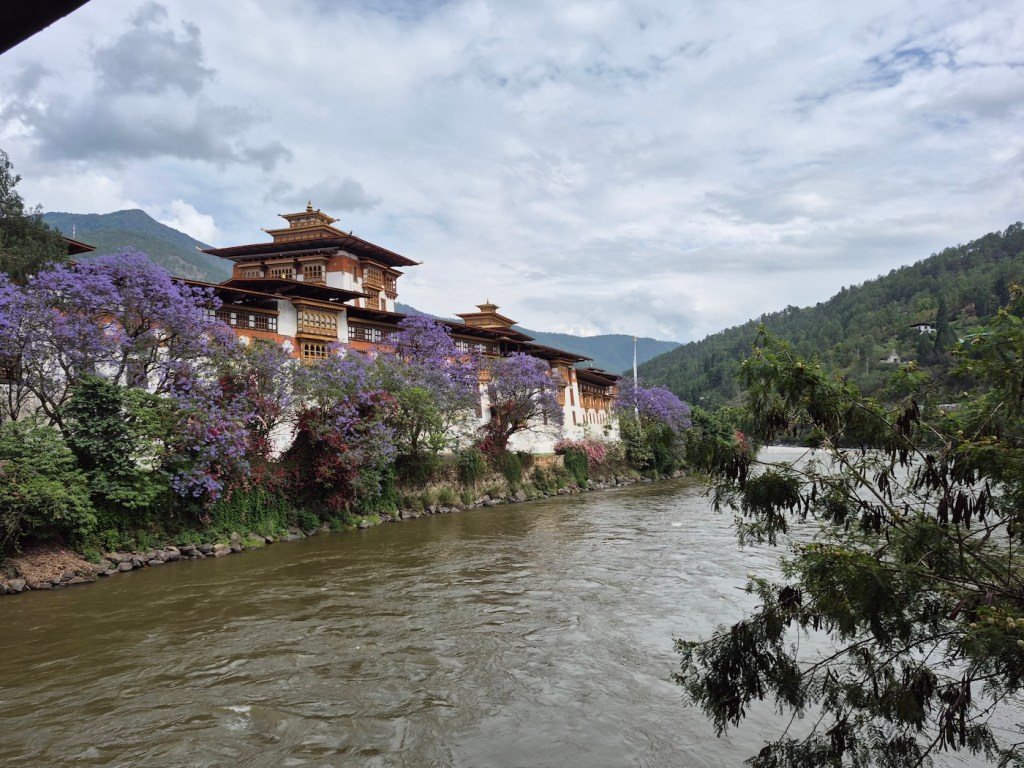
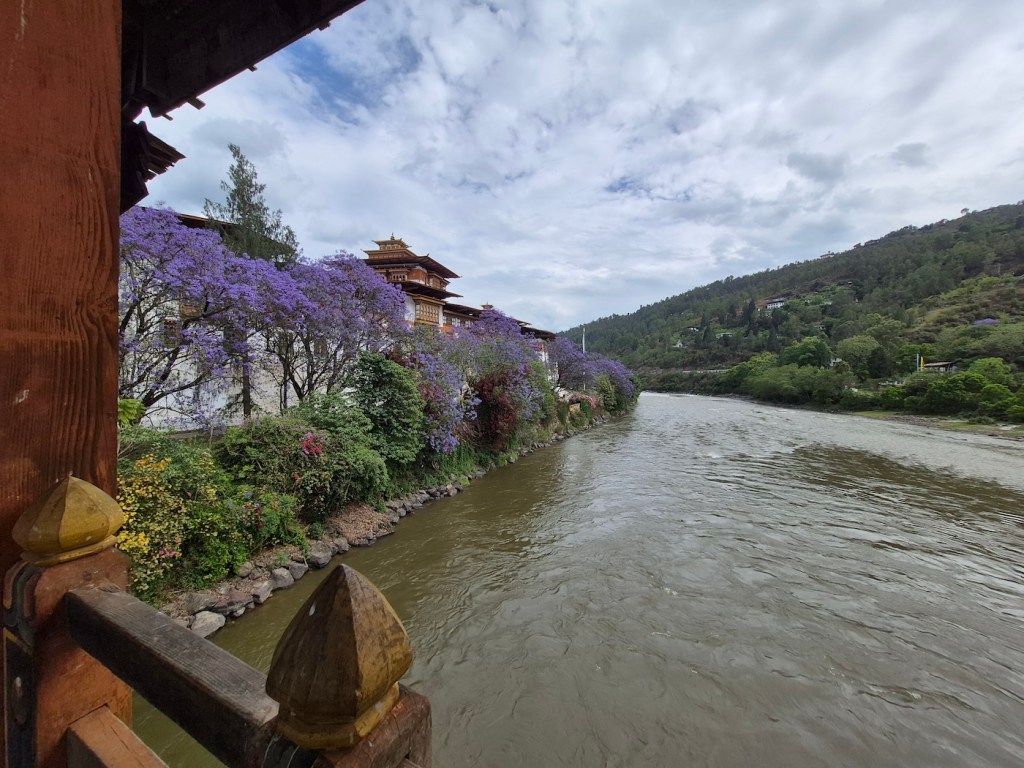
The Dzong is quite elaborately spread out, with large courtyards, steep stairways, beautifully carved wooden balconies and intricate paintings almost everywhere. Unlike some of the monasteries we had visited, photography was allowed in much of the complex. We could take photographs in the courtyards and around the buildings, although not inside the main temple.
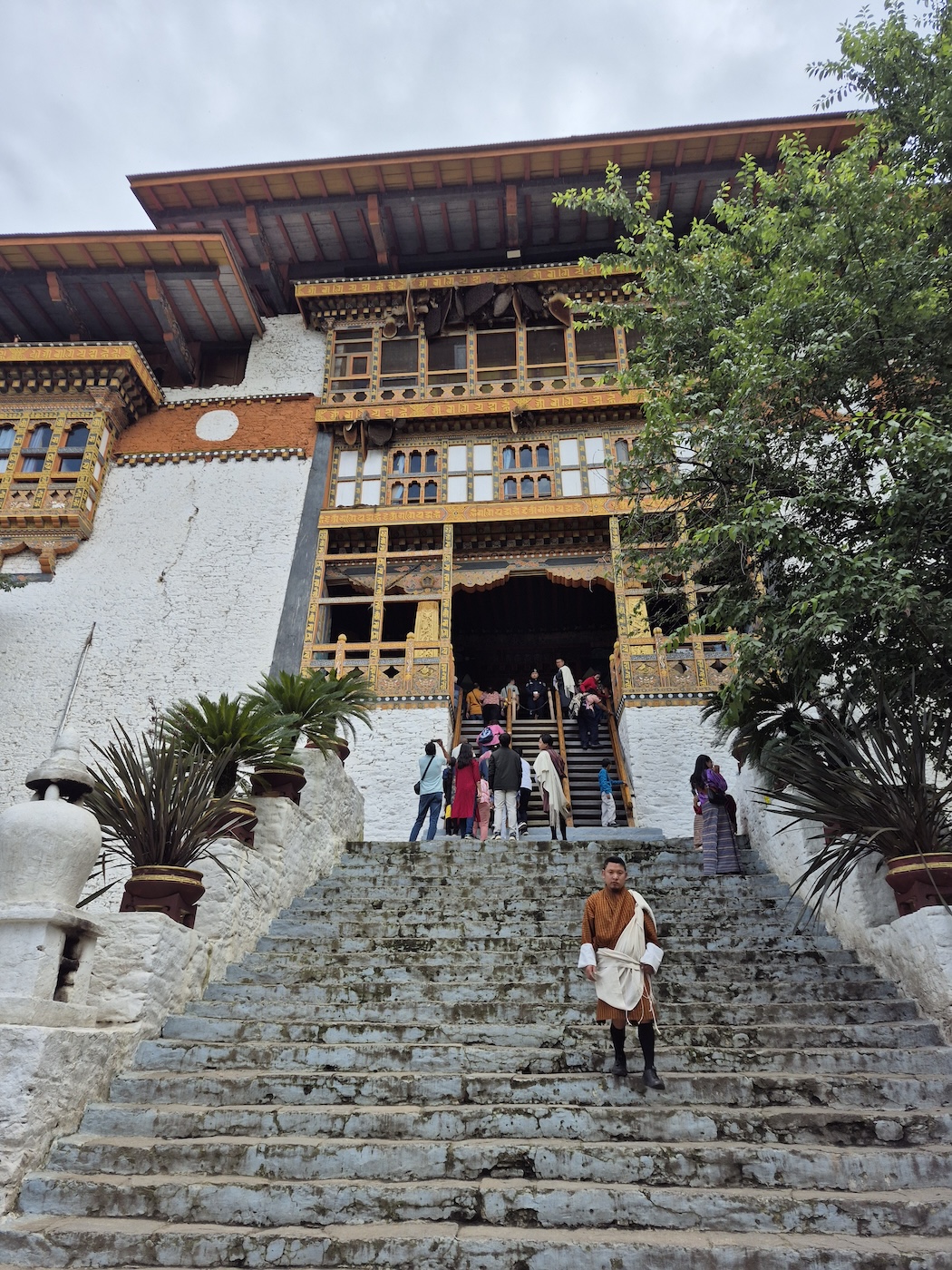
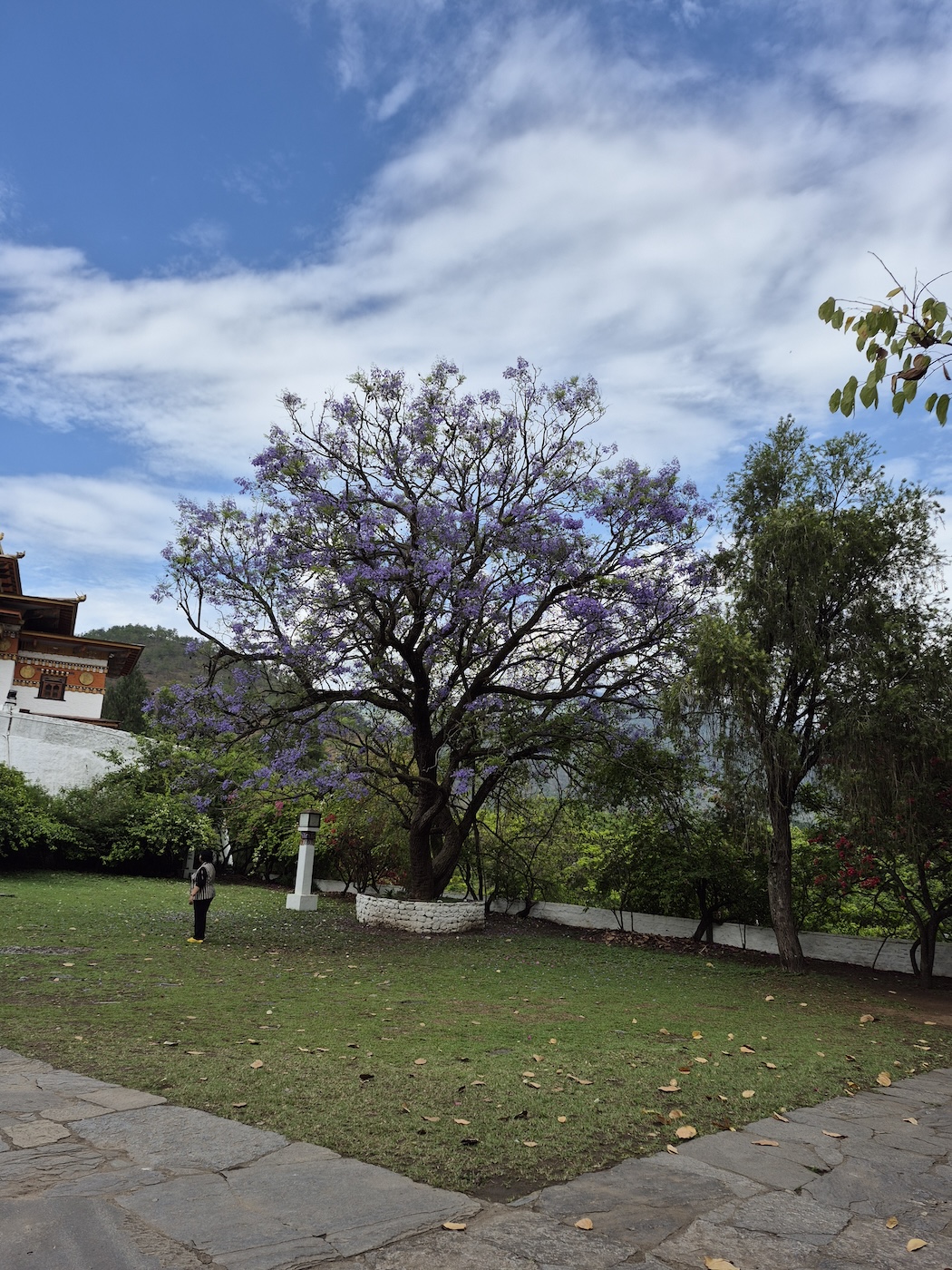
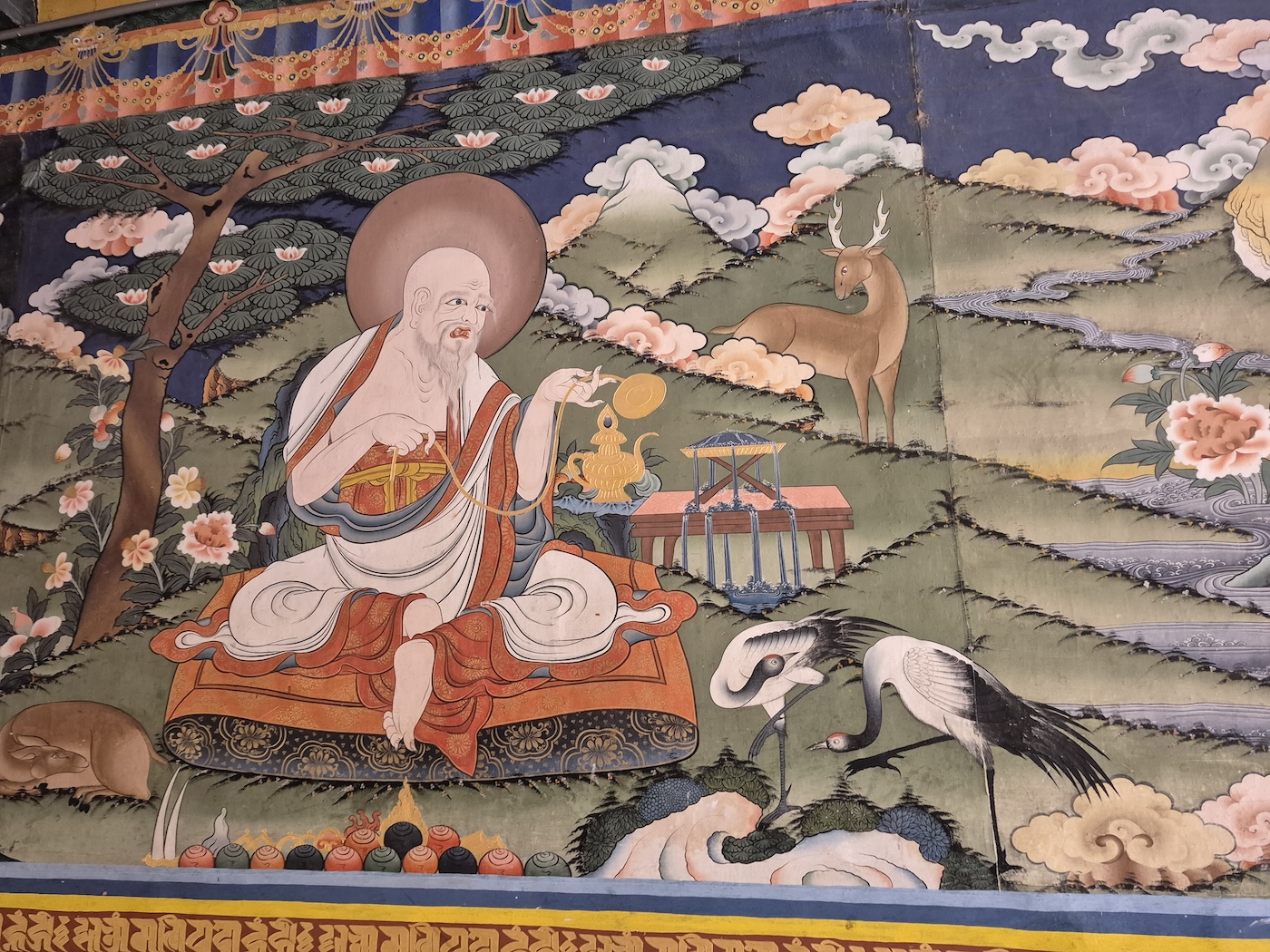
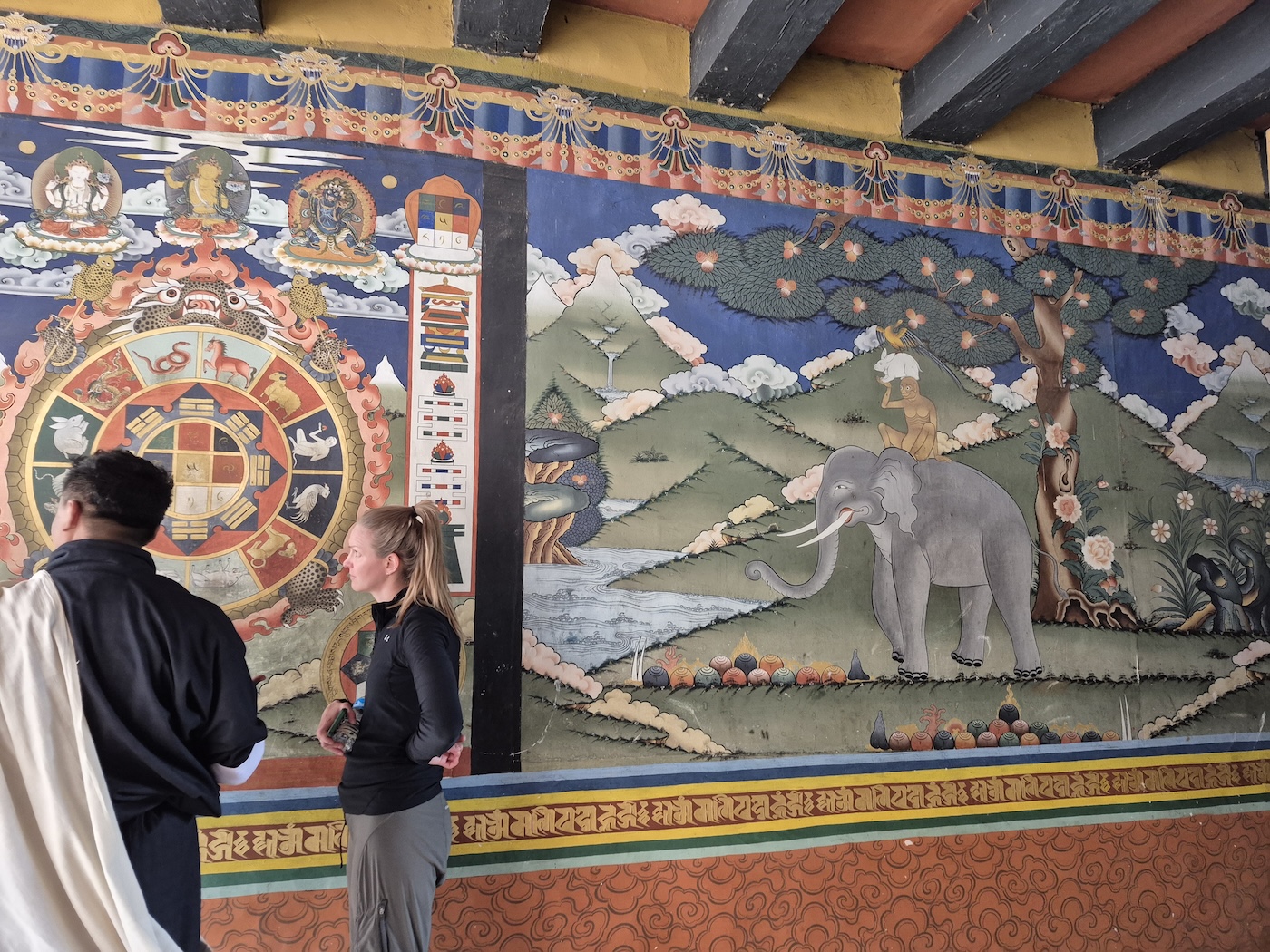
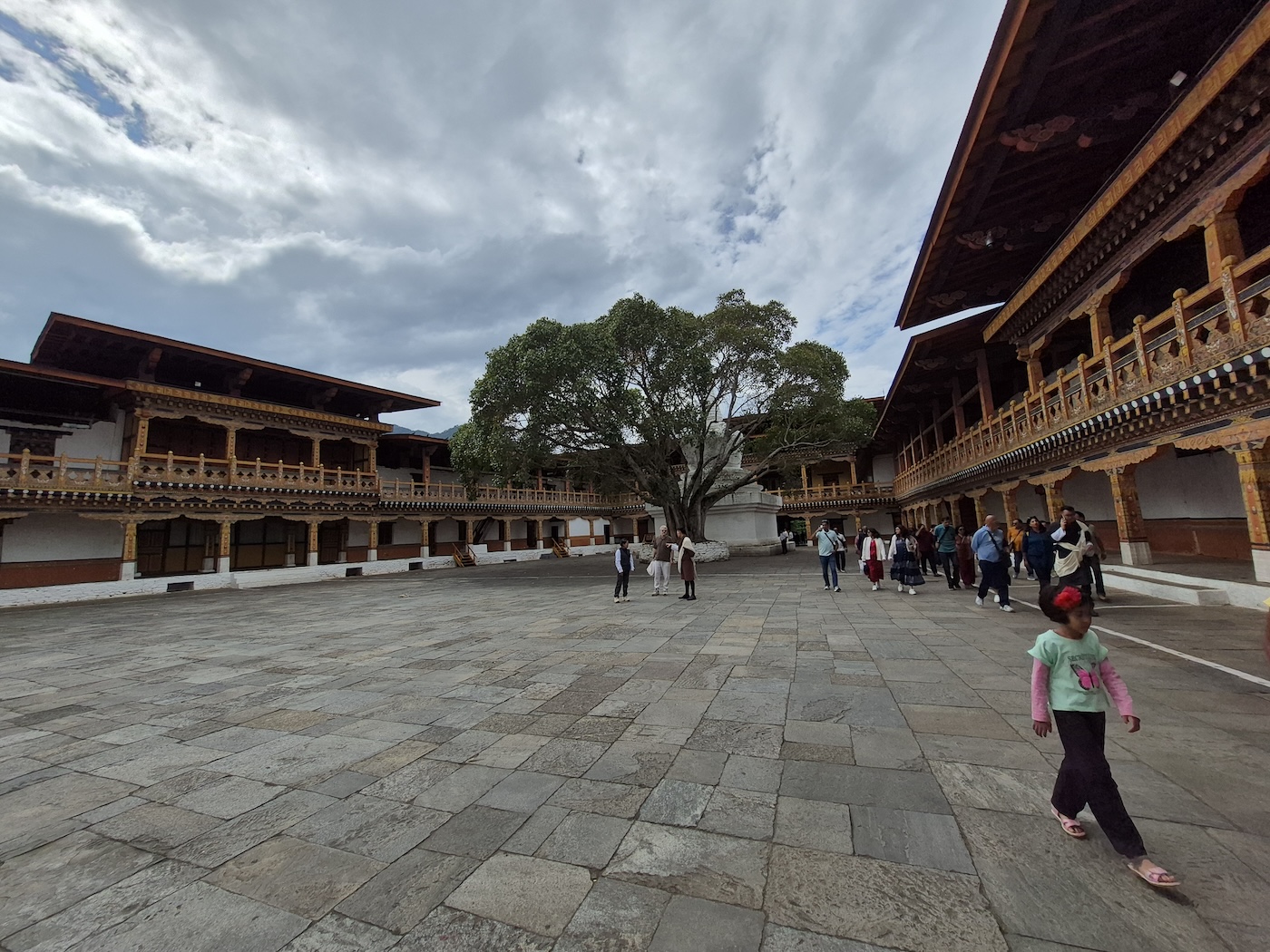
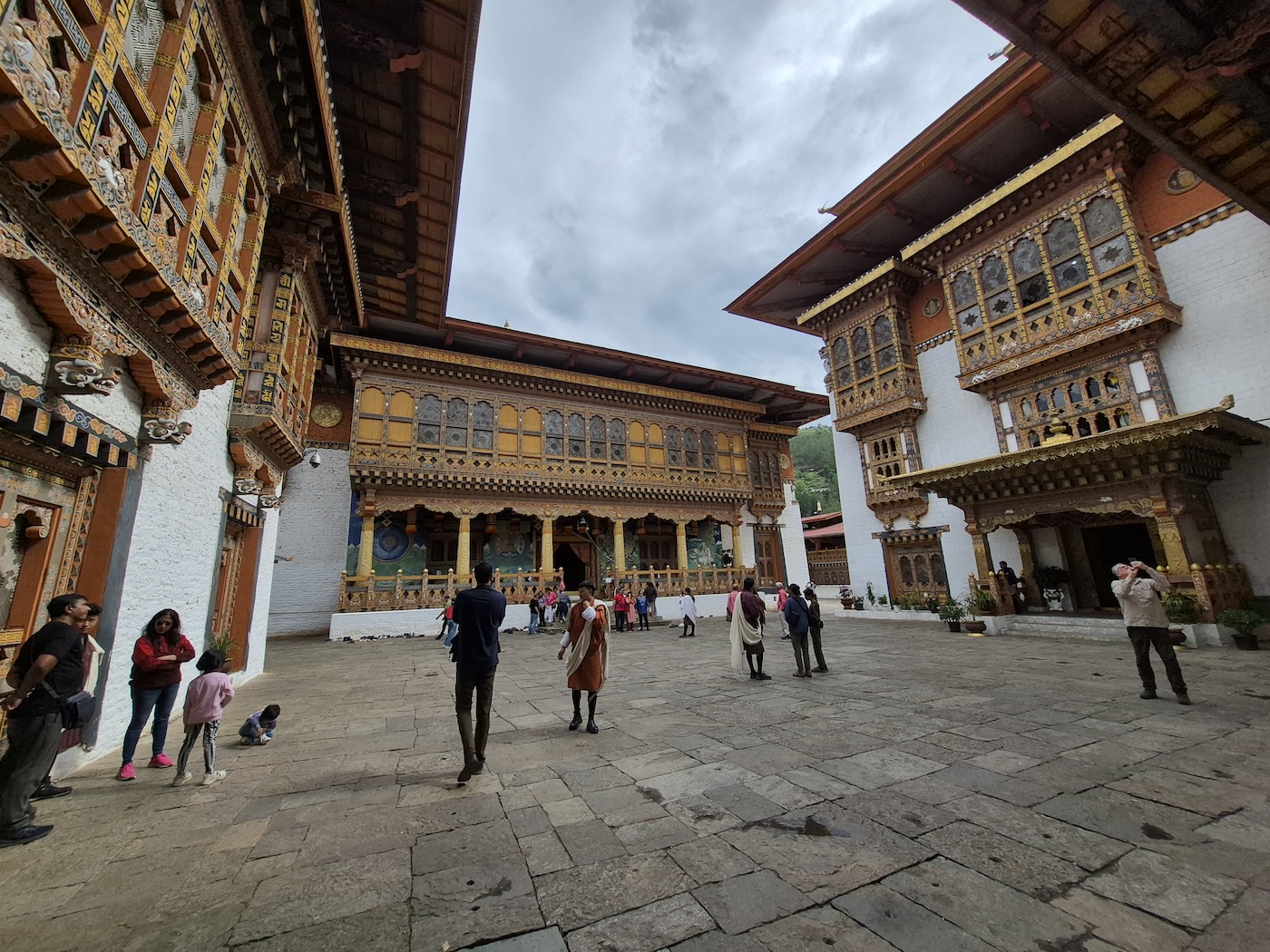
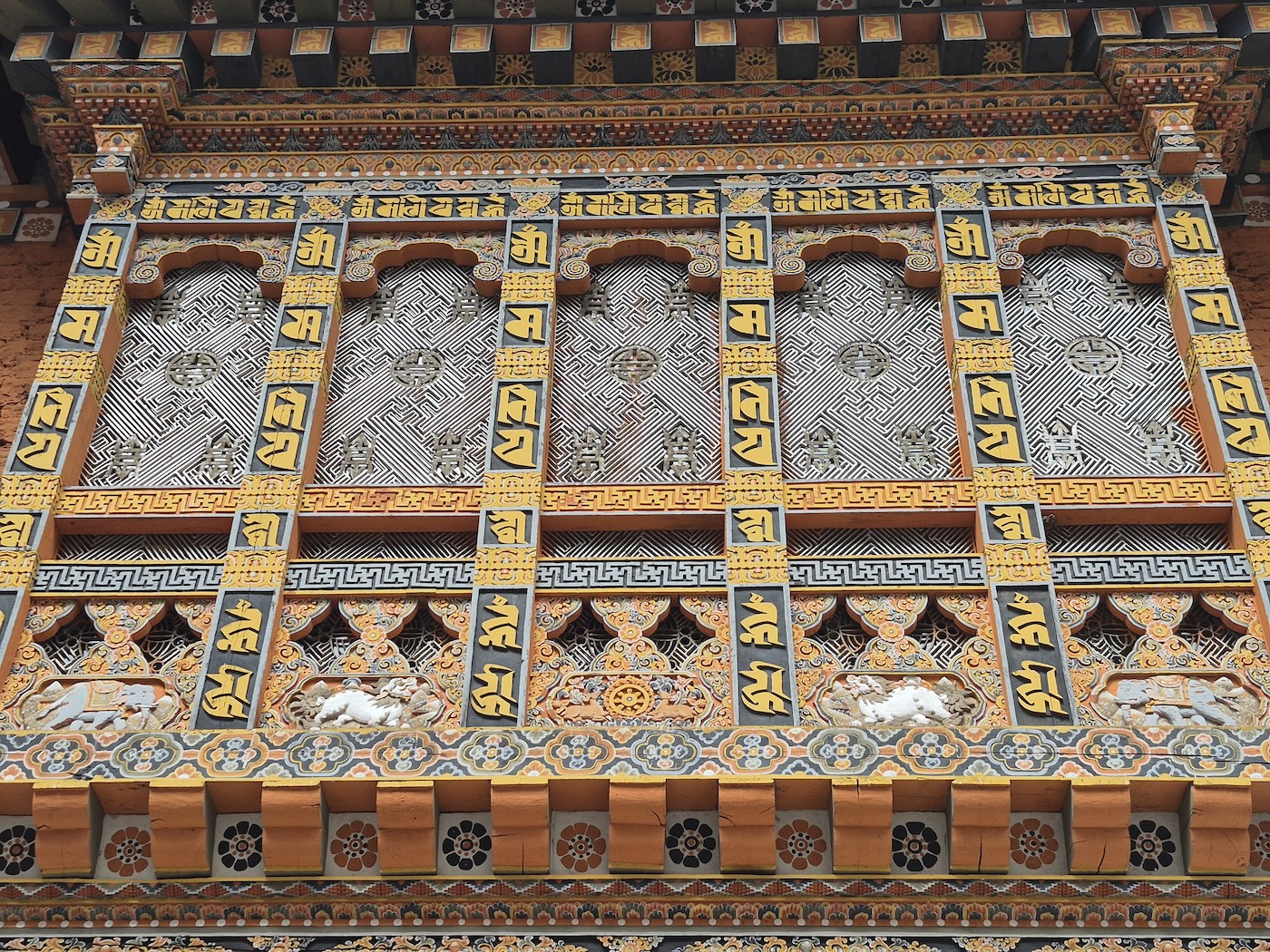
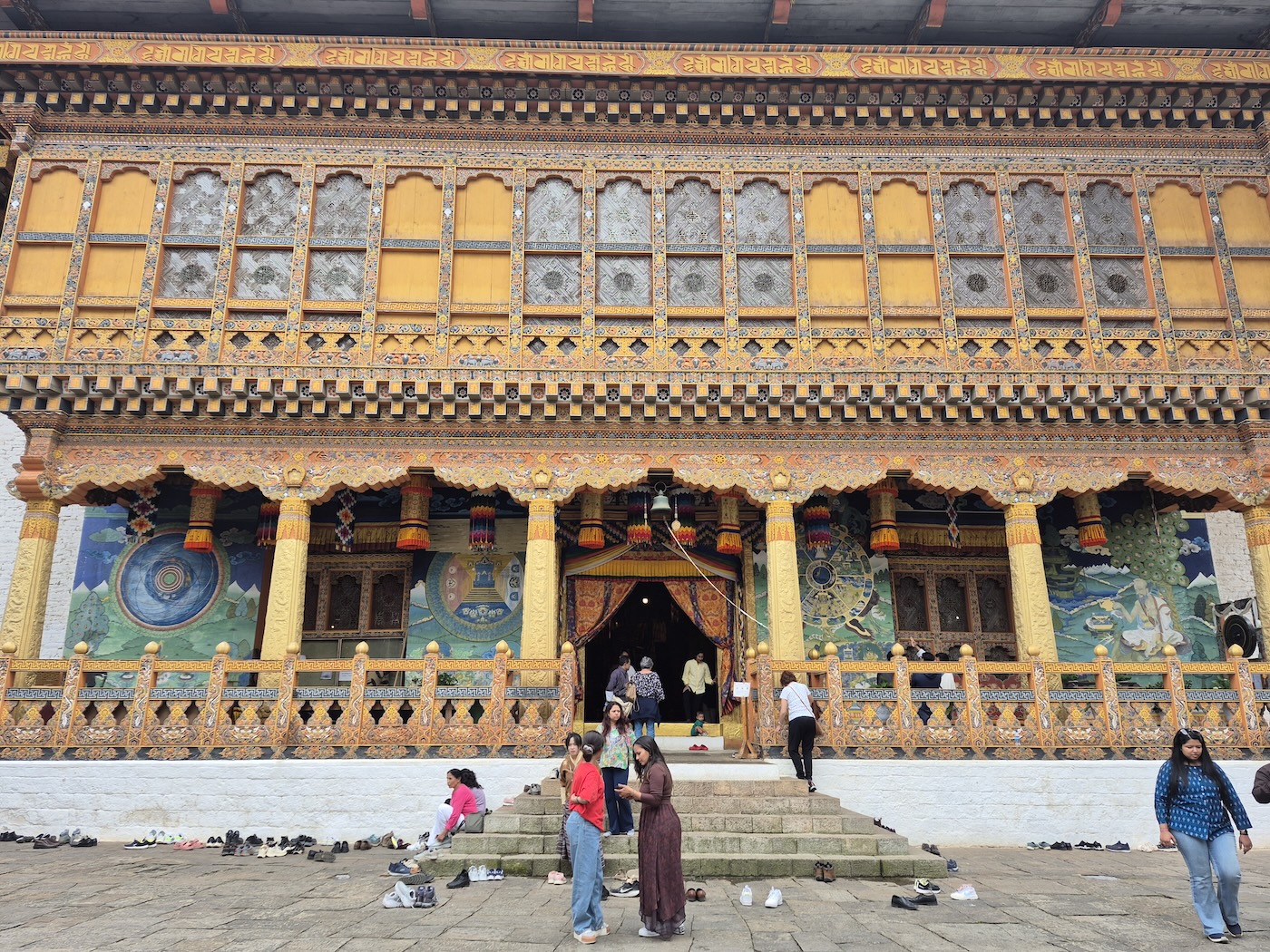
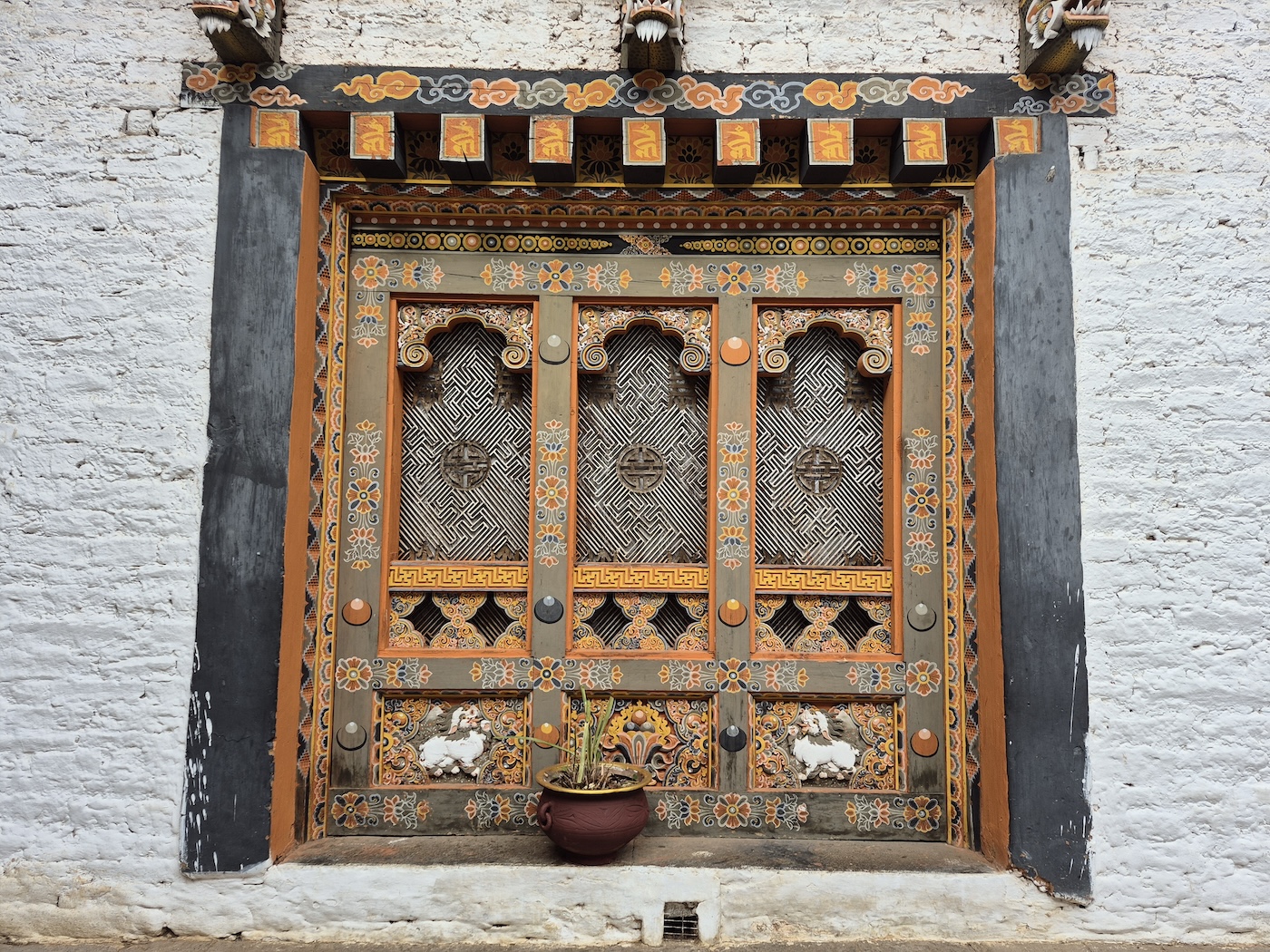
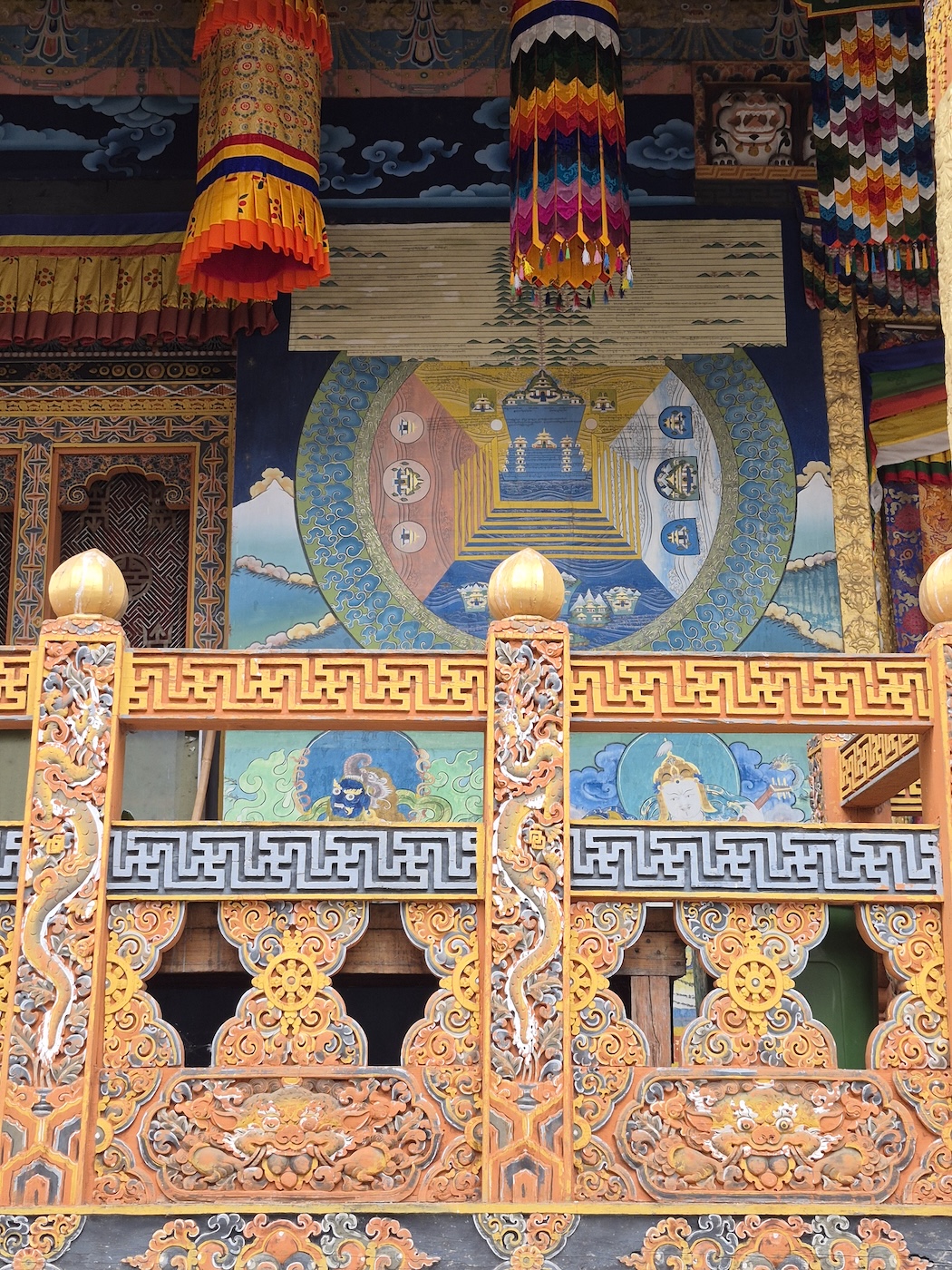
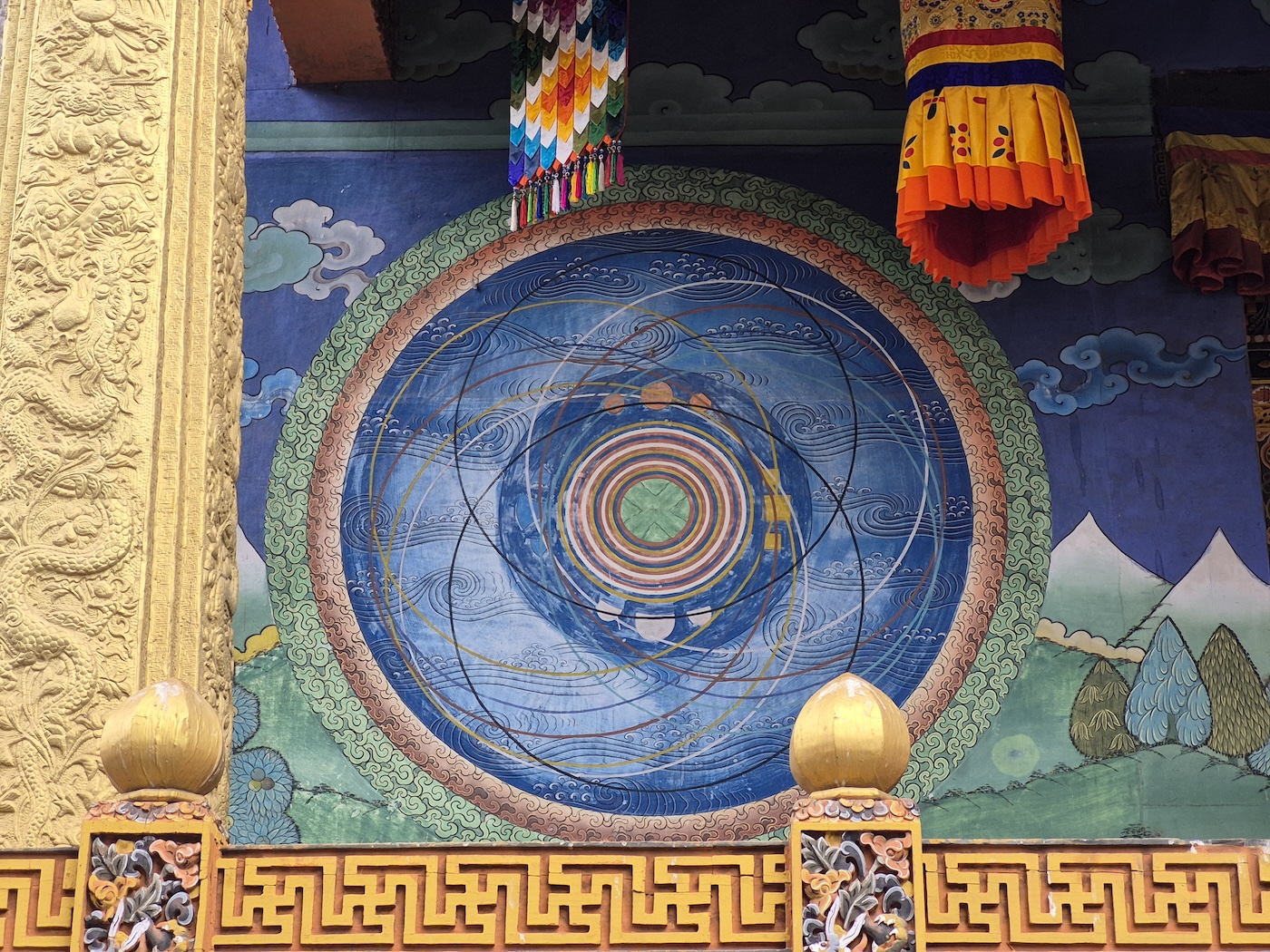
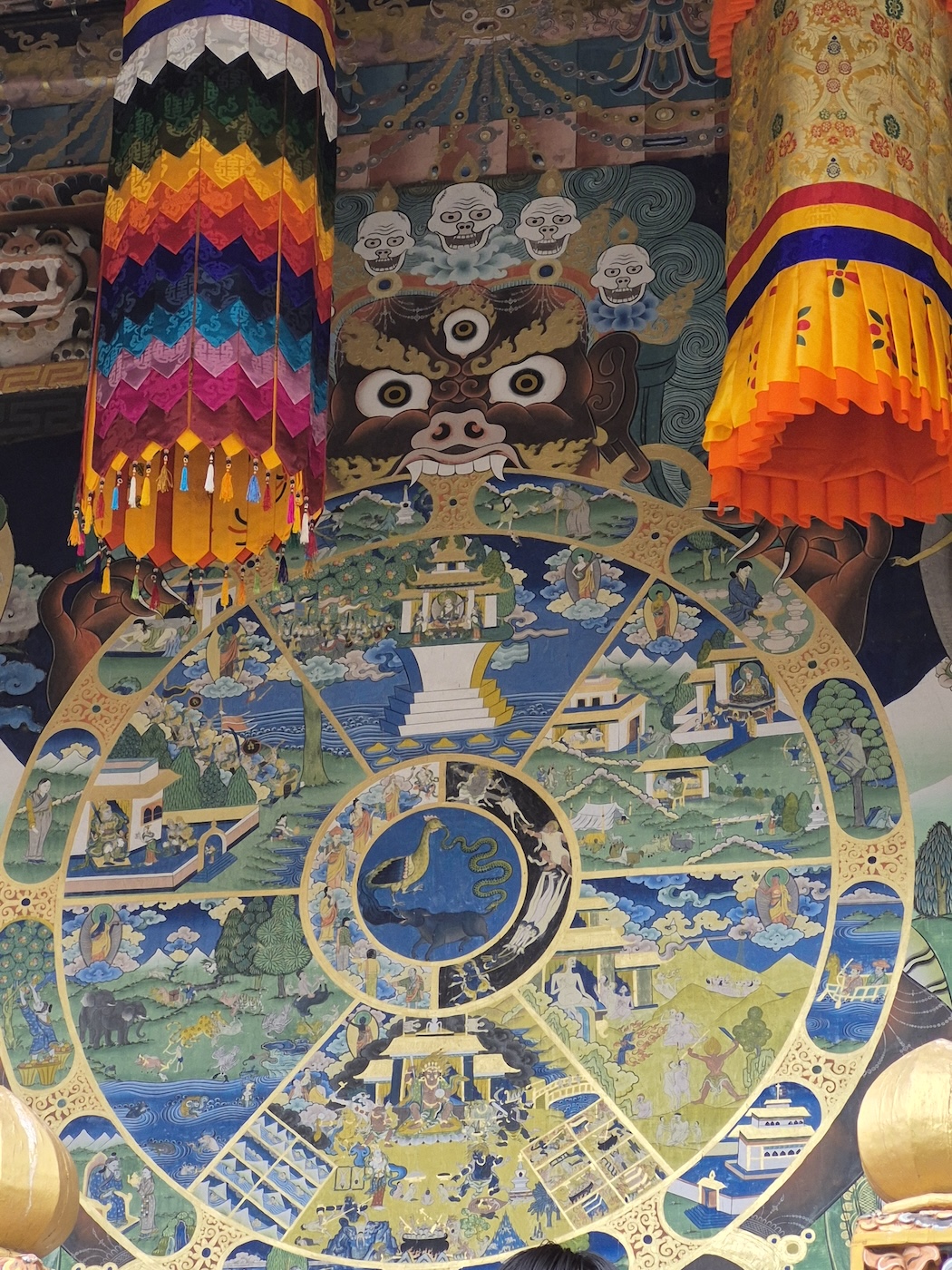
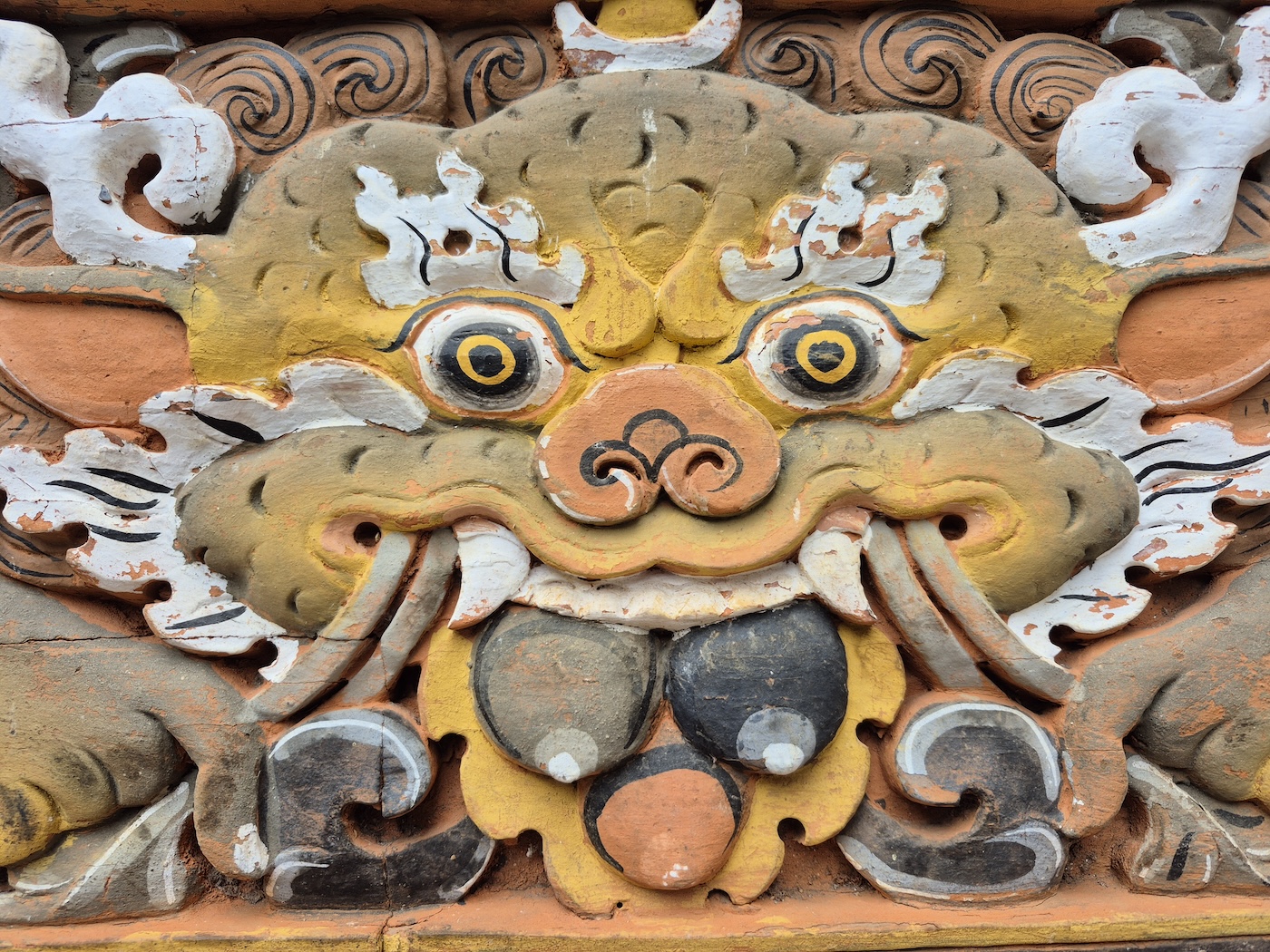
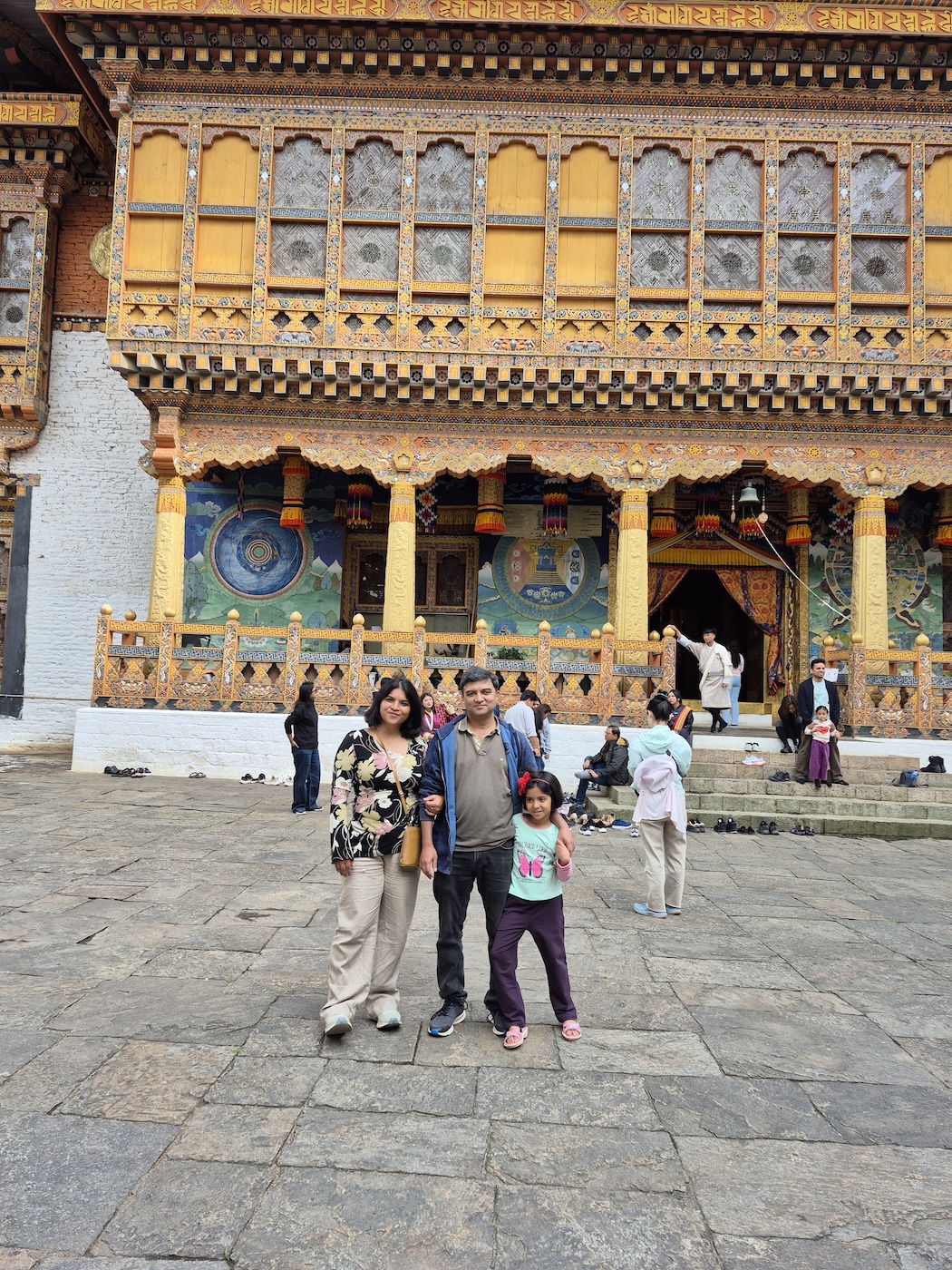
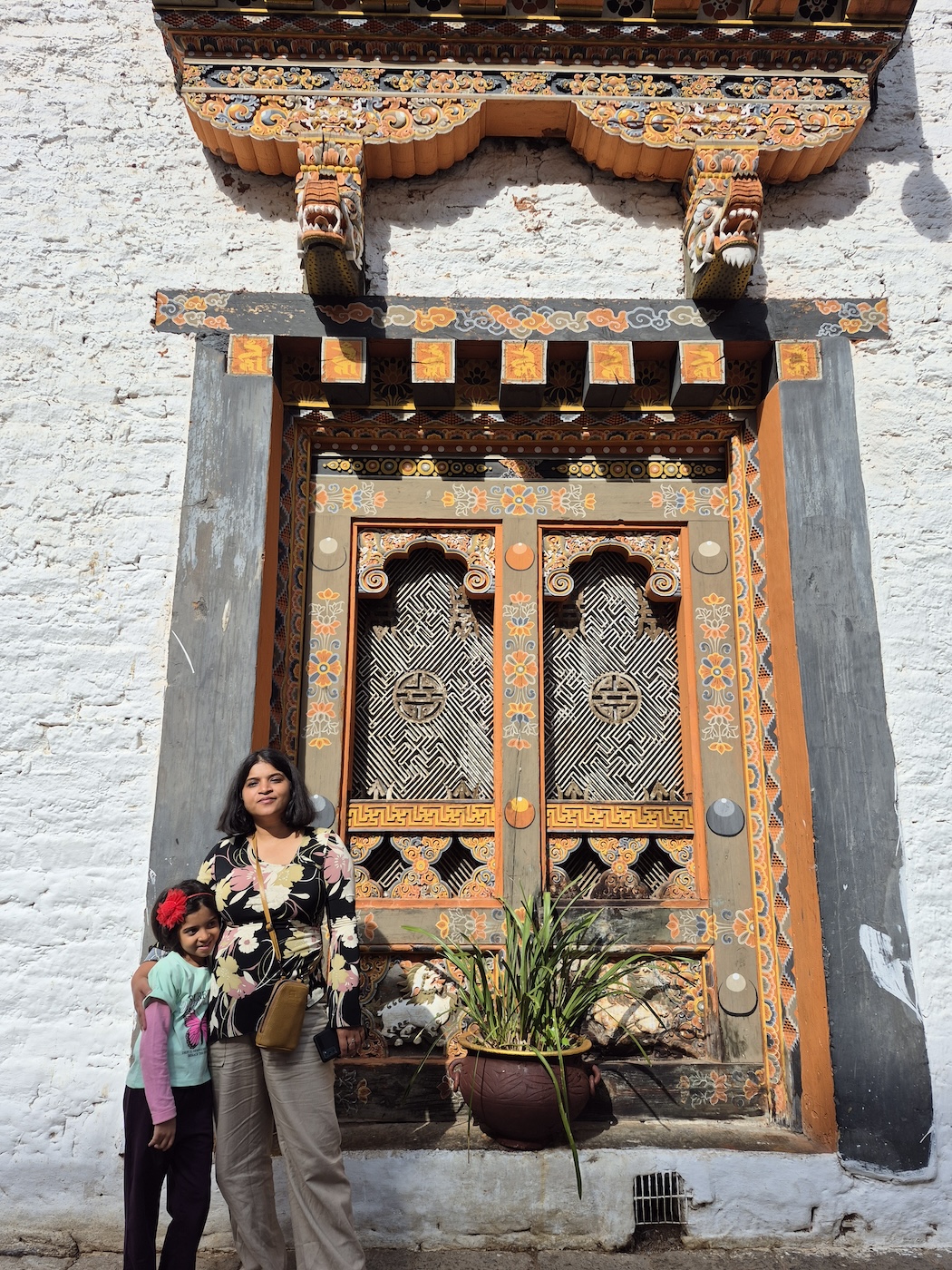
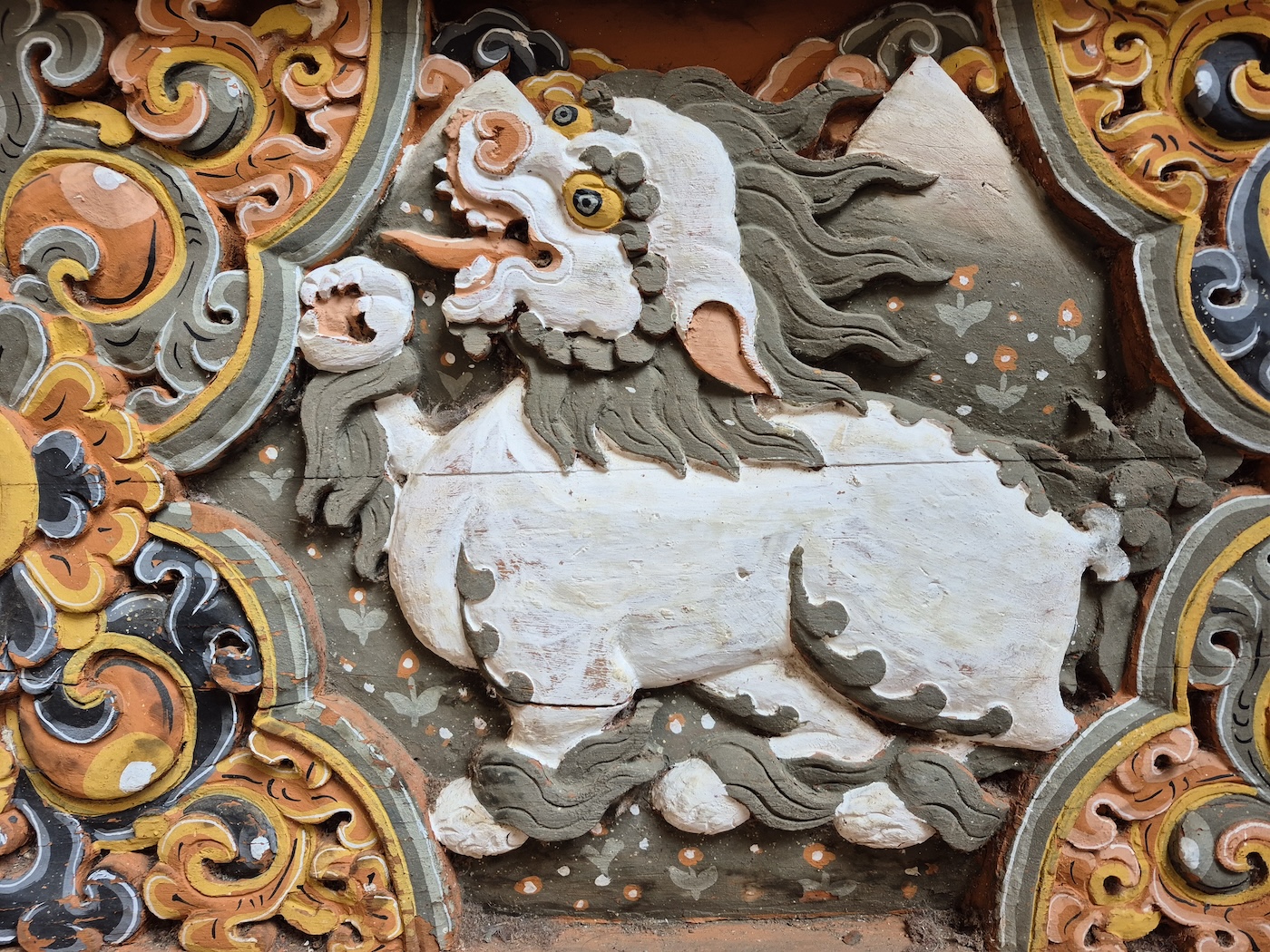
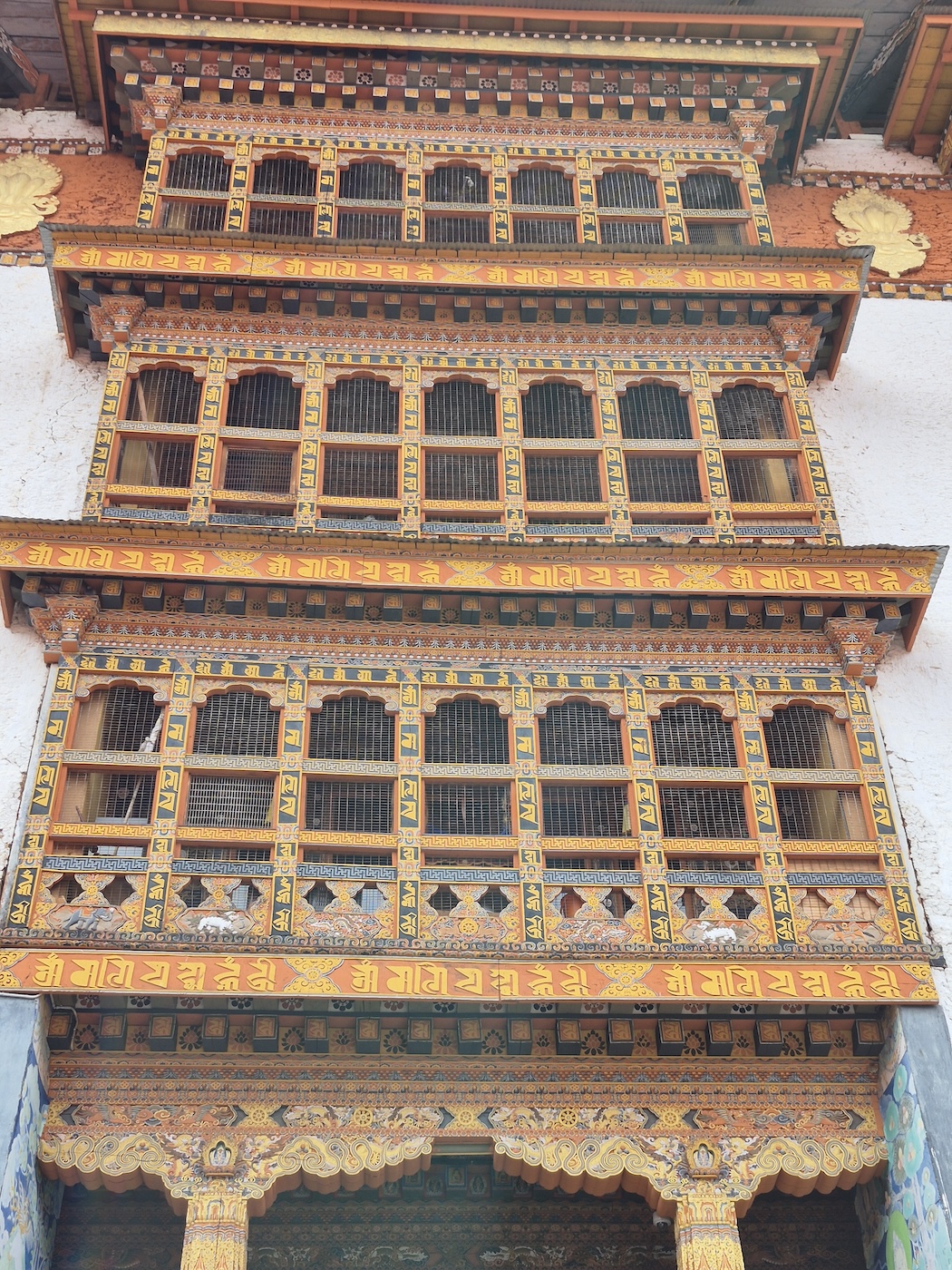
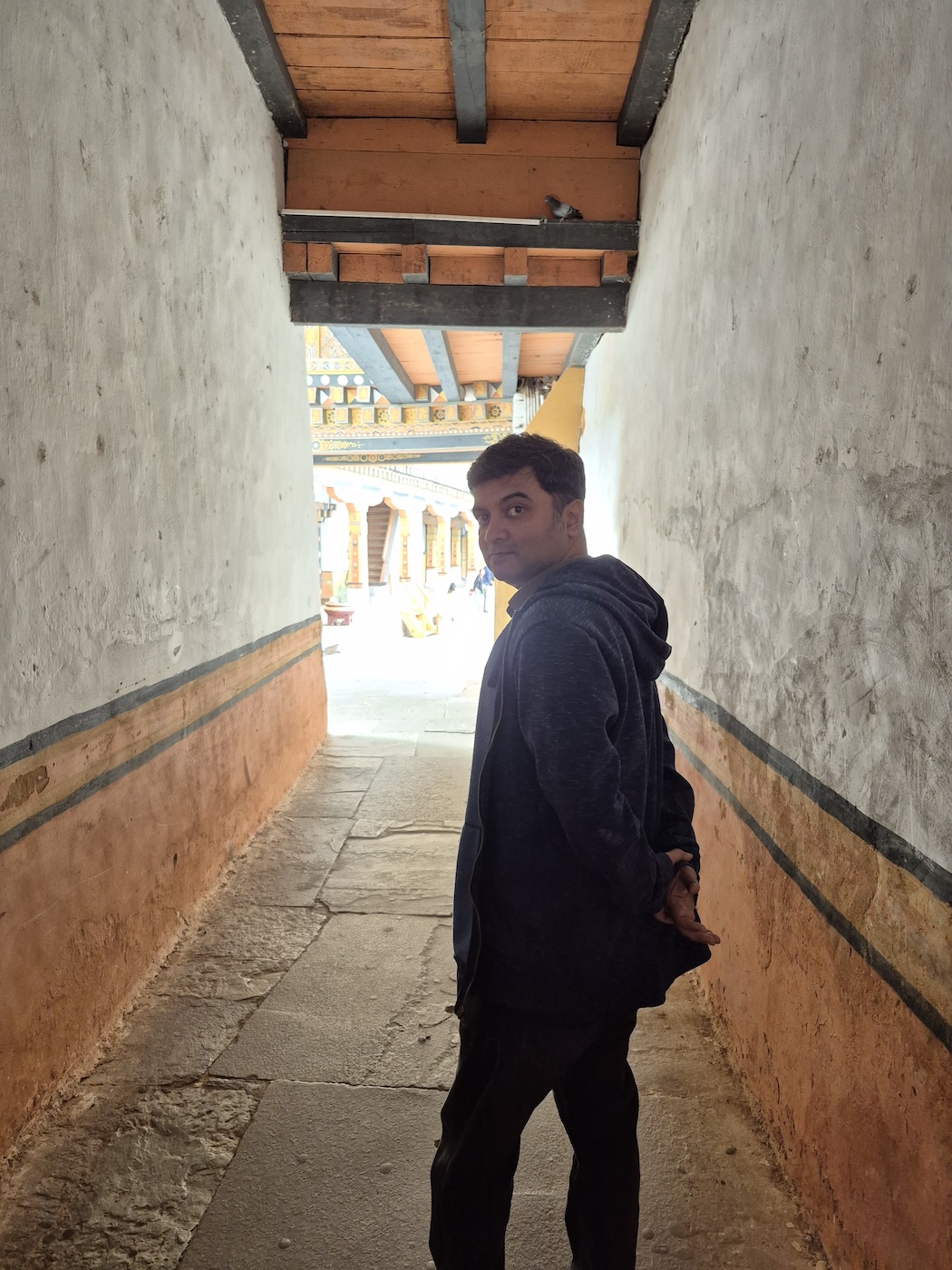
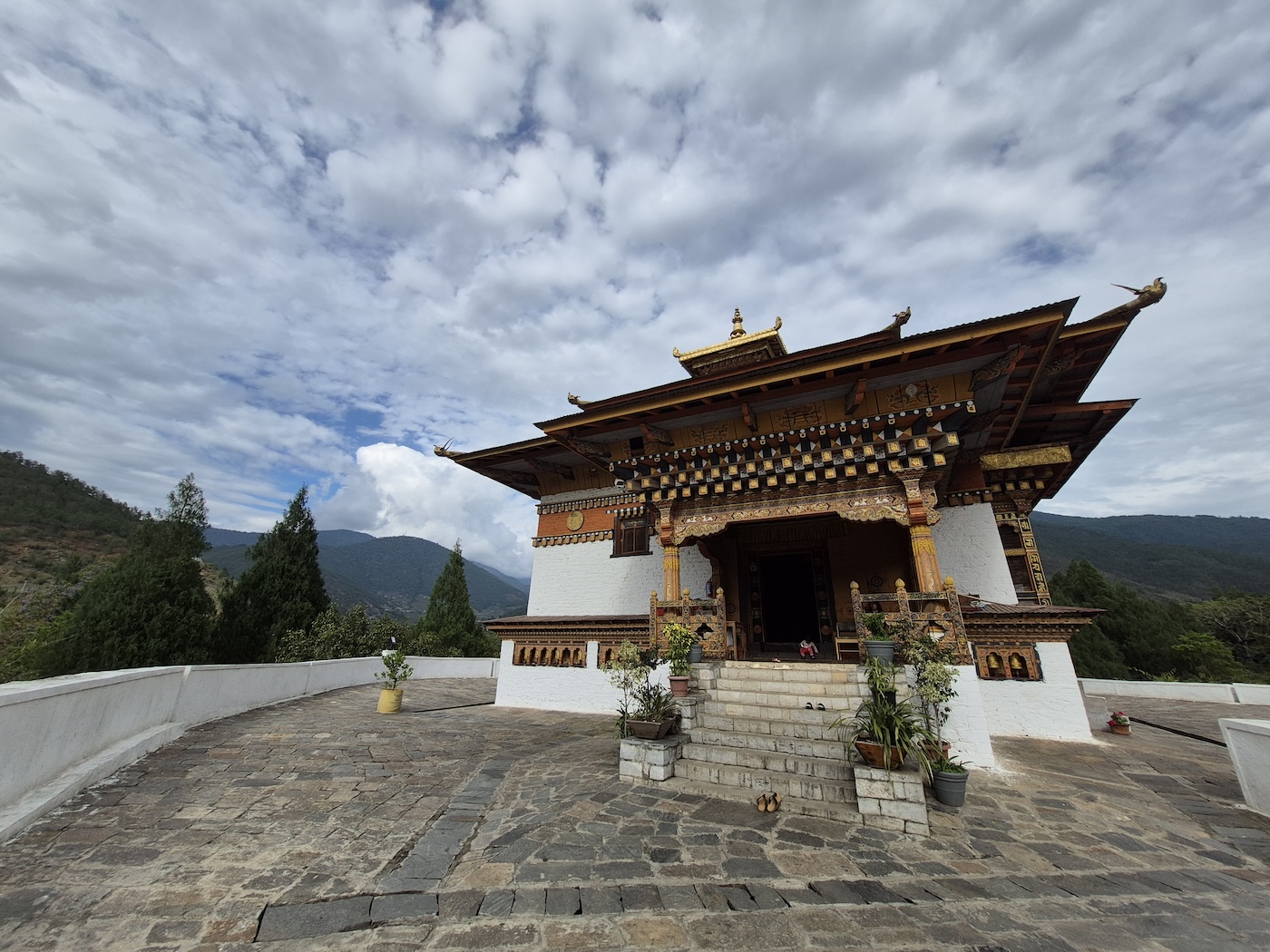
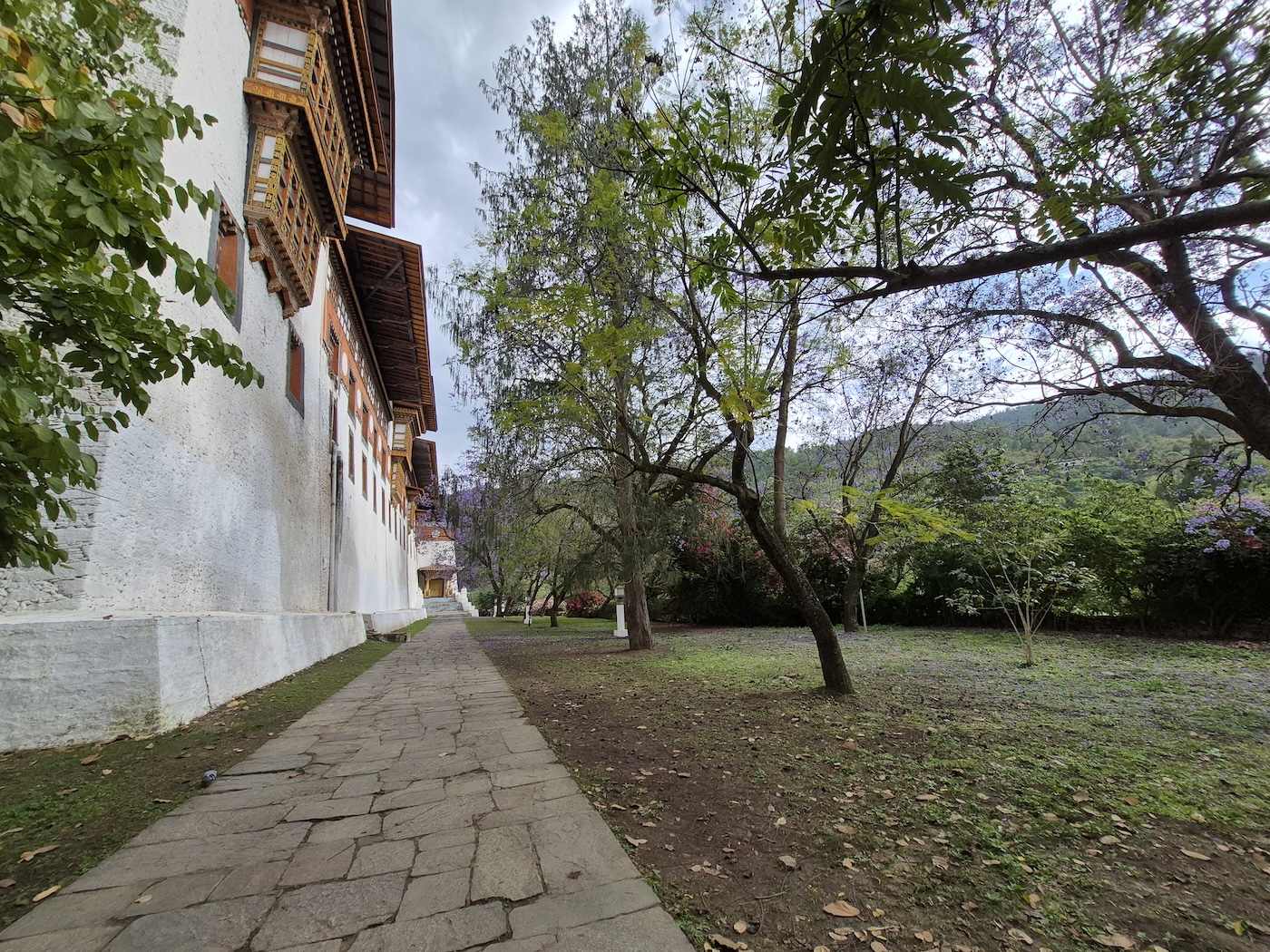
That restriction was understandable, but it also meant that some of the most ornate paintings and carvings had to be carried back only in our memories.
Just outside the main Dzong, we also visited a much smaller and older structure called Dzongchung, which literally means “the little Dzong.” Standing beside the scale and grandeur of Punakha Dzong, it would have been easy to overlook, but it was interesting to see the smaller sacred structure that existed there before the present Dzong was built.
Three-fourths of the way across the suspension bridge
After leaving Punakha Dzong, we drove for another five minutes or so and then walked close to a kilometre to reach the Punakha Suspension Bridge.
The bridge stretches from one side of the river to the other without any support in the middle. It is long, narrow and covered with prayer flags. It also sways.
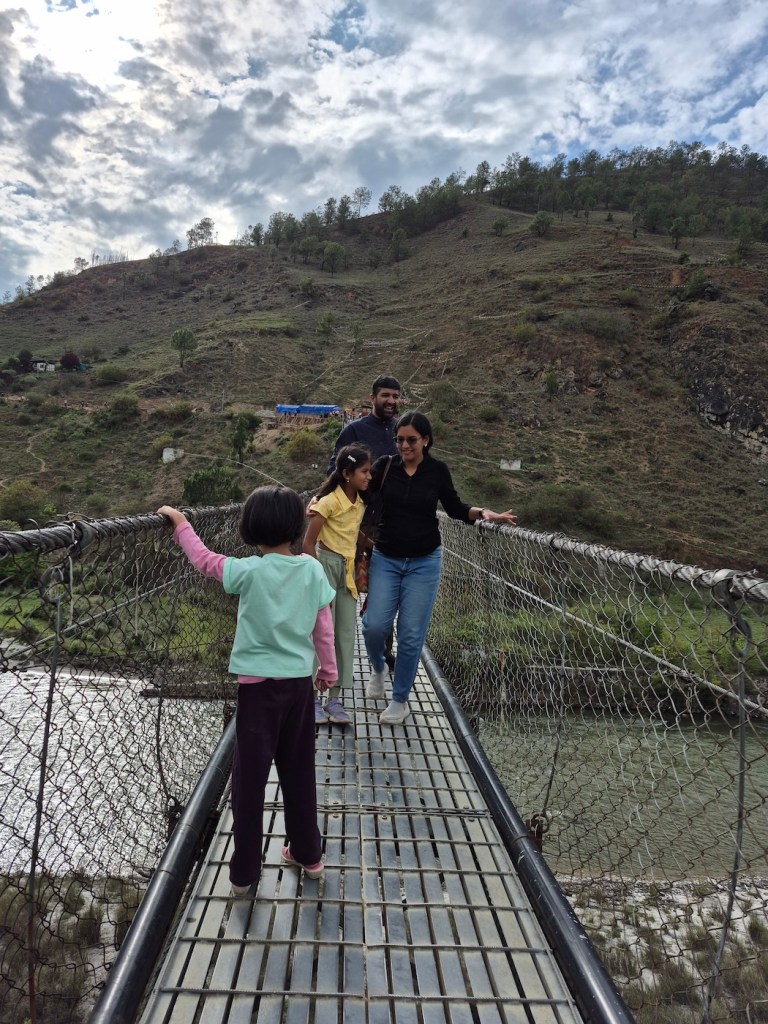
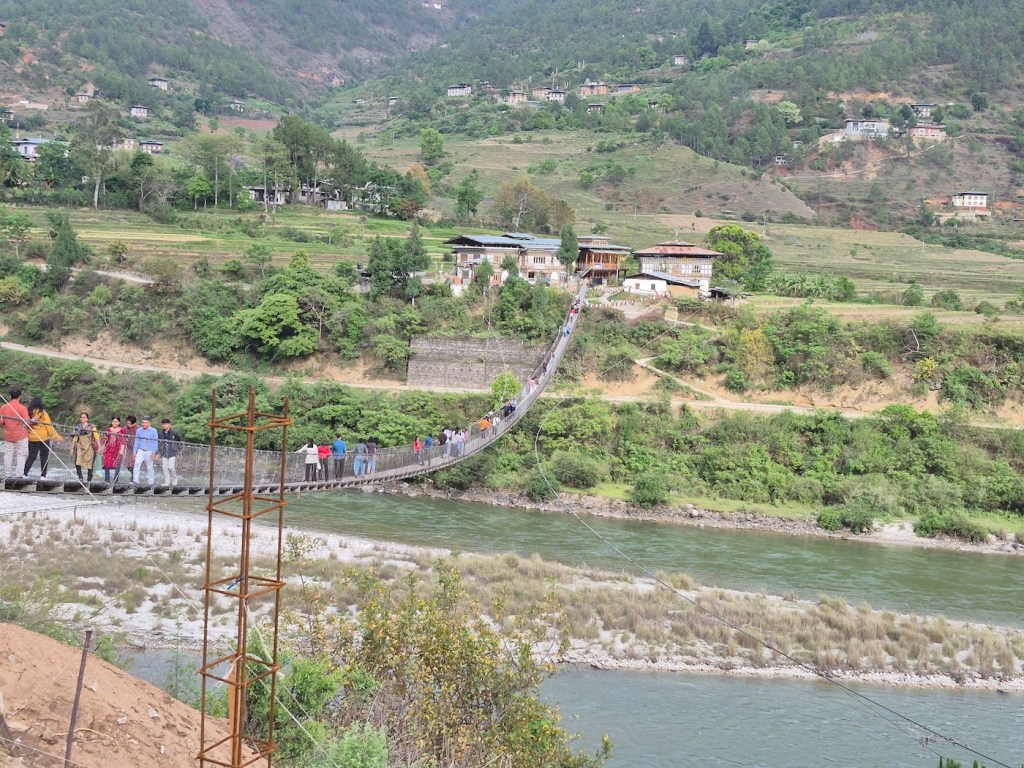
As people walked across it, the entire bridge seemed to move gently from one side to the other. I knew that it was safe, but that knowledge did not make the swaying feel any less alarming.
Apparently, many visitors cross the bridge, stop at a restaurant on the other side and then walk all the way back. We made it almost three-fourths of the way across before a practical question occurred to us: even if we reached the other end, we would have to repeat the entire experience to return.
We had already experienced the bridge. That was enough.
So we turned around.
Just as we started coming back, a huge group of Indian tourists entered the bridge from our side. There must have been around 50 or 60 people, most of them senior citizens. They were understandably nervous and were moving forward inch by inch while occupying almost the entire width of the bridge.
Seeing the whole group together made us even more certain that turning back had been the correct decision. We somehow found our way past them and returned to solid ground before the entire group had moved farther onto the bridge.
The hotel I had been waiting for
By the time we reached our hotel, it was around four or five in the evening.
We were staying at Dhumra Farm Resort, and this was one of the hotels I had been most curious about. When I was planning the trip, it had a rating of around 4.9 on Tripadvisor despite having several hundred reviews. Such a high score with so many reviews is quite rare.
It was also one of the more expensive hotels on our trip. The rooms cost upwards of ₹12,000 per night, so I had been looking forward to finding out whether it genuinely lived up to its reputation.
I would say that it did.
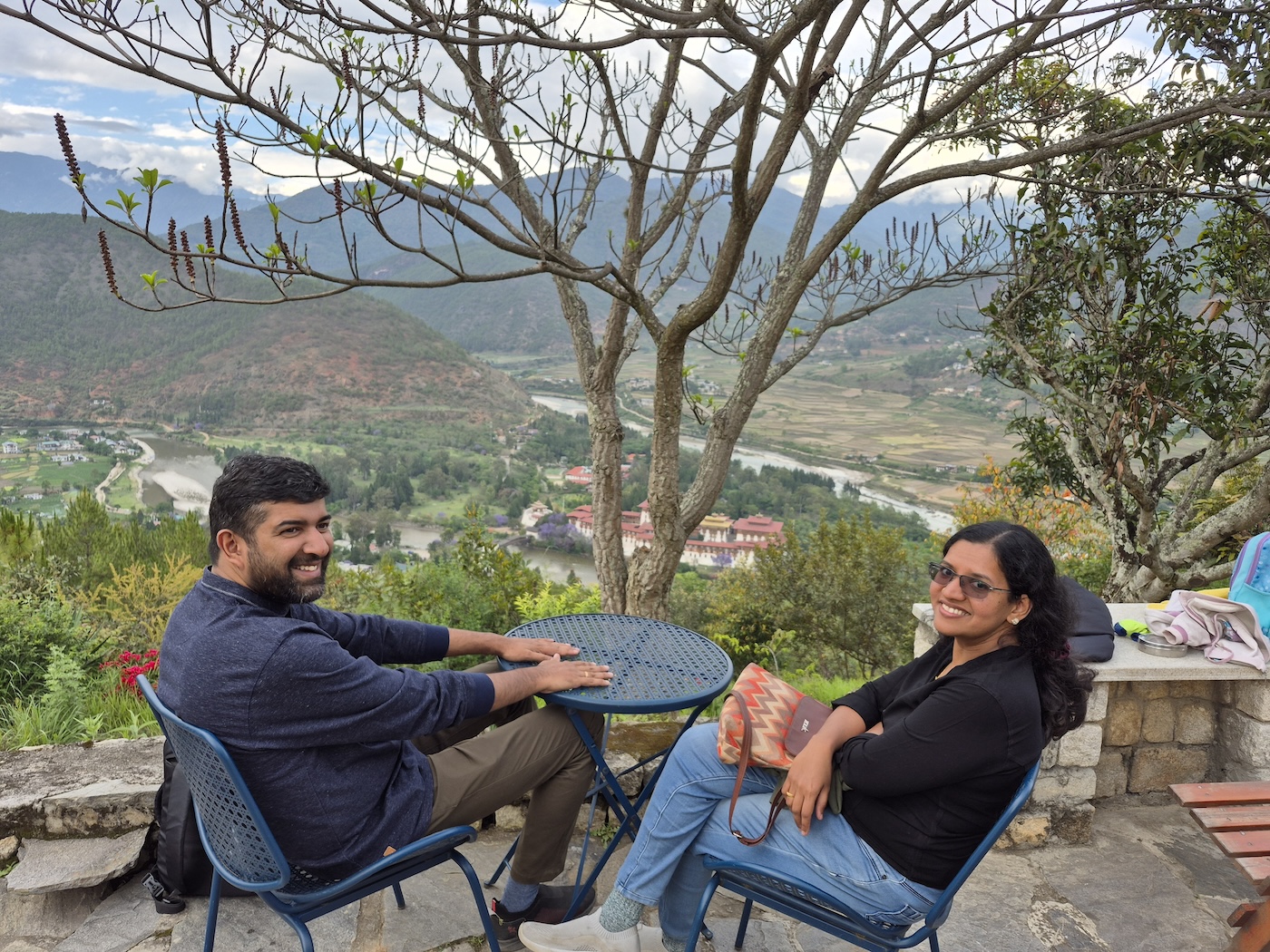
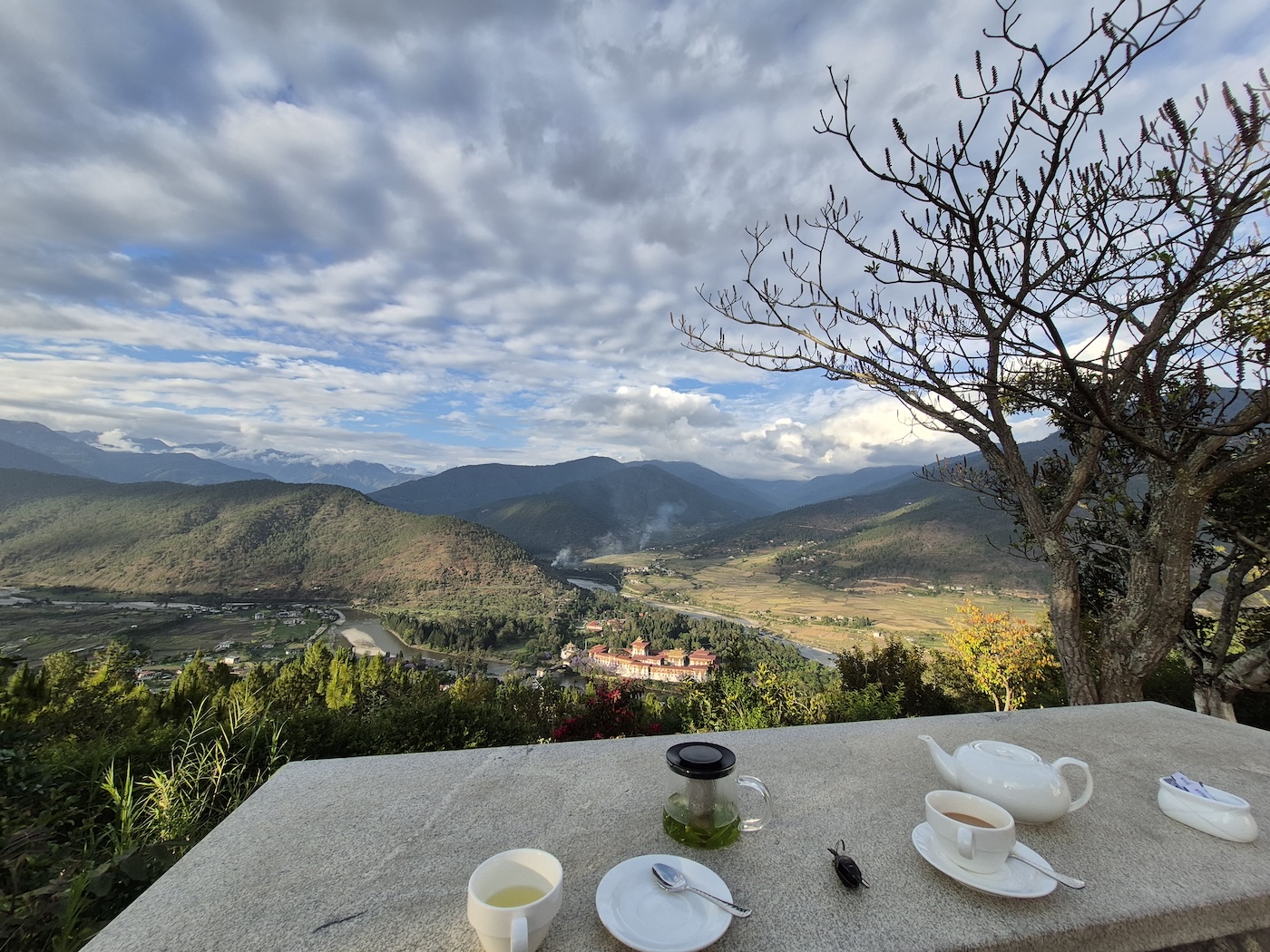
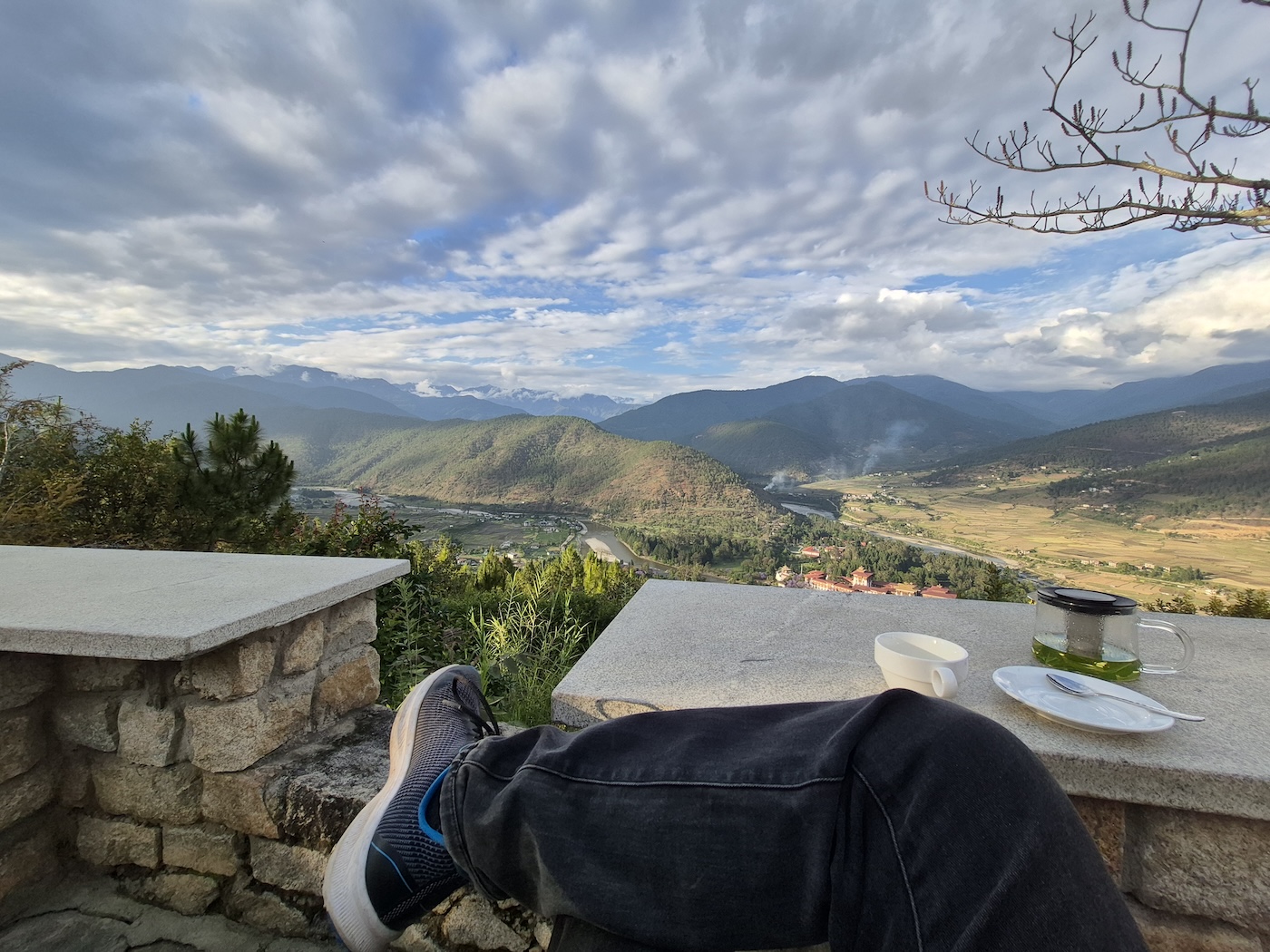
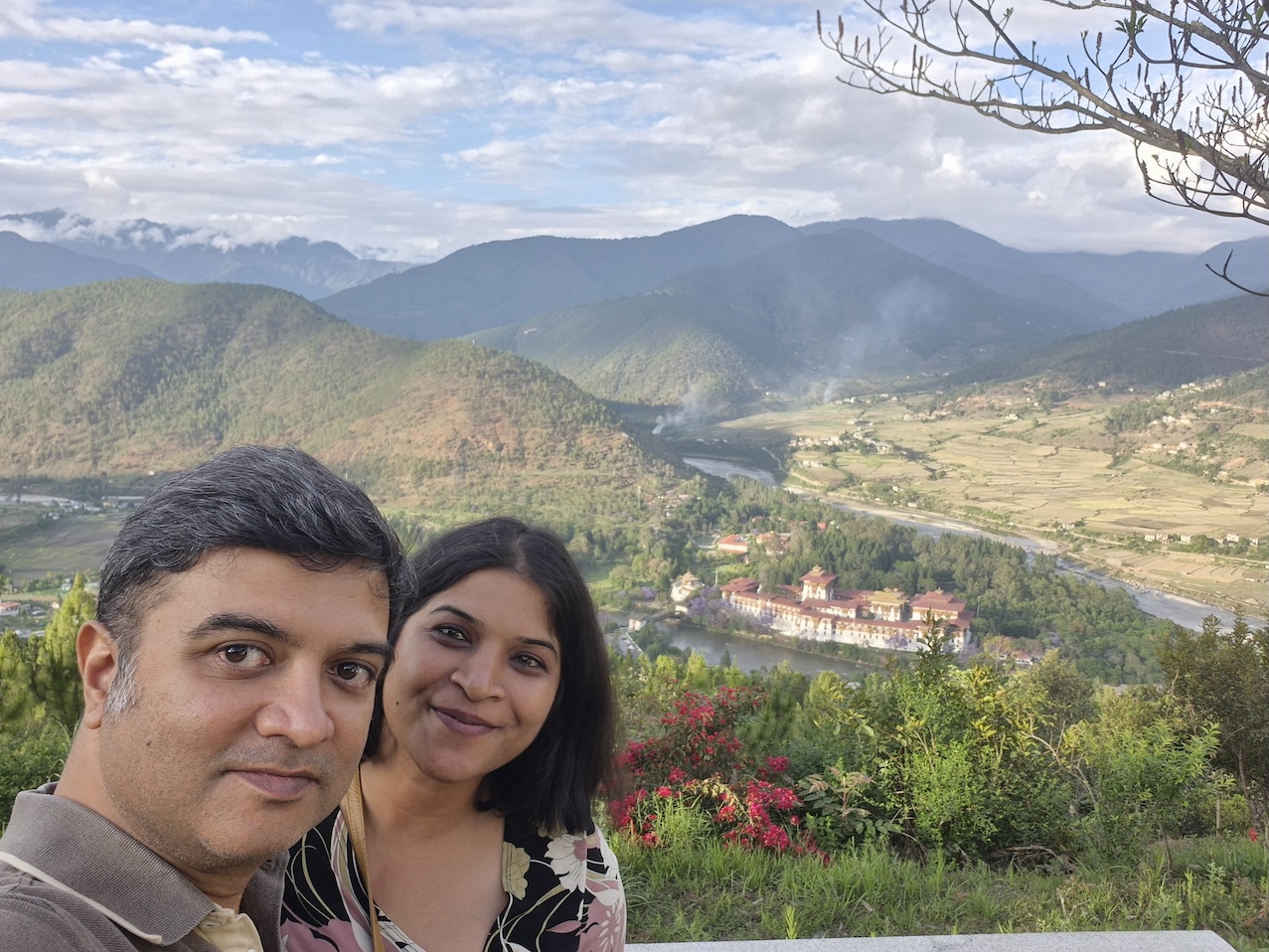
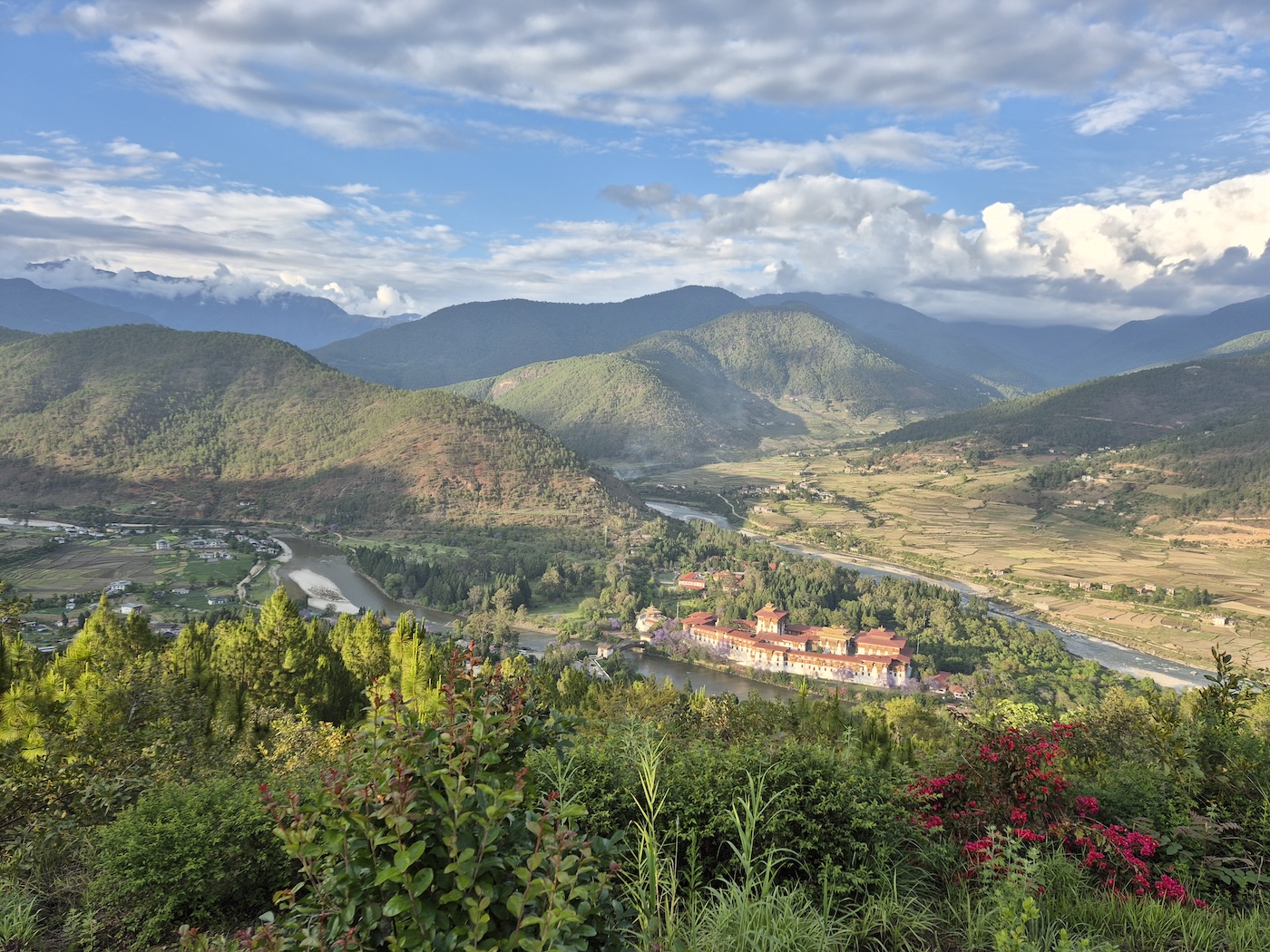
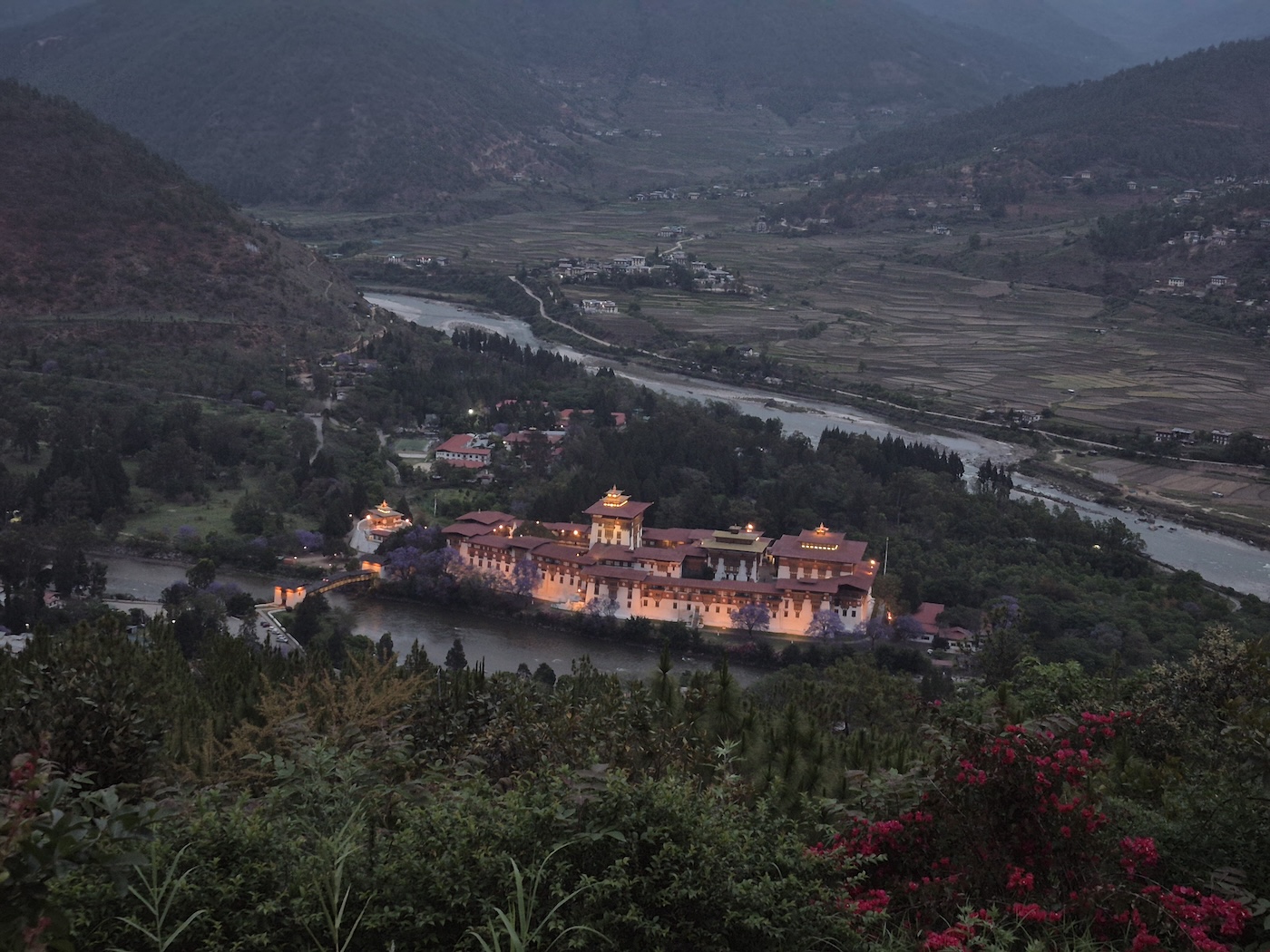
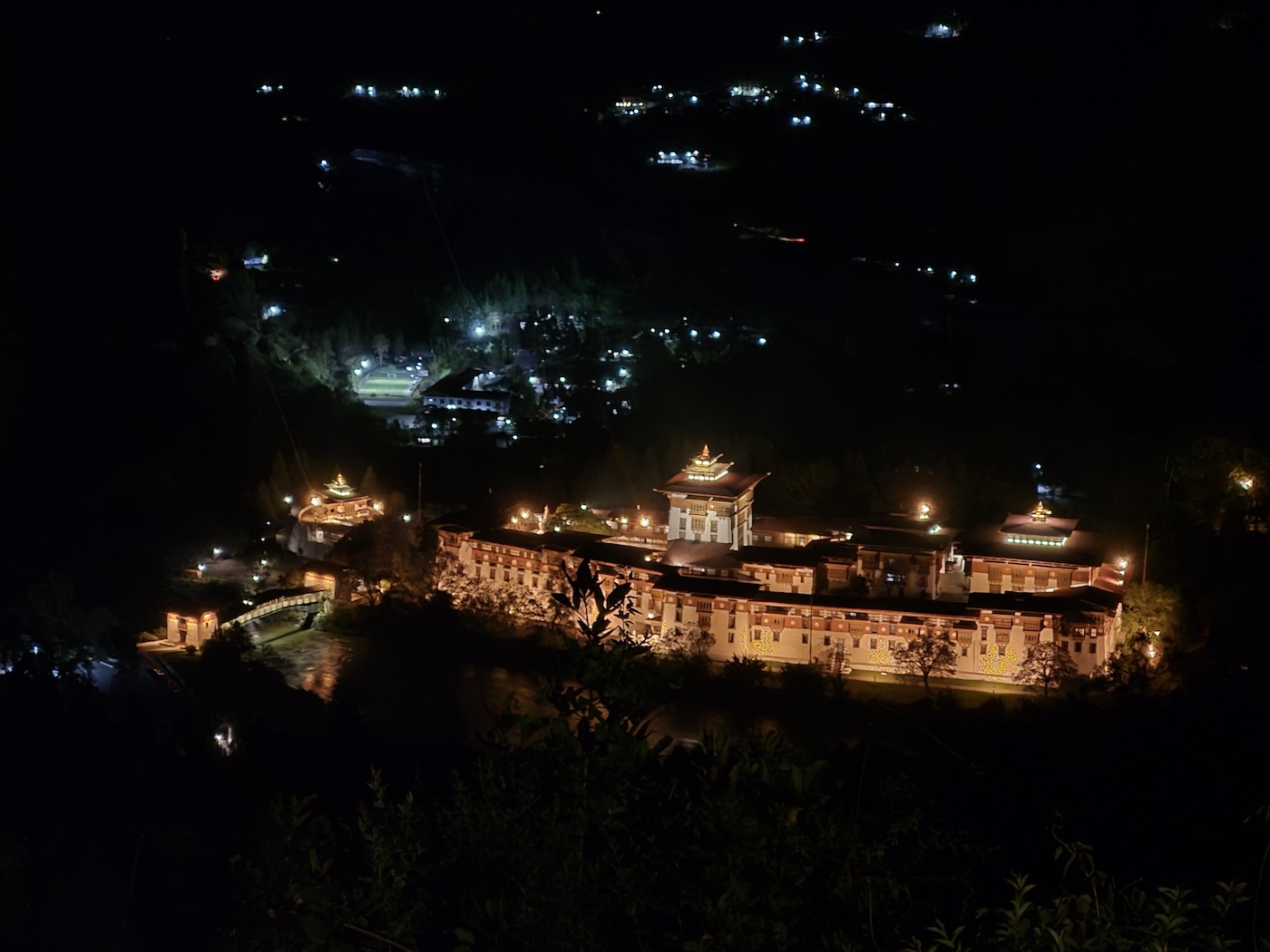
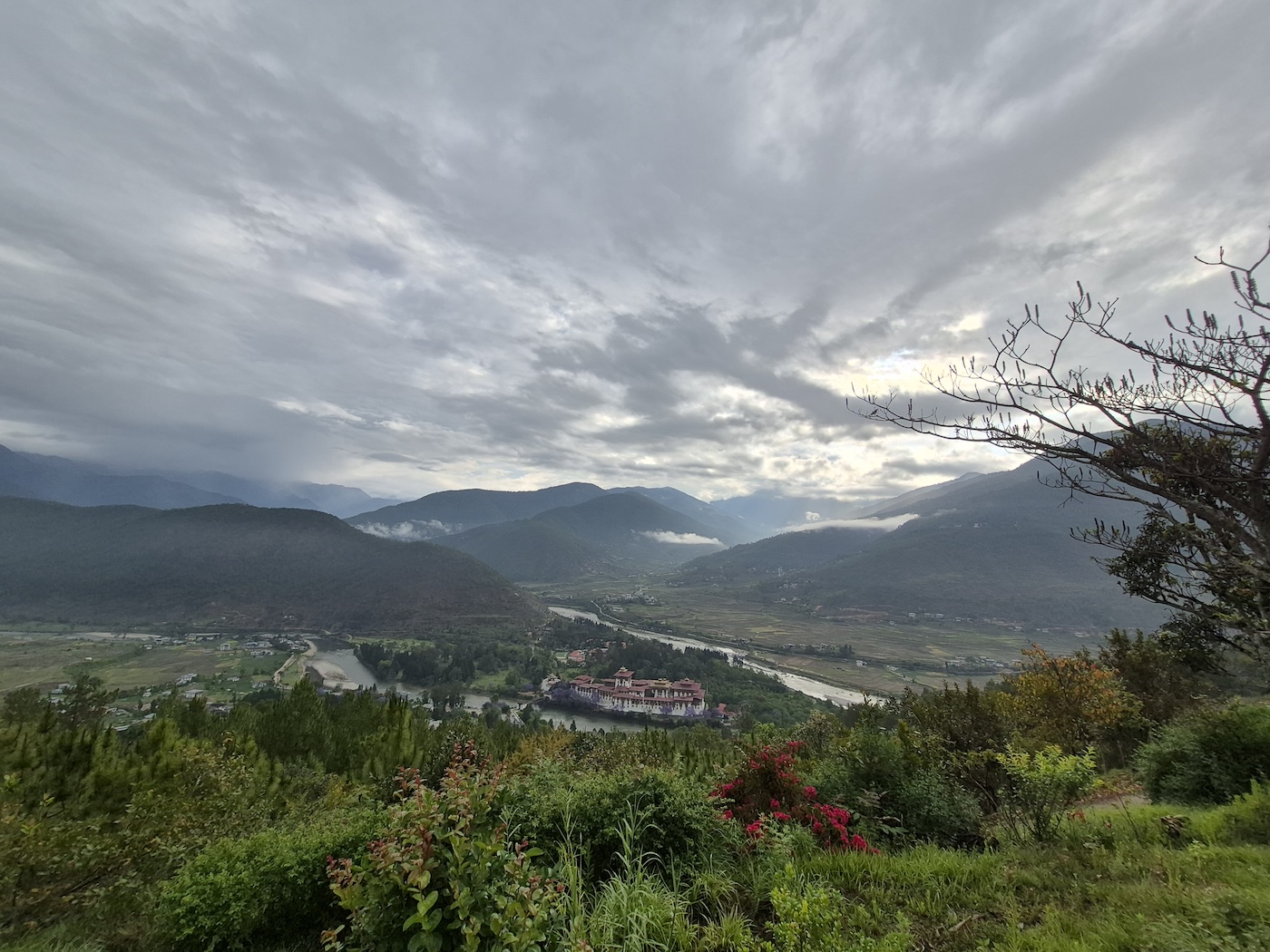
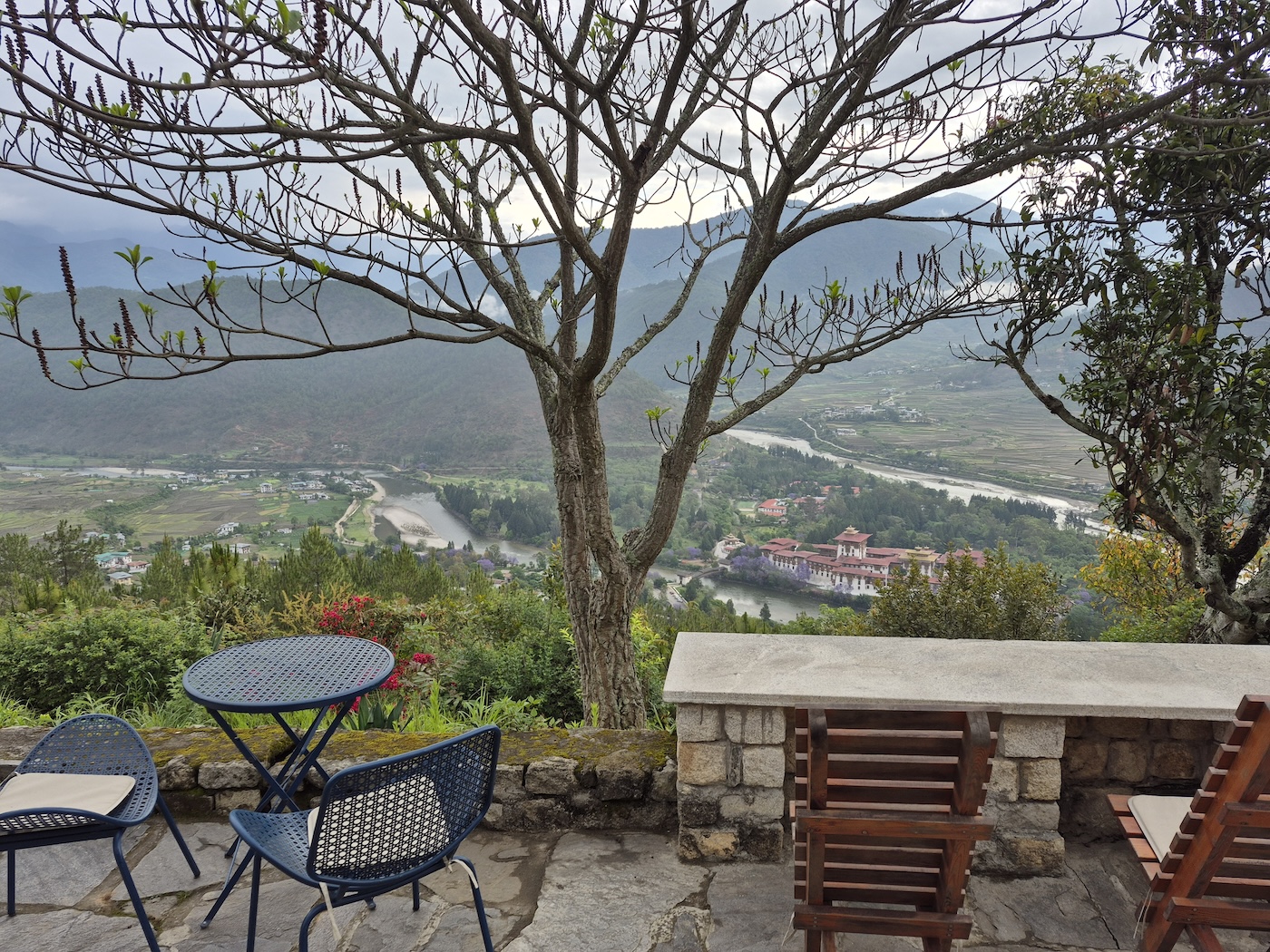
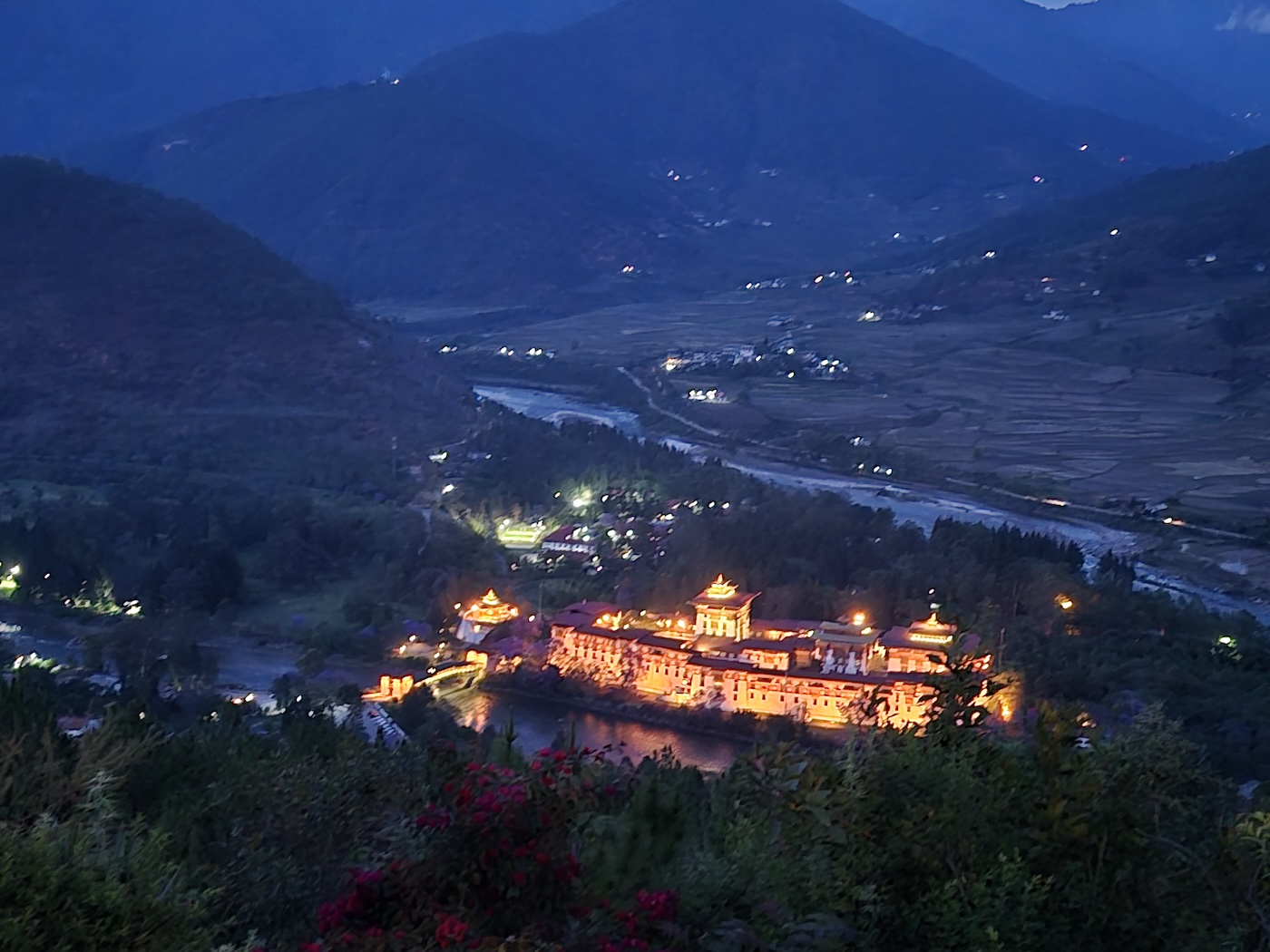
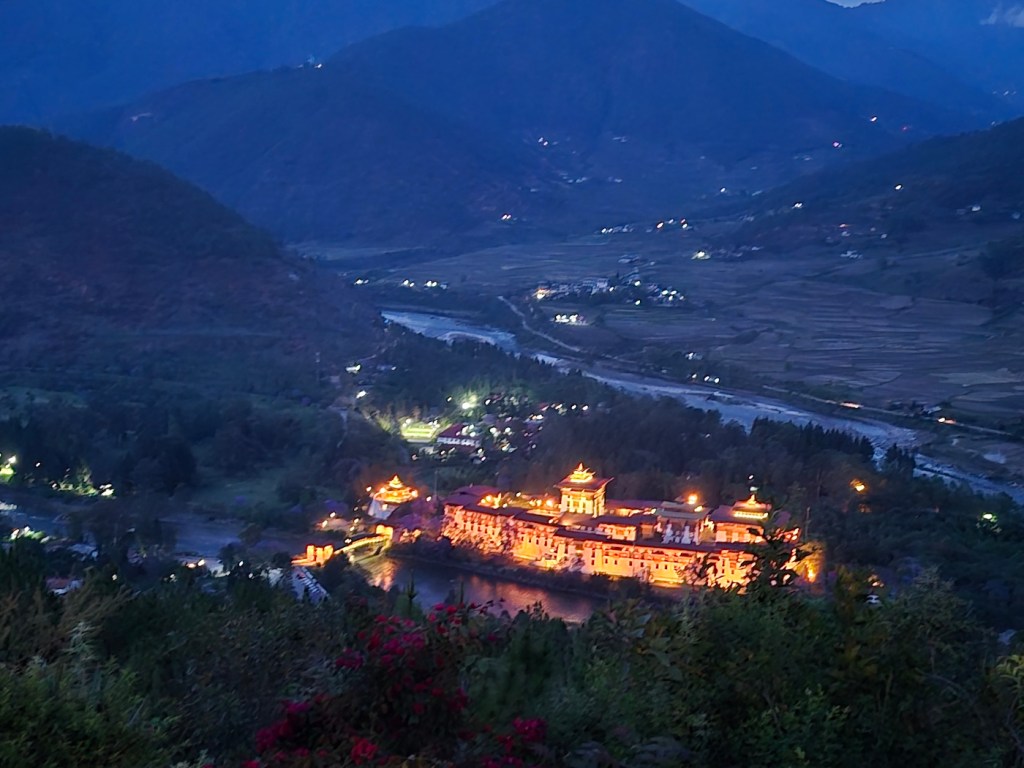
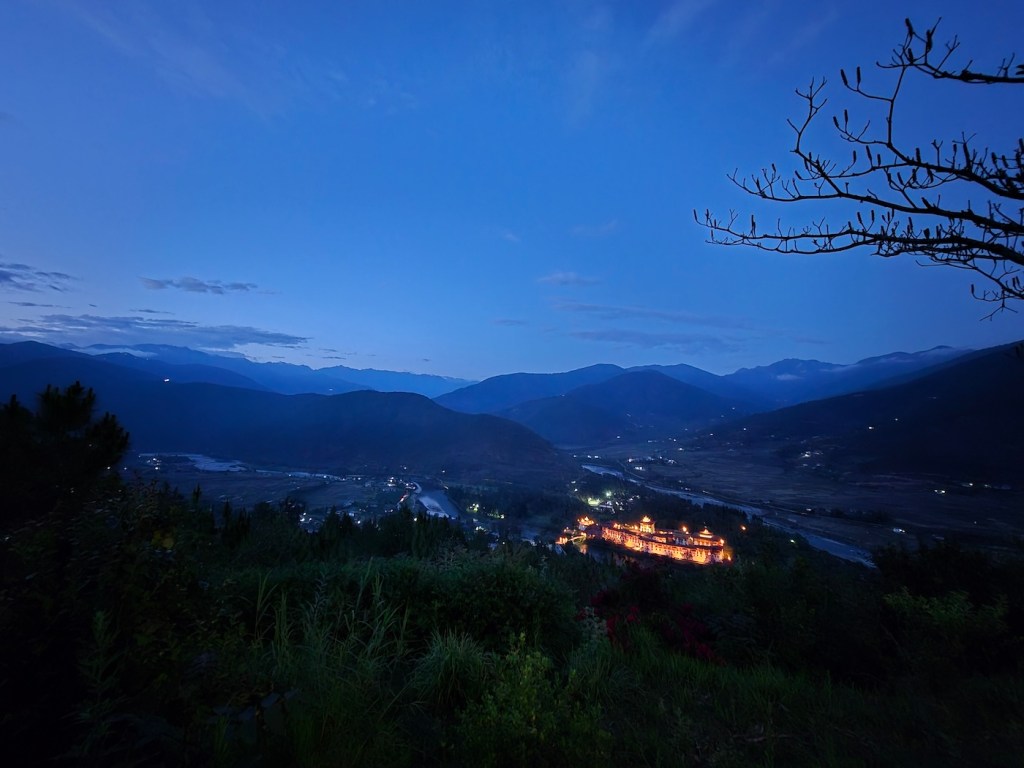
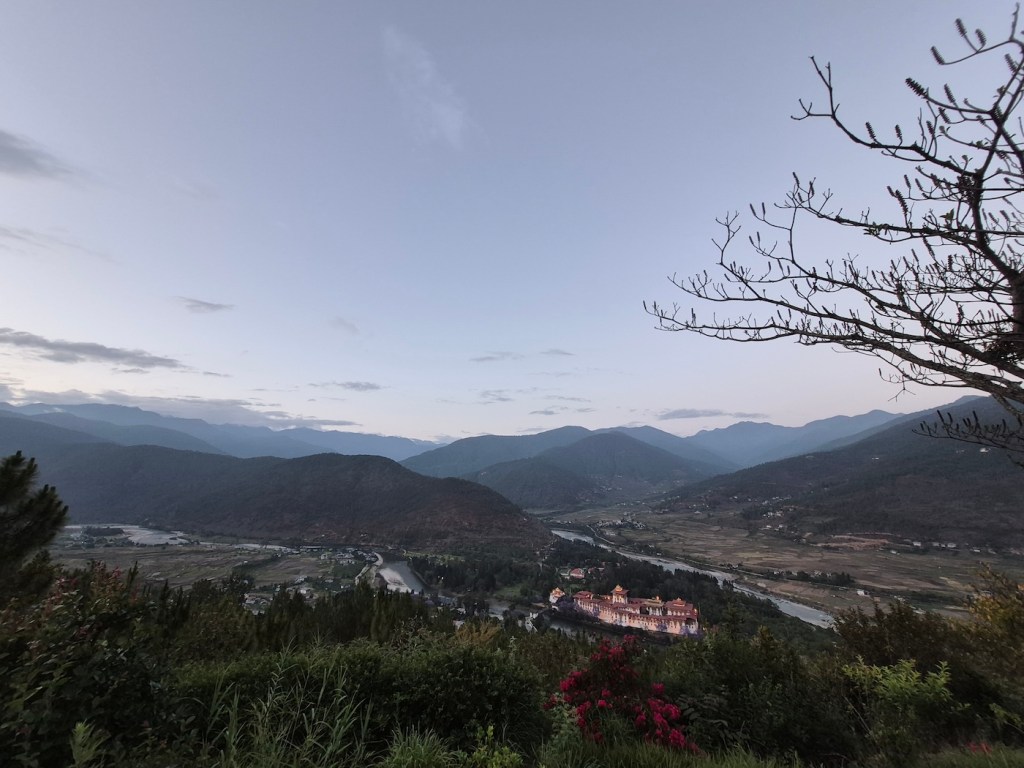
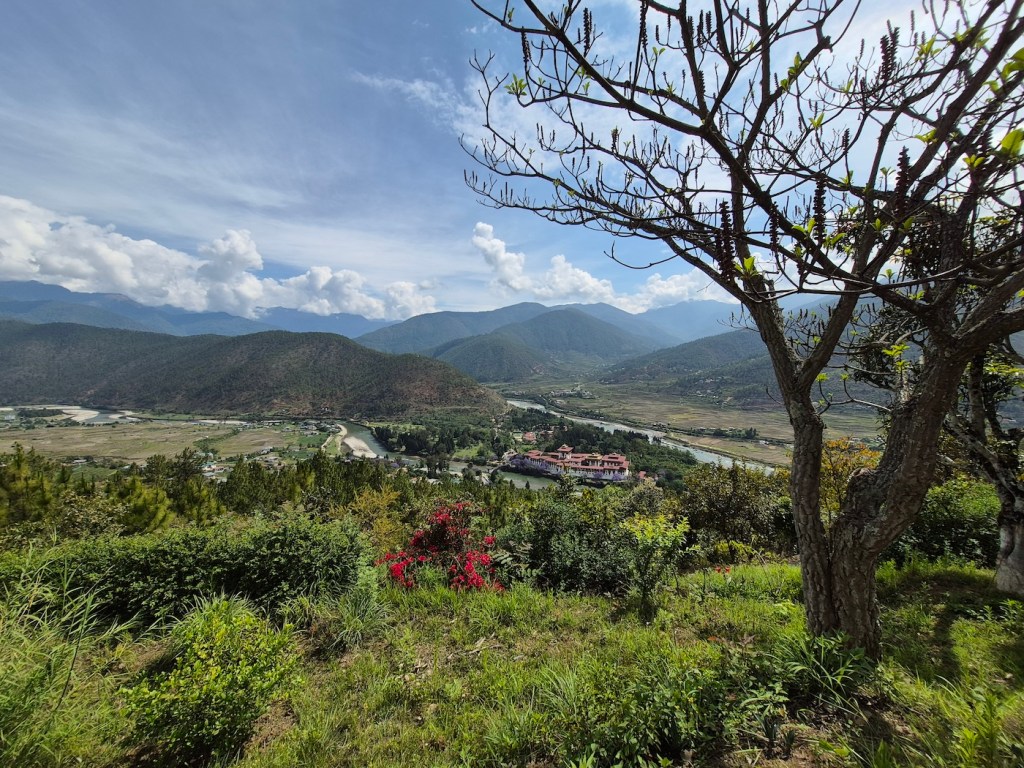
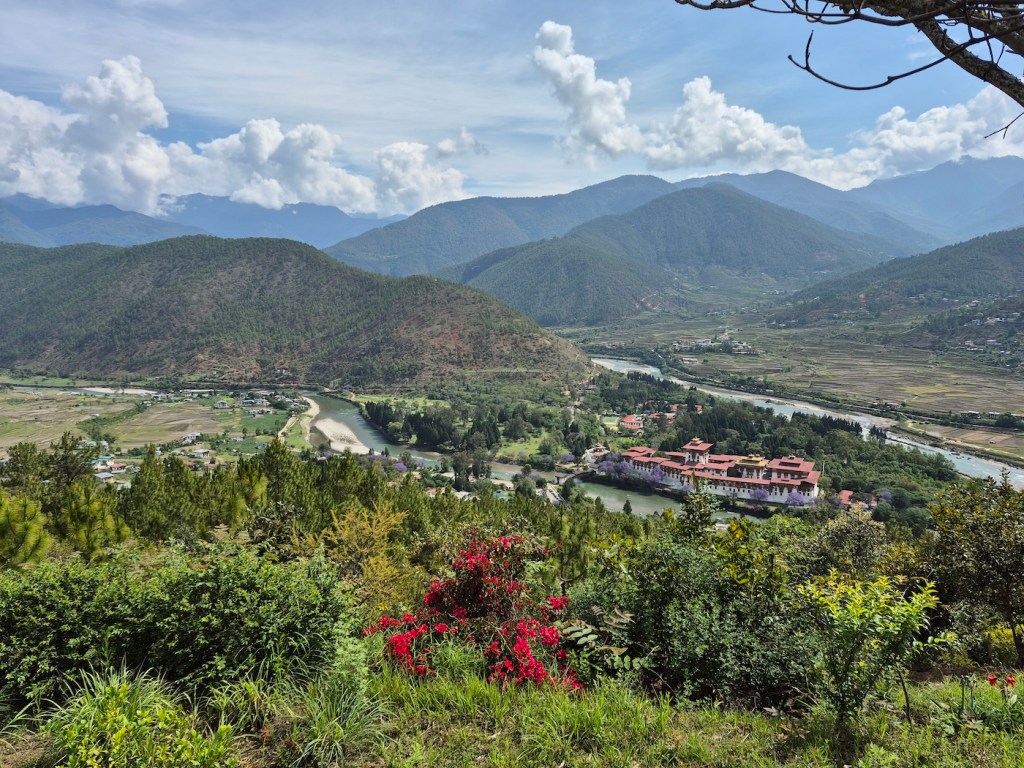
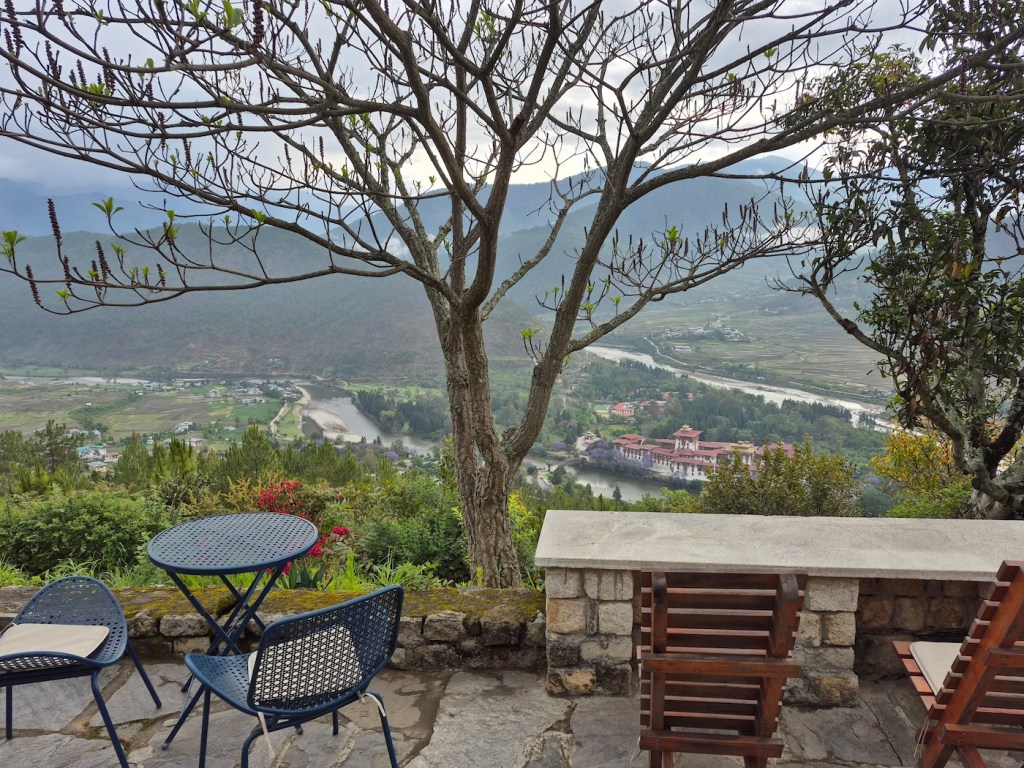
The property is located high above the valley, almost directly overlooking Punakha Dzong. From the common sitting area, we had an incredible view of the mountains, the two rivers and the Dzong below. It was the kind of view that made you want to sit down and remain there without doing anything else.
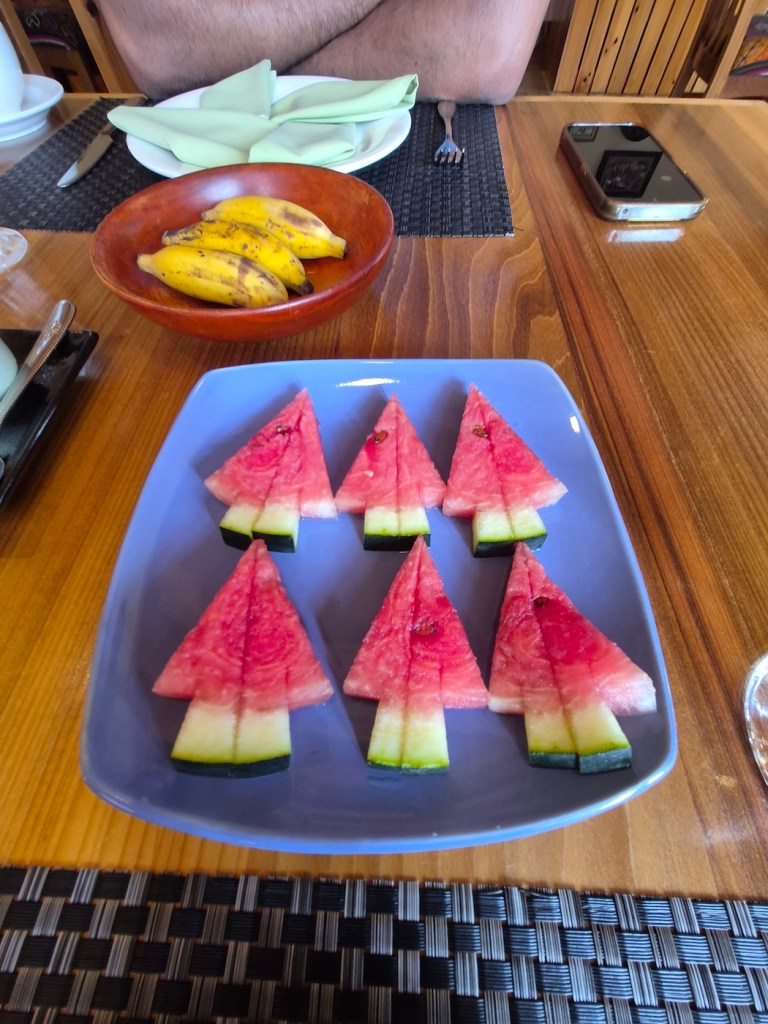
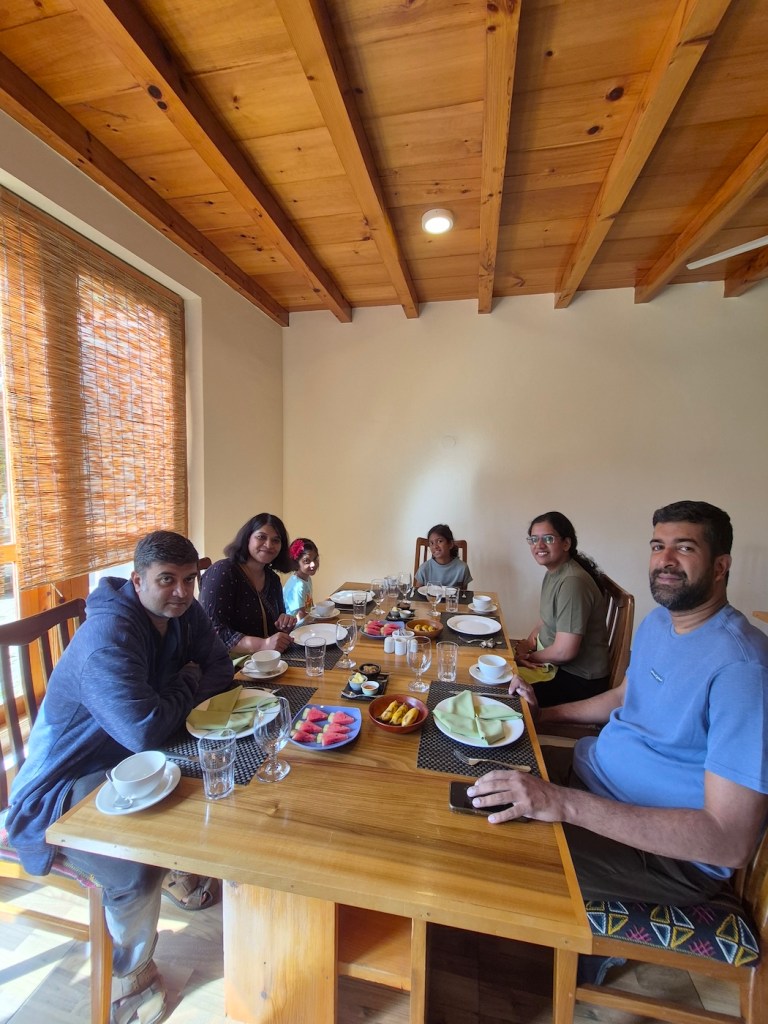
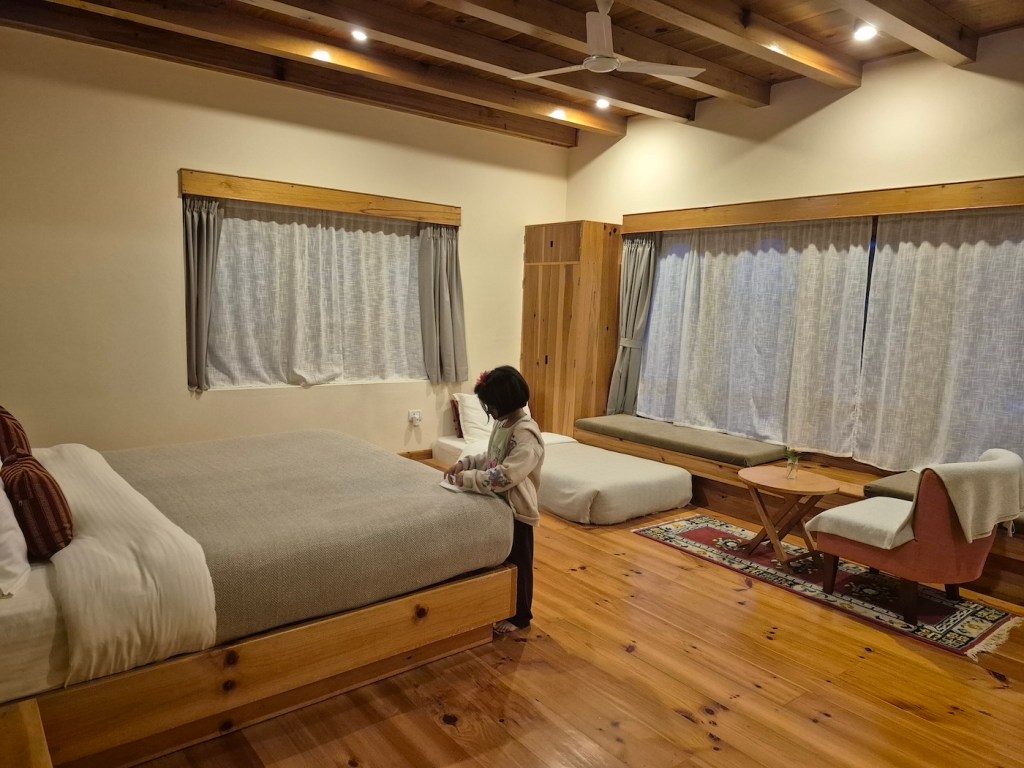
The rooms were very comfortable, and the food was excellent. Much of it was freshly prepared using produce from their own farm, and everything tasted extremely fresh. If I separately considered the location, rooms, food and hospitality, there was very little to complain about.
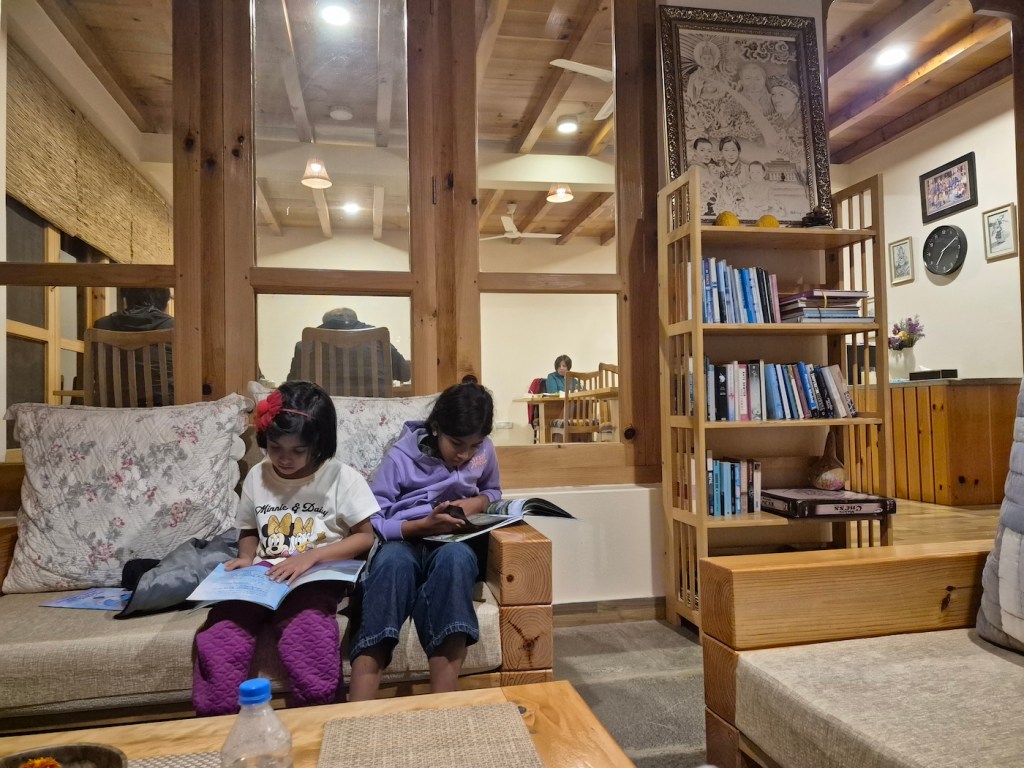
That evening, we simply sat in the common area for a long time, talking and enjoying the view.
Hiking to Khamsum Yulley Namgyal Chorten
The next morning, after breakfast, we drove to the starting point of the hike to Khamsum Yulley Namgyal Chorten.
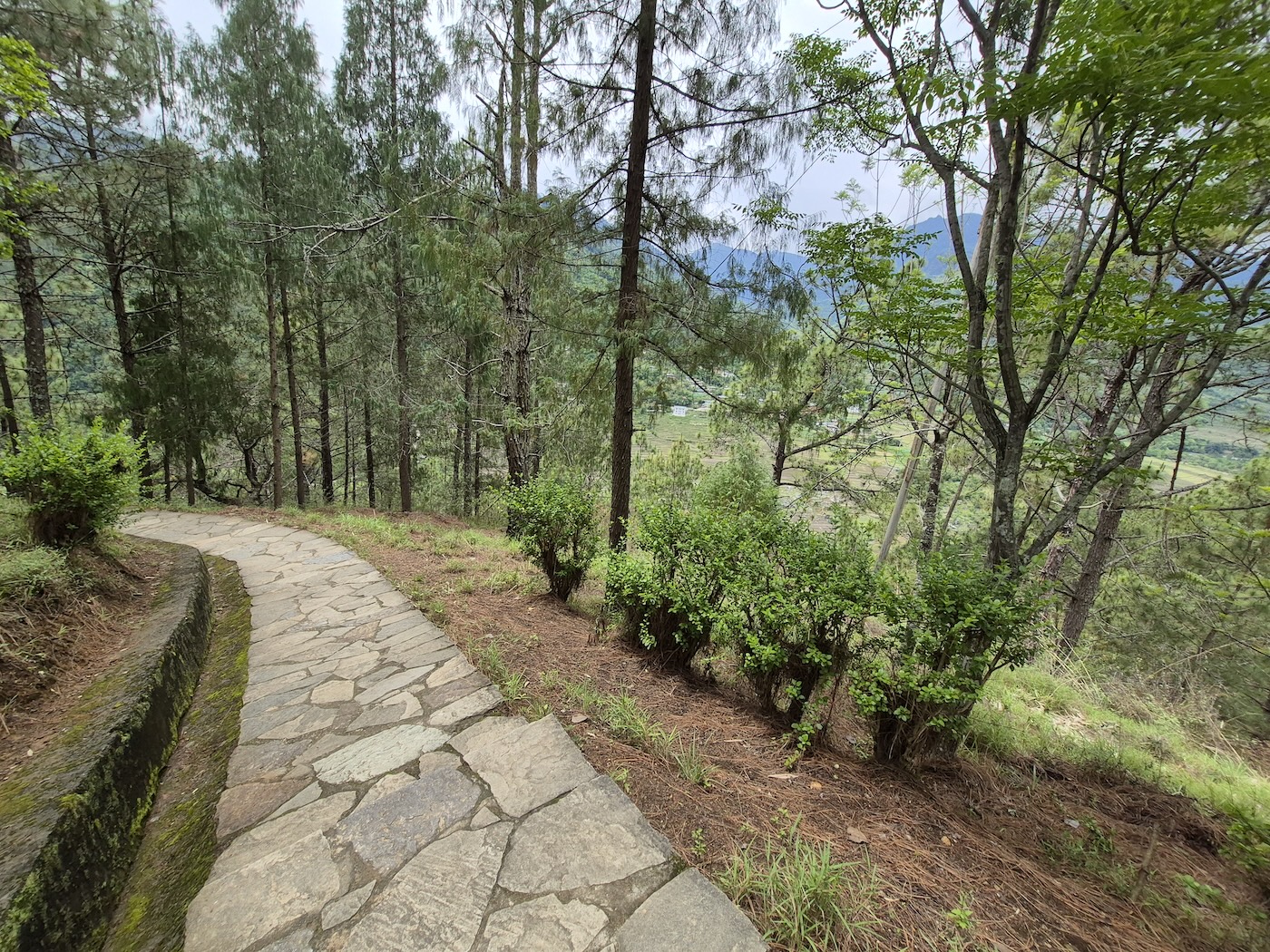
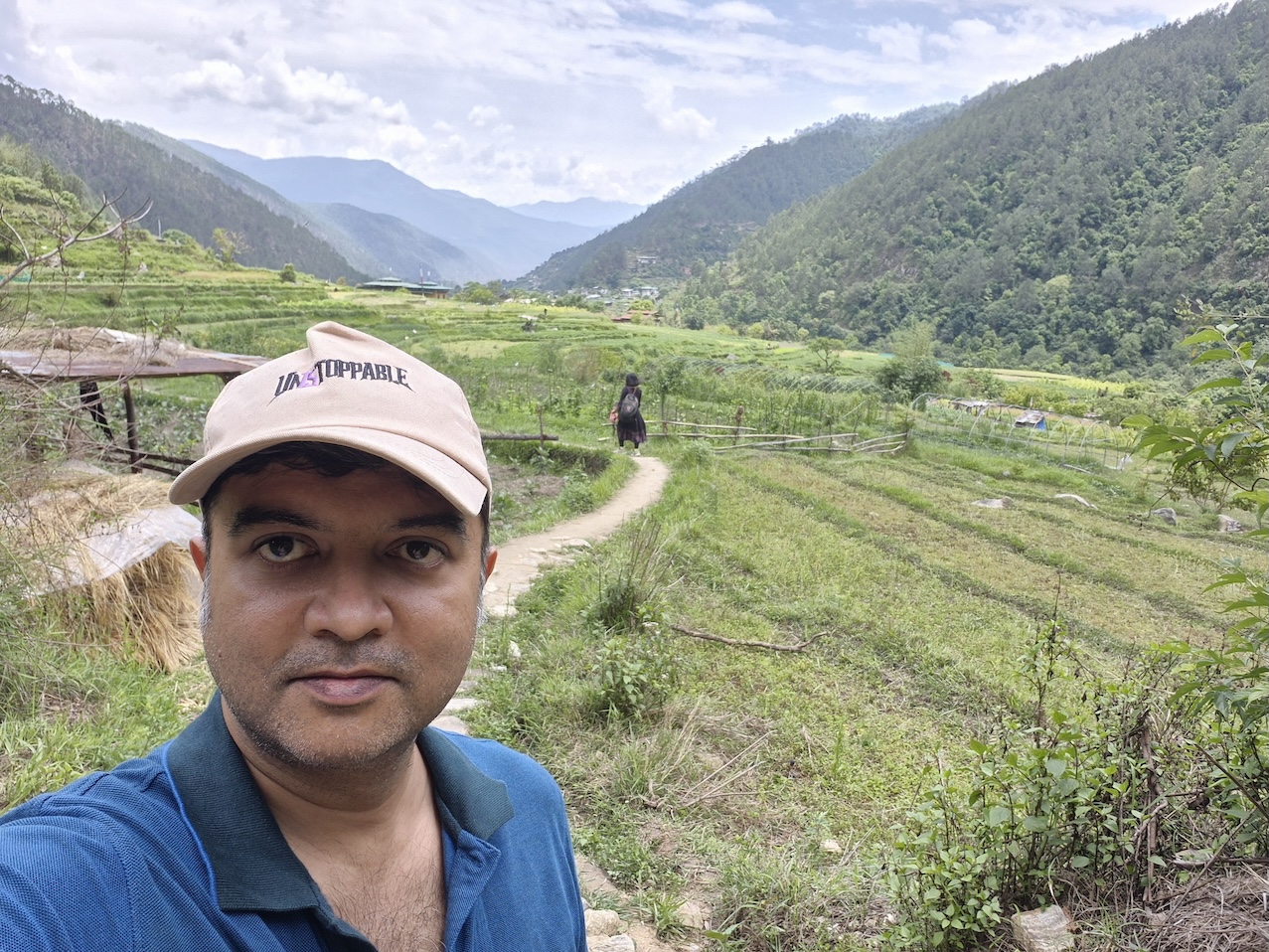
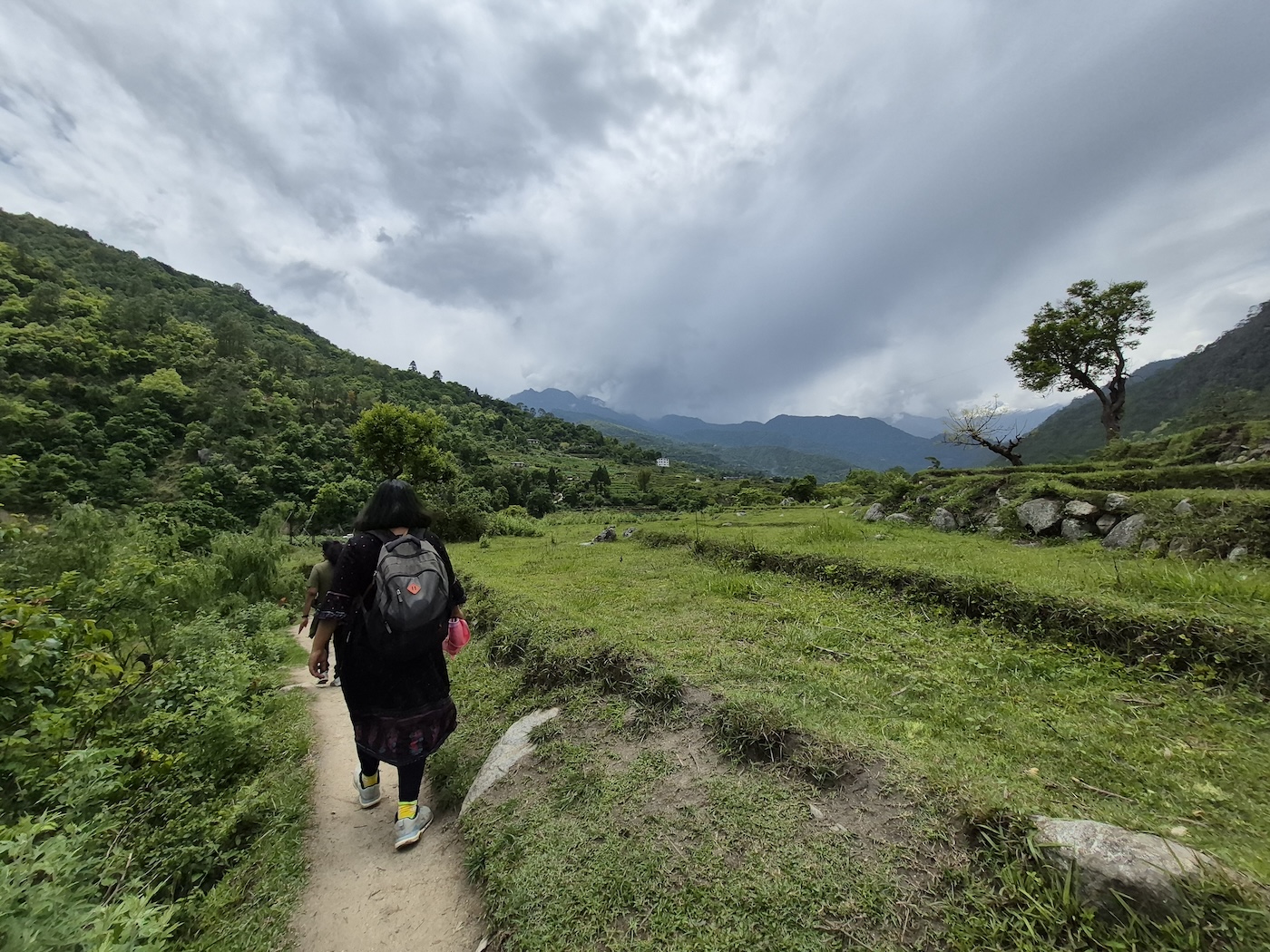
The walk began with a bridge across the river. For the first part, the path passed through paddy fields and village farmland. Then the climb began, with a mixture of sloping paths and steps leading upwards through the trees.
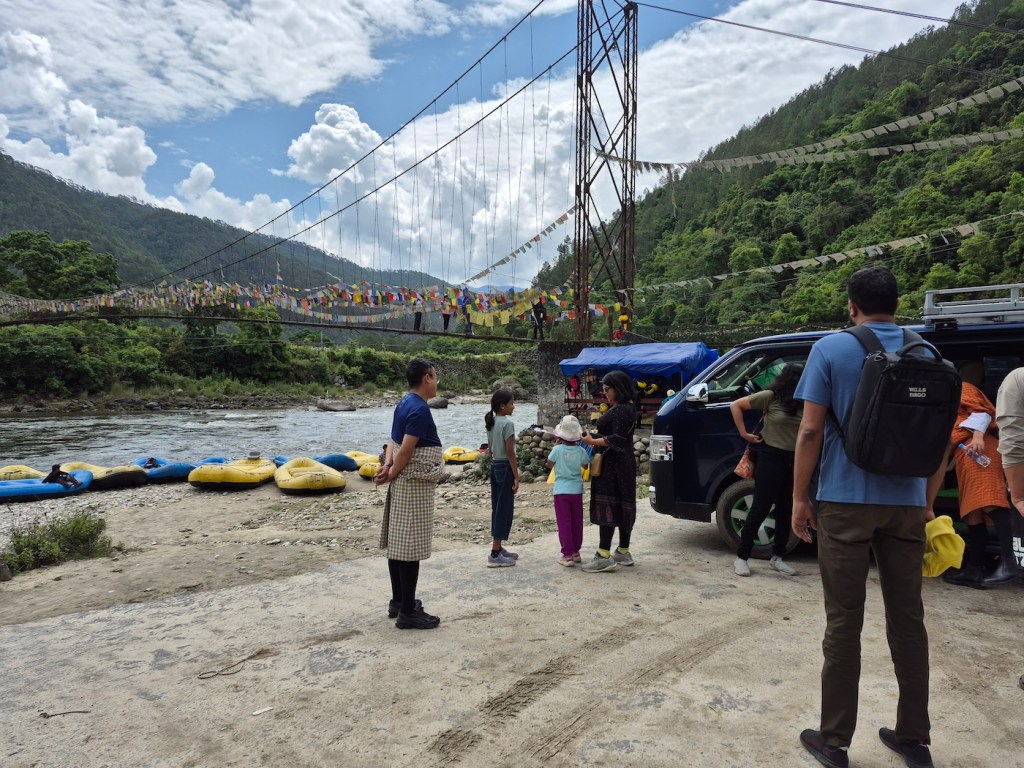
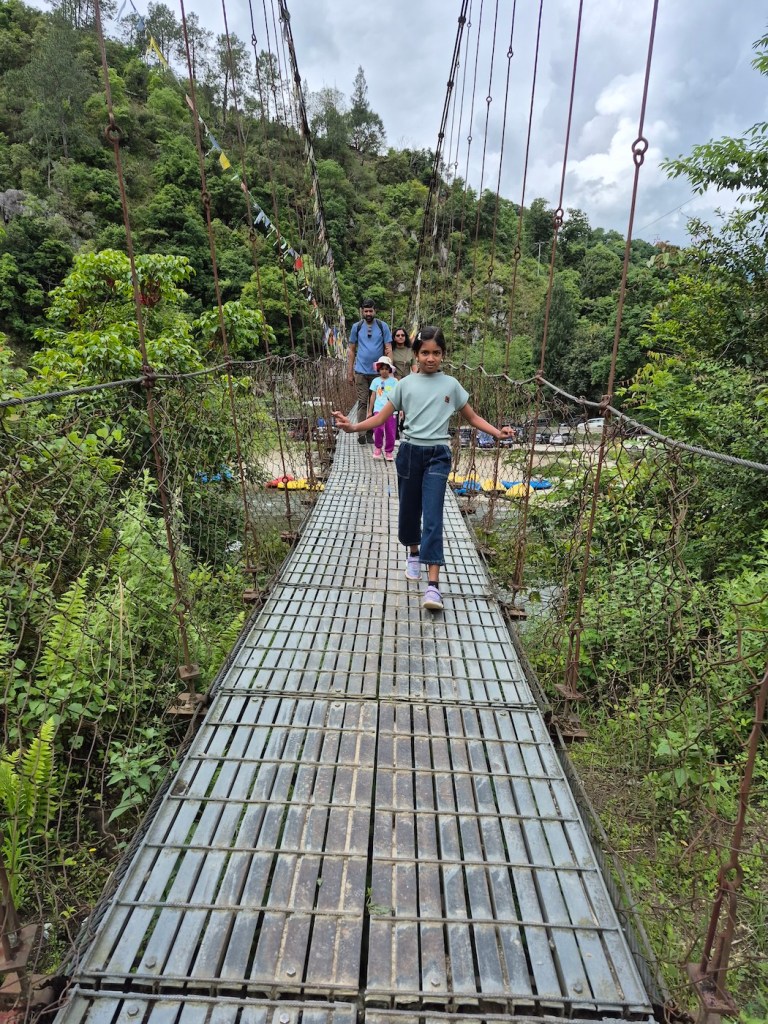
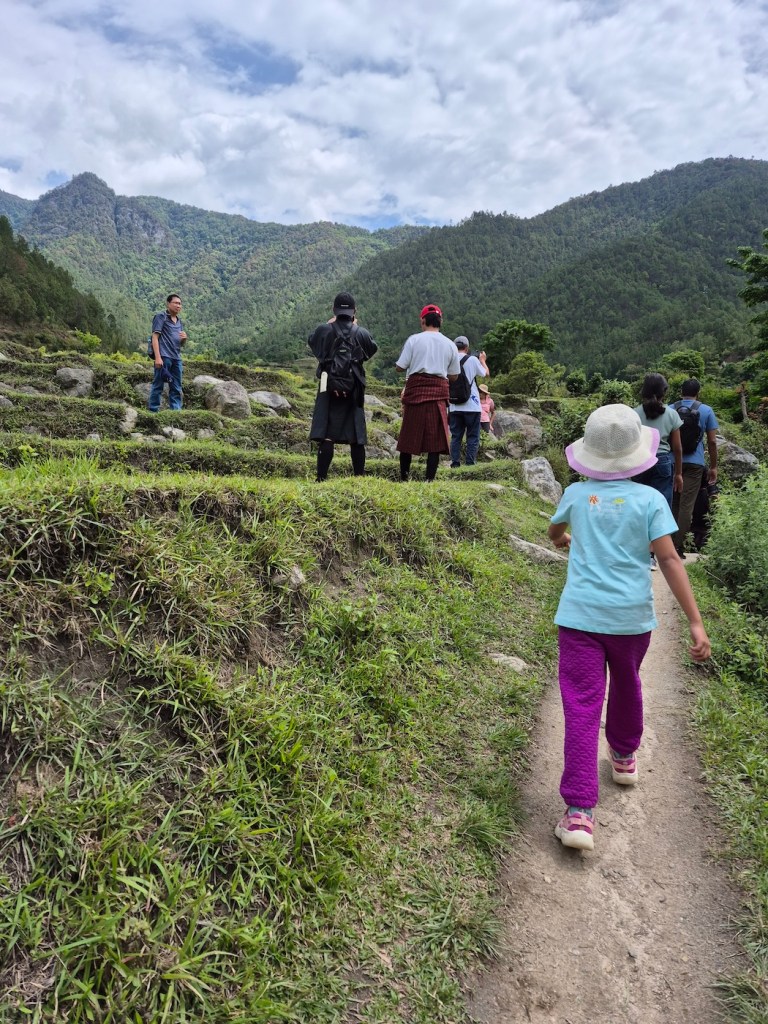
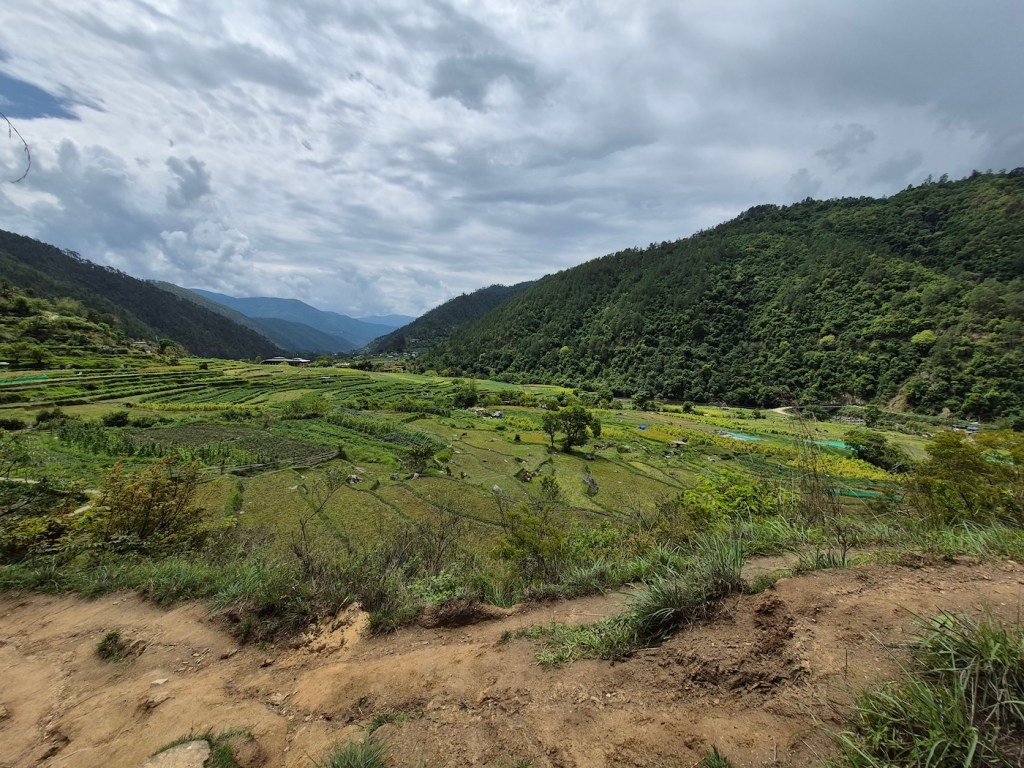
The entire walk was probably around three to four kilometres. It was not an extremely difficult hike, but there was enough climbing to make it feel like a proper morning activity. Once again, the children were great sports. They walked the whole way with us and reached the Chorten at the top.
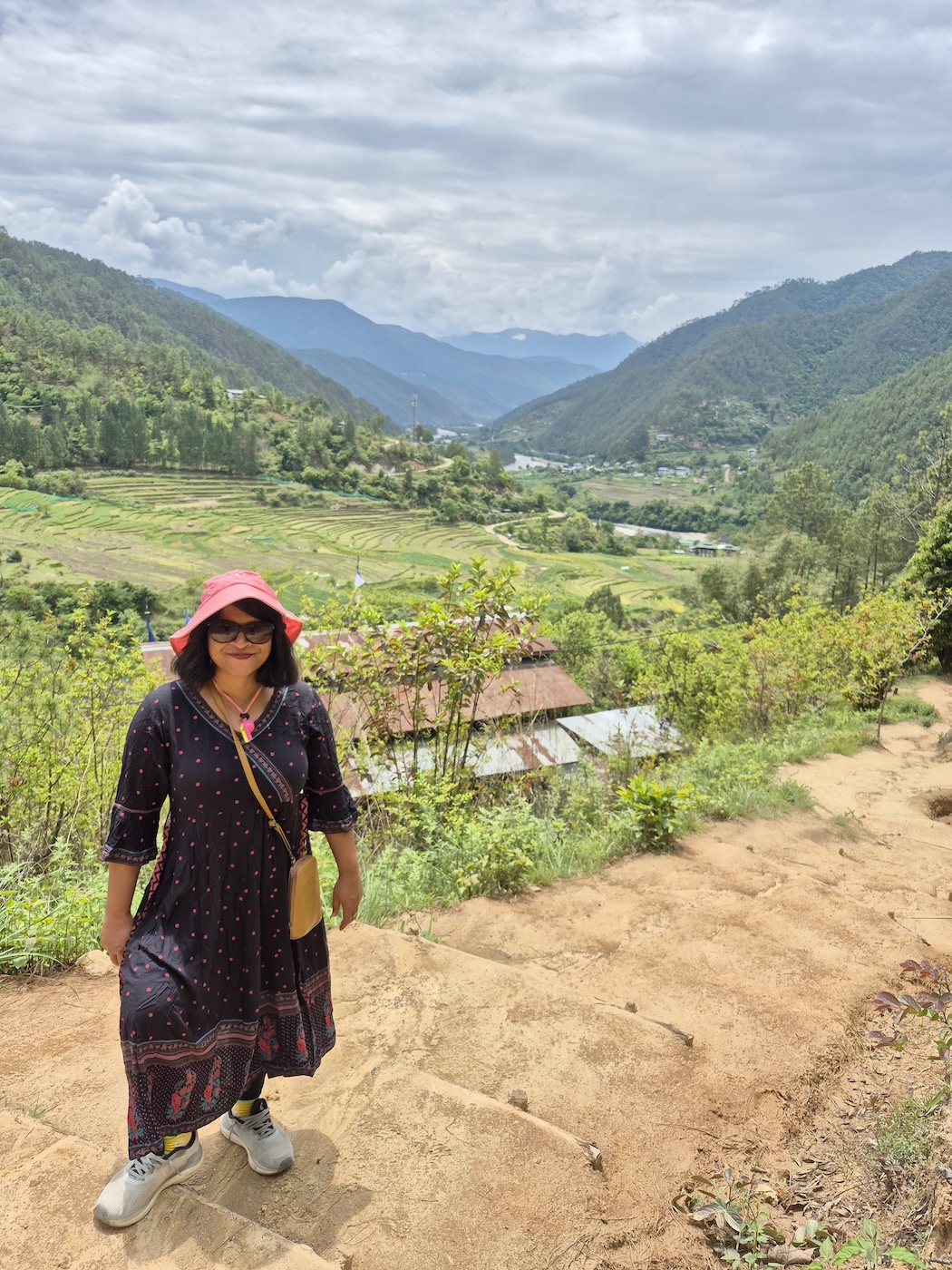
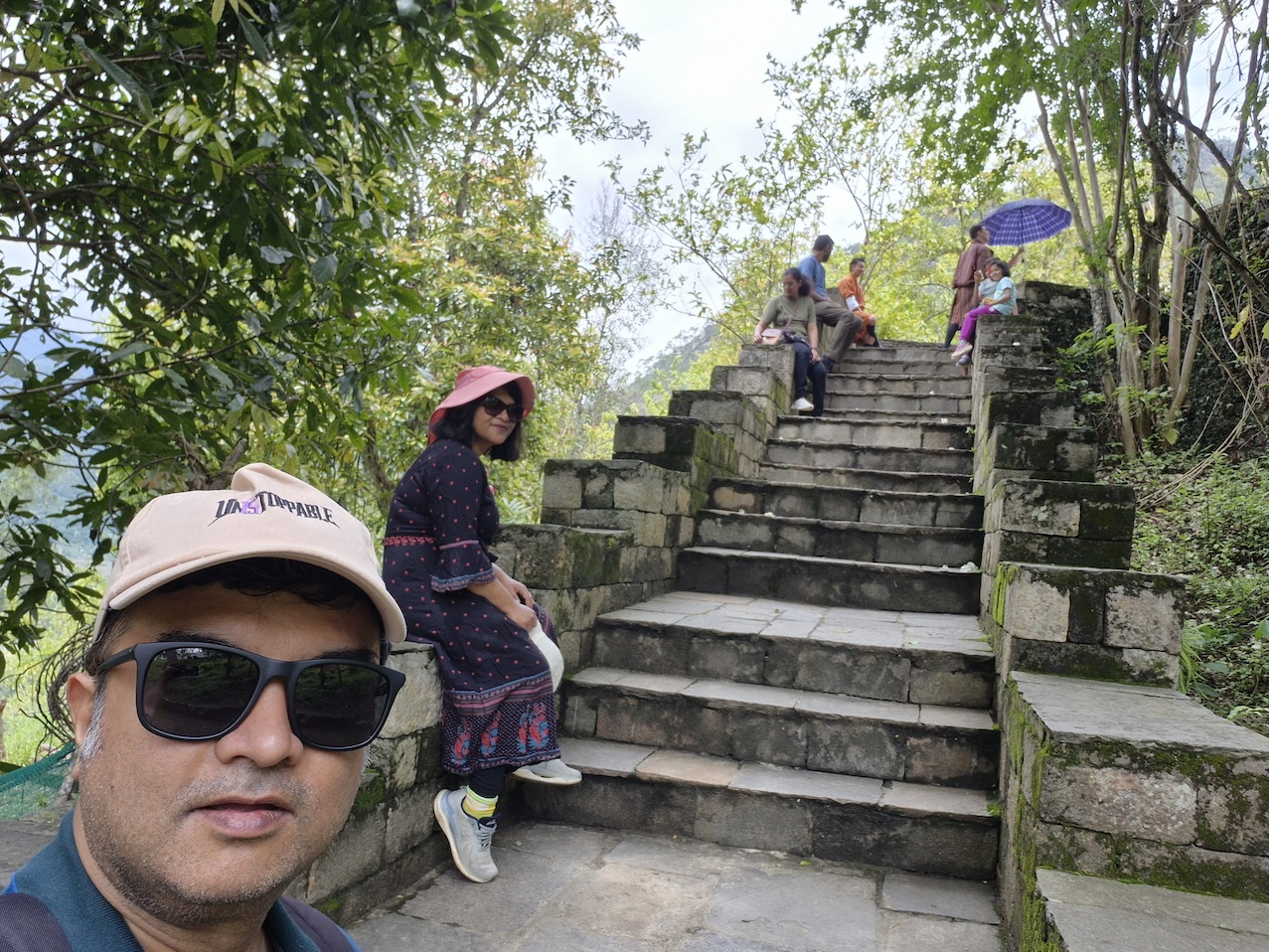
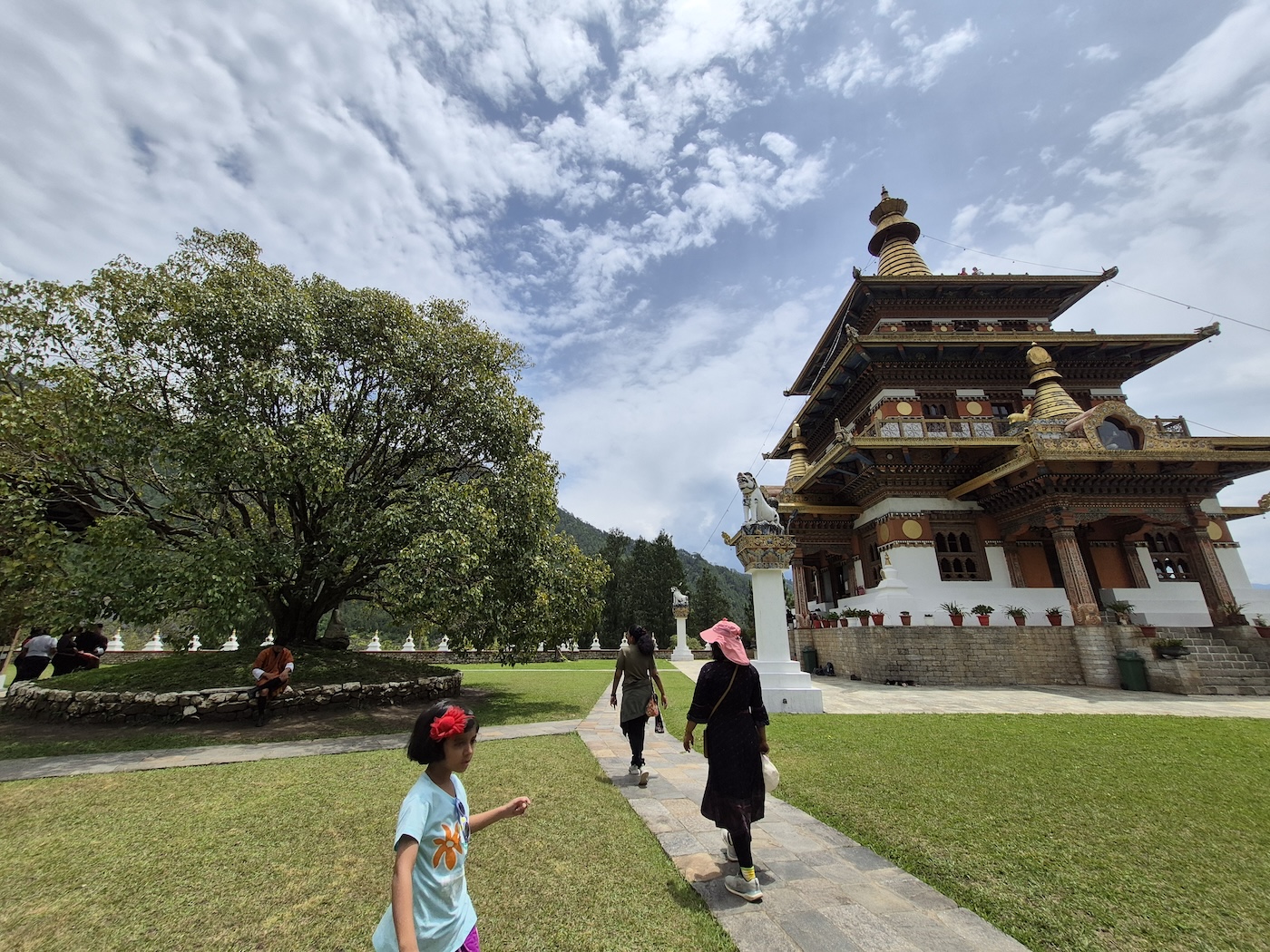
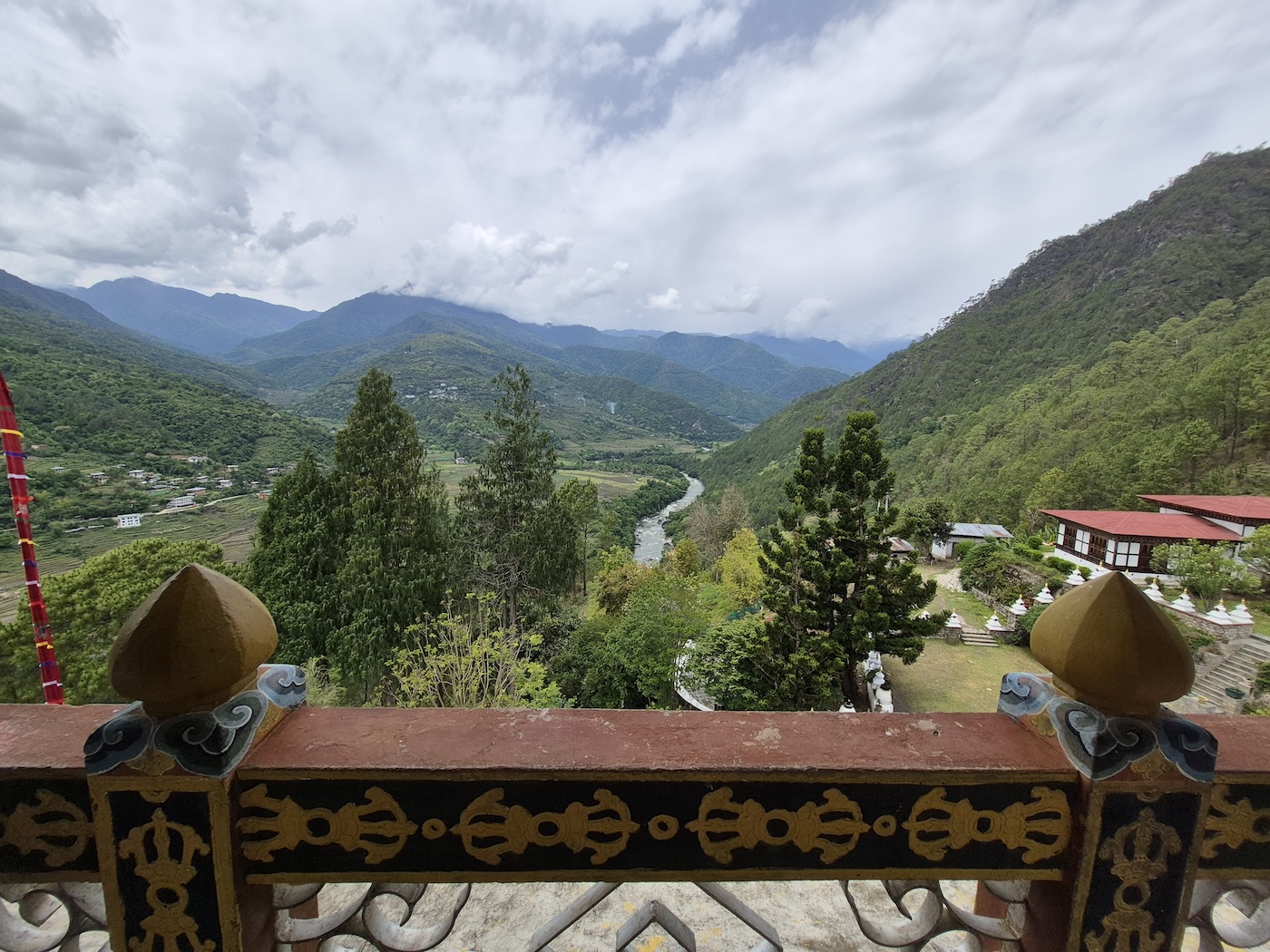
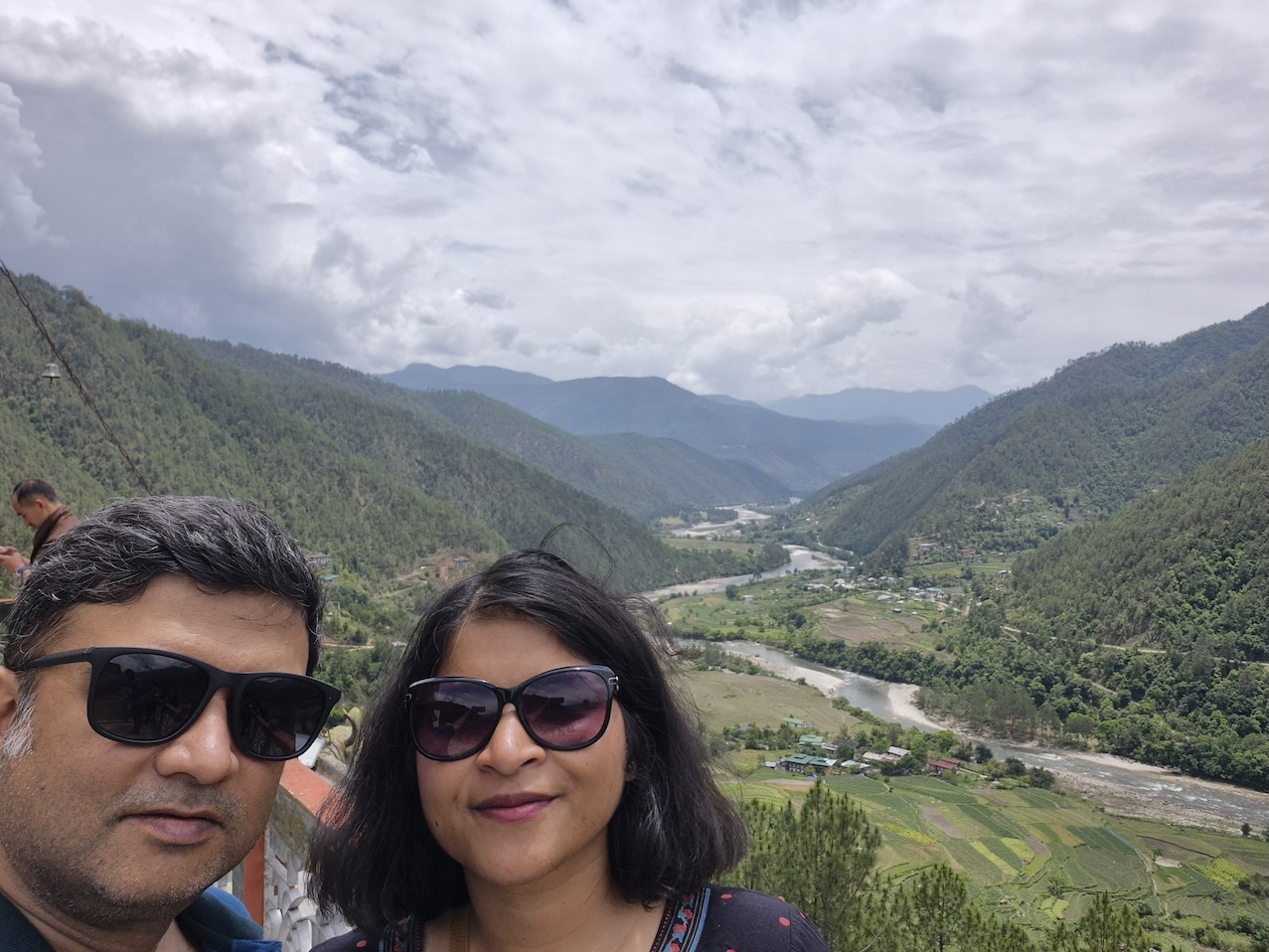
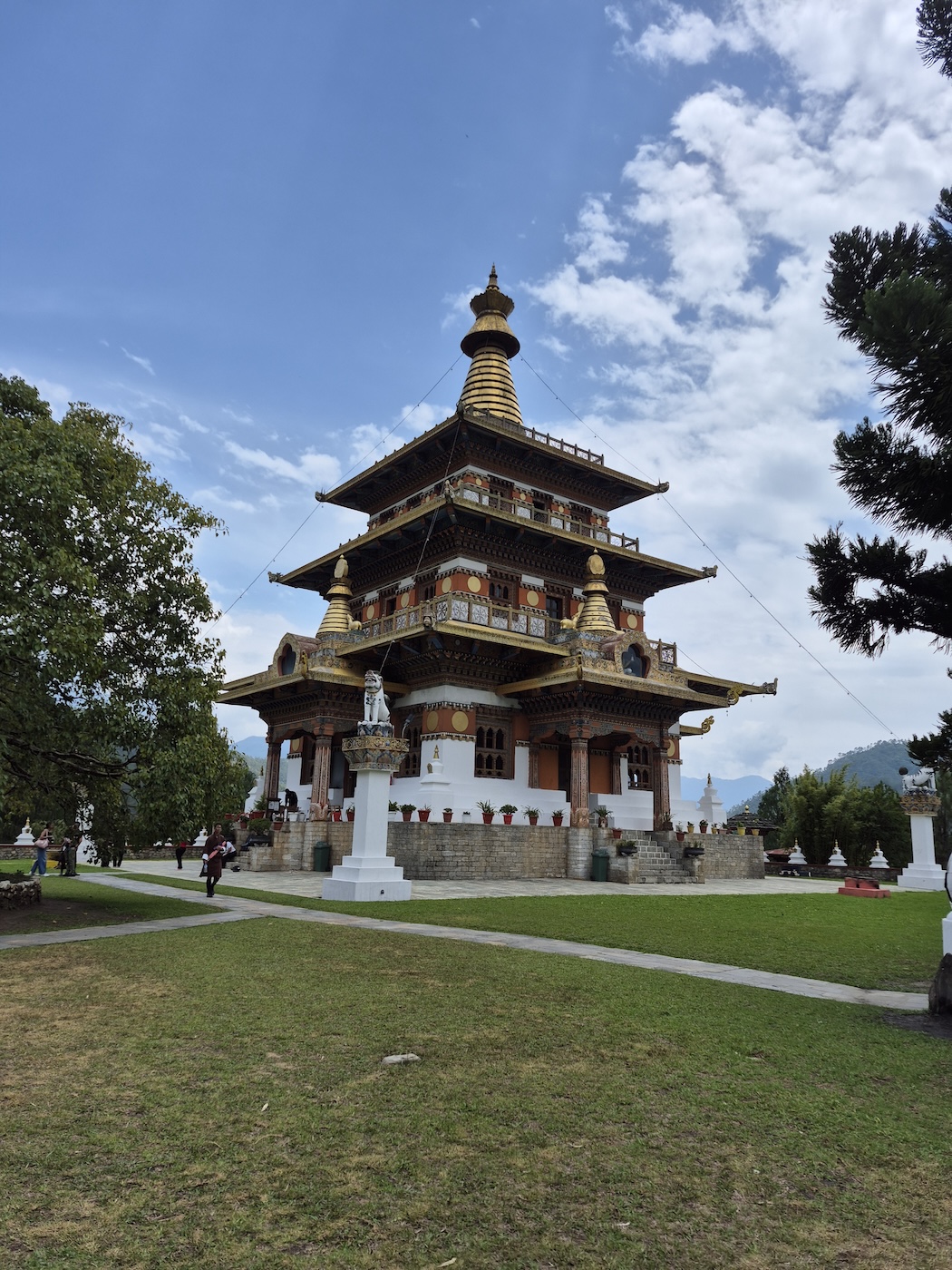
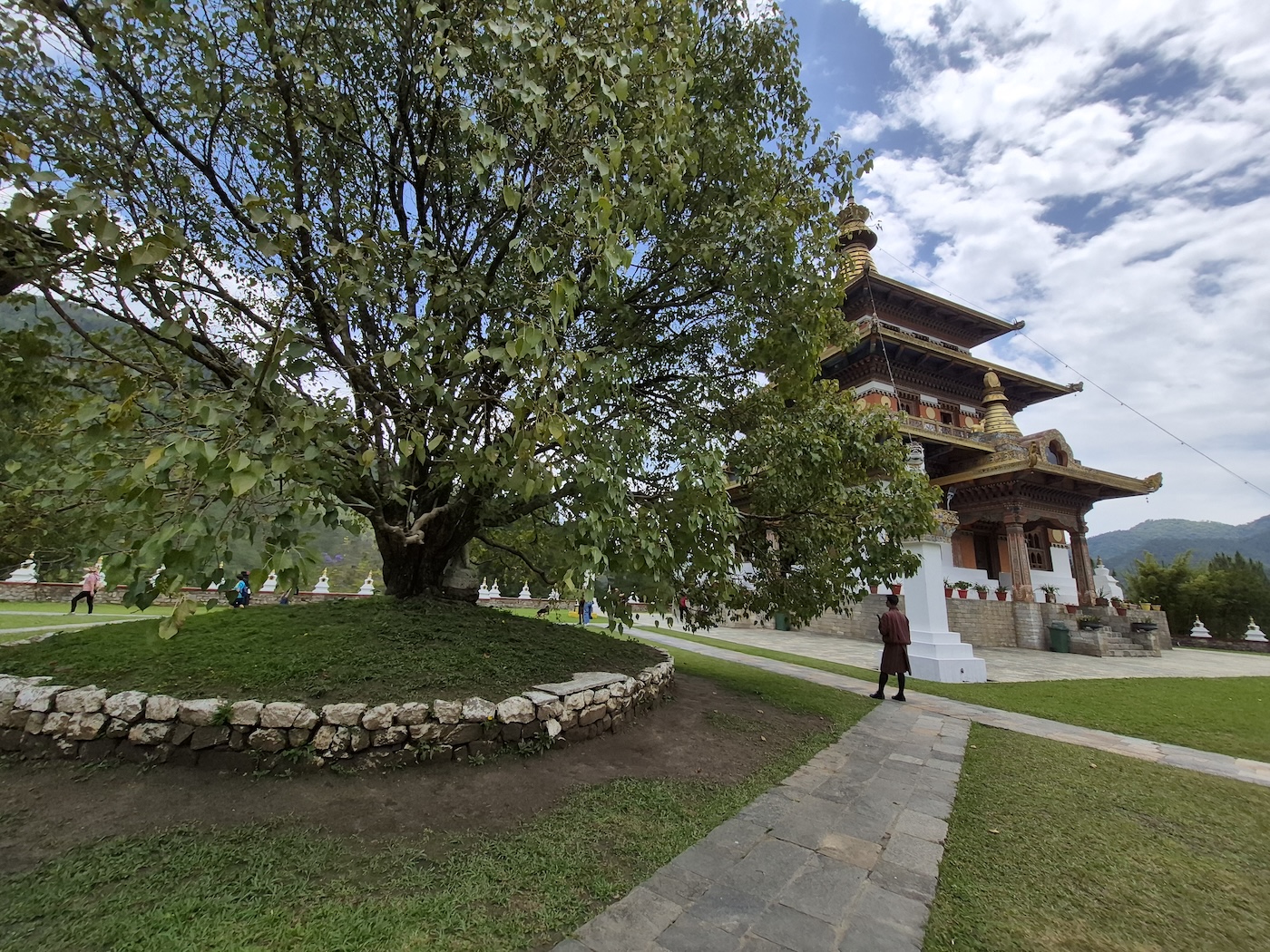
The four-storeyed Chorten stands on a ridge overlooking the Punakha Valley. Each level contains elaborate Buddhist imagery and protective deities, and the interiors are rich with colour and detail. Photography was not permitted inside, so we could not capture any of it.
We climbed through the different levels and finally came out at the top. The view from there was superb—green fields, the river and the Punakha Valley spread out below us. After the climb, standing on the rooftop and looking across the valley felt immensely rewarding.
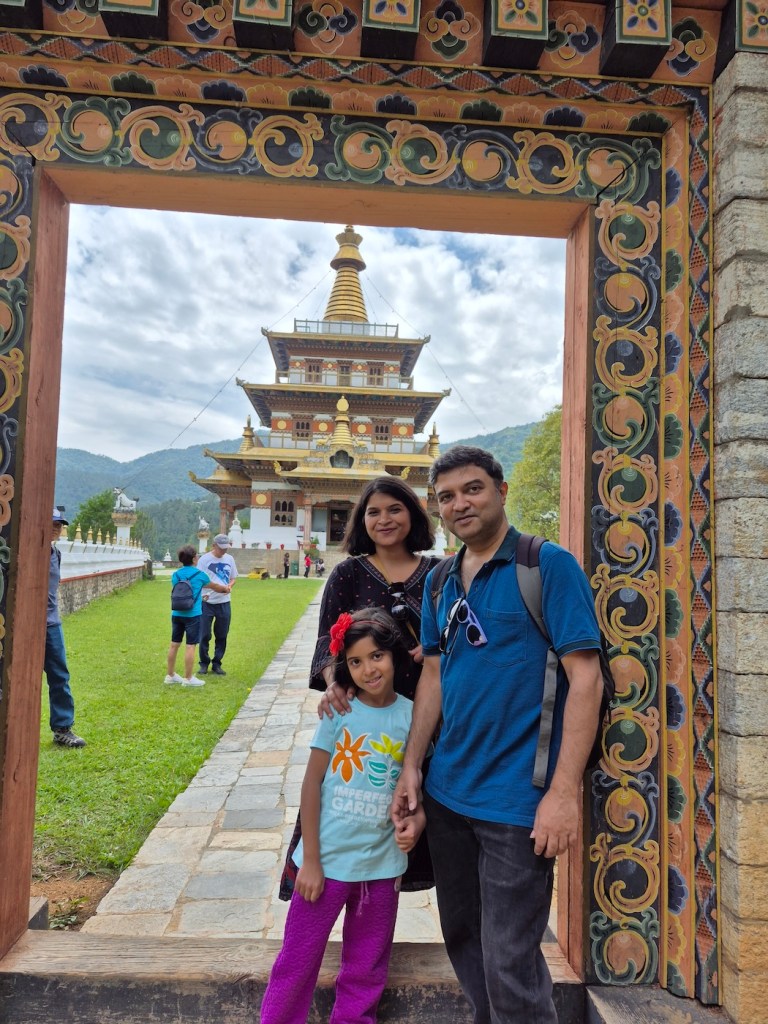
Then we walked back down to the river.
A gentle introduction to river rafting
The rafting point was located close to the base of the Khamsum hike. Once we returned, we went almost directly for rafting on the Mo Chhu.
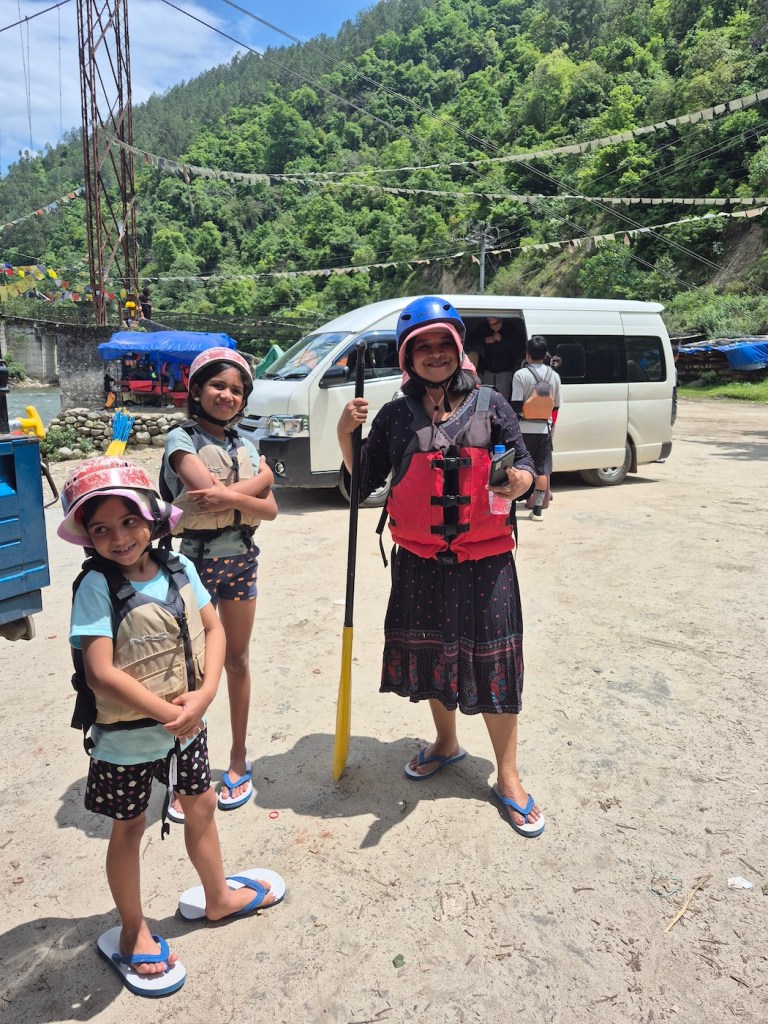
This was my third experience of river rafting.
The first had been in Rishikesh, and that had been properly adventurous, with several strong rapids. At the end of it, I had decided that I had done enough river rafting for one lifetime.
My second experience was on the Beas River on the way to Manali. That had been much gentler and was something one could relax and enjoy rather than merely survive.
The Punakha rafting experience was gentler still.
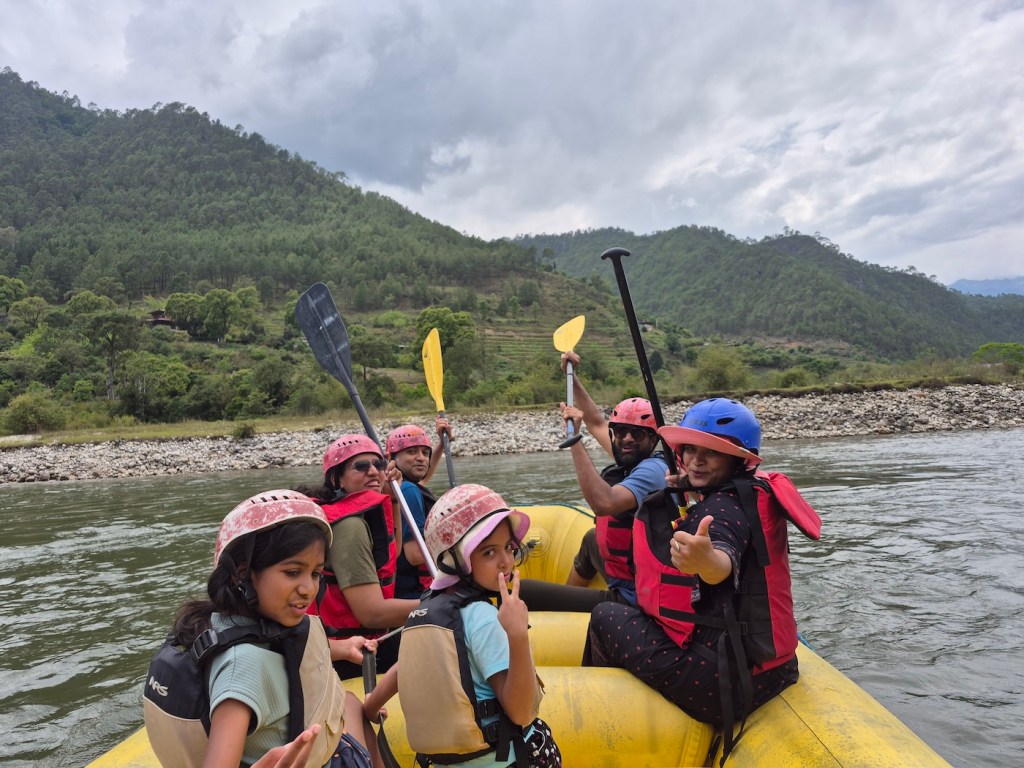
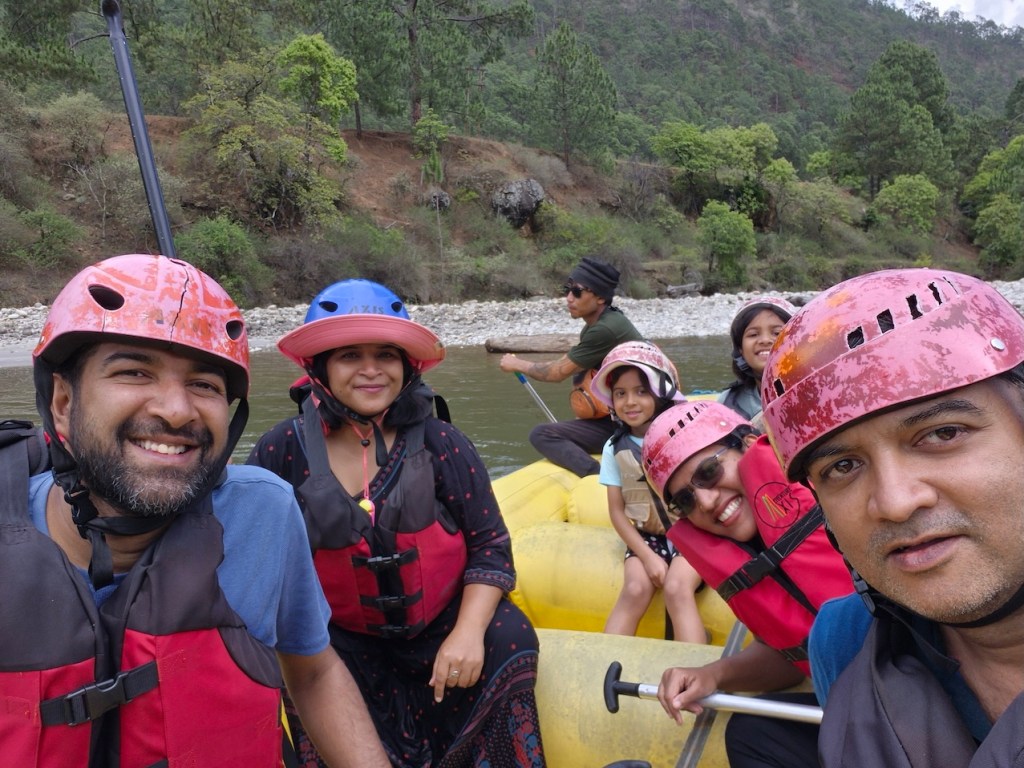
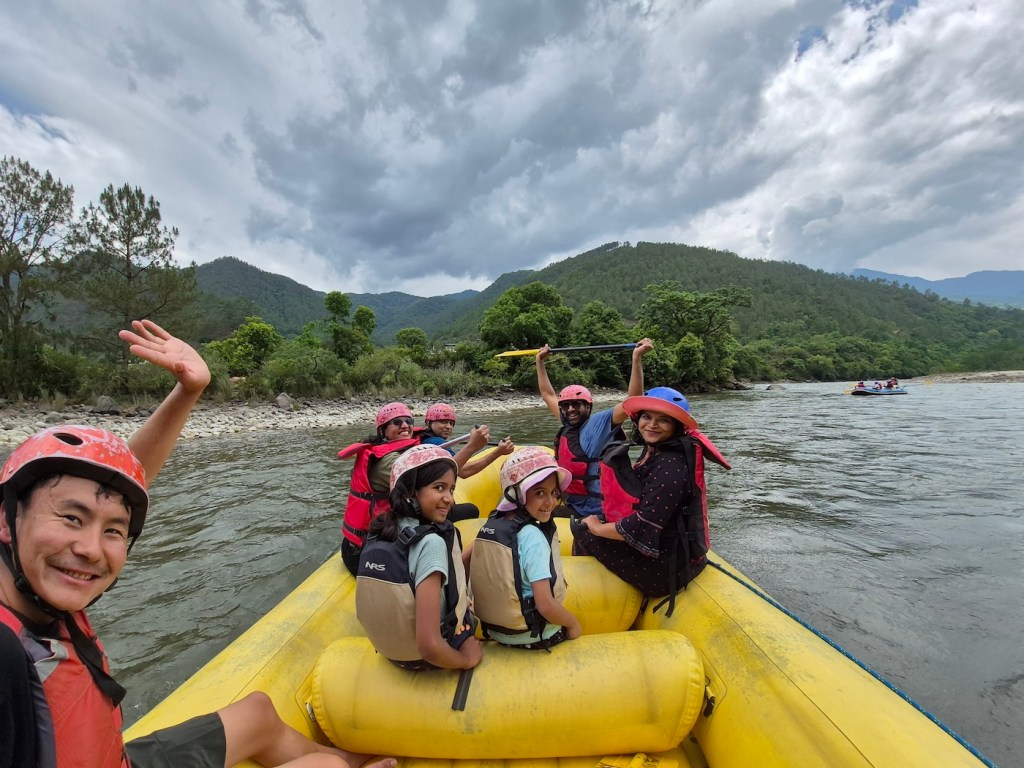
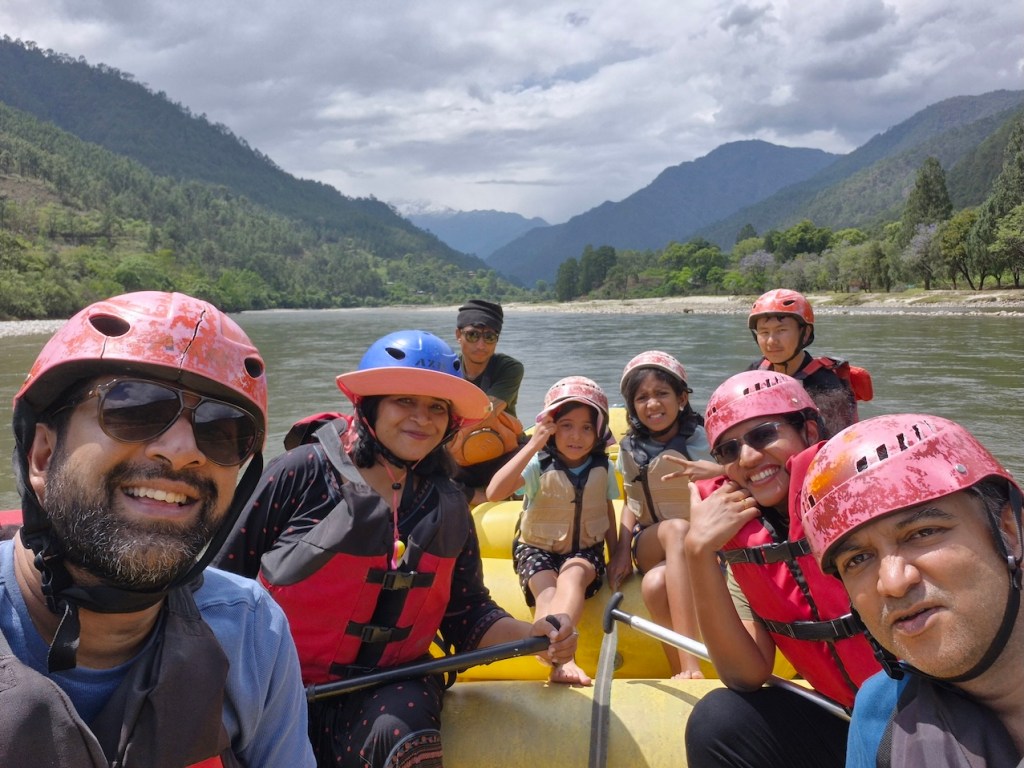
There were very few rapids, and even those were mild. Most of the time, we were simply floating smoothly down the river, surrounded by beautiful scenery. In the distance, we could see snow-covered mountain peaks.
For anyone travelling with children, this would be a very good introduction to rafting. It provides the excitement of sitting in a raft and passing through a few rapids without making the entire experience frightening.
Meera, in particular, is not fond of water-based activities. During our island-hopping excursions in Malaysia, she had disliked almost everything involving the sea and was generally afraid of the water. But she enjoyed this. Perhaps having Nandita with her helped, but the calm river and gentle pace certainly made a difference.
A hurried but excellent lunch at Ku-Kham House
By the time we completed the rafting and came out of the river, it was already quite late for lunch. All of us were hungry, so we rushed to Ku-Kham House in Sopsokha.
They had a buffet, but we knew that it would be wasted on us. The children would not eat most of the dishes, and after the hike and rafting, we wanted something that could be served quickly.
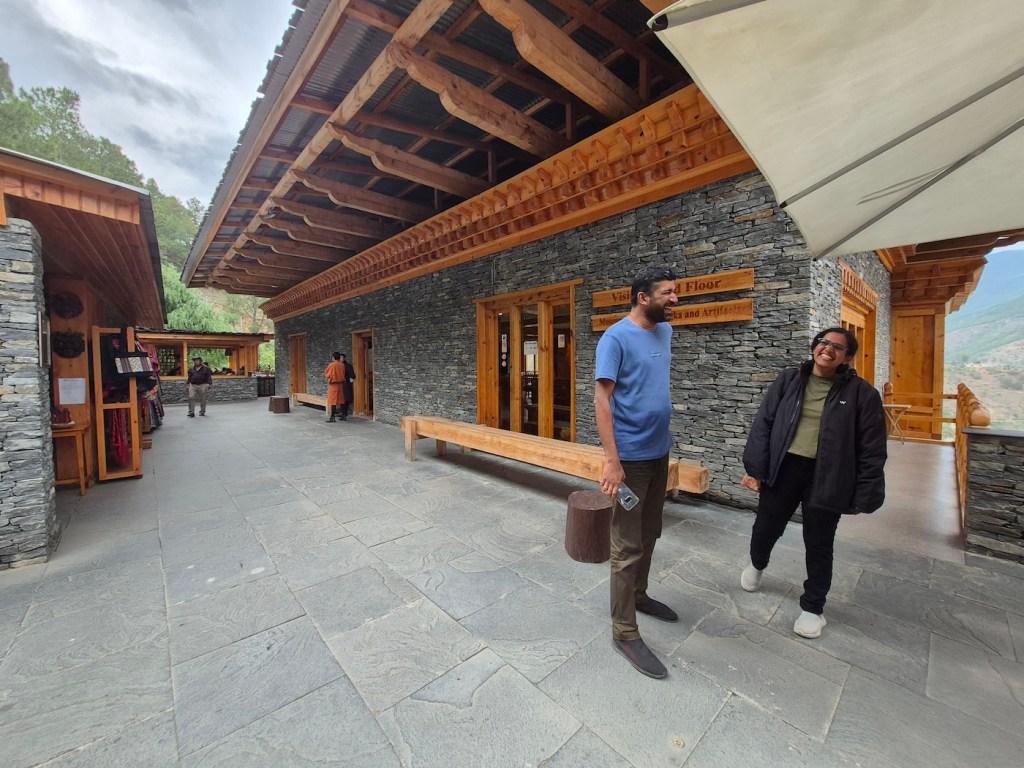
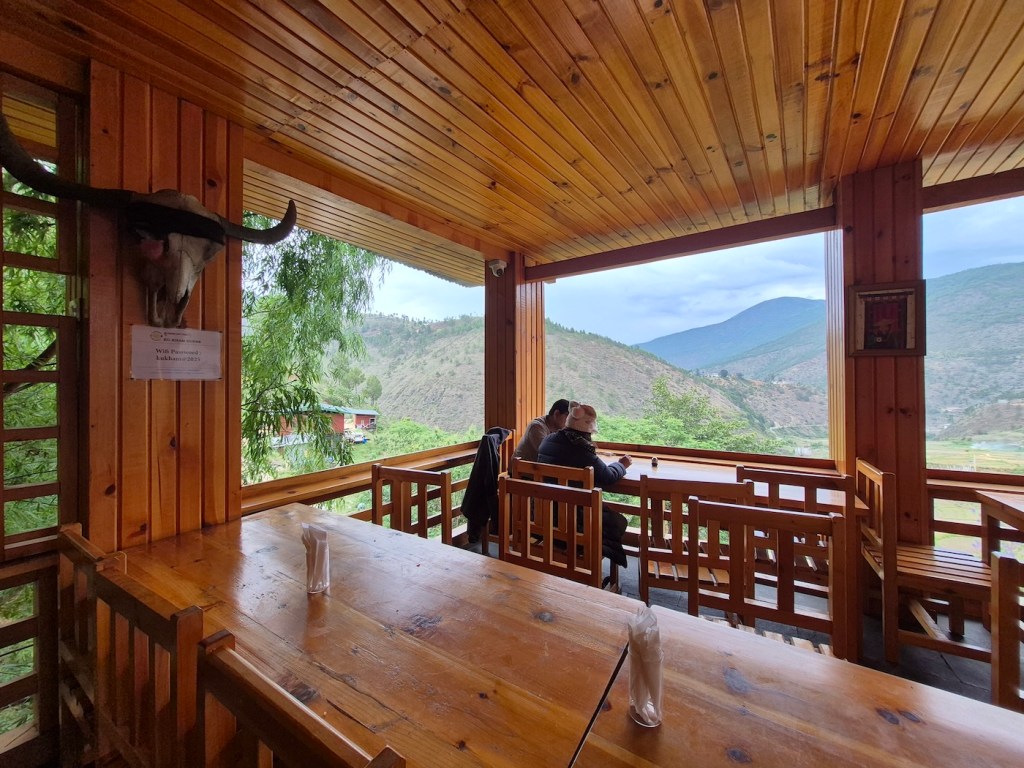
There was also a café section, so we ordered chow mein, Maggi and a few other simple dishes. Everything was extremely tasty, and the food arrived quickly. Perhaps hunger made it even better, but we really enjoyed that meal.
The stories and souvenirs of Chimi Lhakhang
Our final sightseeing stop in Punakha was Chimi Lhakhang, better known as Bhutan’s fertility temple.
The temple is associated with Drukpa Kunley, the 15th-century monk popularly called the “Divine Madman.” The stories surrounding him are among the most unusual religious stories we heard in Bhutan. He was known for teaching through humour, irreverence and behaviour that was far removed from the solemn image one normally associates with a Buddhist monk.
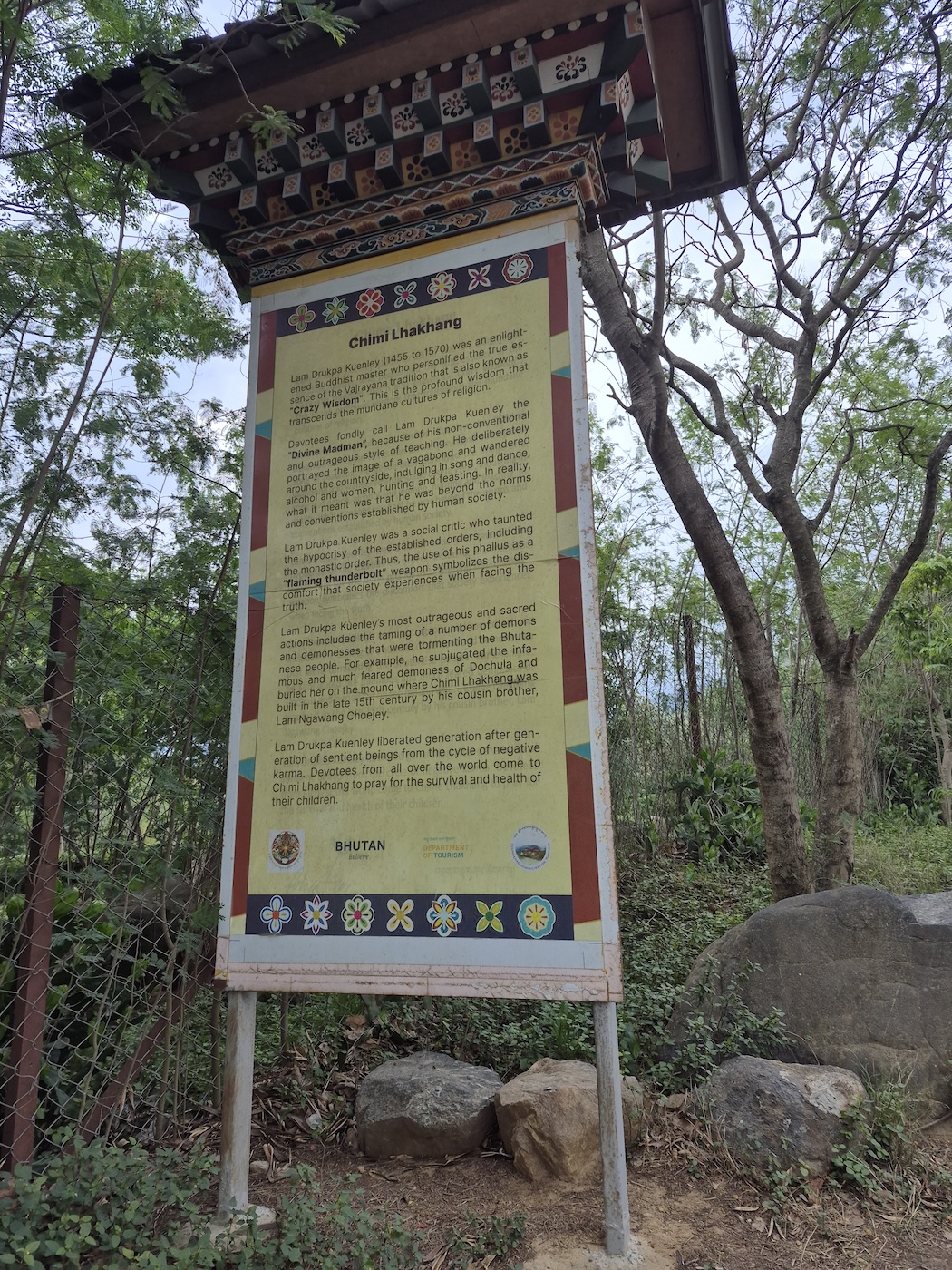
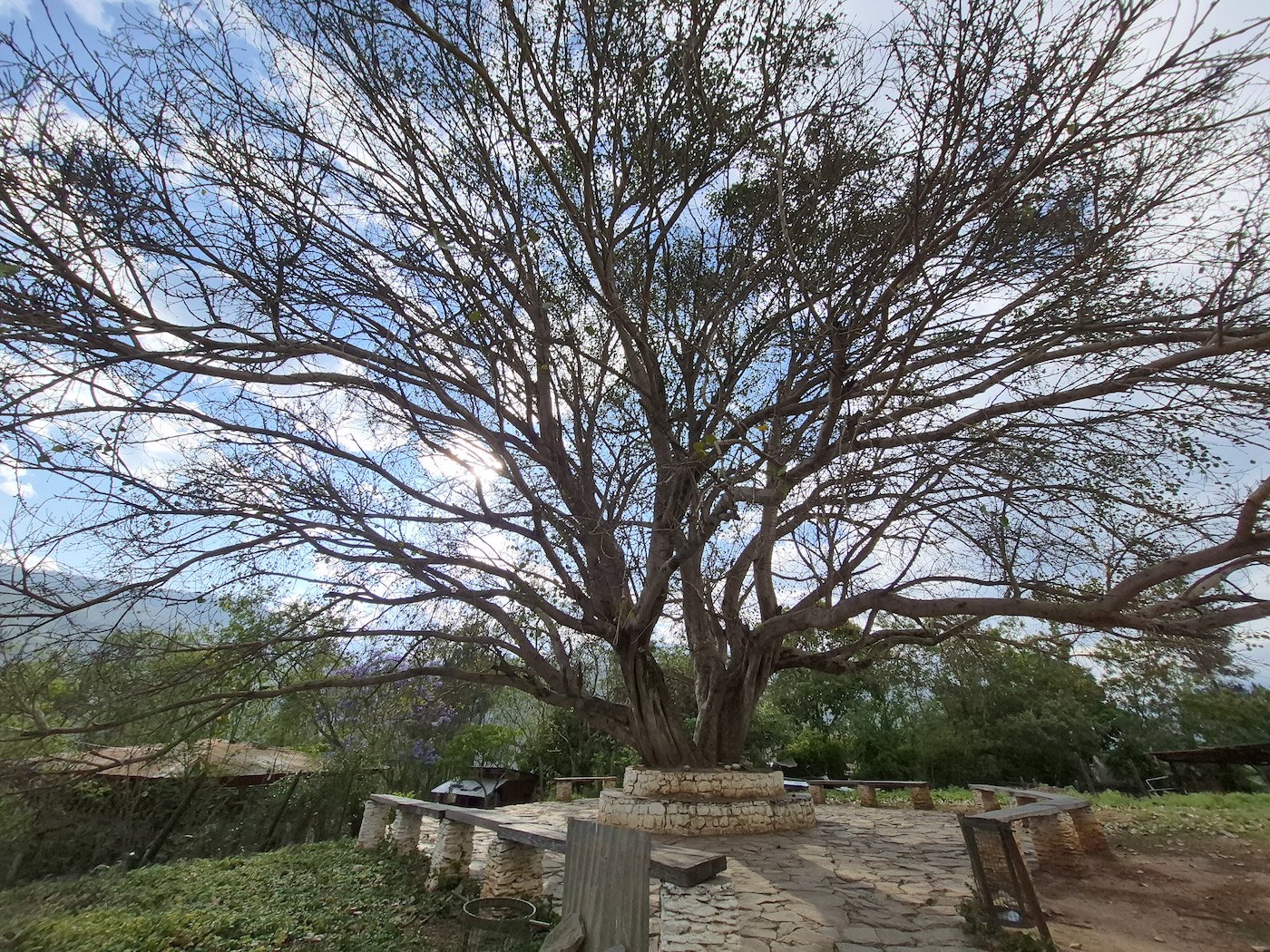
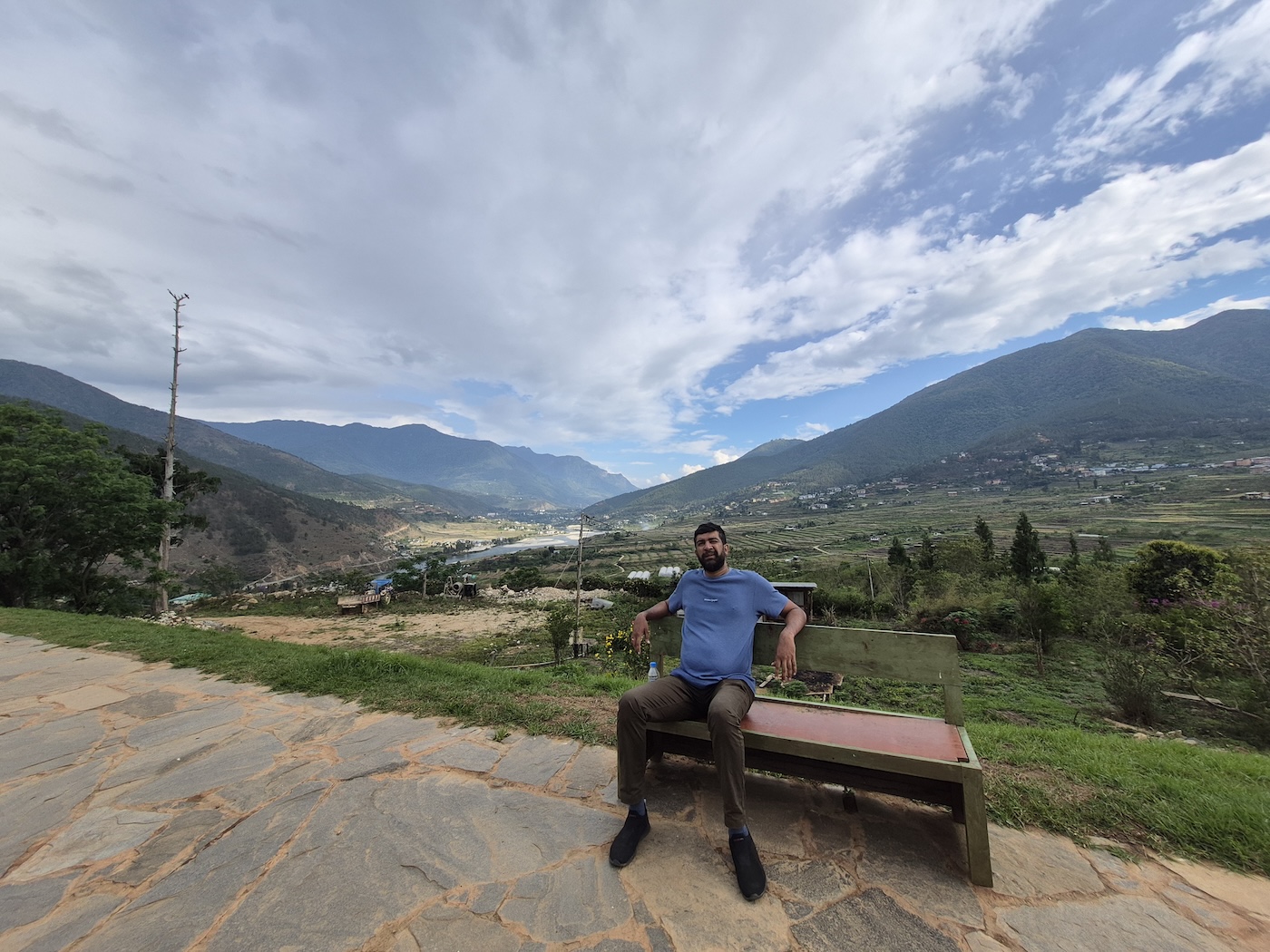
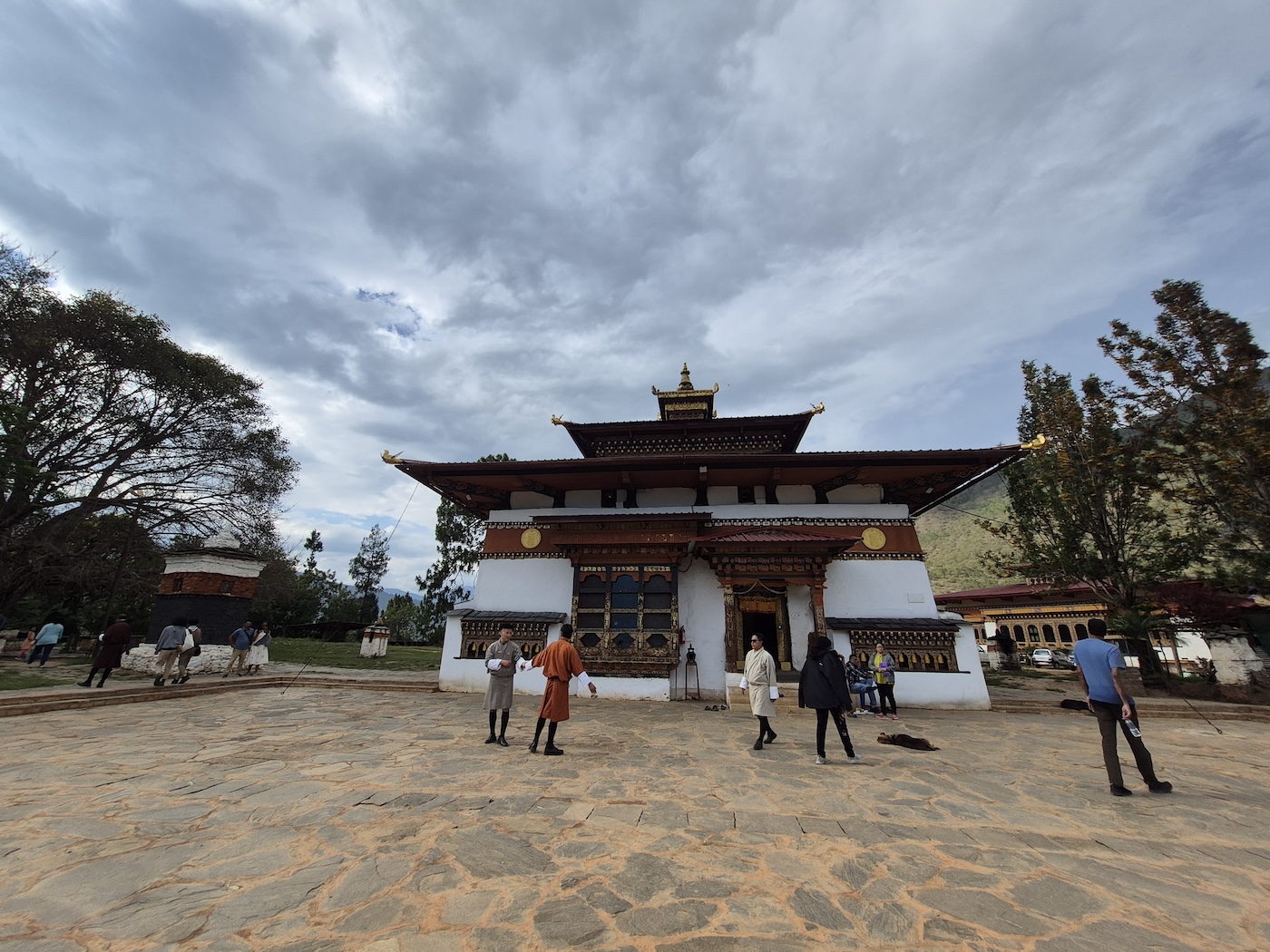
The temple stands on a small hill and requires a short walk of around half a kilometre through the village and fields.
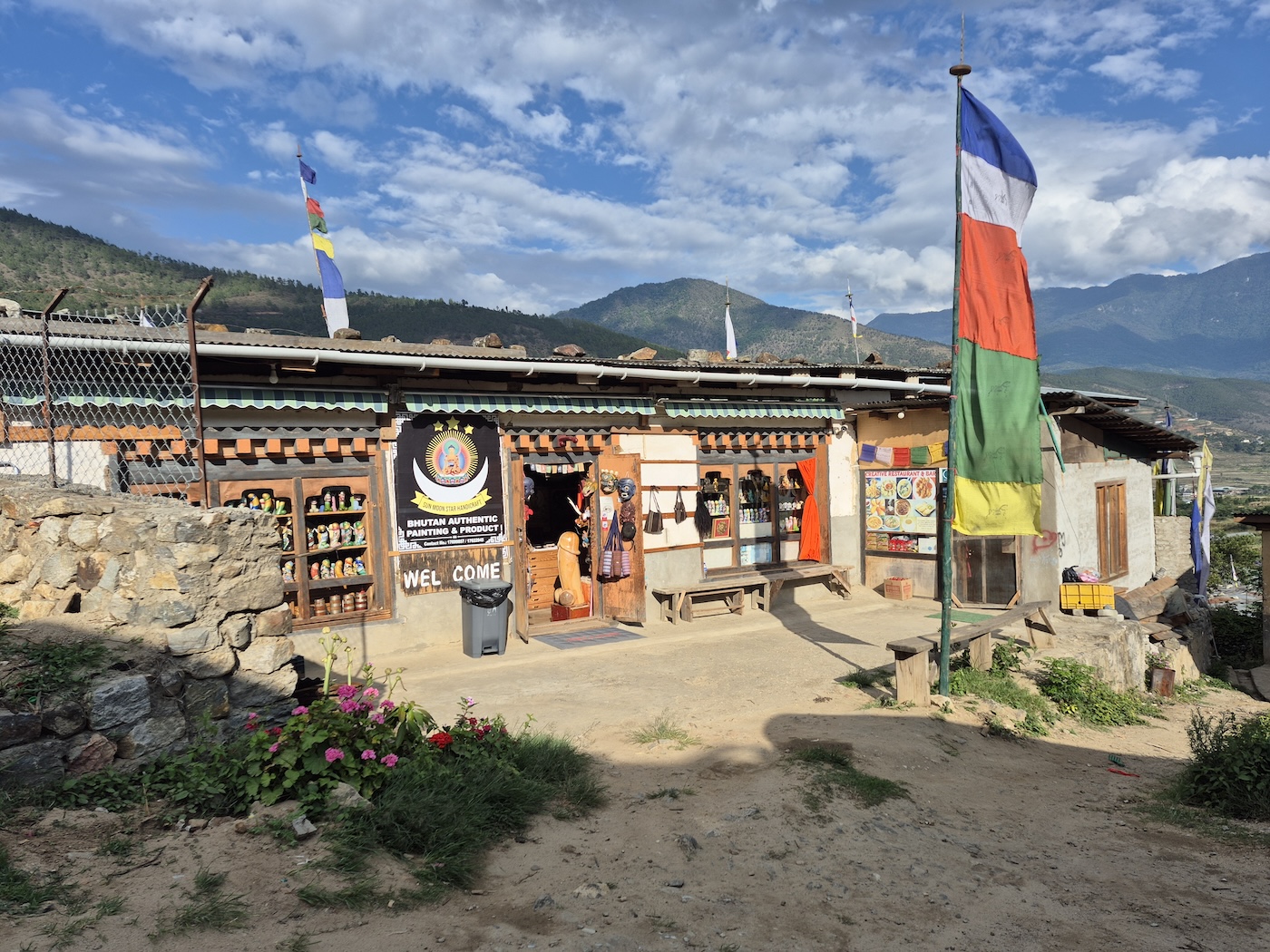
Moumita was more interested in the souvenir shops around the starting point. There were many of them, selling handicrafts and other locally made items, and it appeared that much of the work came from artisans in the surrounding villages. She stayed back to browse through the shops while the rest of us walked to the temple.
We spent some time there, listened to the stories connected with the temple and then returned to join her.
By then, it was almost evening, and we went back to Dhumra Farm Resort.
An evening that stretched until 2:30 a.m.
Back at the hotel, we once again settled into the sitting area with that magnificent view. I spent some time reading a book, which was honestly one of the most enjoyable parts of the trip. After several days of driving, sightseeing and hiking, simply sitting quietly with a book in such a beautiful place felt wonderful.
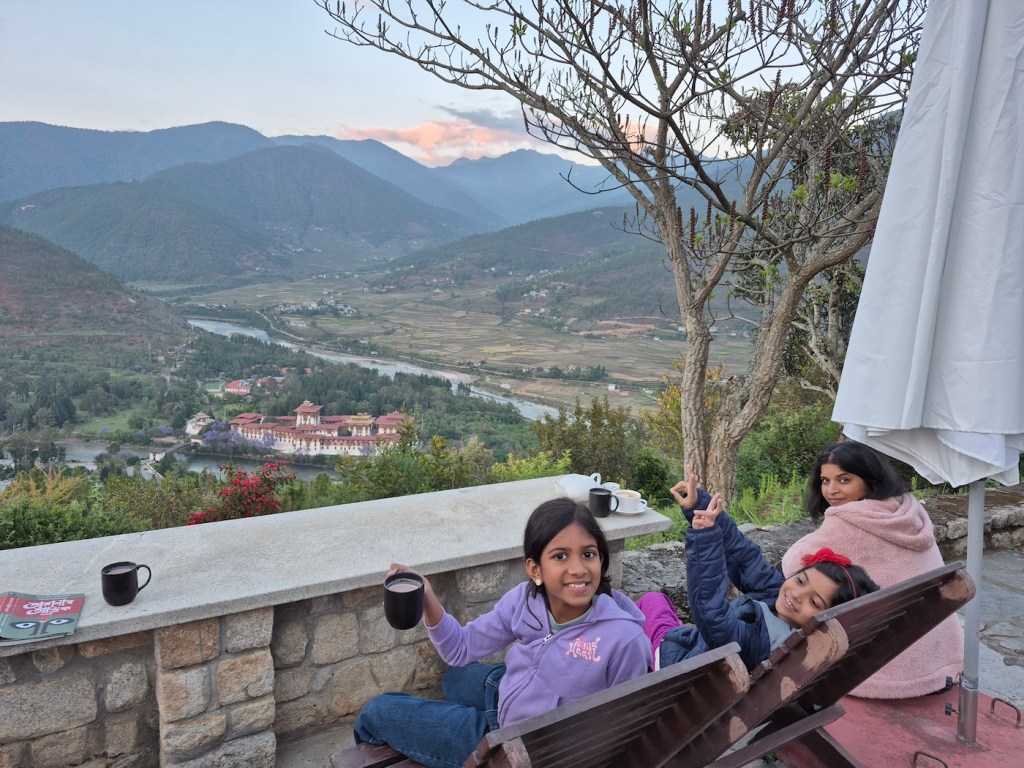
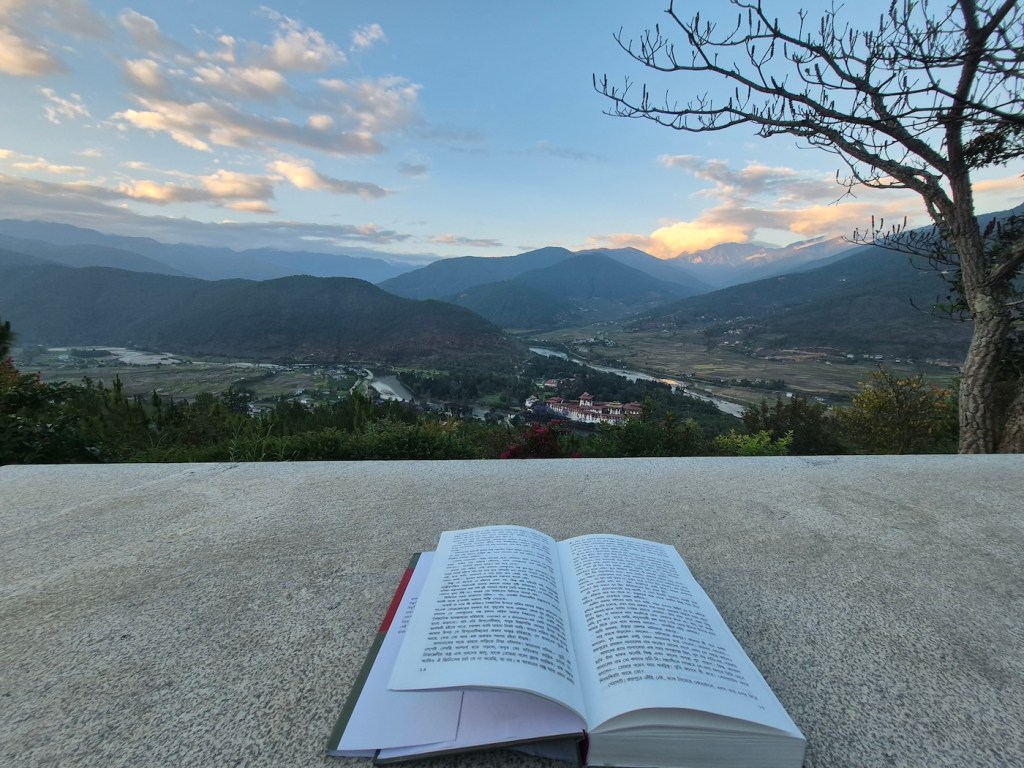
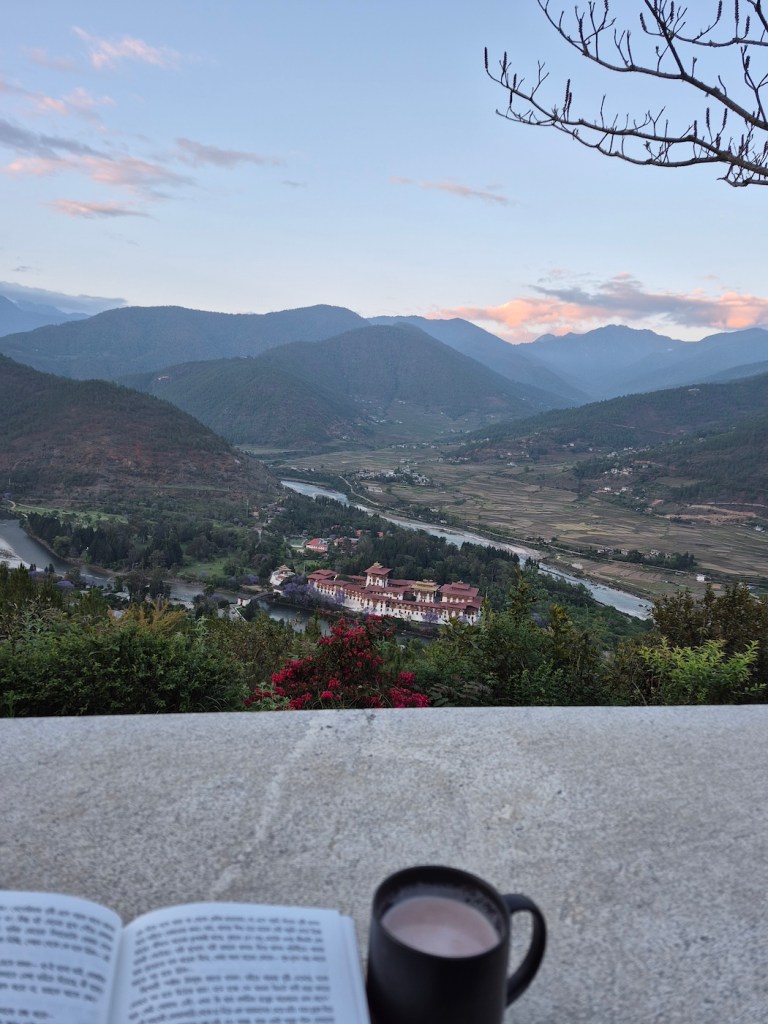
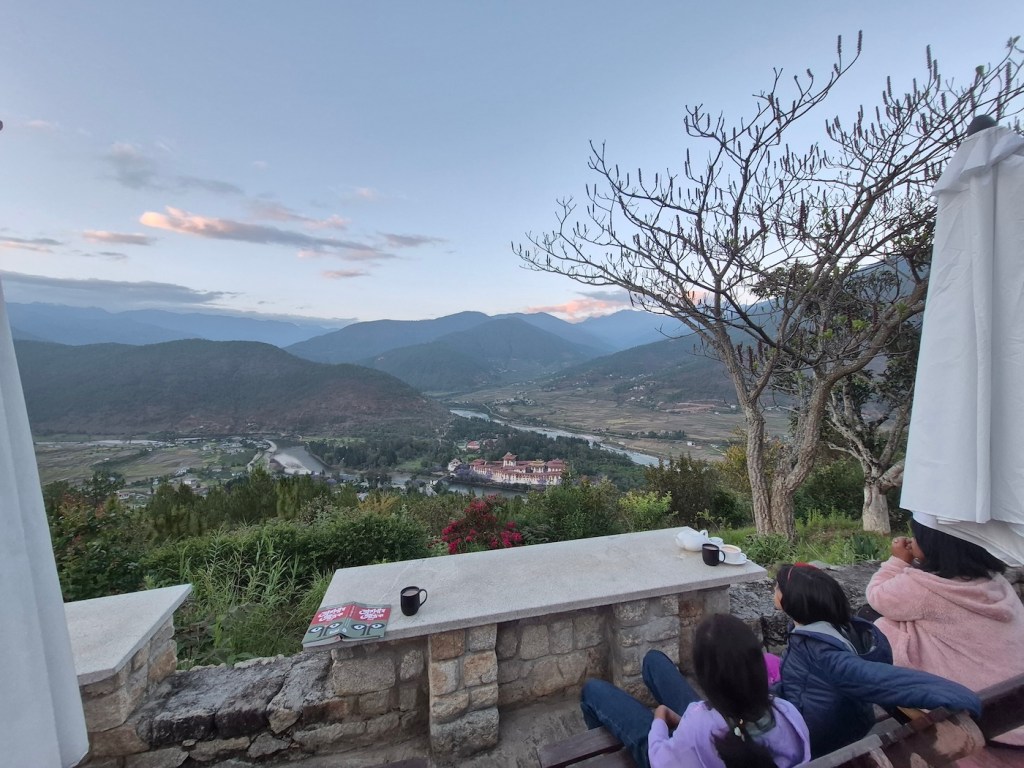
Later, after the children had gone to sleep, we opened the bottles of wine we had bought earlier. The four of us—Arun, Sreeja, Moumita and I—sat talking.
We kept chatting and chatting, completely losing track of time. When we finally checked the clock, it was almost 2:30 in the morning. We hurried off to bed because we had to leave for Paro the next day.
This was not a wise decision for me.
I generally need seven to eight hours of sleep, and during the trip I had developed the habit of waking up at around 5:30 every morning. Despite going to bed at 2:30, I woke up automatically at 5:30—and immediately realised that I had a splitting headache.
We had another excellent breakfast at Dhumra, packed our bags and left for Paro. For most of the drive from Punakha, I was sleeping and dozing in the car, trying to recover.
Fortunately, by the time we reached Paro, the headache had mellowed down. I was enormously relieved. Had it continued at the same intensity, the final and most anticipated part of our Bhutan trip could easily have become miserable.
Instead, I reached Paro feeling much better and ready for what lay ahead.
And that is where the next chapter of the journey begins.
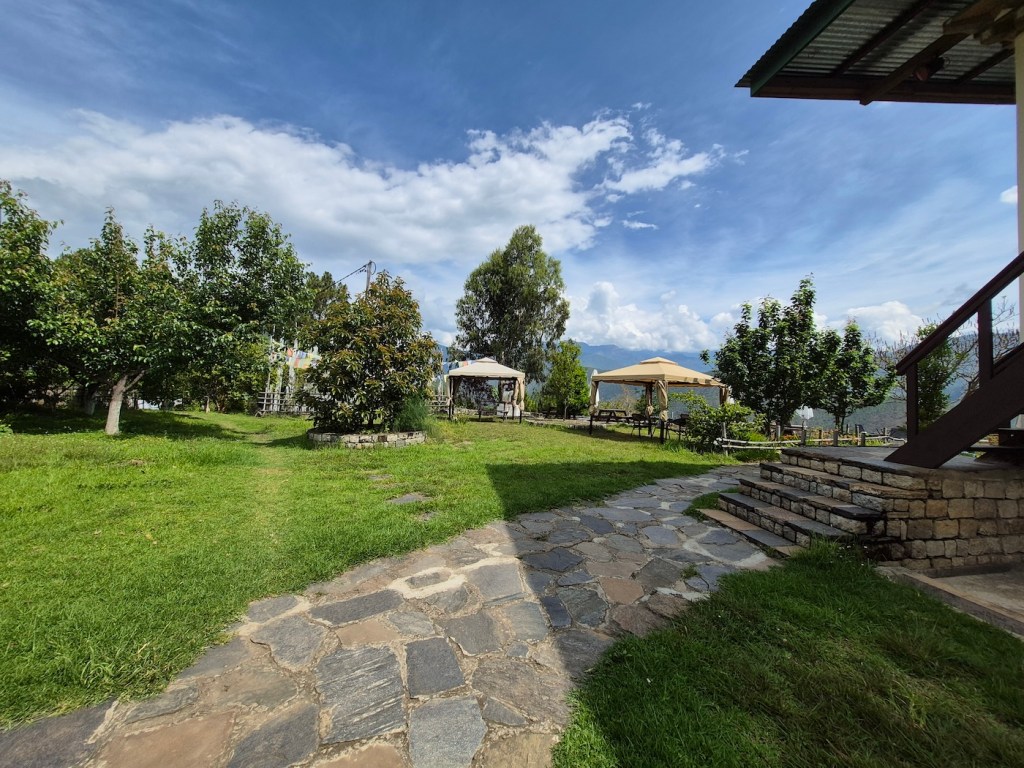
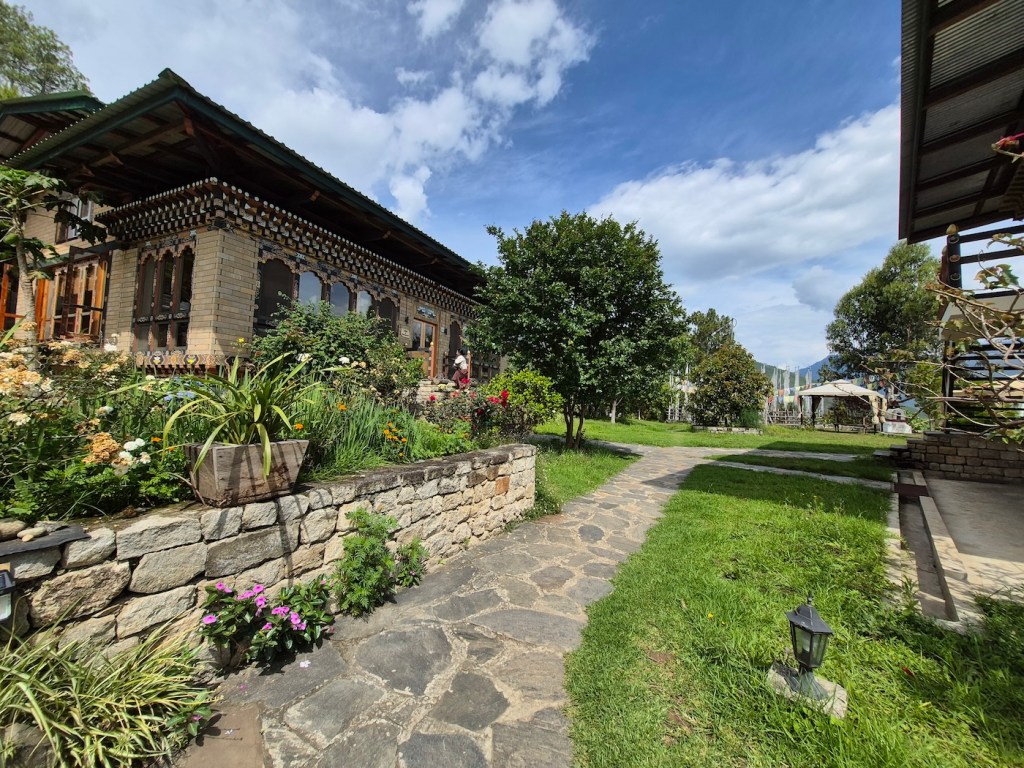
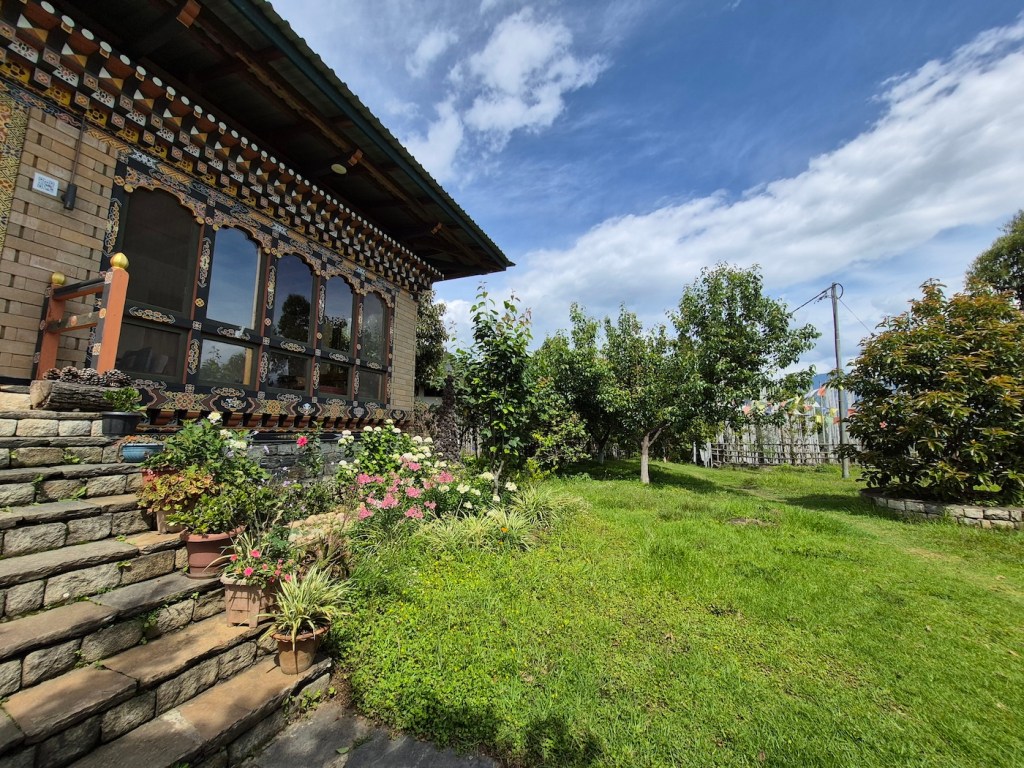
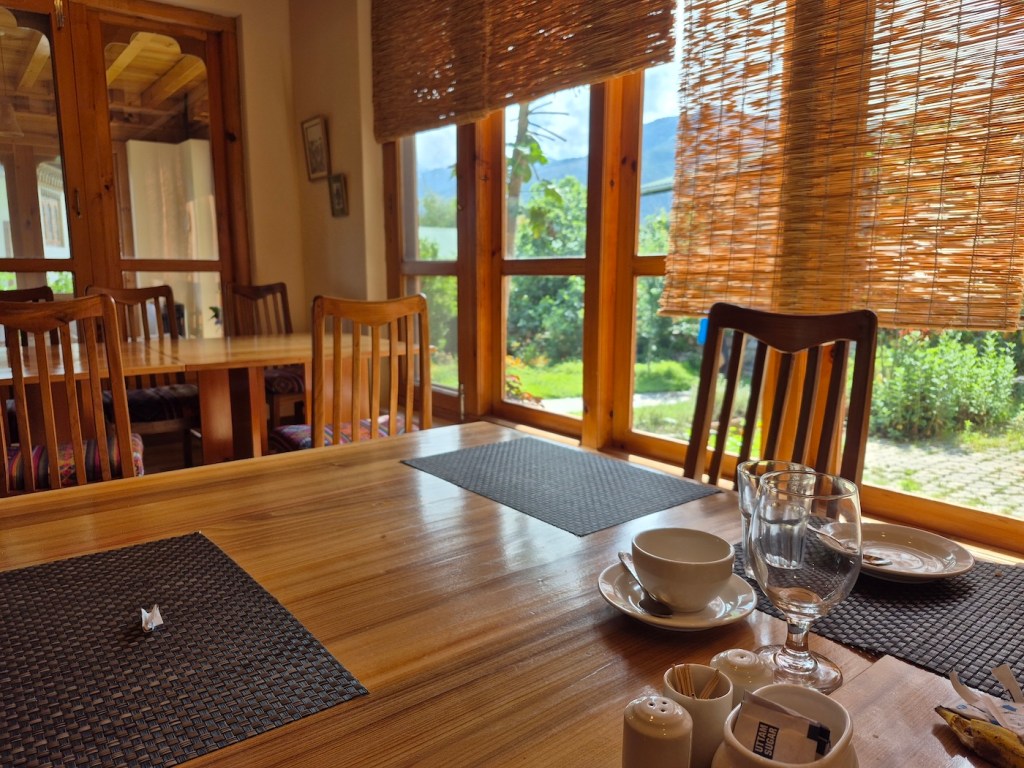
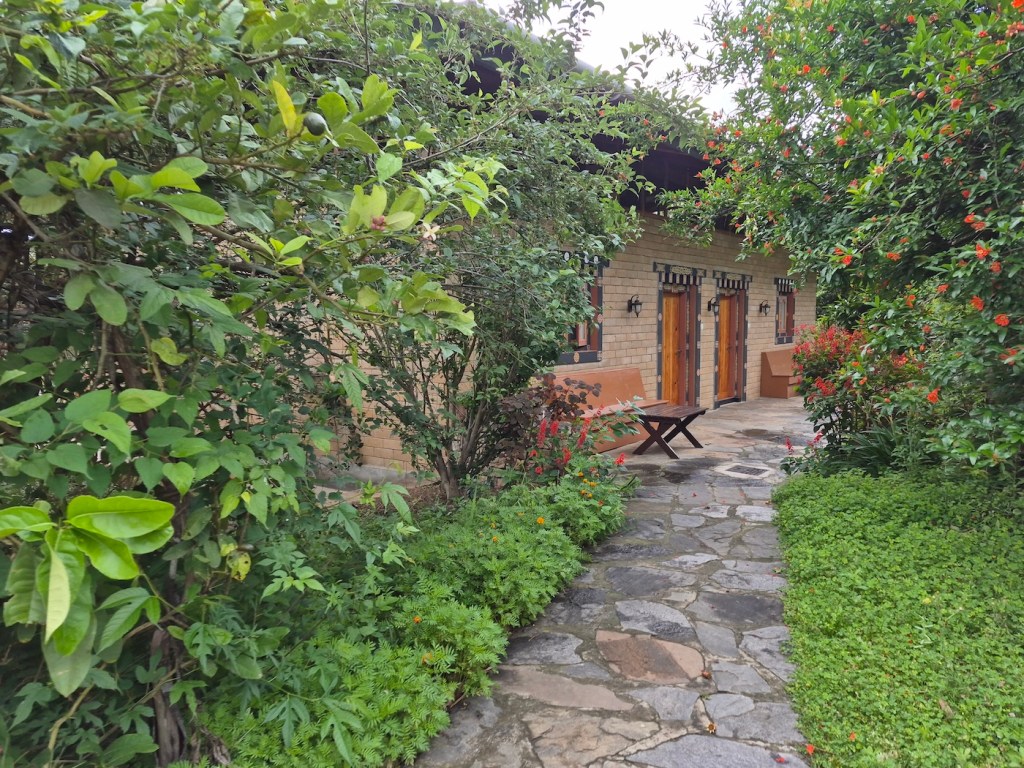
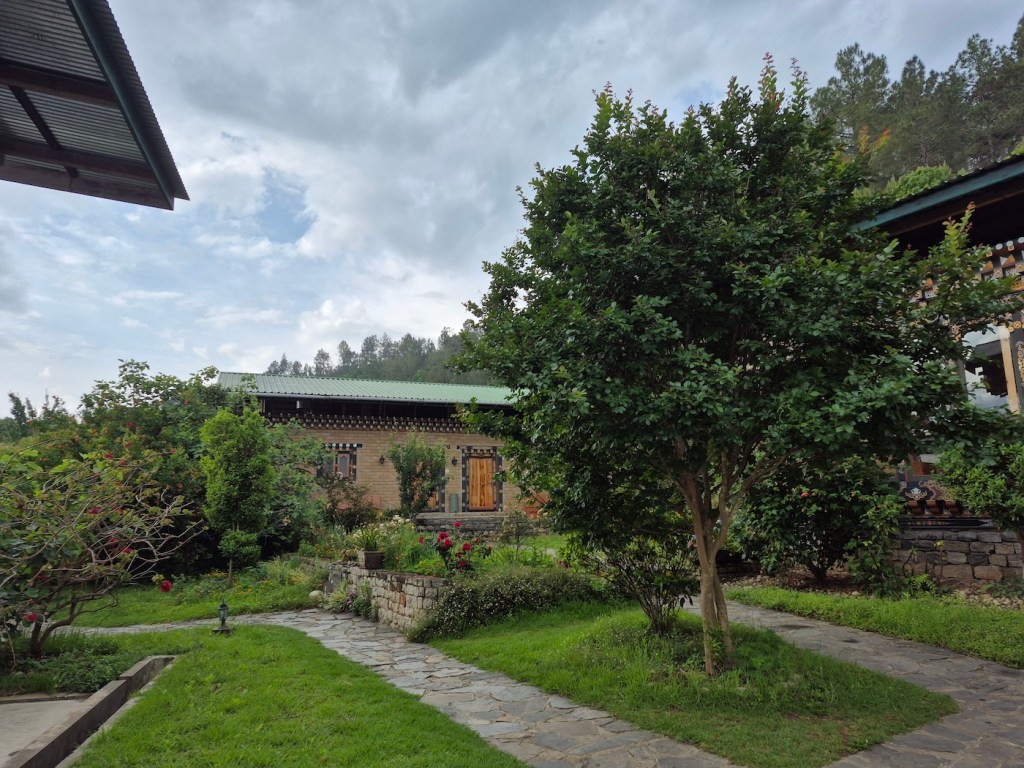
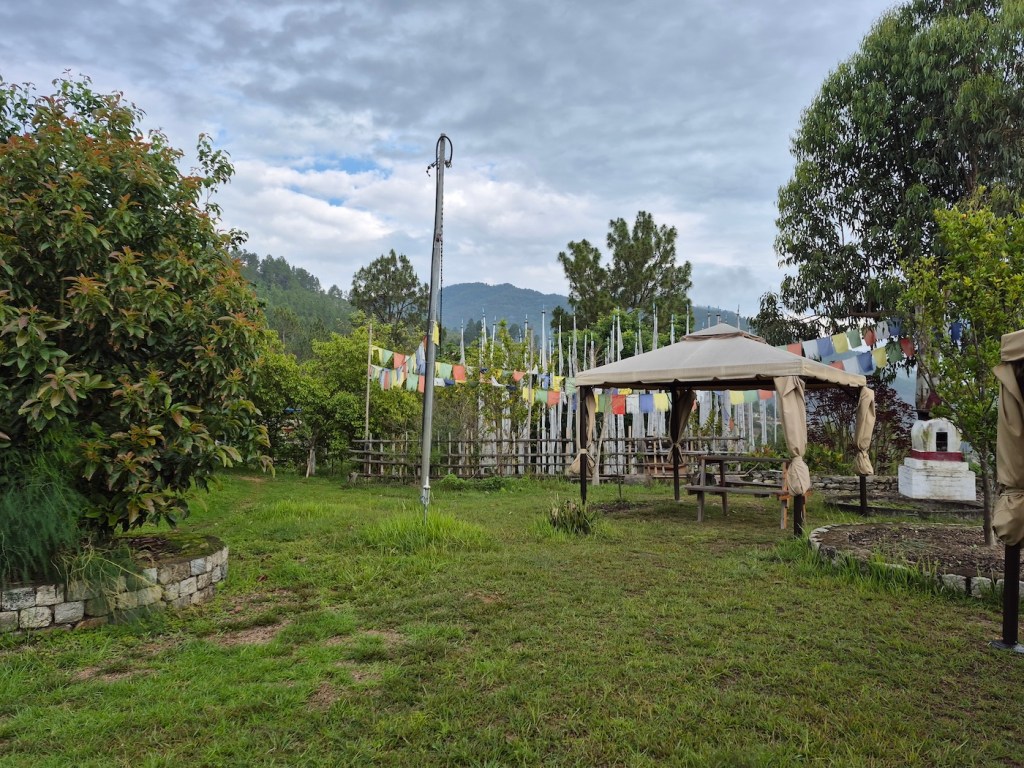
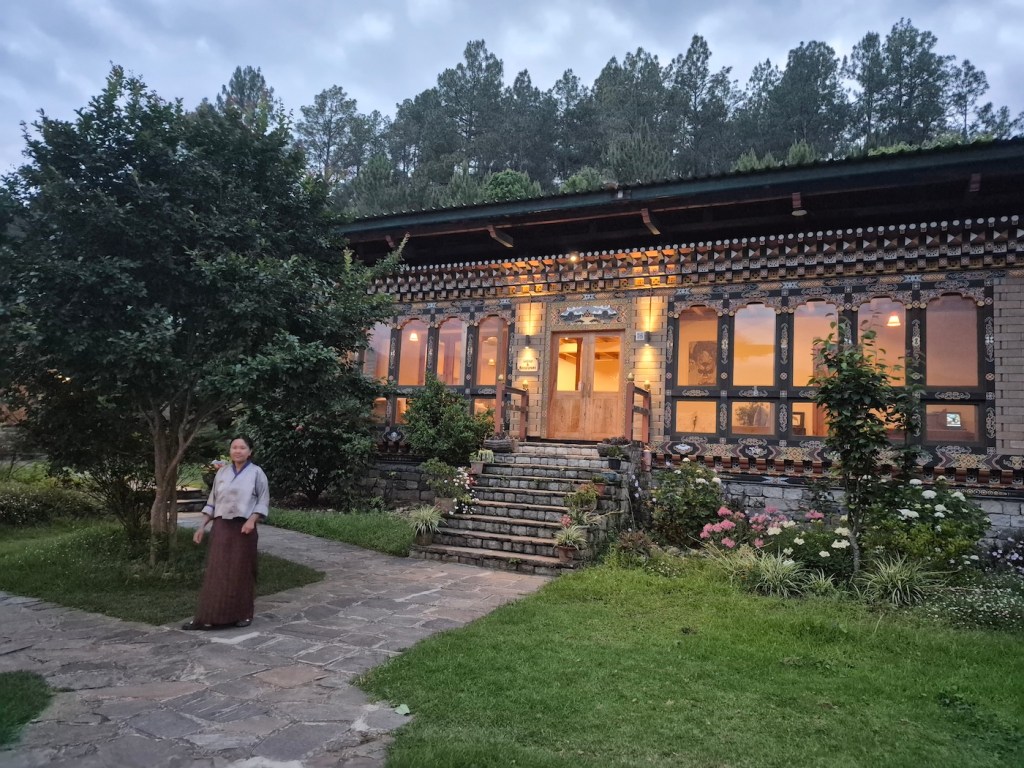
Dhumra – A few more pics for the memoirs – Oh I so loved the place.
There was a gentleman from Germany (i came to know later), who was also staying at Dhumra, who while passing in the lawns inside Dhumra, asked me,”Do you know where you are?” I was confused – what is he really expecting as answer? I said,”mm..Punakha…bhutan…Dhumra…??” He said,”Paradise”.
And that’s Dhumra for you!


Leave a Reply