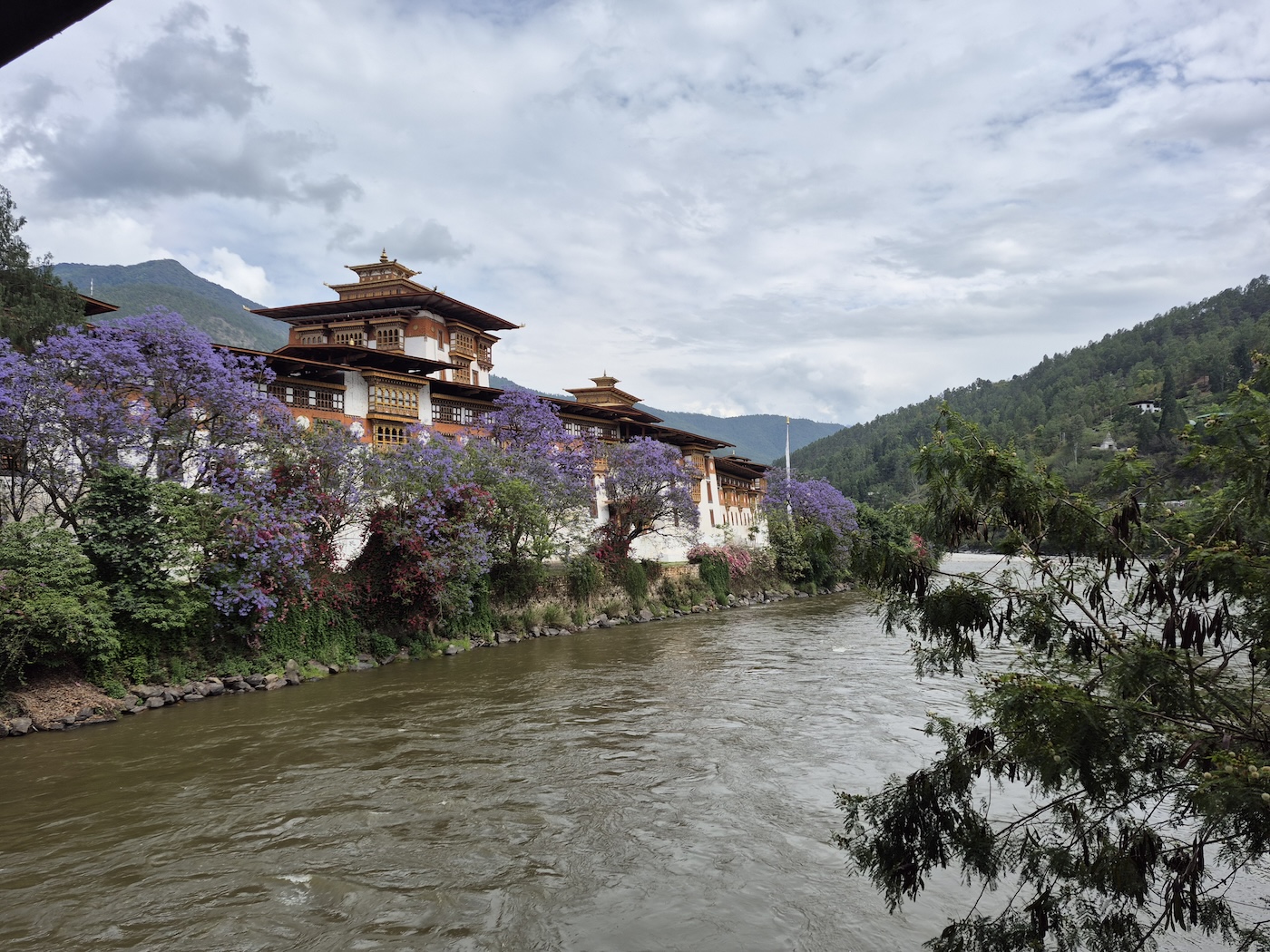
My final thoughts after travelling through Thimphu, Phobjikha, Punakha and Paro
Bhutan is a very small country sitting between two giants—India on one side and China on the other.
It would have been very easy for a country of this size to be overwhelmed by the influence of either neighbour. And of course, those influences exist. Bhutan’s religion and iconography have deep connections with India, while its geography and history tie it closely to the Tibetan cultural world. Yet Bhutan has managed to absorb these influences without allowing them to erase its own identity.
That, more than any individual monastery, valley or mountain view, was what impressed me most about the country.
Bhutan has chosen to remain unmistakably Bhutanese.
Here are the details of the Travel –
1. From Bangalore to Bagdogra to Phuntsholing and Thimphu
How to experience the real Bhutan
One thing became clear to me by the end of our journey: a trip to Bhutan can be either extraordinary or surprisingly ordinary. Much depends on how you travel.
If you rush through Thimphu, Punakha and Paro, stop only at the famous attractions, eat familiar Indian food in standard hotels and spend the entire journey ticking items off a checklist, you may return wondering what all the fuss was about.
Bhutan reveals itself slowly.
Spend enough days there. Walk through its forests. Take the trail across Phobjikha Valley. Attempt the climb to Tiger’s Nest.
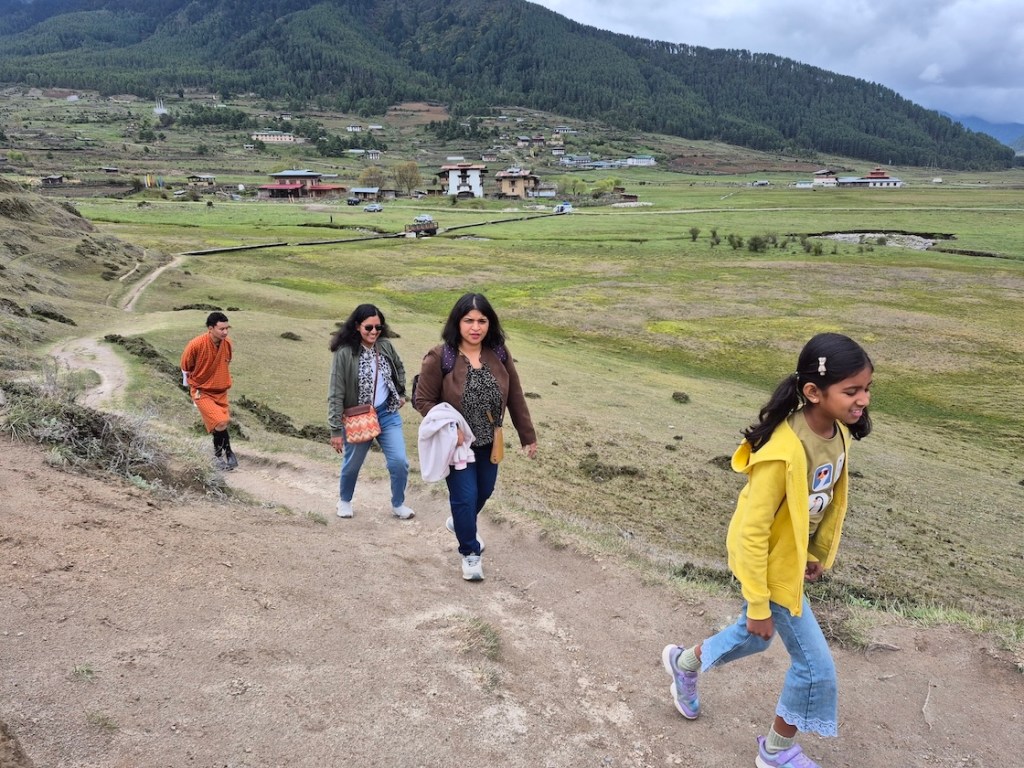
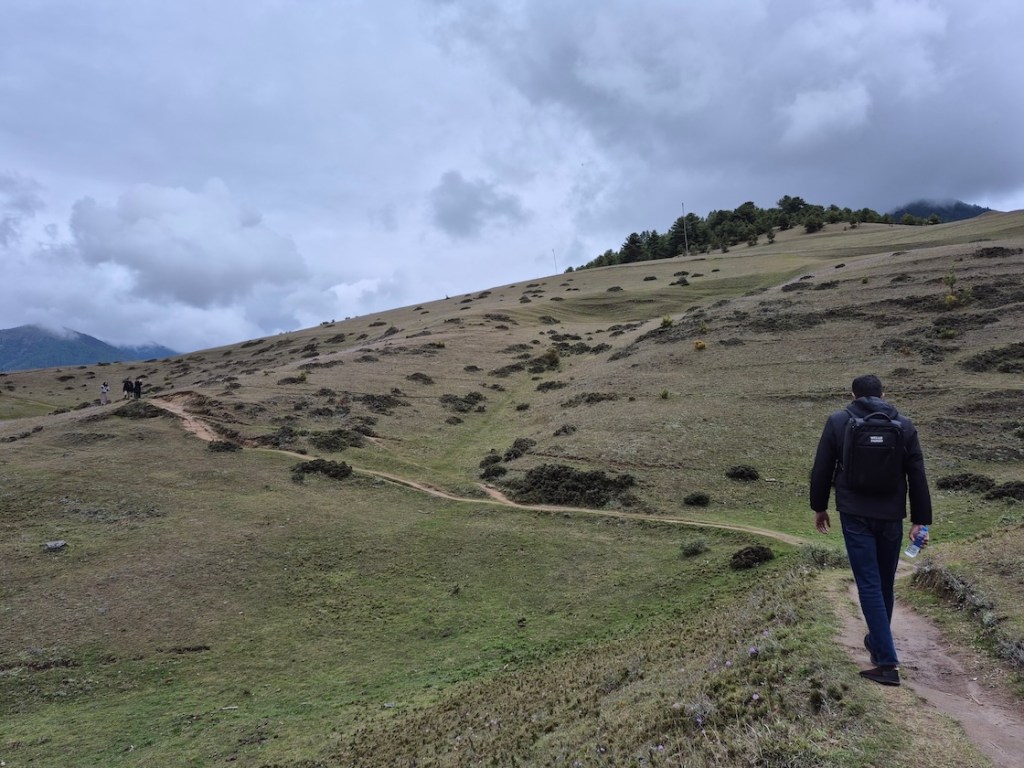
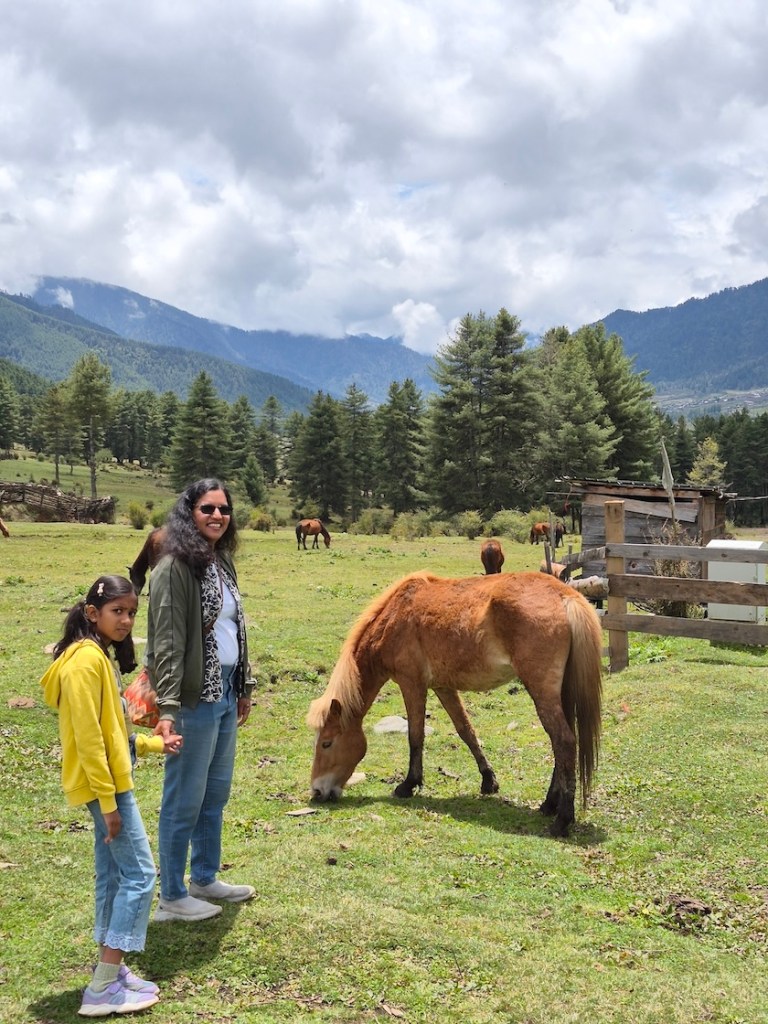
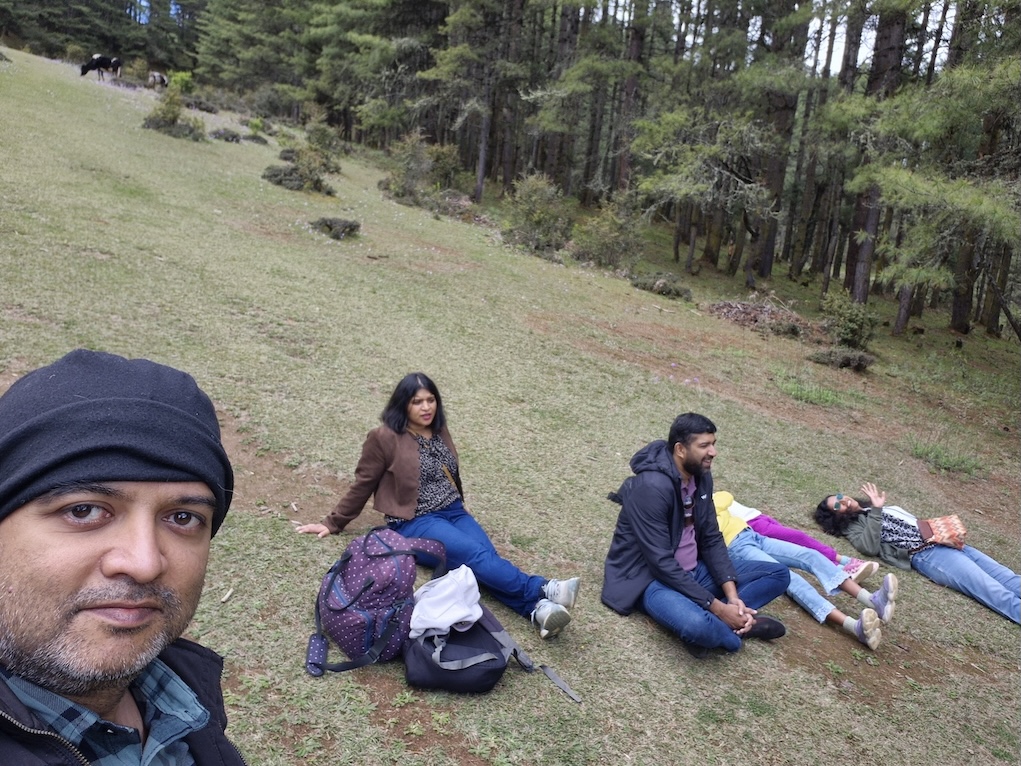
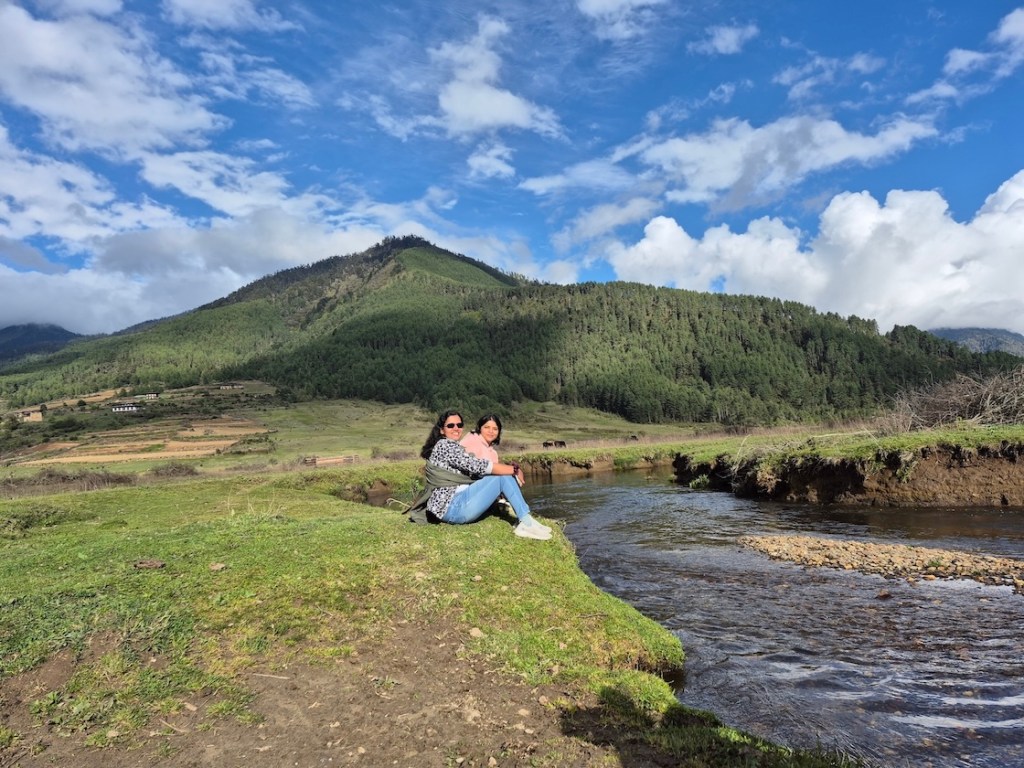
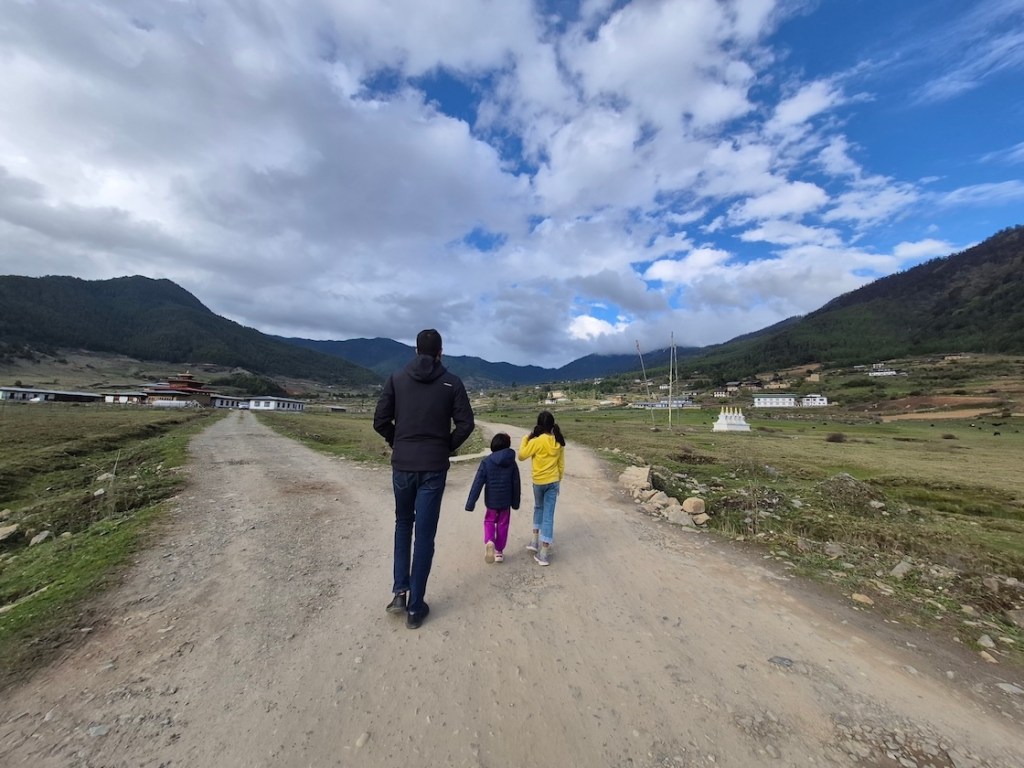
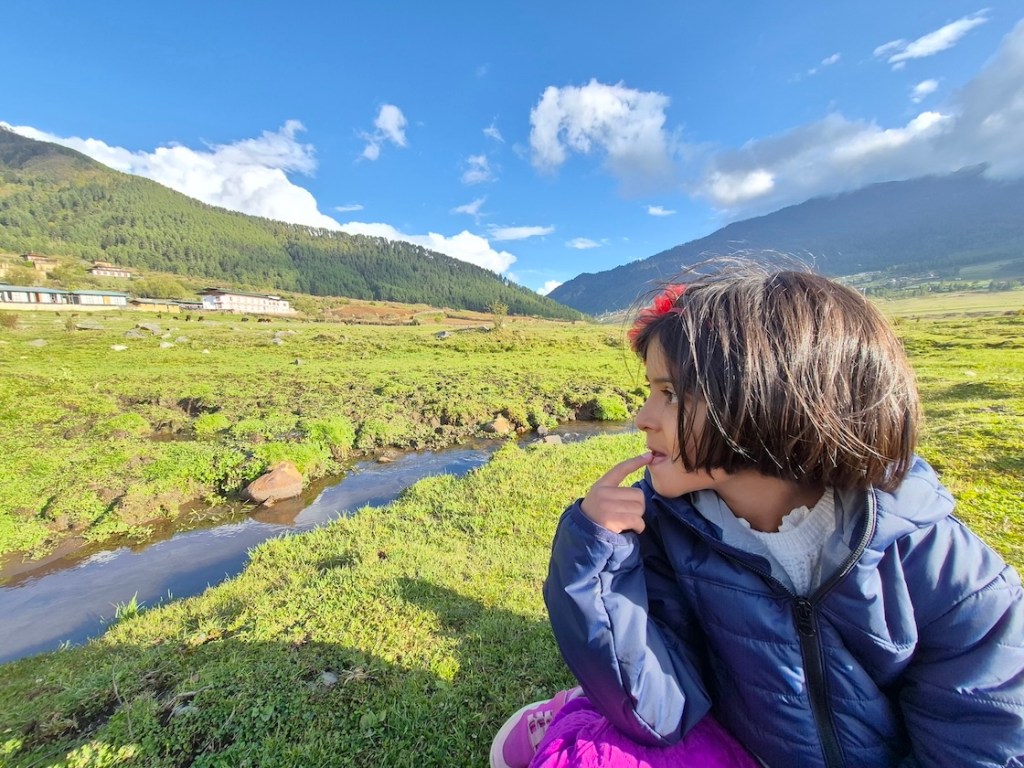
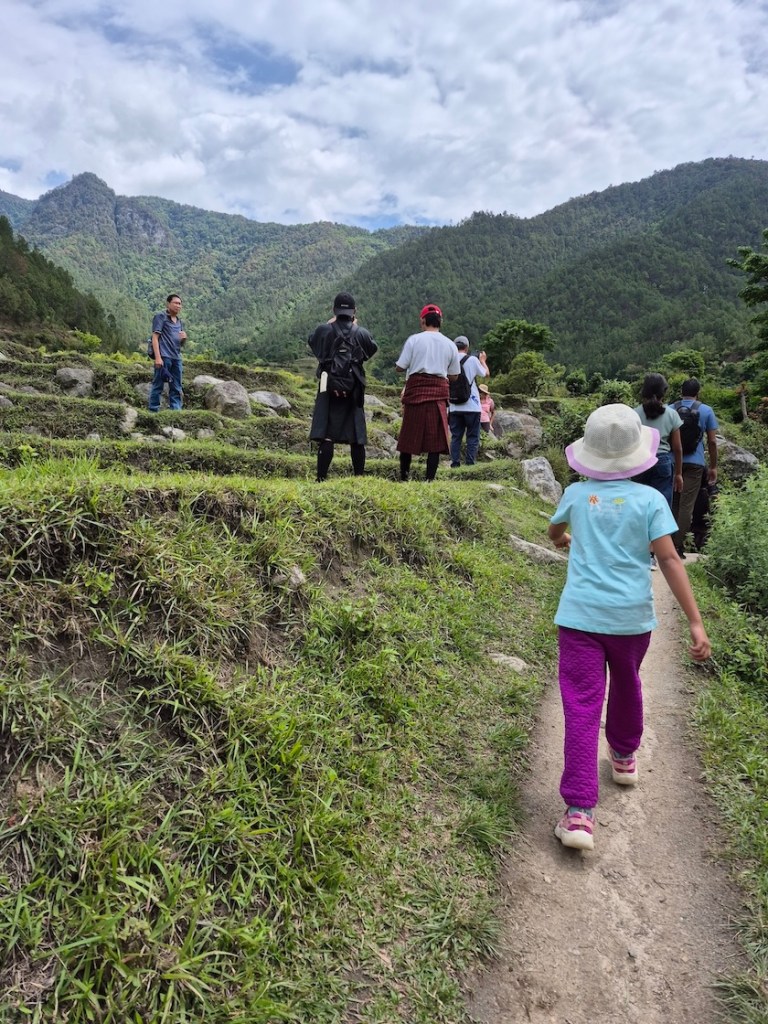
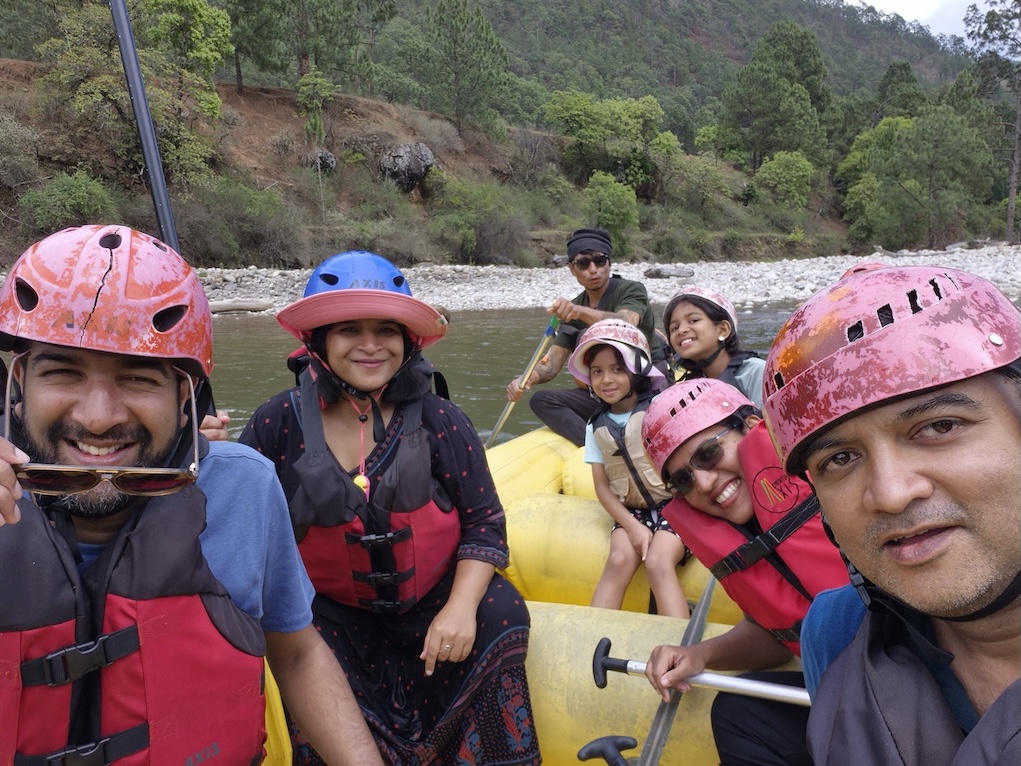
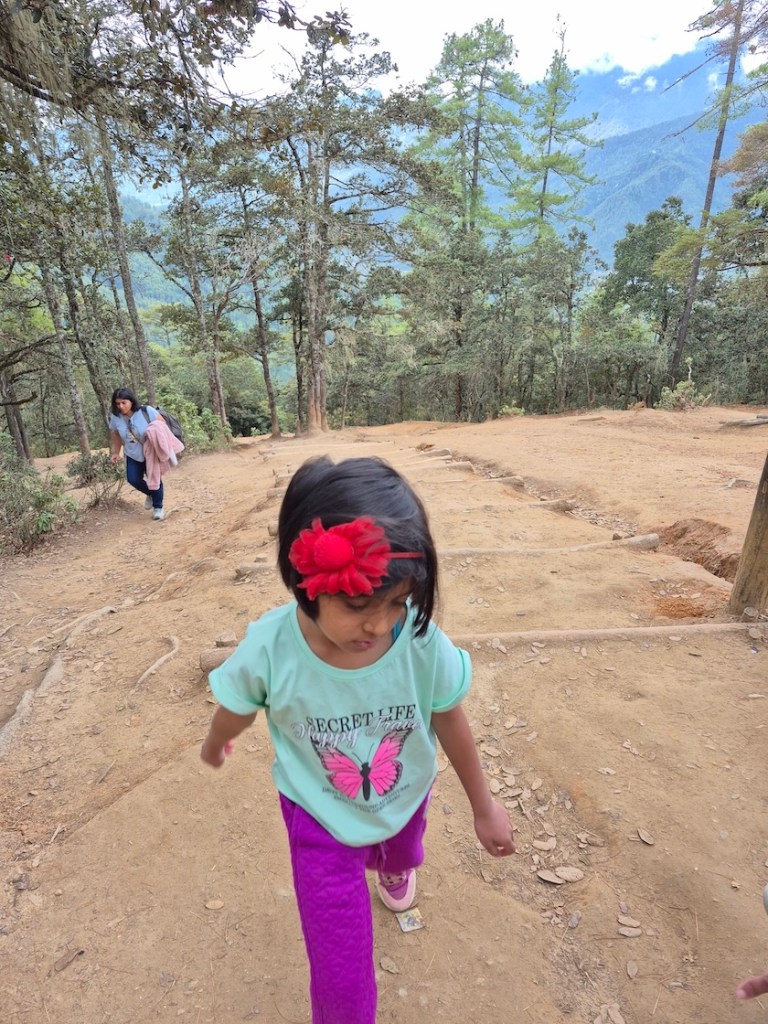
Sit beside a river without rushing to the next attraction. Talk to your guide and driver about their lives.
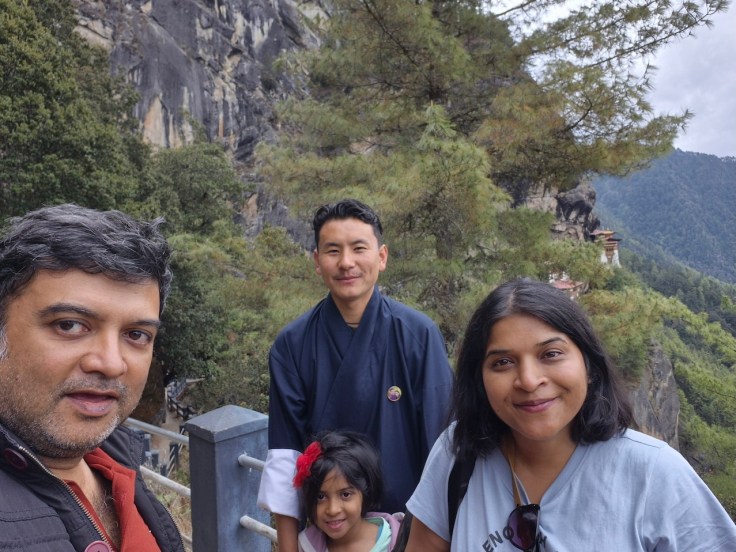
Stay in a farm resort, homestay or a small hotel that opens onto the landscape.
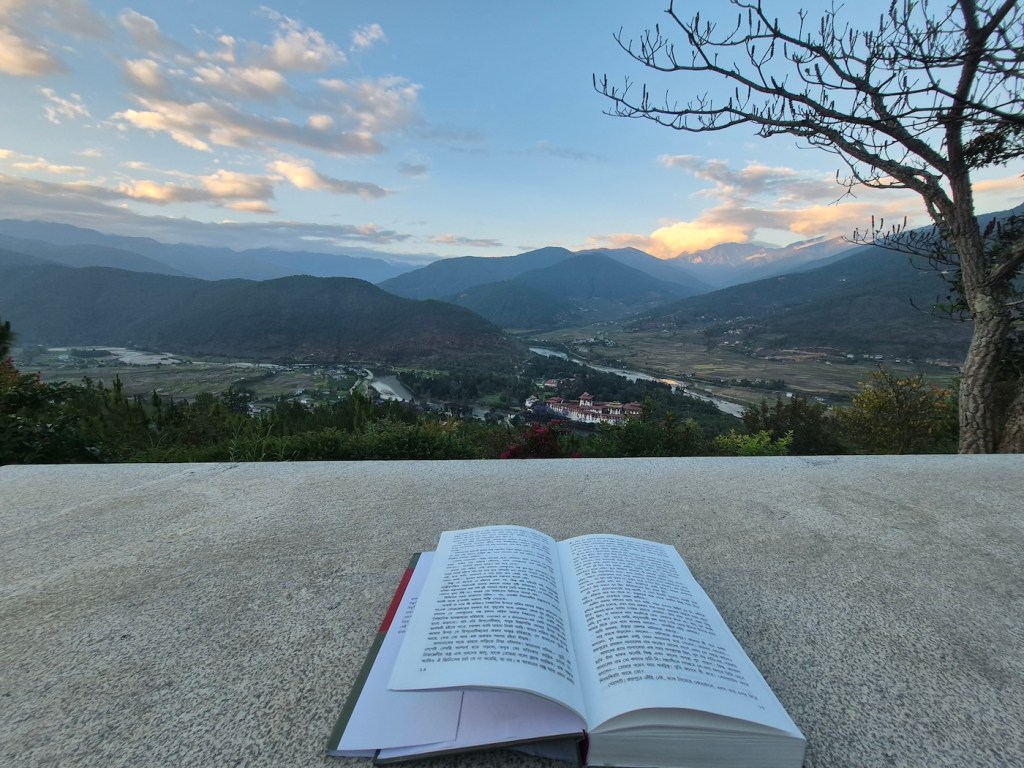
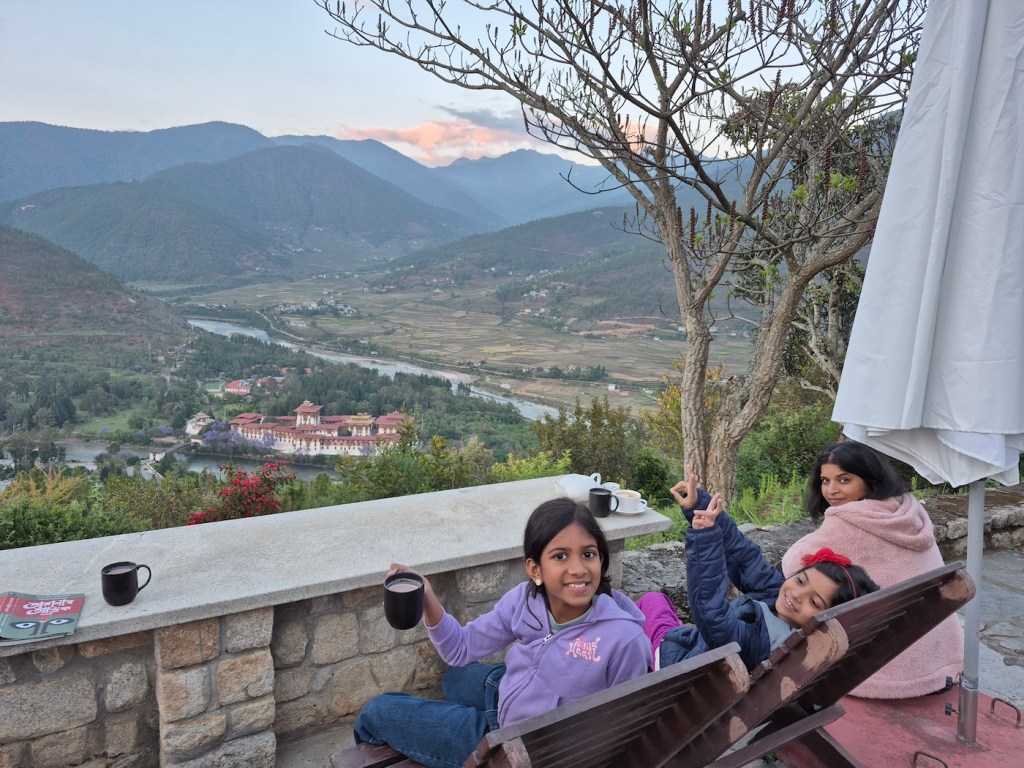
Try ema datshi, shamu datshi, momos, local wine and whatever the kitchen is cooking—rather than expecting palak paneer, roti and chicken curry at every meal.
Go with a Group of Like Minded People
We were 6 of us – 2 families – Husband, Wife and Daughter. Arun is my college friend. And we as a family are close with their family (Sreeja & Nandita) as well. So it was fun. Unless you have like minded people it is difficult to enjoy a trip like this – which has hikes and free time to experience the places.
So choosing your travel group is very important too!
Culture that is still lived, not performed
The strength of Bhutanese identity is visible everywhere.
Our guide and driver wore traditional Bhutanese clothing throughout the journey. Men commonly wear the gho, a knee-length robe tied at the waist, while women wear the kira, a long woven dress. We also saw people wearing jeans, T-shirts and other contemporary clothes, of course. Bhutan is not frozen in time. But traditional clothing is still a normal part of daily life, particularly in schools, offices, formal settings and the tourism sector.
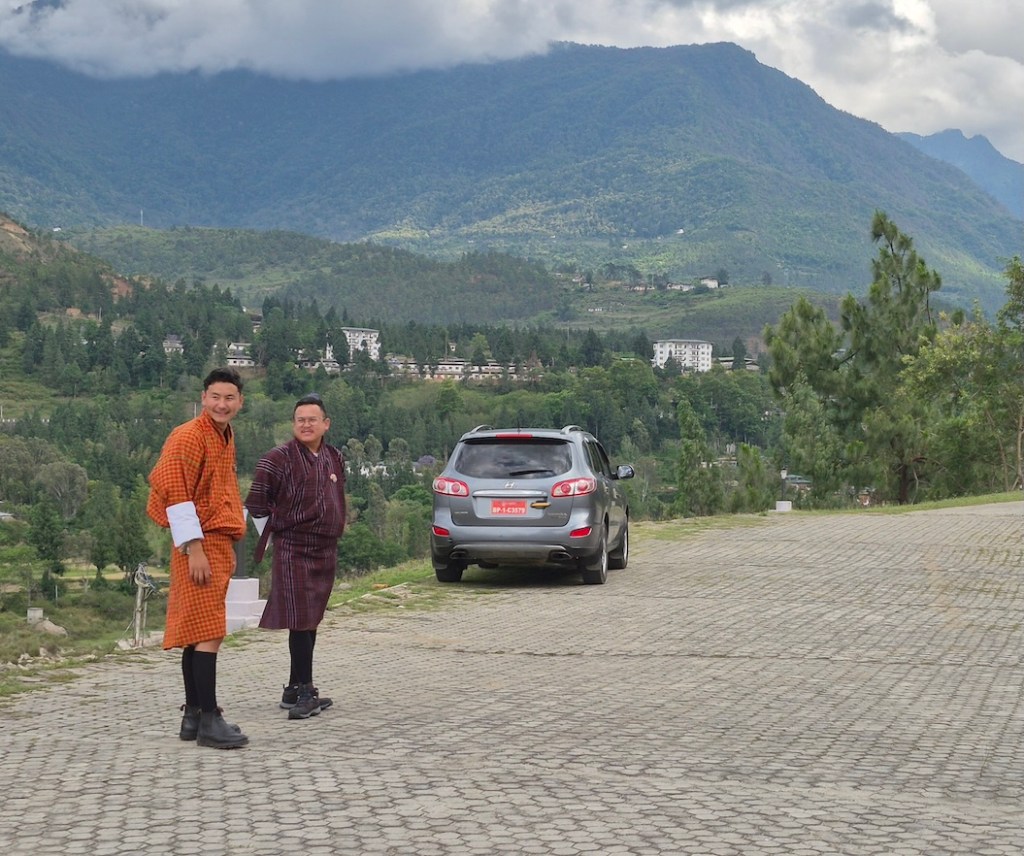
It did not feel like a costume put on for visitors. It felt like a living expression of identity. And it was great to see this.
Our guide introduced us to the sanctity of the monasteries and Dzongs from the beginning—how to behave, where photographs were permitted, and why certain objects, paintings and spaces were sacred. That context mattered. Without it, we might have seen only beautiful buildings. With it, we began to understand that these were not historical monuments preserved for tourists; they were part of a continuing religious and cultural life.
The artwork in the National Museum at Paro also revealed how cultures travel and transform. We saw deities and names that felt familiar from India—Mahakala, Tara, Rudra and others—appearing within Bhutan’s Vajrayana Buddhist traditions. They are not simply copies of Hindu gods or straightforward “reincarnations” of them. Rather, they reflect the long movement of religious ideas, symbols and teachers between India, Tibet and Bhutan.
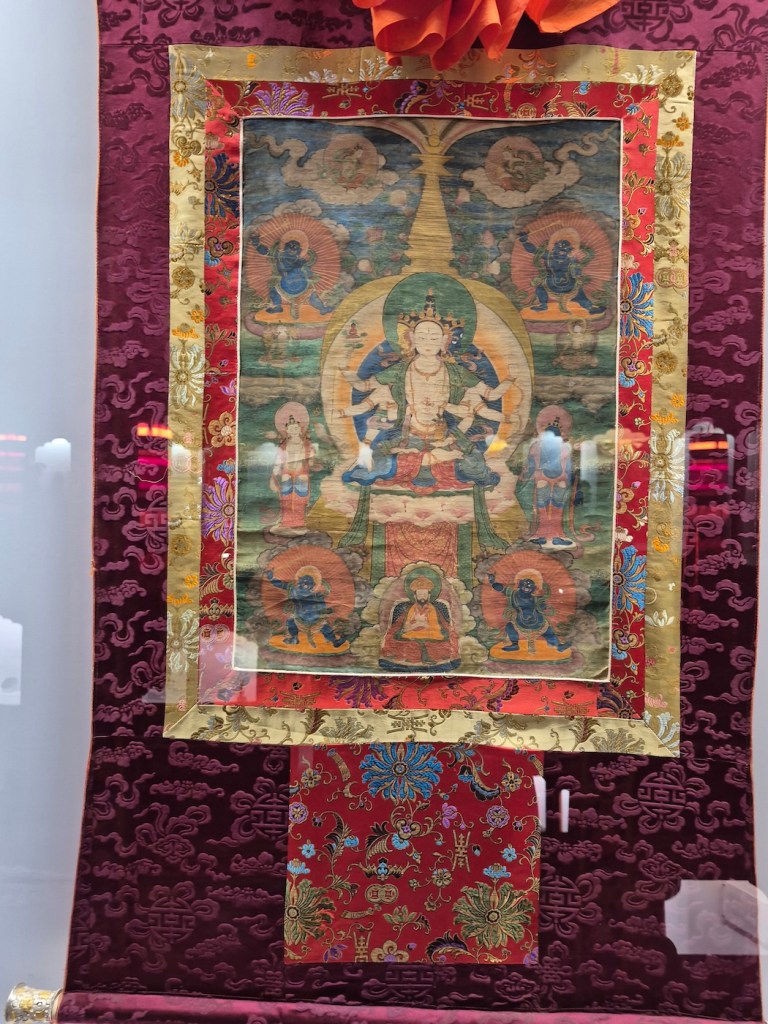
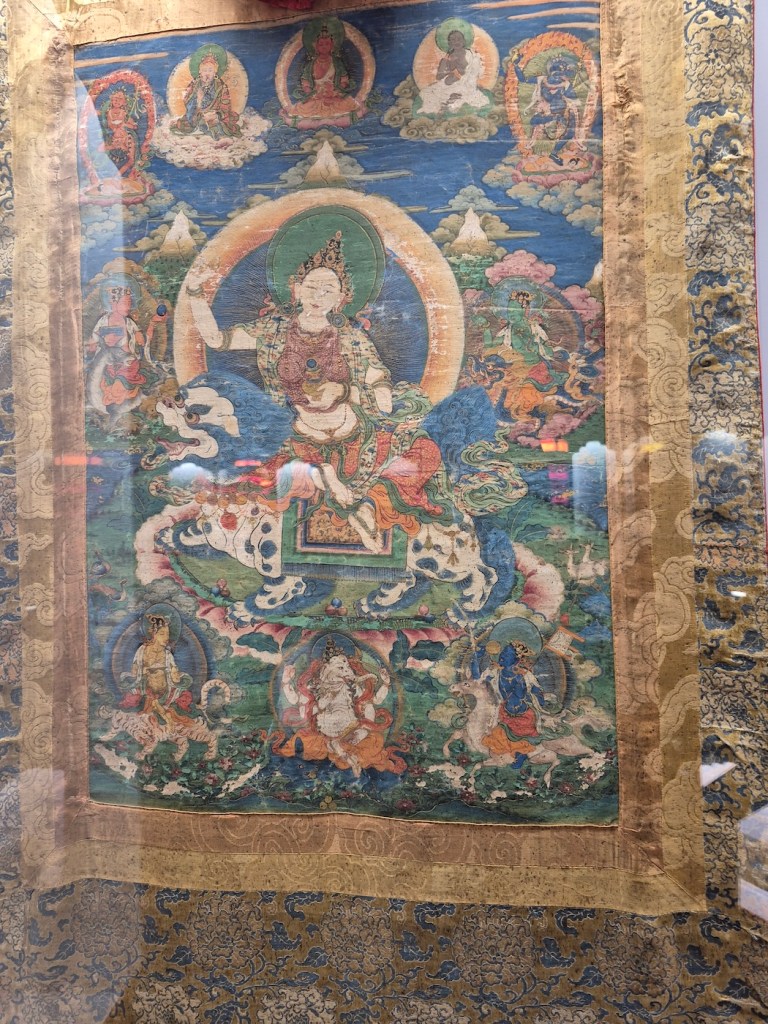
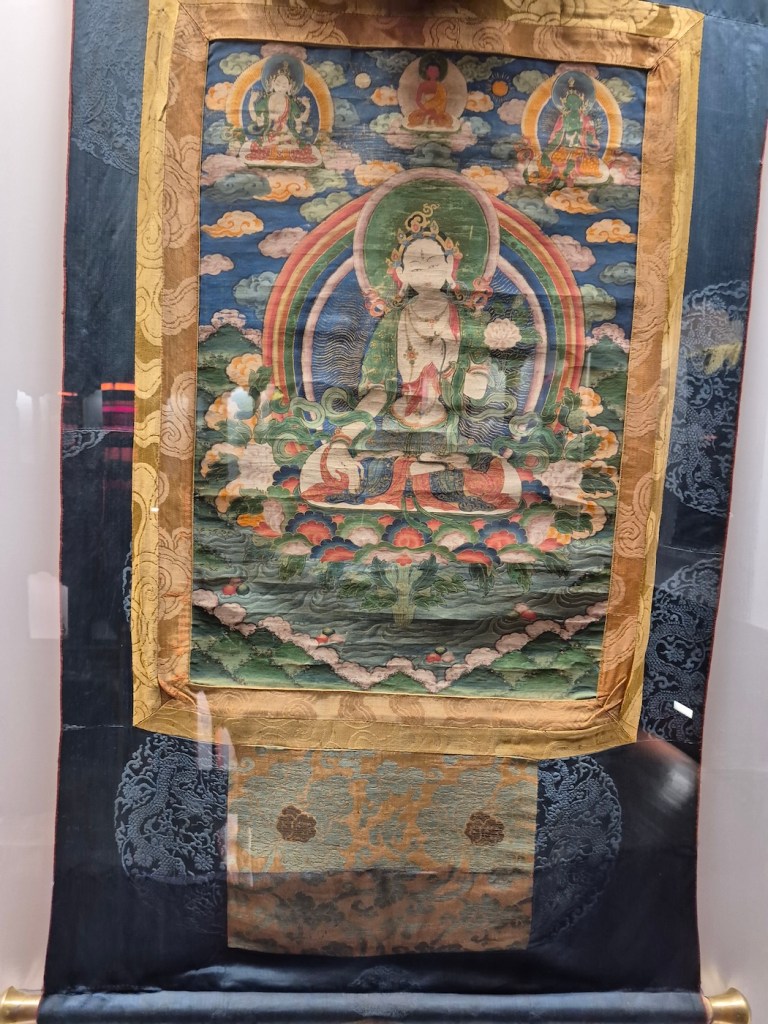
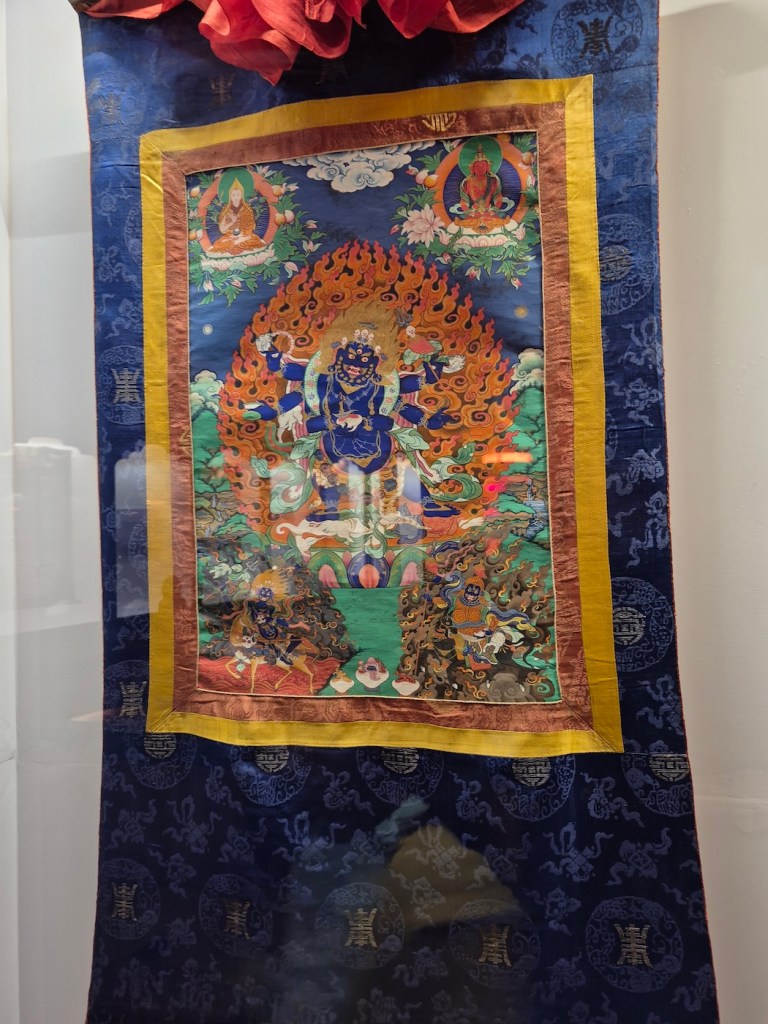
Bhutan has not built its identity by pretending outside influences do not exist. Its achievement lies in turning centuries of influence into something distinctly its own.
Clean roads, calm people and a different pace
The other thing that struck us repeatedly was how clean the country was.
Most roads were excellent, even though we were travelling continuously through difficult mountain terrain. Only in very remote stretches, such as parts of the route towards Phobjikha Valley, did the road quality drop noticeably—and there it was understandable.
The towns were orderly, the valleys largely free of litter, and the people we met were calm, polite and genuinely pleasant to talk to. Bhutan did not feel rushed. Even its cities seemed to move at a more humane pace.
At times, driving through the clean mountain roads and well-maintained towns felt closer to travelling in parts of Europe than in the Indian subcontinent. The exceptions were often near crowded tourist locations, where an occasional plastic bottle or chips packet would appear. Those small pieces of rubbish stood out precisely because the rest of the country was so clean.
It was a reminder that tourists do not merely observe a destination. We change it by being there—for better or worse.
Gelephu: a country looking towards the future
On our way home, I came across a magazine about the Gelephu Mindfulness City, Bhutan’s extraordinarily ambitious new project in the southern part of the country.
Gelephu is being developed as a Special Administrative Region and an economic hub. Its official vision combines innovation, business and international connectivity with Bhutanese spirituality, environmental balance and cultural identity. The project is intended to create new economic opportunities for the country, particularly for its younger generation, without following the familiar model of development that sacrifices nature and tradition.
What fascinated me even more was the culture of volunteerism surrounding it.
Thousands of Bhutanese citizens have participated in volunteer programmes connected with Gelephu—clearing land, managing waste, landscaping and planting trees. The King himself has joined these efforts. From the photographs and accounts I saw, it did not appear to be the usual political photo opportunity. It looked like leadership taking part physically in a shared national project.
Perhaps the eventual city will face complications. Every large vision does. But the thinking behind it is remarkable: prosperity is necessary, yet it must remain rooted in mindfulness, nature and Bhutanese values.
The official description of Gelephu speaks of blending “Mindfulness and Prosperity.” That phrase captures much of what I sensed throughout Bhutan. The country does not reject modernity. It simply refuses to accept that becoming modern requires becoming culturally anonymous.
And then there are the phalluses
No summary of Bhutan would be complete without mentioning one of its most unexpected cultural symbols: the phallus.
We first encountered it at Simply Bhutan in Thimphu, where a section explained its cultural significance. After that, we began noticing phallus paintings on the walls of houses, oversized wooden versions hanging from balconies, and entire souvenir displays dedicated to them.
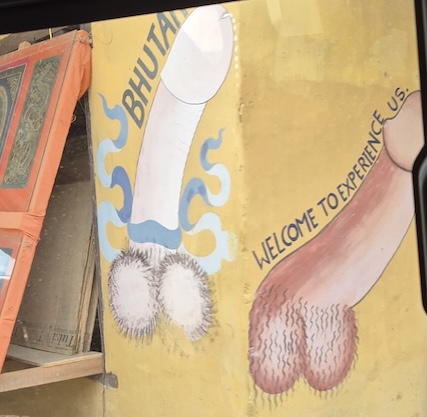

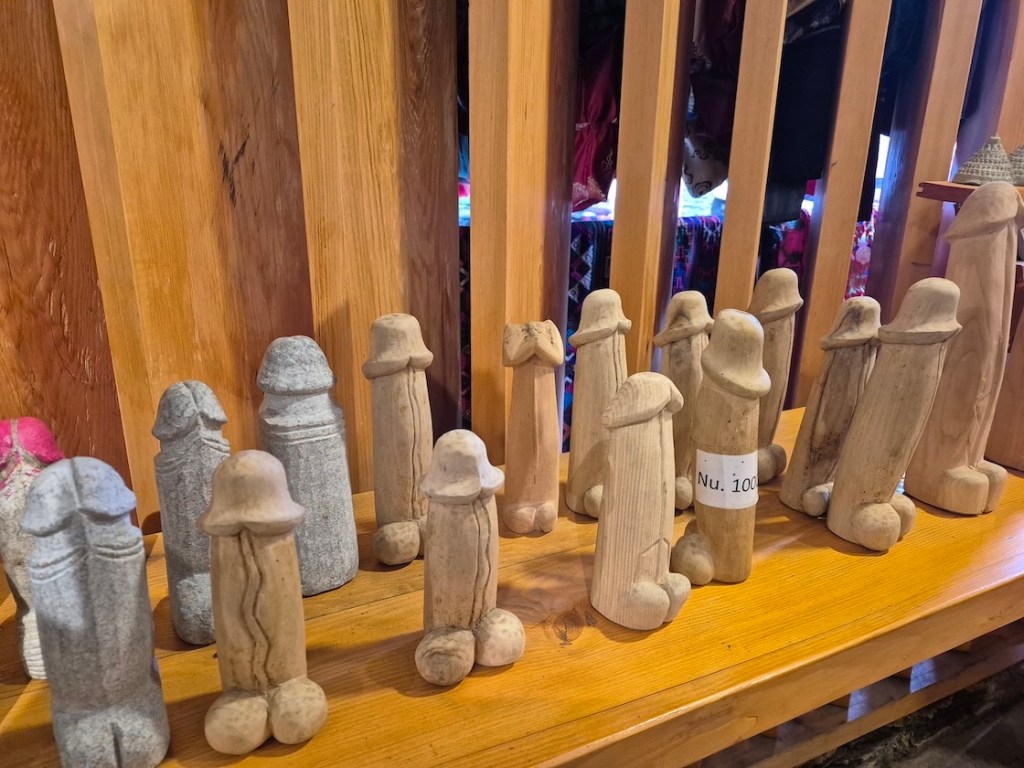
To an outsider, the first reaction is inevitably: Why?
The tradition is most commonly associated with Drukpa Kunley, the 15th- and 16th-century Buddhist master popularly known as the “Divine Madman.” He rejected conventional, solemn methods of religious teaching and used outrageous behaviour, humour, songs and sexual imagery to challenge hypocrisy and pretension. In Bhutanese legends, his phallus became the “thunderbolt of flaming wisdom,” a power with which he subdued demons and harmful forces.
Over time, the image came to represent protection, good fortune and fertility. Painted phalluses on houses and carved wooden ones suspended from roofs were traditionally intended to ward off evil and malicious influences. The association with fertility remains especially strong at Chimi Lhakhang near Punakha (the Fertility Temple), where couples come seeking blessings for children.
That does not fully explain why a tourist would want to carry a giant wooden phallus home in a suitcase. Some Bhutanese mysteries are perhaps best left unresolved.
The kind of tourist we should not become
Unfortunately, a few experiences during our trip also showed us exactly what Bhutan is trying to protect itself from.
During our Tiger’s Nest trek, we came across a group of Indian tourists talking loudly, shouting to one another and playing music loudly through phone speakers. This was not an amusement park. It was a pilgrimage trail leading to one of Bhutan’s holiest monasteries. Around them, people from different parts of the world were climbing quietly, absorbing the forest, the mountains and the sense of devotion attached to the journey.
The noise felt completely out of place.
Bhutan’s official guidance to visitors specifically asks people to maintain silence at sacred sites. Yet such behaviour should not require a government instruction. When we enter a monastery, a forest, a train compartment or even a quiet public space, the basic rule should be simple: our entertainment should not become everybody else’s noise.
We encountered a smaller but almost comical version of the same problem during a traditional hot-stone bath. The entire point of the bath was to rest our exhausted bodies in silence after the Tiger’s Nest trek. Instead, a couple in one enclosure kept shouting across the partitions to their teenage son in another:
“Kabir, maza aa raha hai?”
And Kabir would shout his answer back.
It was difficult to decide whether to laugh or be irritated. Even in a place specifically designed for quiet relaxation, such behavior maybe can come only from Indians – and specially North Indians (you know the Delhi, UP, Bihar belt).
To be clear, this is not about nationality alone, and certainly not about any particular Indian state or social class. It is about behaviour. Thoughtless tourists exist everywhere. But as Indians—and as Bhutan’s closest and largest pool of visitors—we have a special responsibility not to carry our worst public habits across the border.
Indian travellers are also extremely important to Bhutan’s tourism economy. Government figures reported for 2025 indicated that Indians accounted for about 62% of all visitors. This creates a difficult balance for Bhutan: Indian tourism brings significant business to hotels, restaurants, guides and drivers, but high numbers of visitors can also place pressure on the tranquillity and cleanliness that make Bhutan special.
Bhutan’s rules—its SDF, certified guides for treks and entry into monuments and Dzongs, and restrictions on self-drive rentals—make more sense when seen in this context. They are not simply bureaucratic hurdles. They create employment for Bhutanese people and place a local custodian between the visitor and a culturally sensitive landscape.
And include at least one place beyond the standard circuit. For us, Phobjikha Valley changed the character of the entire trip. Haa Valley is another option, and there are many more if you are willing to travel farther and slower.
The Bhutan we will remember is not simply the Bhutan of grand Dzongs and famous monasteries. It is the Bhutan of long conversations, mountain roads, quiet valleys, children walking farther than we thought they could, local food, unexpected rain, and evenings when there was nowhere else we needed to be.
A country that does things deliberately
Almost everything in Bhutan appears to have been thought through in a slow and measured manner. The country does not seem interested in growth at any cost. It wants development, tourists and international investment, but it also wants to decide the terms on which they arrive.
The Sustainable Development Fee is one example. At the time of writing, Indian visitors pay Nu./₹1,200 per person per night, while most other international visitors pay US$100 per night. According to Bhutan’s Department of Tourism, the money supports infrastructure, environmental and cultural preservation, healthcare, education and opportunities for Bhutanese people (Education is Free there). The country describes its philosophy as balancing access with protection: visitors contribute towards preserving the place they have come to experience.
(They should actually increase the per night cost for Indians and decrease it for other international visitors)
Many travellers naturally dislike paying an additional daily fee. I can understand that. But after visiting Bhutan, I find myself supporting the principle behind it.
Some places cannot survive unlimited, careless tourism. Once a peaceful monastery trail becomes a noisy picnic spot, or a pristine valley becomes littered with packets and bottles, the very thing people travelled to see begins to disappear. Bhutan’s tourism policy sends a clear message: the country welcomes visitors, but their presence must also contribute to its preservation.
It is not a perfect filter. Having enough money to travel does not automatically make someone a responsible traveller. But the underlying idea—that tourism should pay for the pressure it creates—is a sensible one.
A place I will hold close
Bhutan is not perfect, nor should visitors romanticise it as a fantasy kingdom without social or economic challenges. But it has achieved something rare.
It has protected a recognisable national character while engaging with the modern world. It has maintained clean towns, living traditions and large stretches of extraordinary natural beauty. And it is trying to build its future without treating its past as an obstacle.
For a small country between two enormous neighbours, that is no ordinary achievement.
If you visit Bhutan, do not go merely to see it. Go prepared to adjust your pace to it. Speak more softly. Walk more slowly. Leave the Bluetooth speaker at home. Look beyond the checklist. Let the country reveal itself on its own terms.
That is when Bhutan stops being just another beautiful destination.
That is when it begins to feel like the dreamy, unforgettable place it truly is.
Krish


Leave a Reply