After another delicious breakfast at Dhumra Farm Resort, it was time to begin the final leg of our Bhutan journey—from Punakha to Paro.
Paro is around 115 kilometres from Punakha. As we had learnt by then, distances in Bhutan cannot be judged by kilometres alone. With the winding mountain roads, the journey takes somewhere between three and four hours. We finished breakfast and started at around 9.30 or 10 in the morning.
The road took us through Dochula Pass once again. This was our second chance to see the Himalayan range from the pass, and once again, the clouds disappointed us. The mountains remained completely hidden. We had now crossed Dochula twice without seeing the view for which it is so famous.
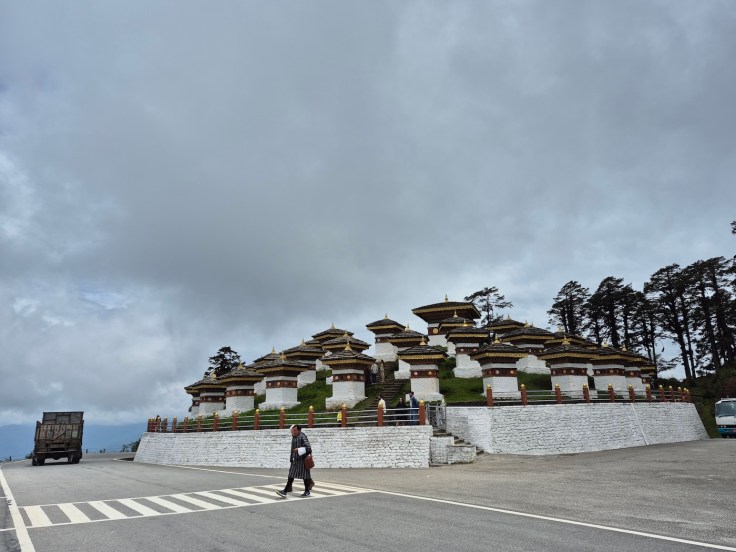
From Dochula, the road descended again, winding its way towards Paro. By the time we reached the town, it was lunchtime.
Lunch at Mountain Café
Our guide and driver dropped us at Paro Market and directed us towards Mountain Café, one of the better-known restaurants in town.
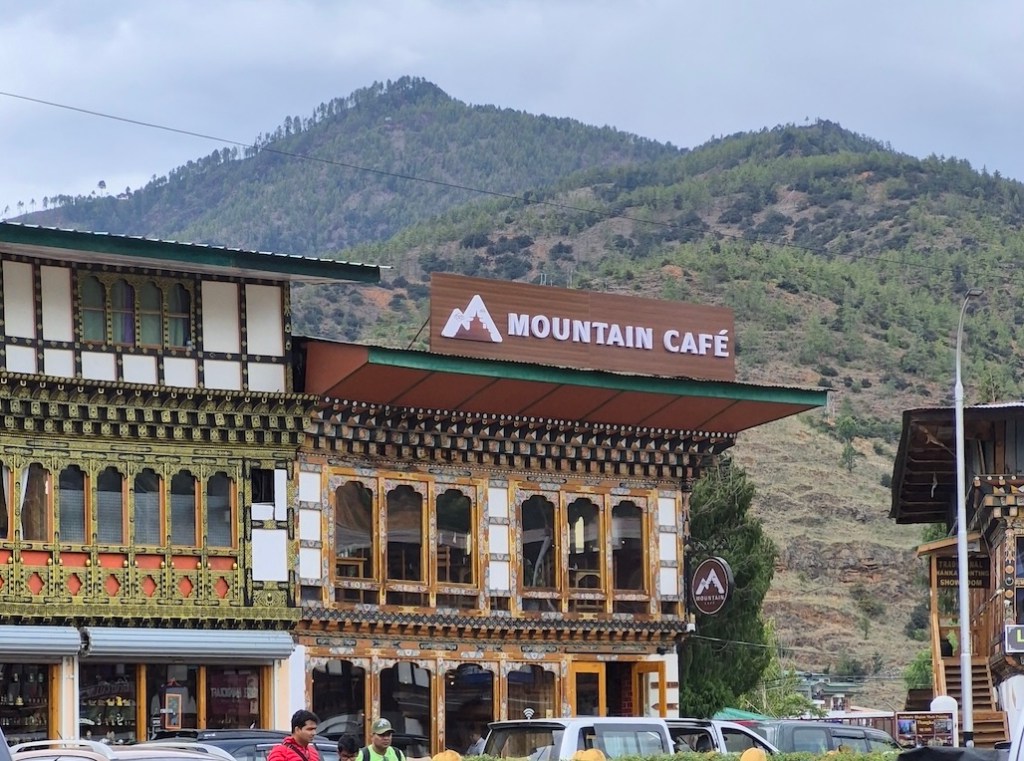
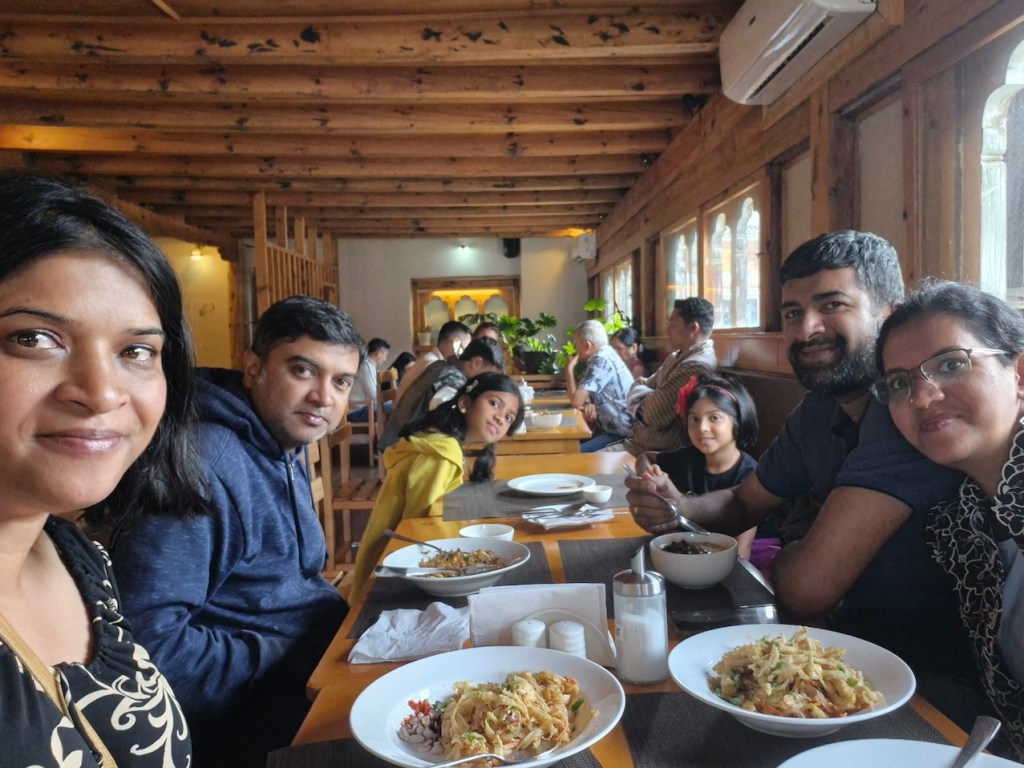
We went in, ordered our food and were not disappointed. Everything we tried was delicious. After many meals at hotels and roadside restaurants during the trip, this felt like a proper café break in the middle of town. If you are in Paro, Mountain Café is certainly worth trying.
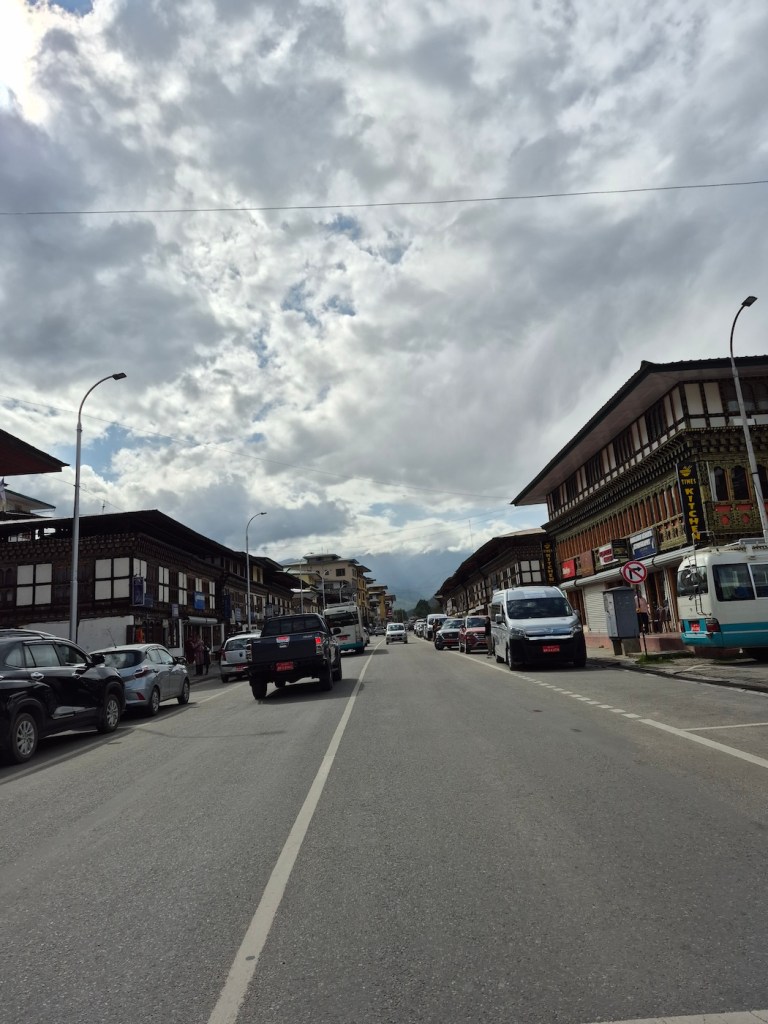
Paro Market itself looked interesting. It had shops, restaurants and several inviting cafés. We did not have much time to explore it that afternoon, but it immediately felt like a place where one could enjoy walking around without any fixed sightseeing agenda.
The National Museum of Bhutan
After lunch, we headed to the National Museum of Bhutan, housed in the old watchtower known as Ta Dzong.
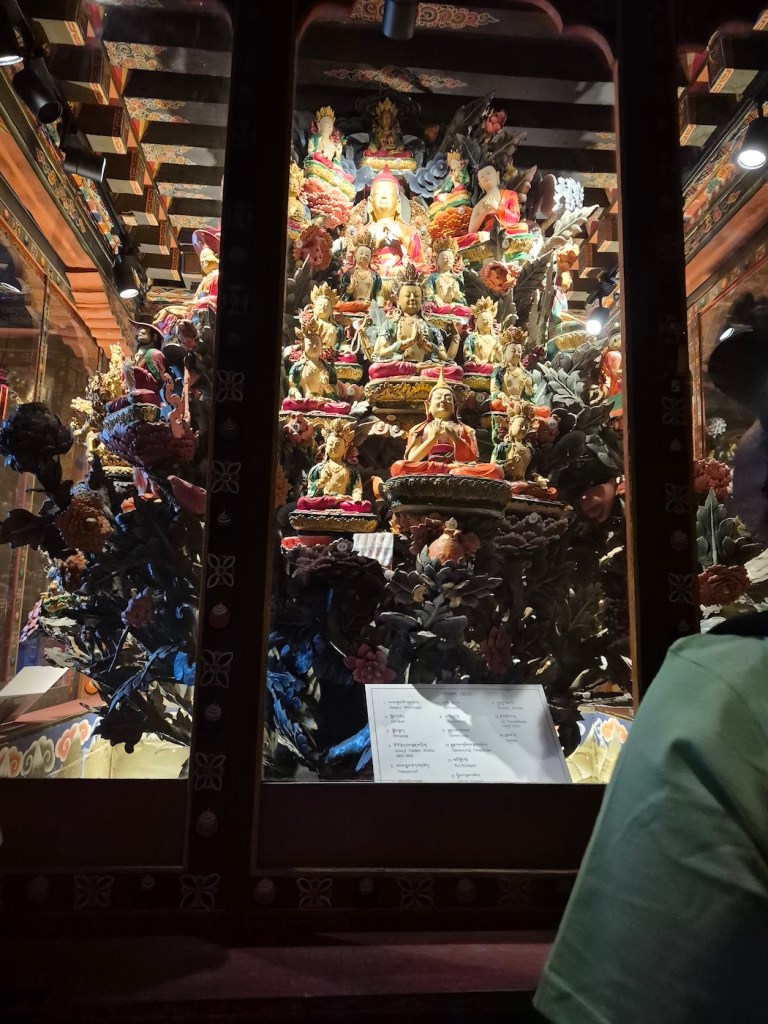
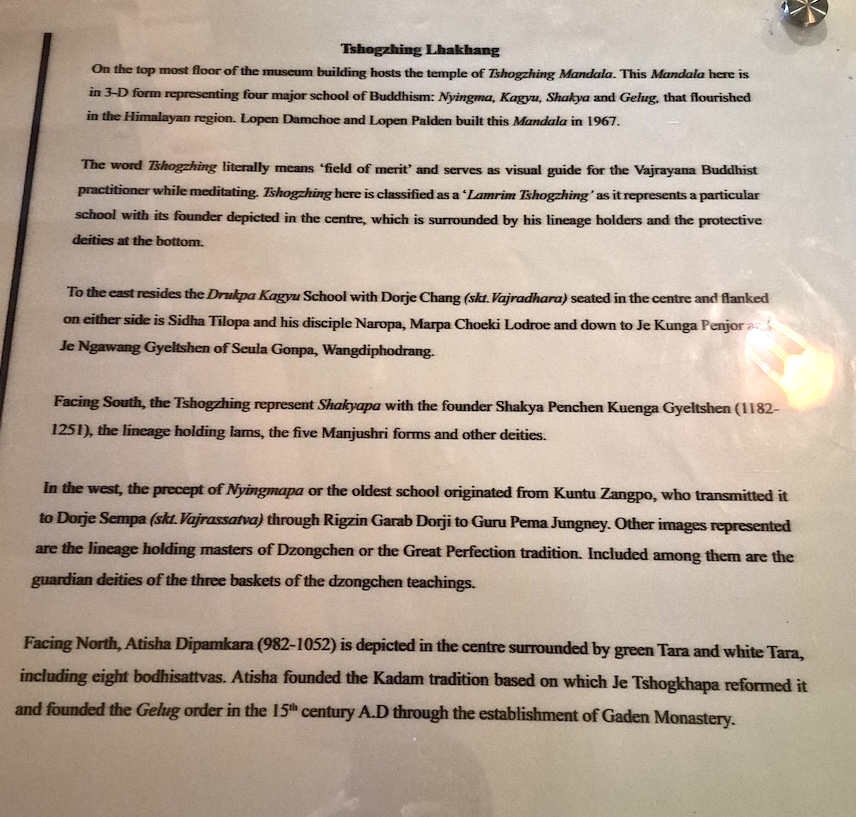
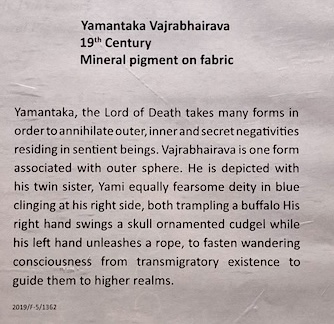
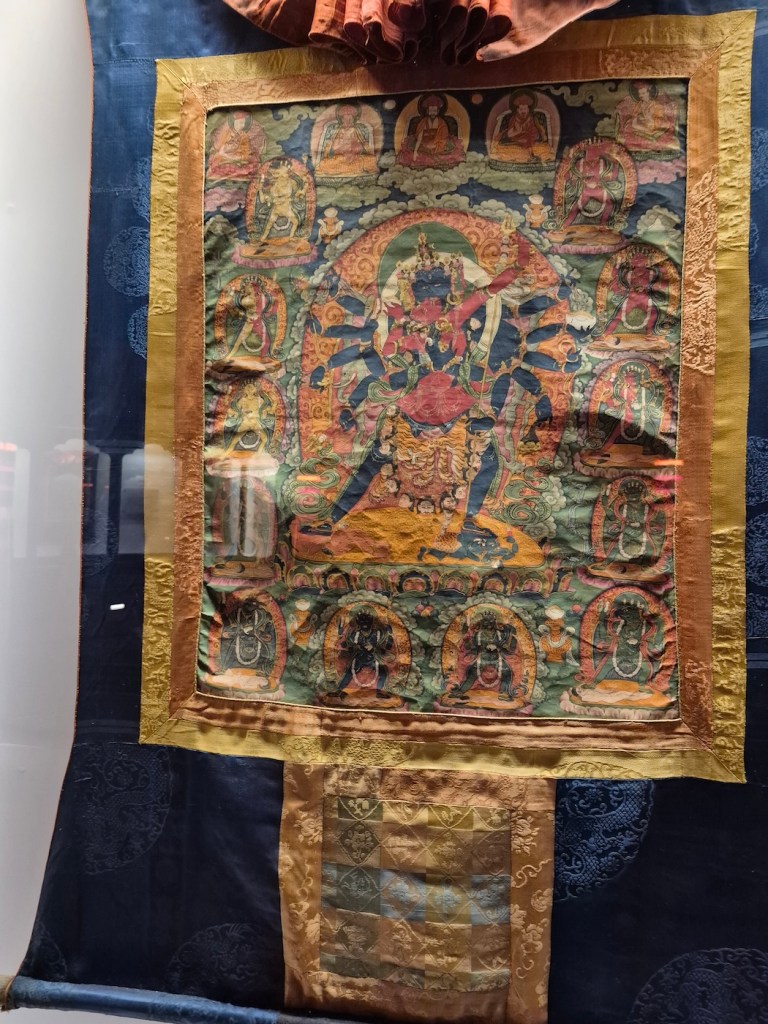
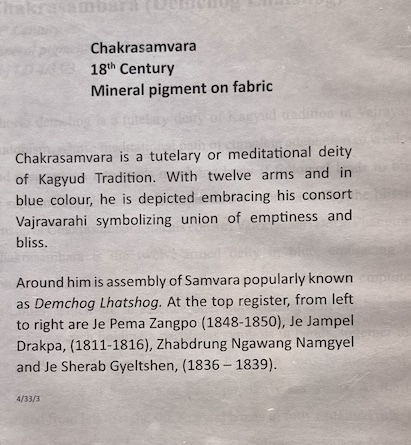
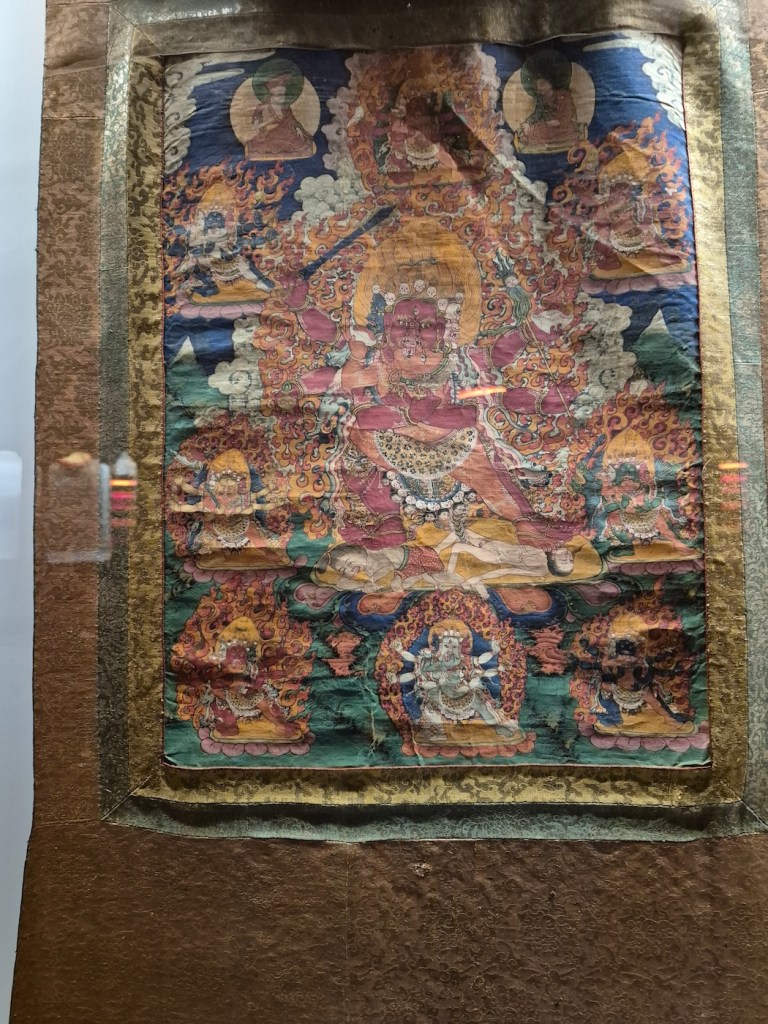
The museum was spread across multiple levels and contained an extensive collection of Bhutanese art and cultural objects. There were paintings, statues, chortens, ritual objects and many other artefacts covering different aspects of Bhutan’s history, religion and culture. It was the kind of museum where one could spend a considerable amount of time if one examined everything properly.
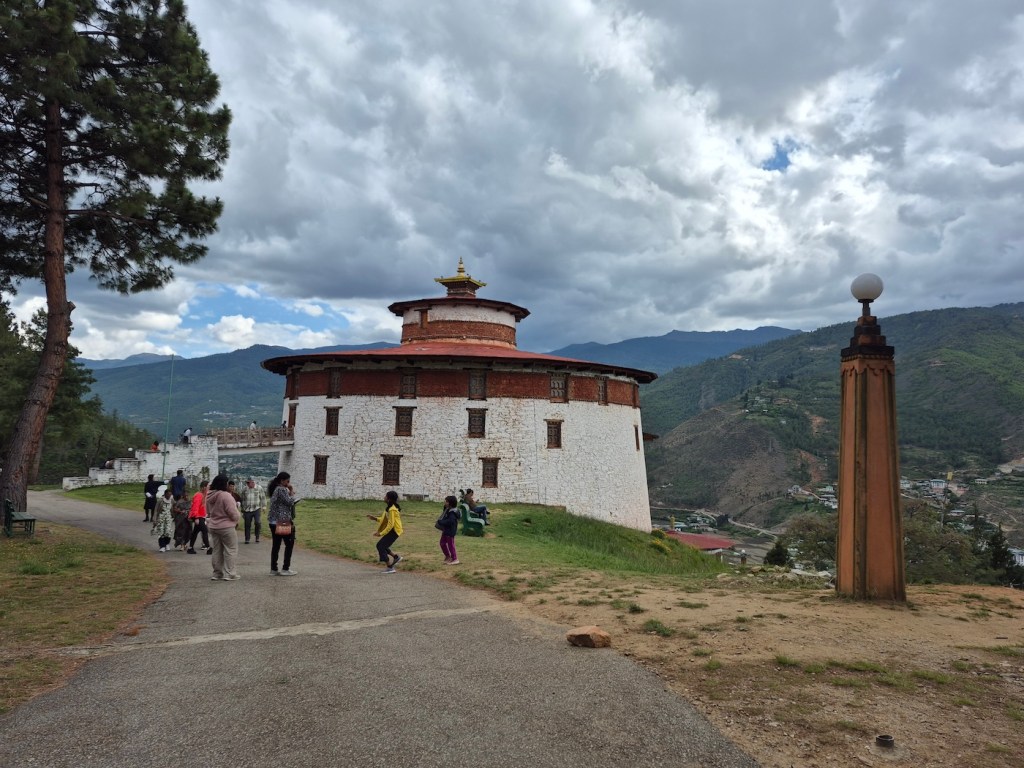
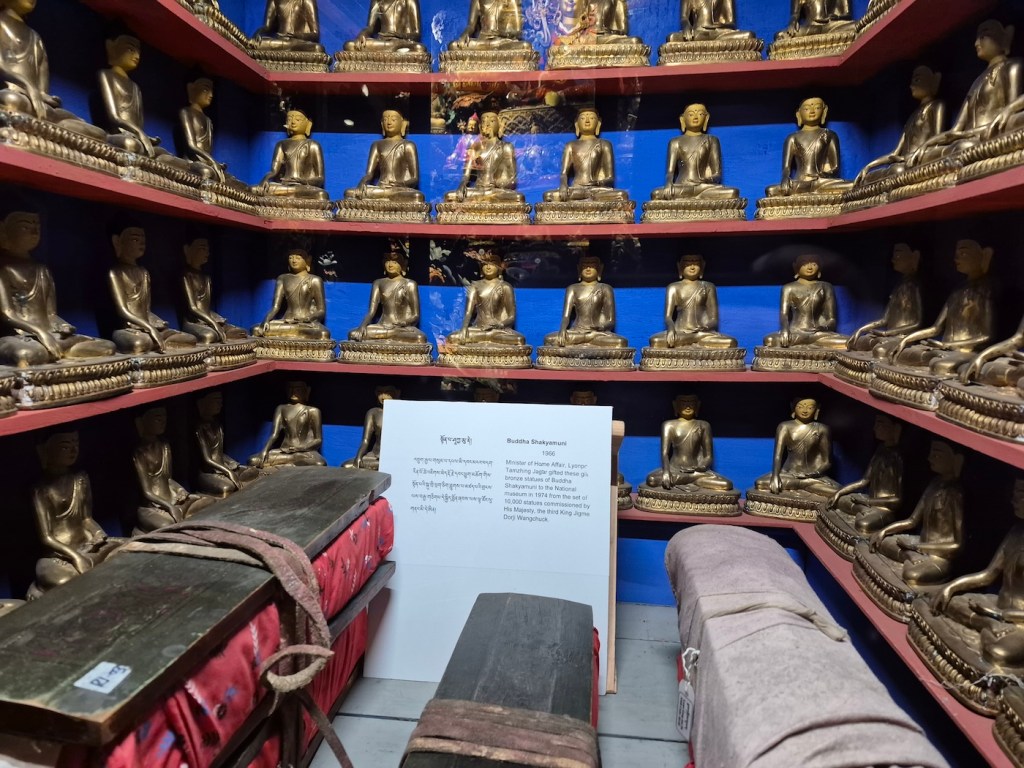
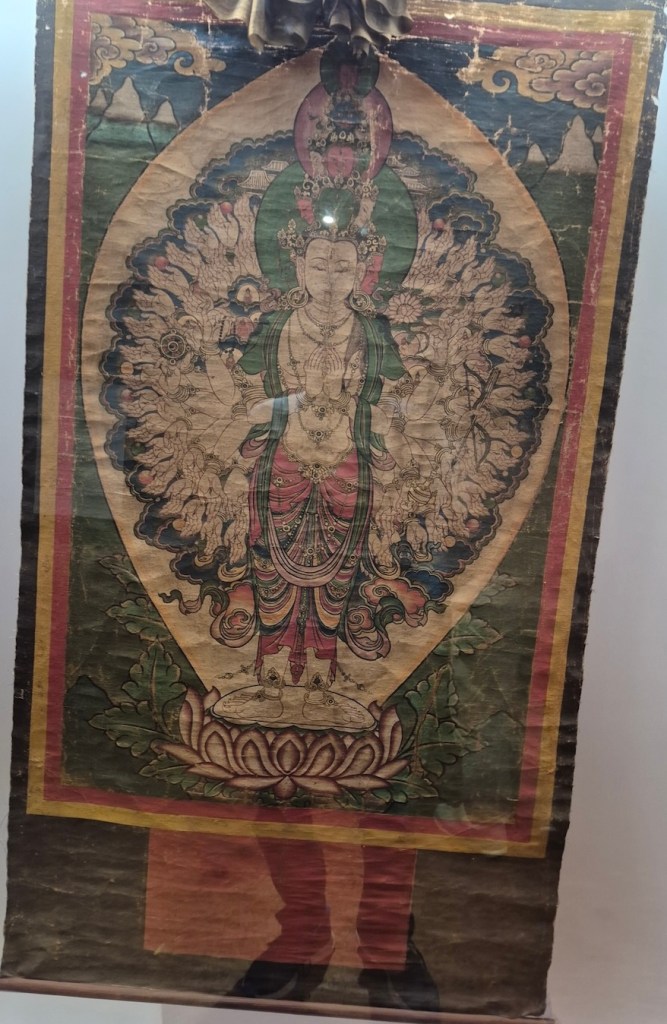
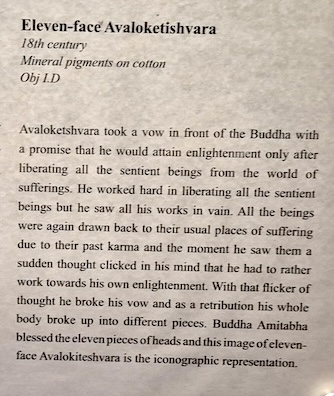
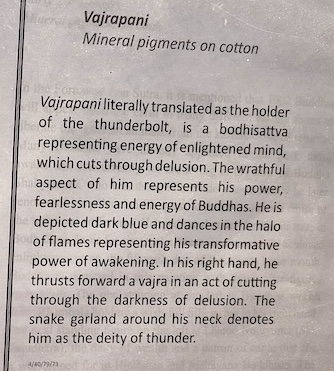
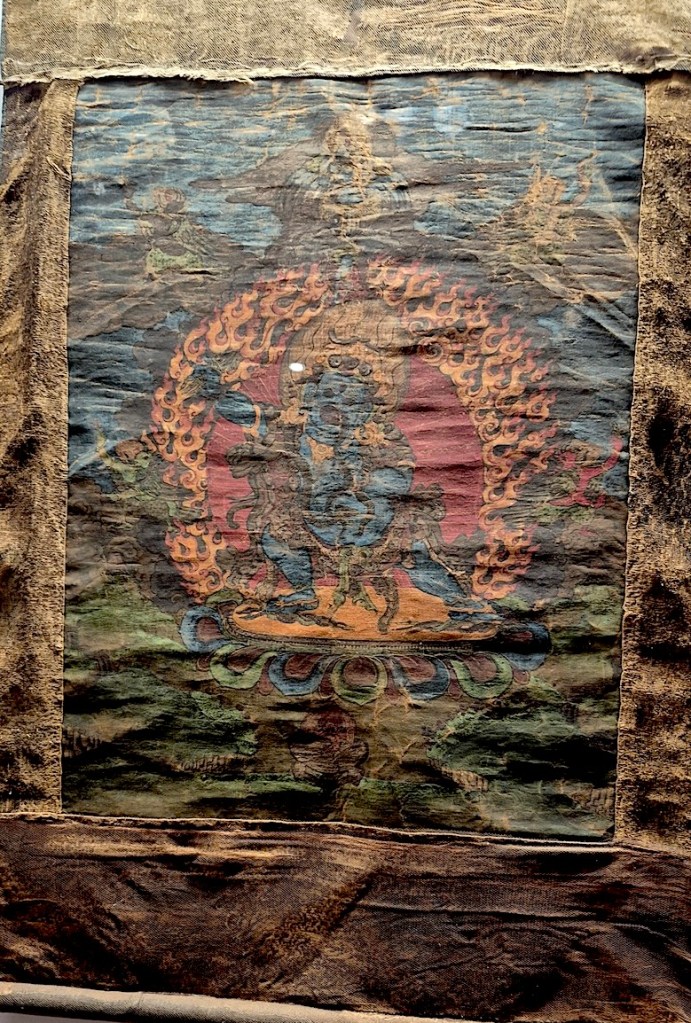
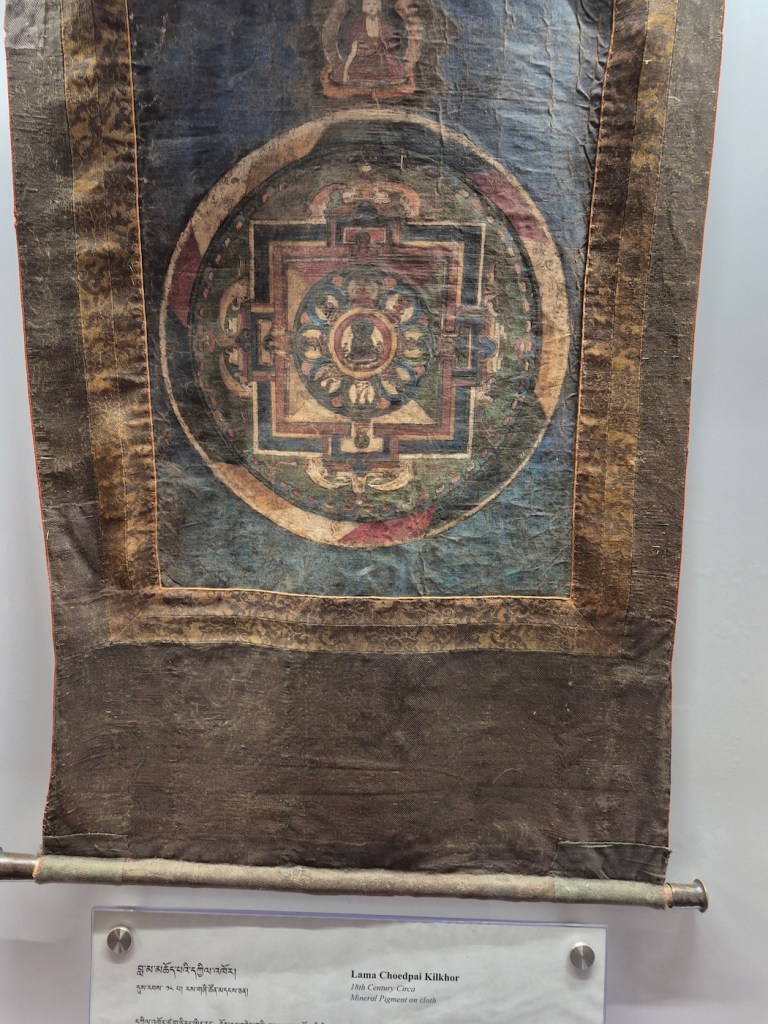
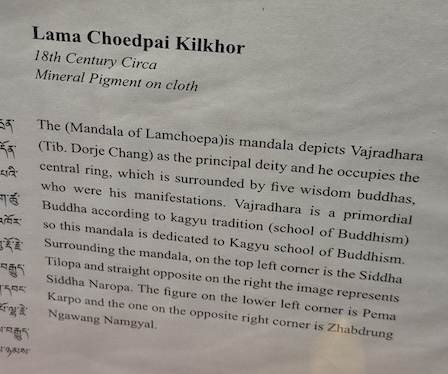
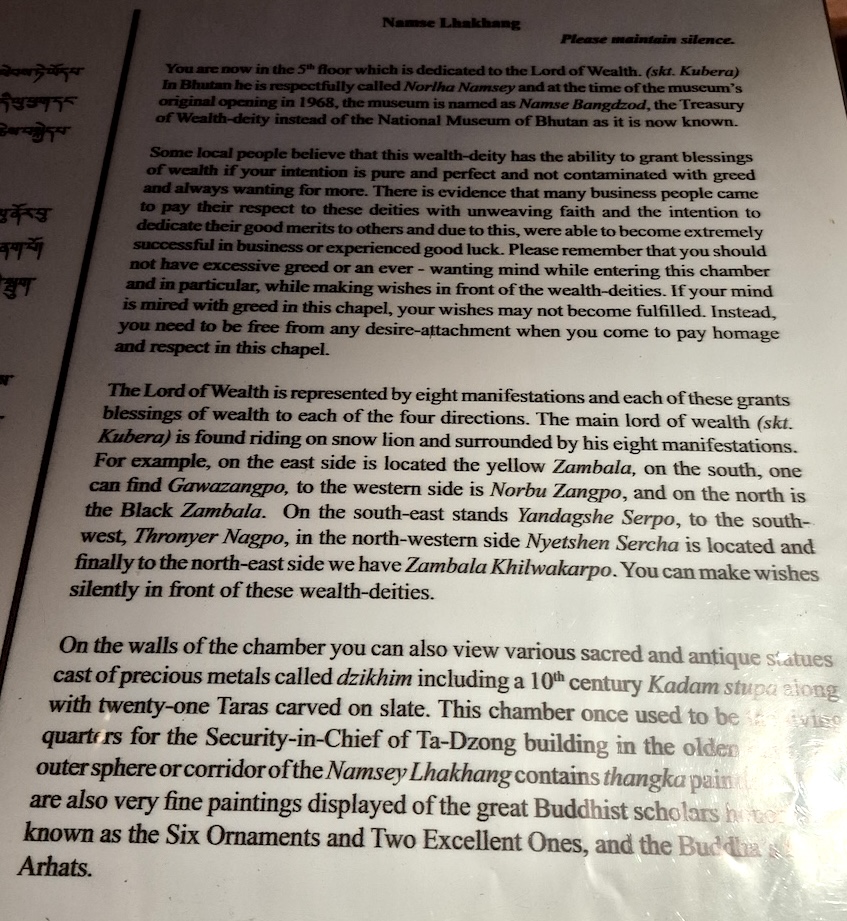
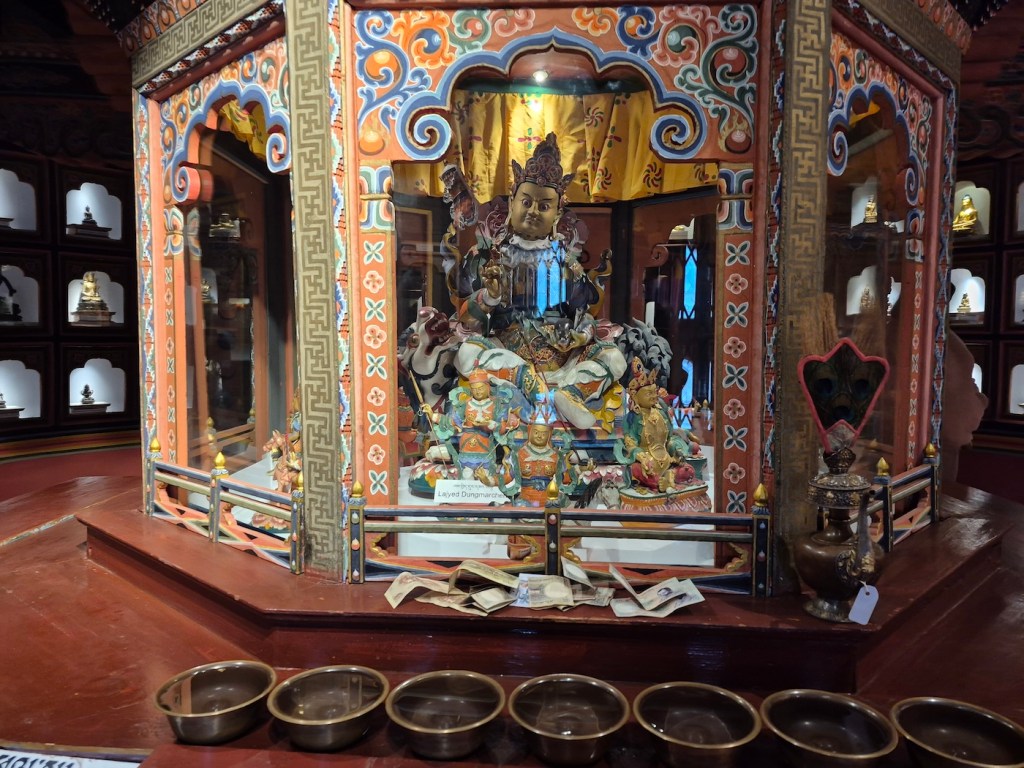
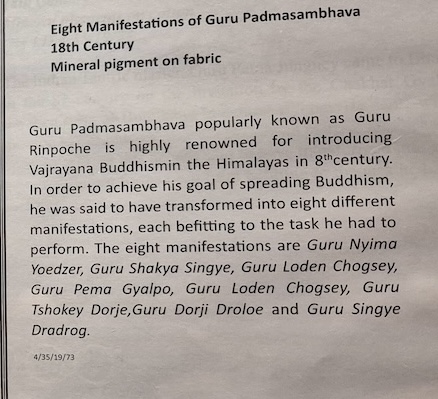
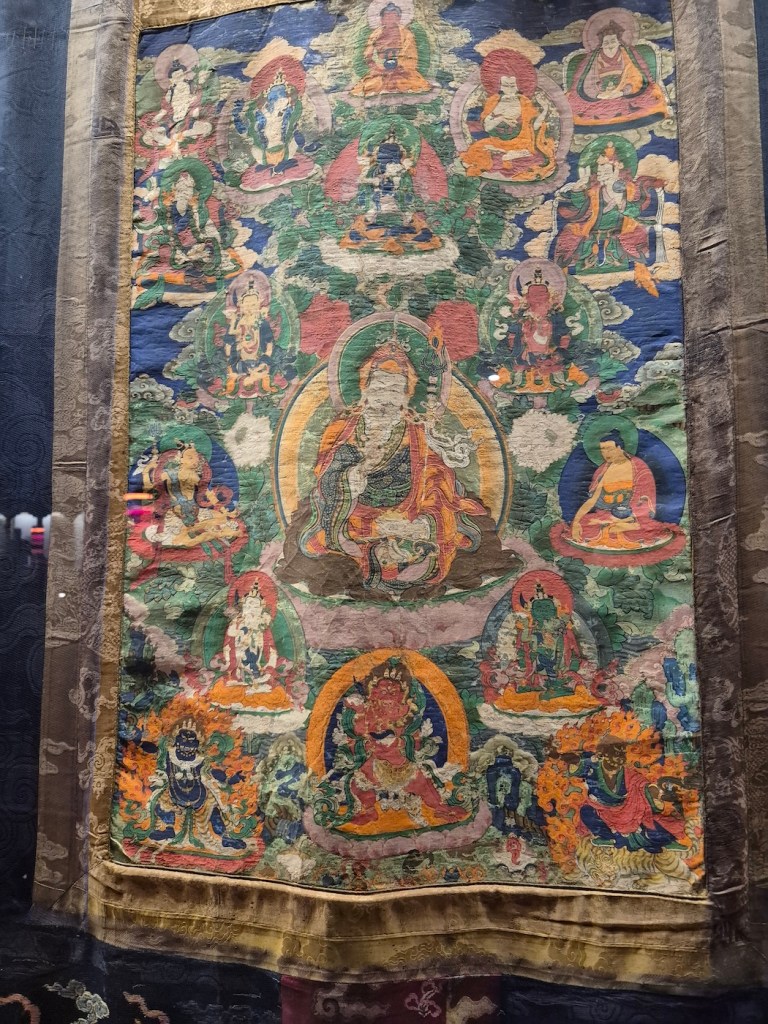
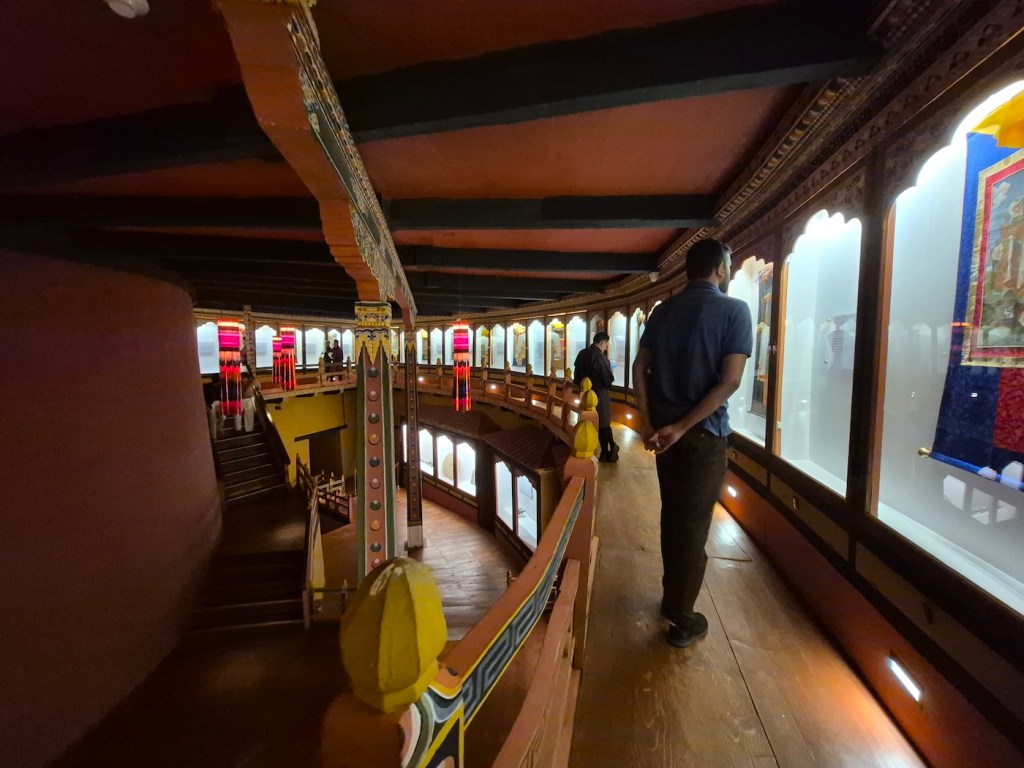
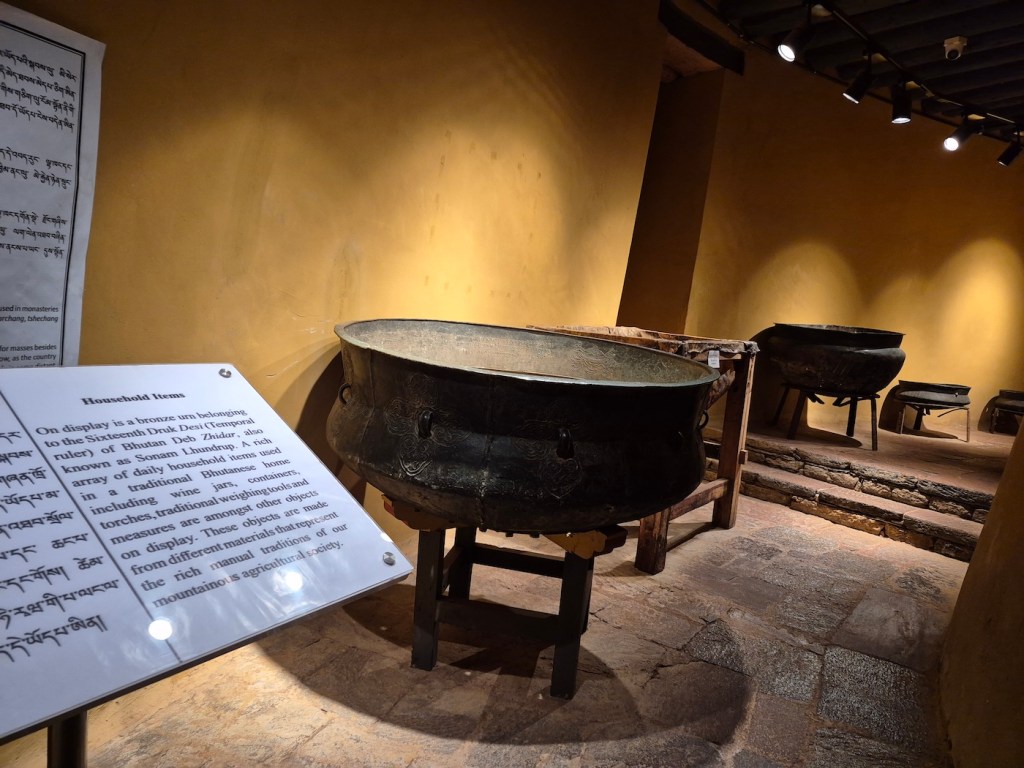
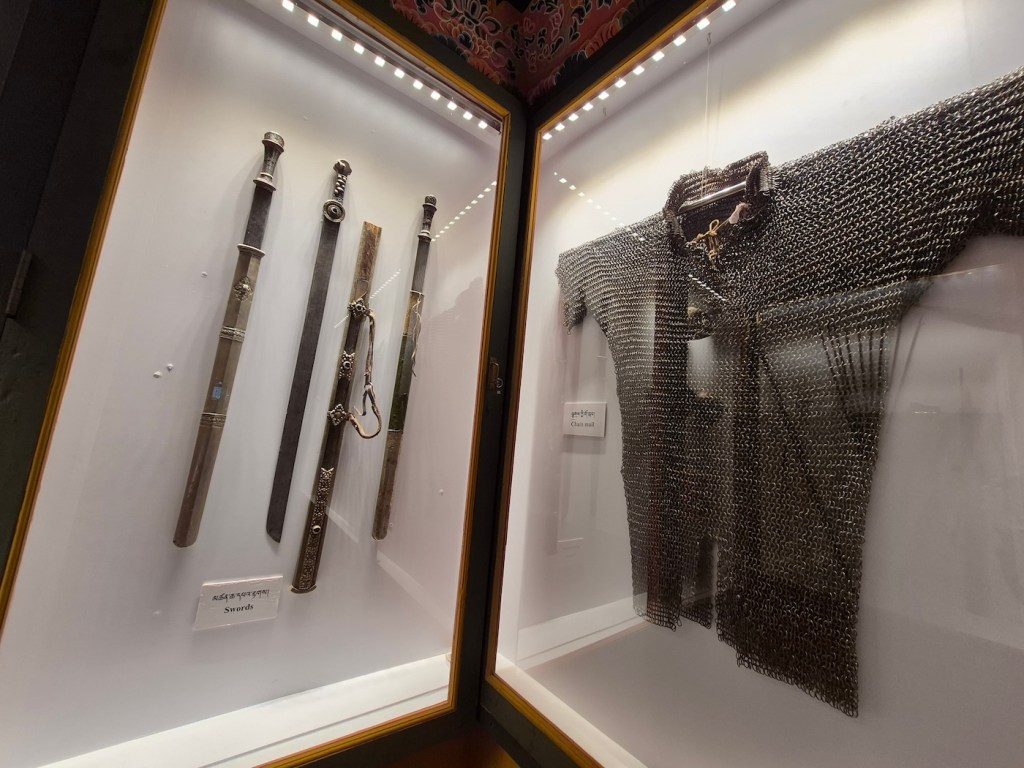
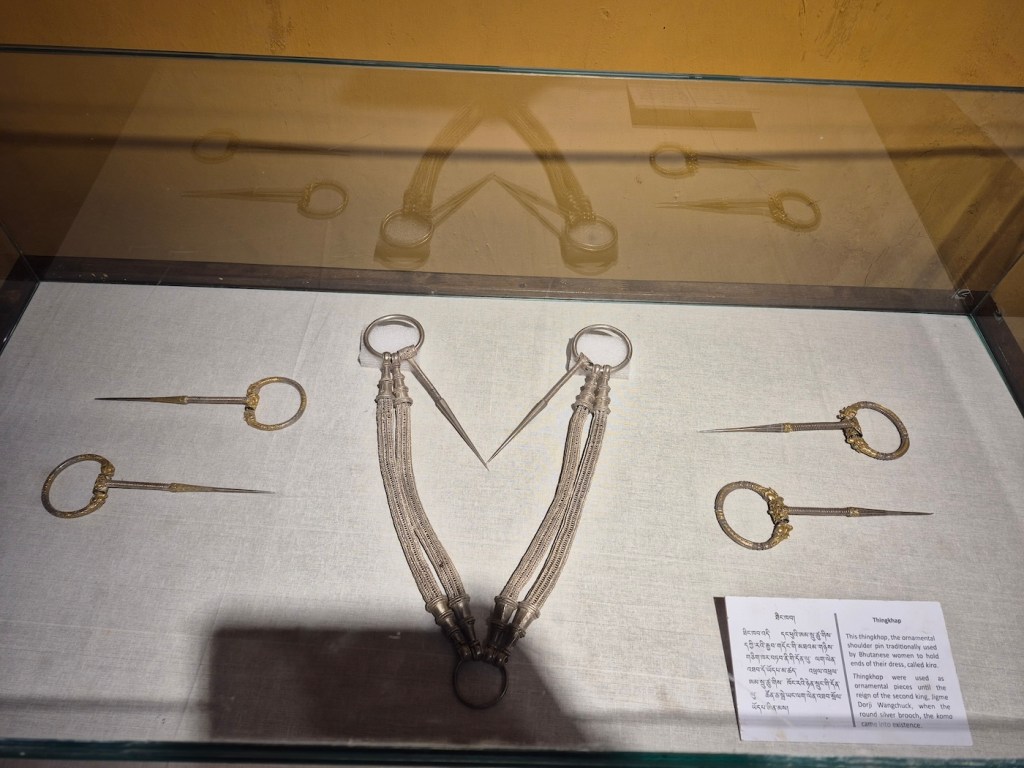
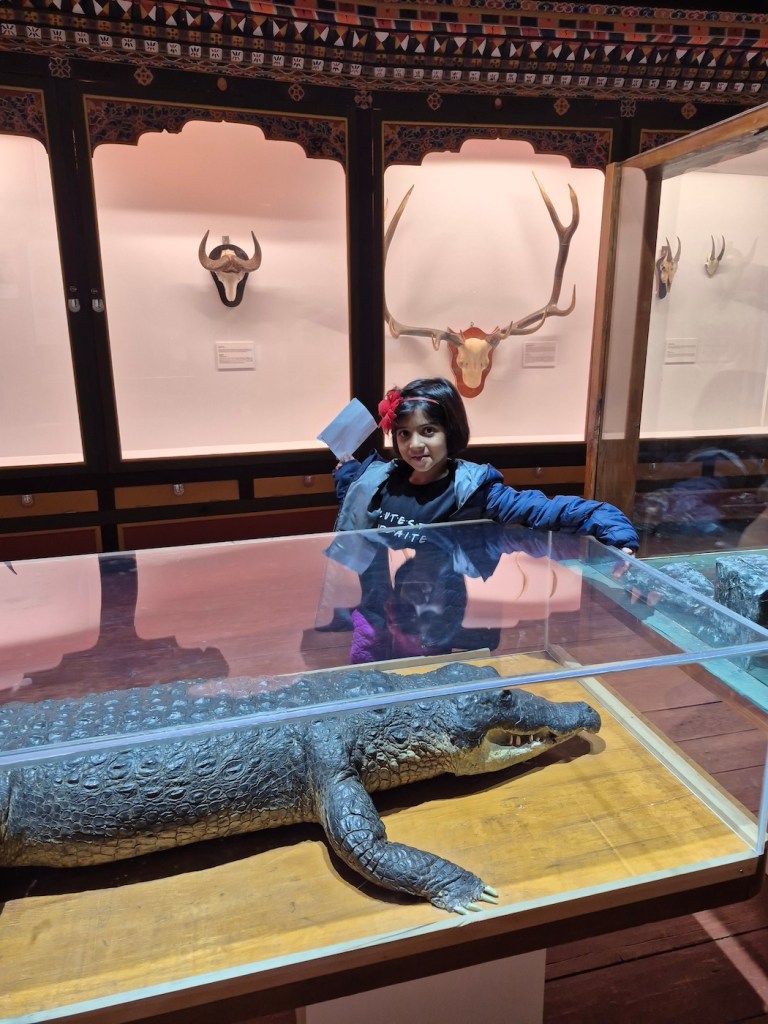
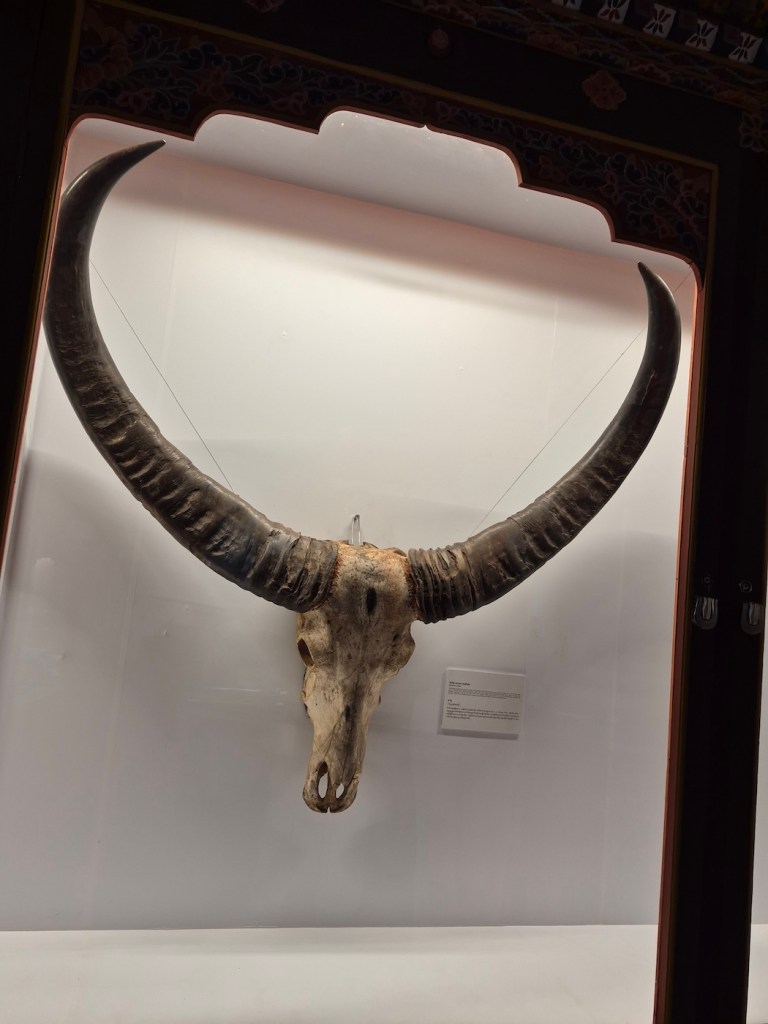
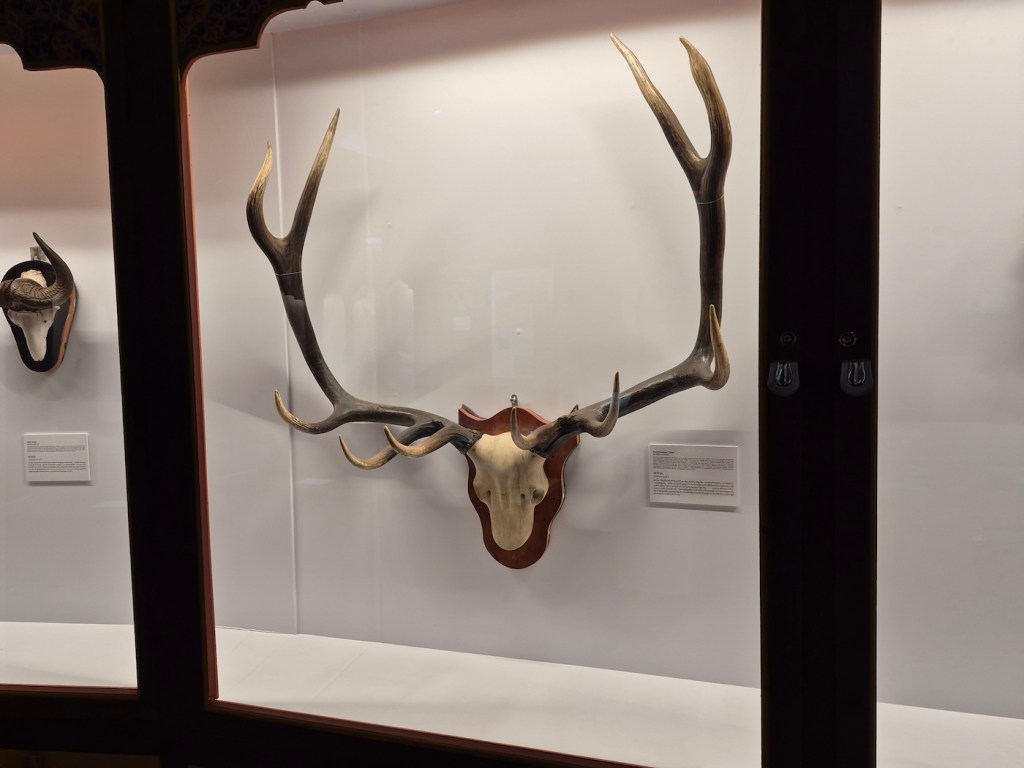
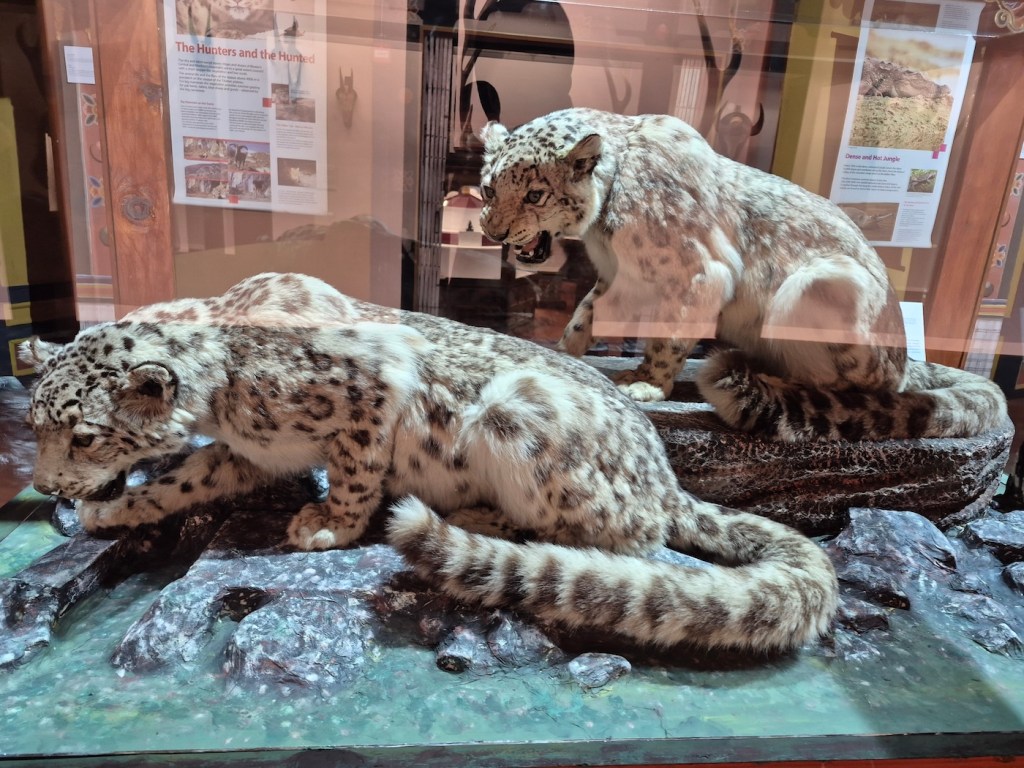
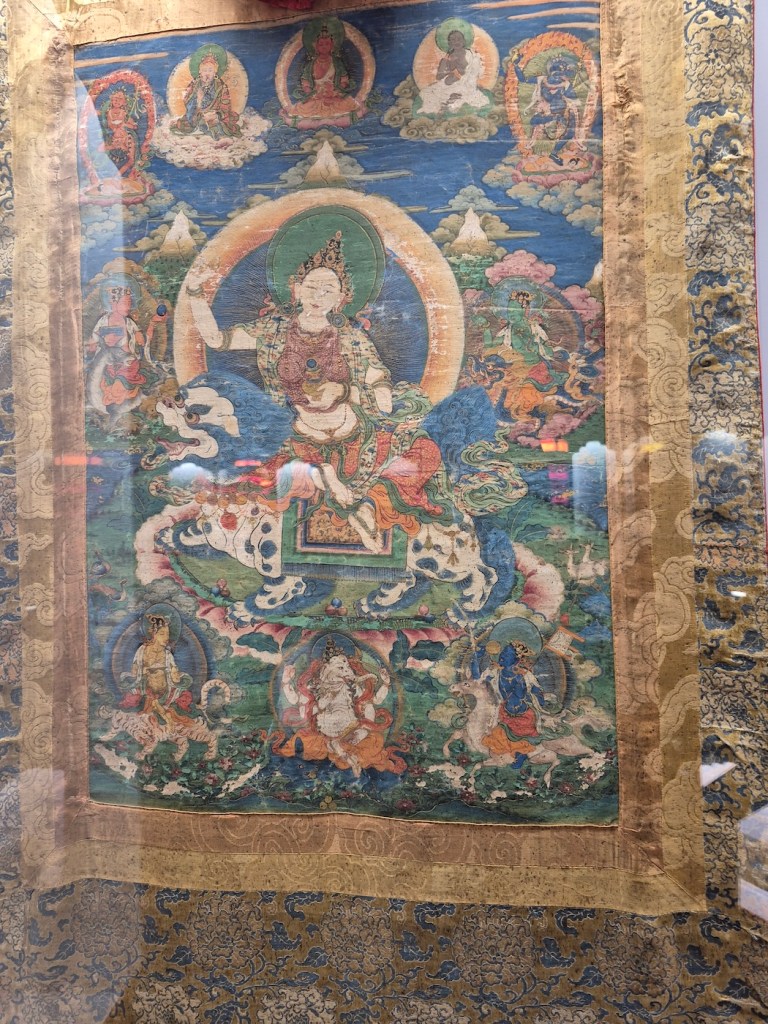
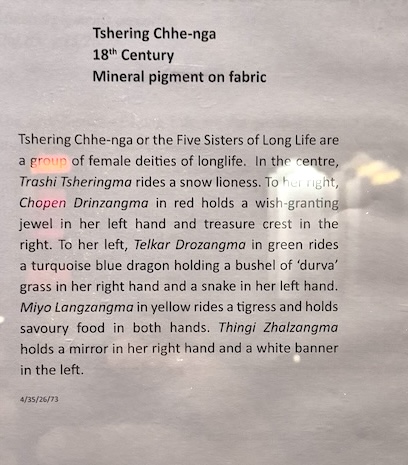
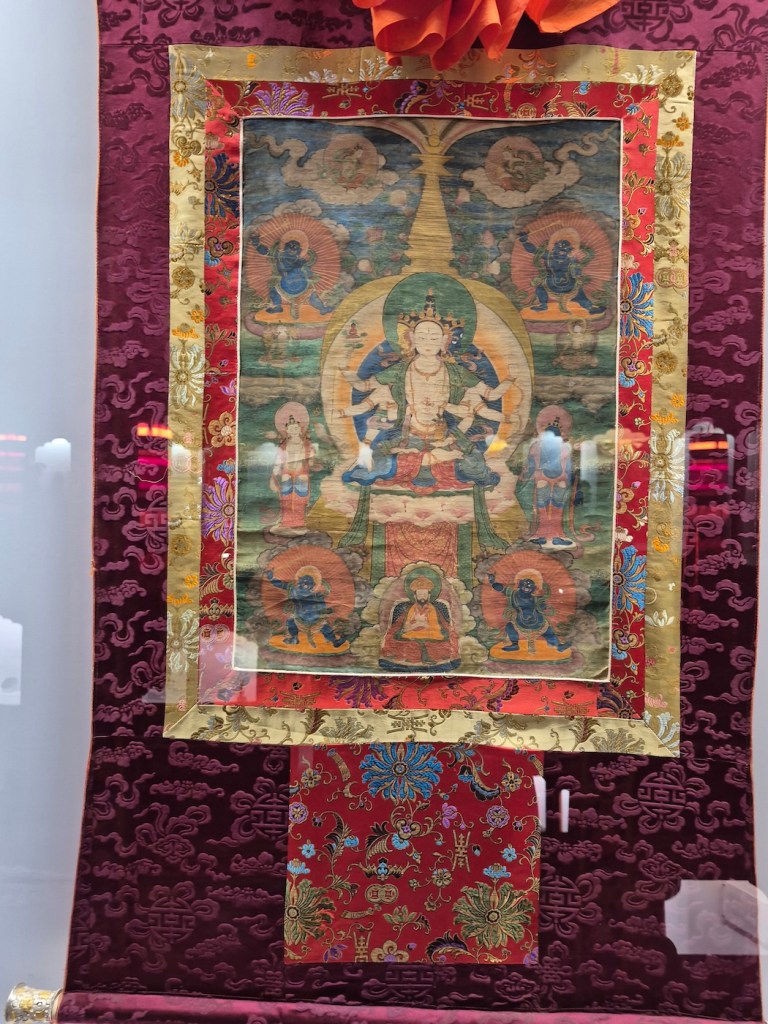
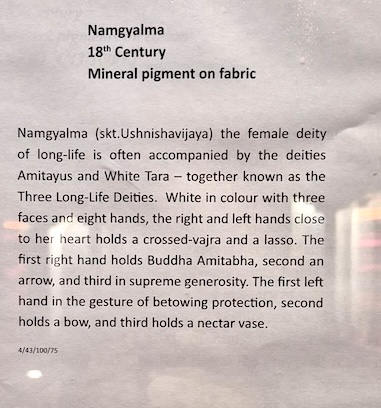
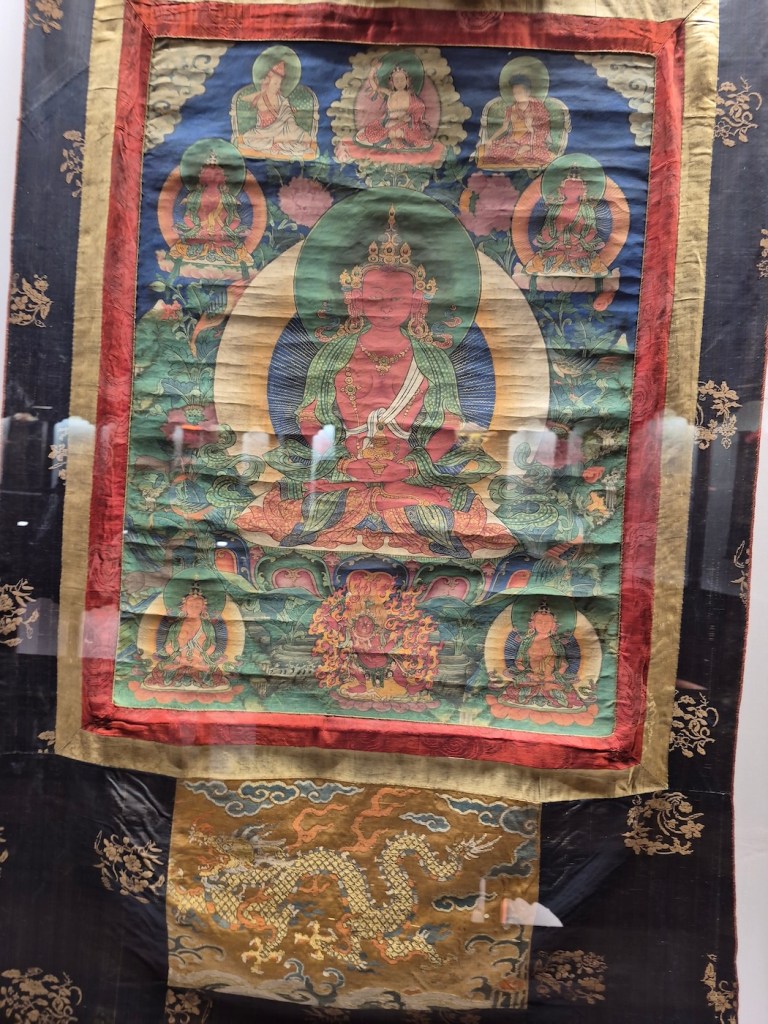
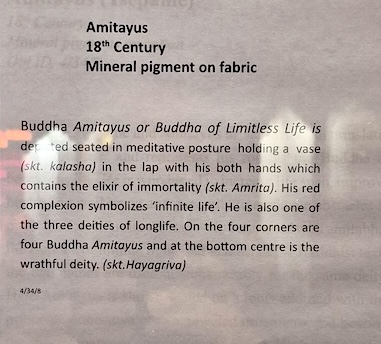
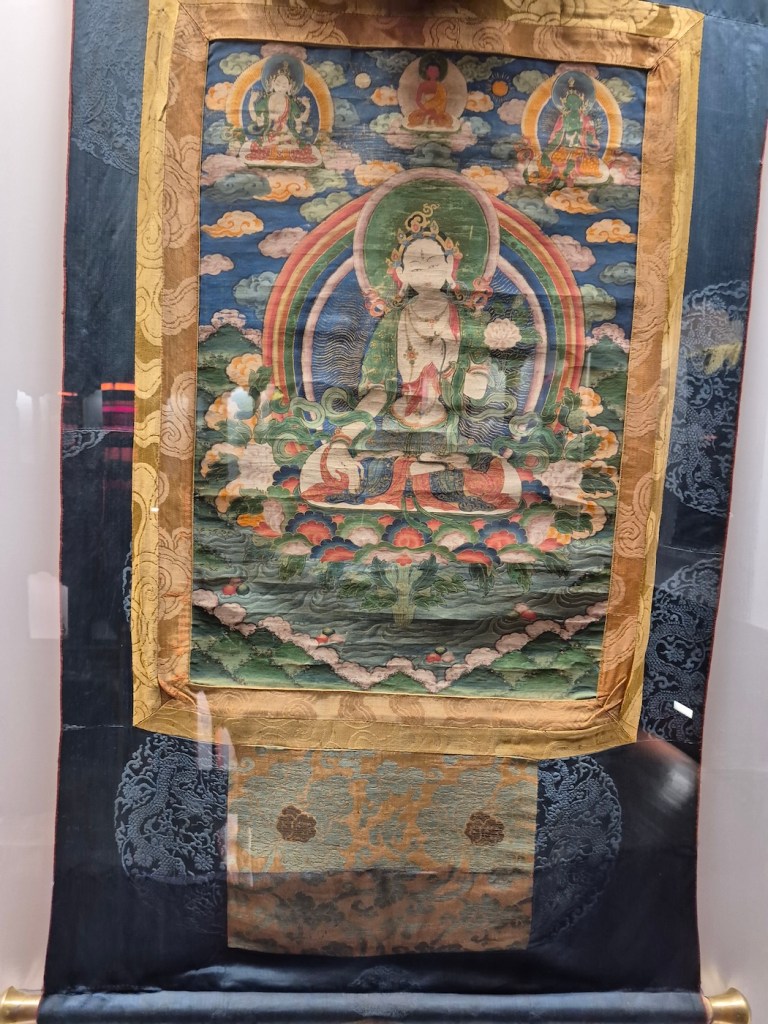
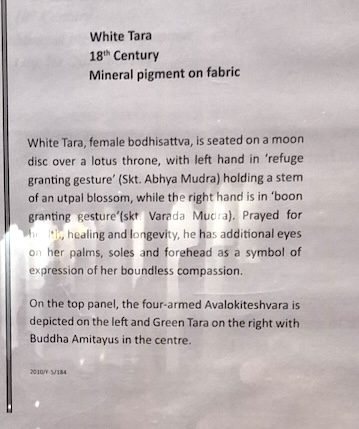
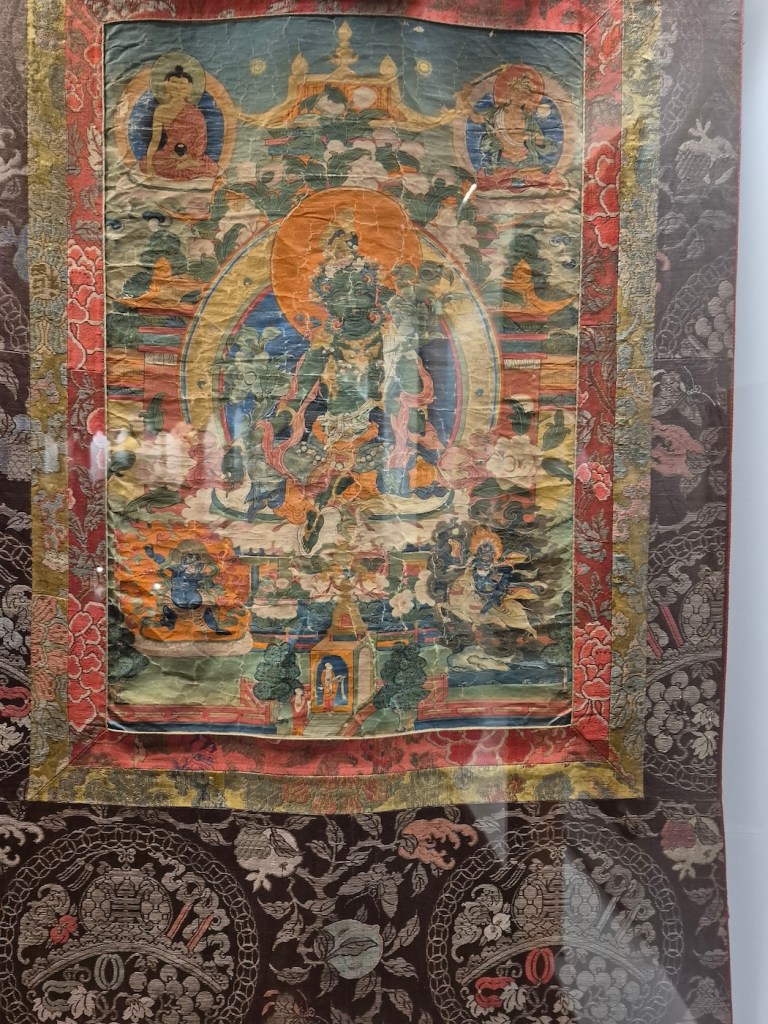
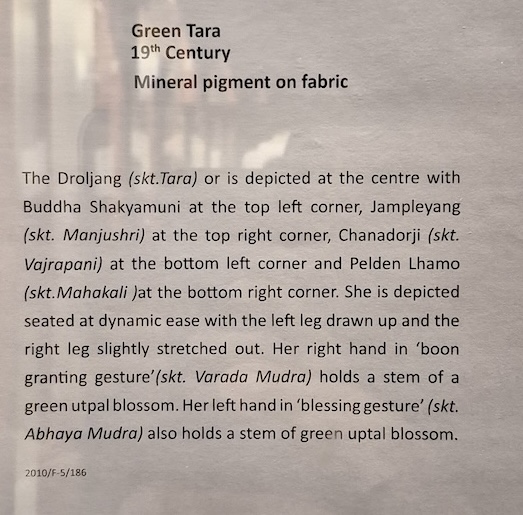
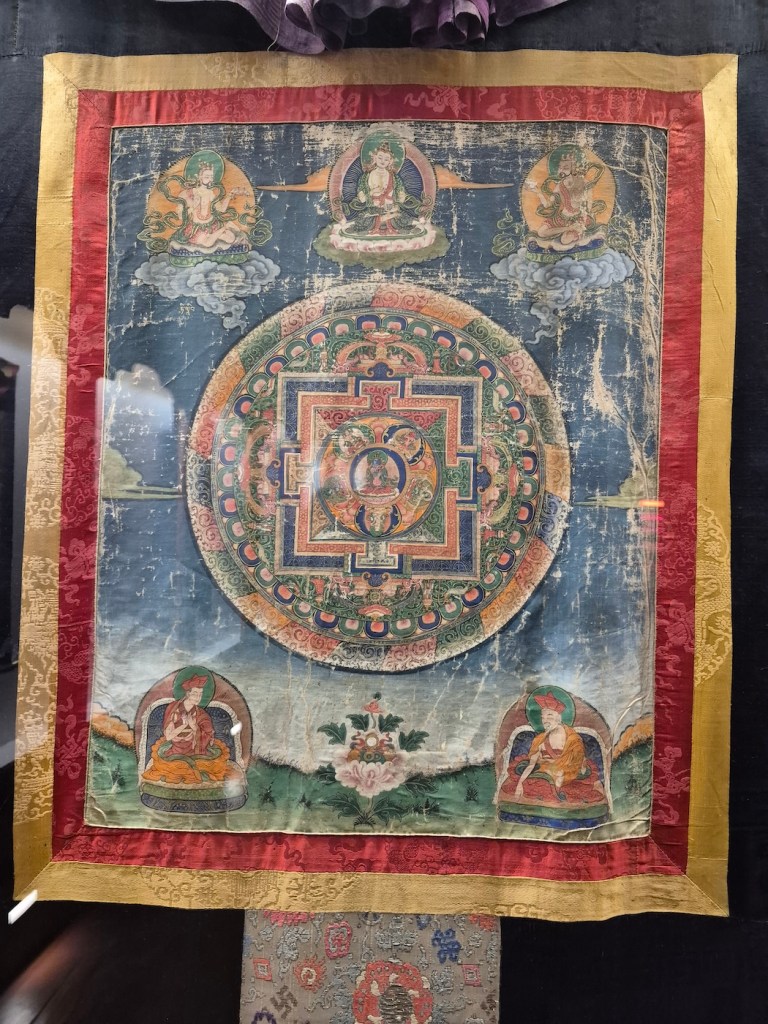
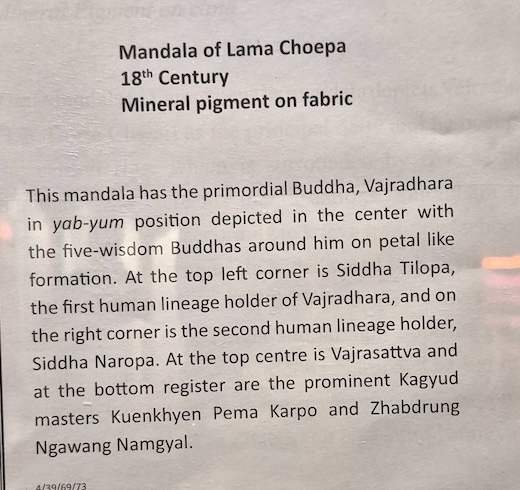
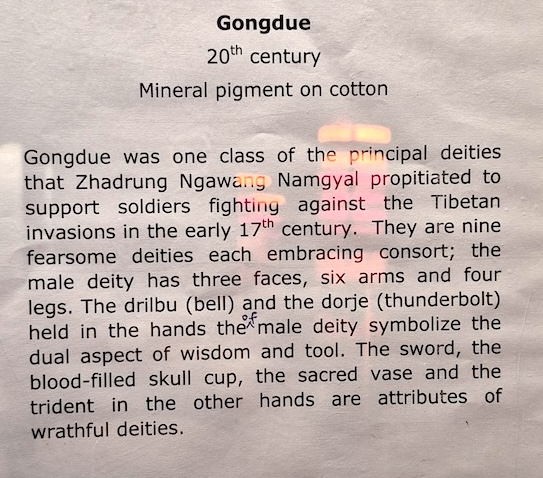
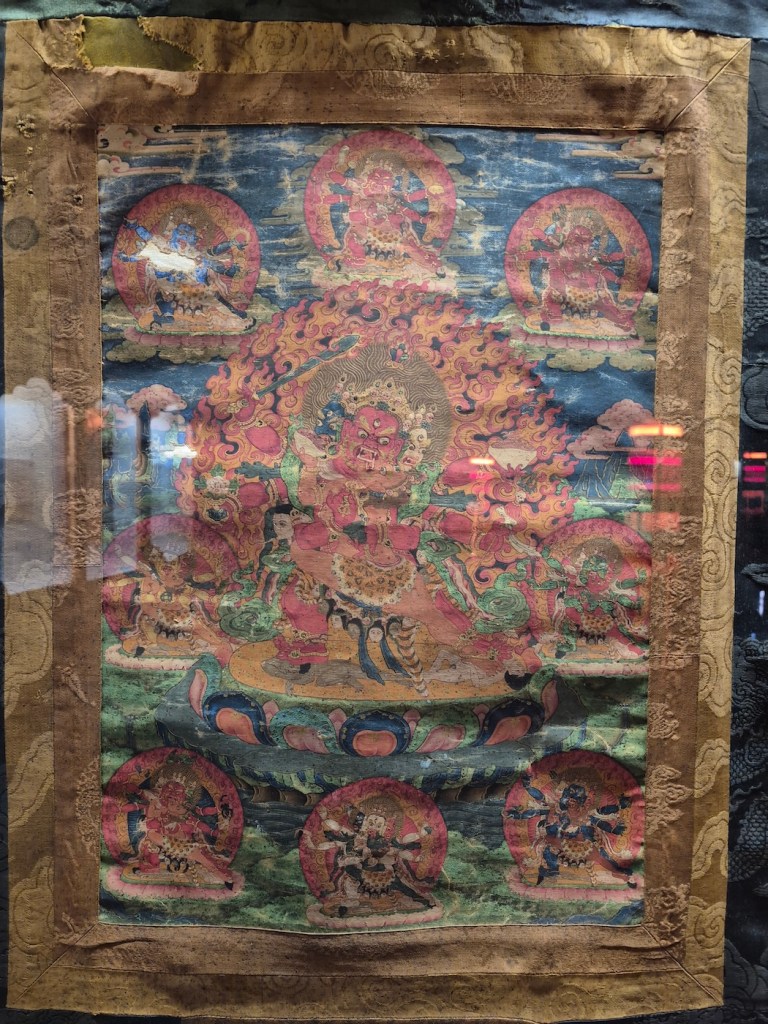
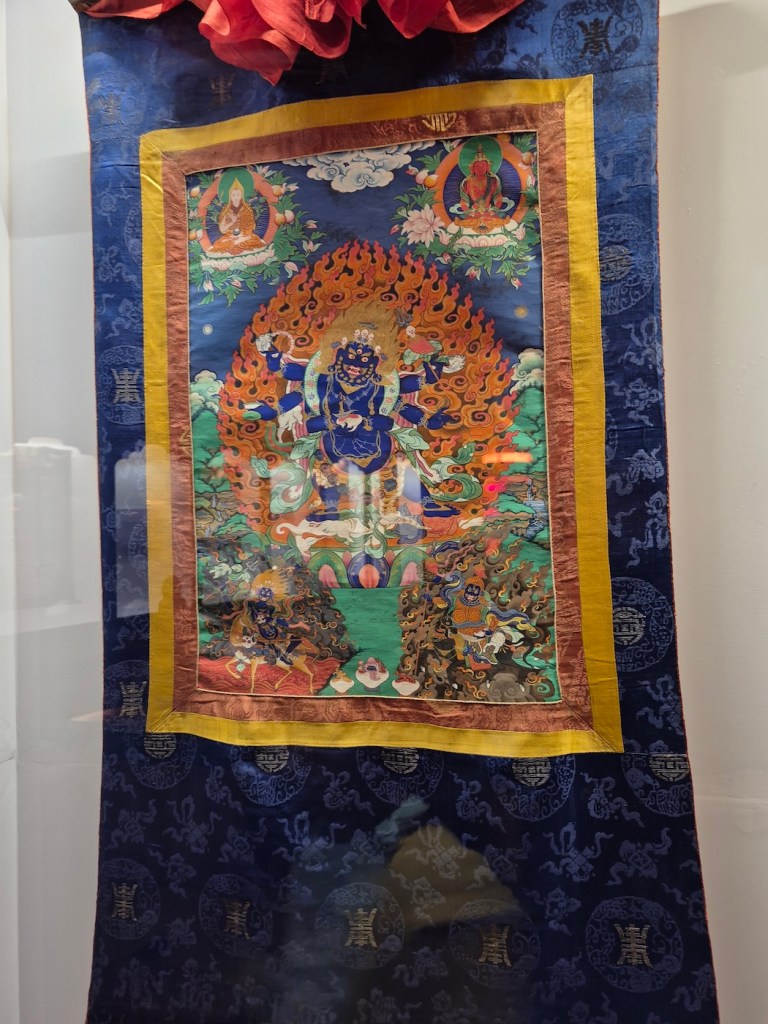
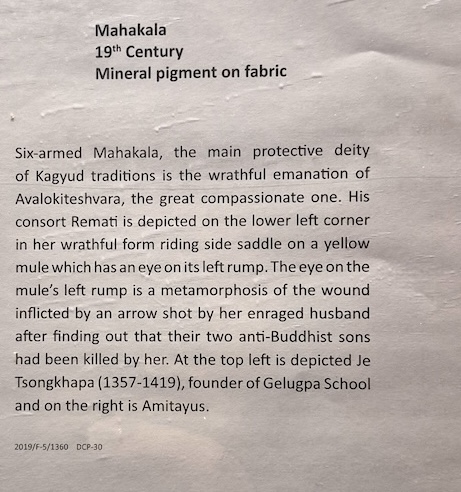
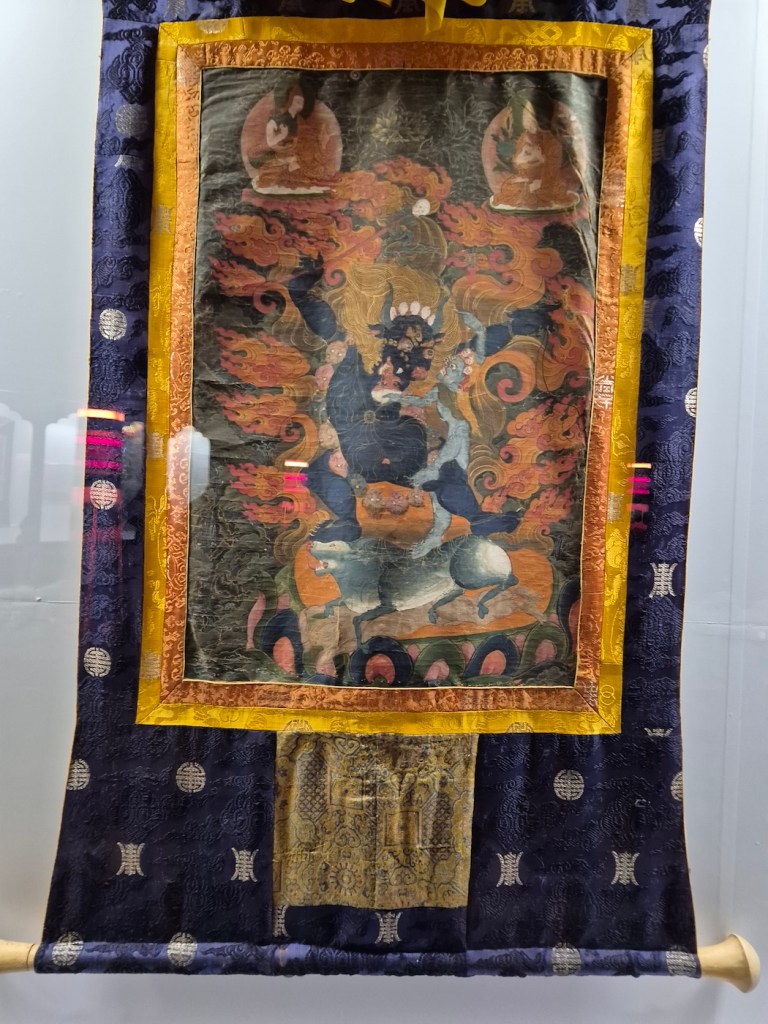
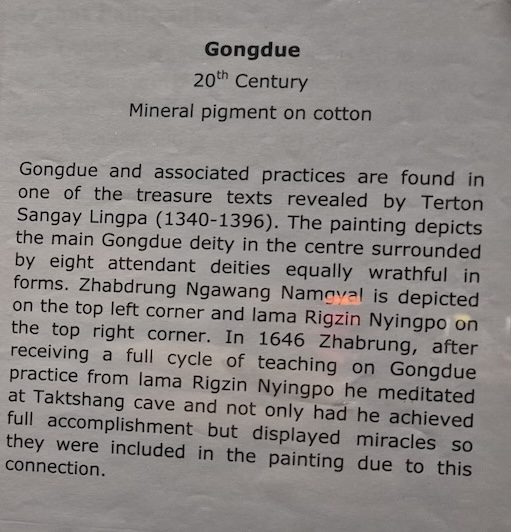
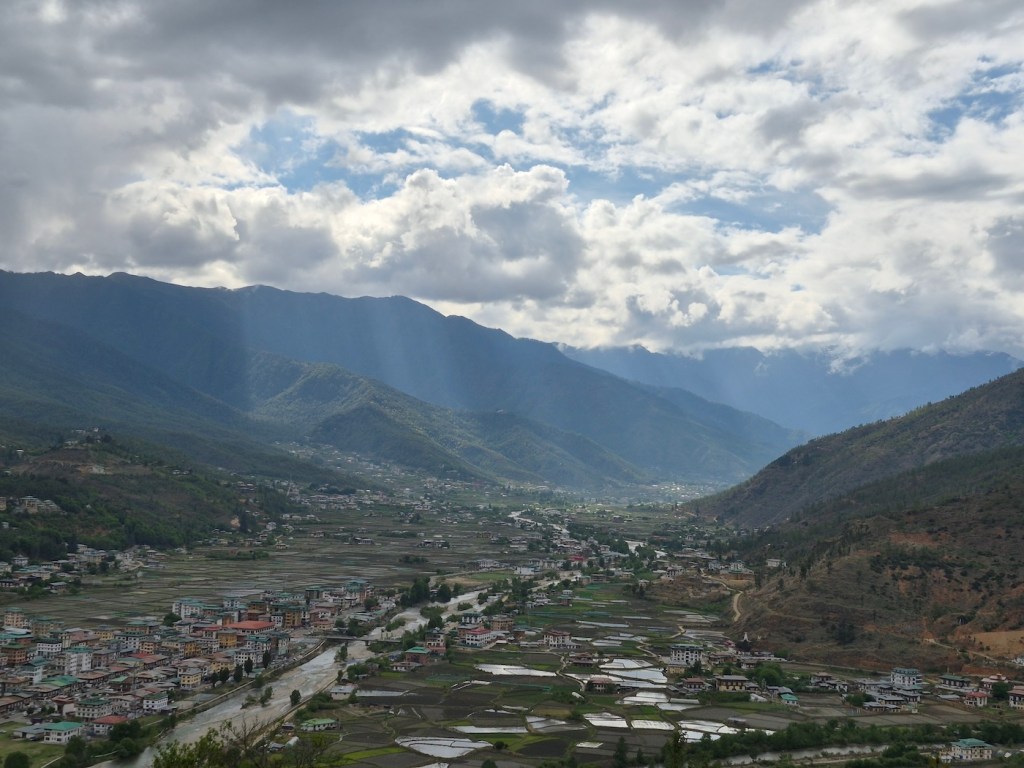
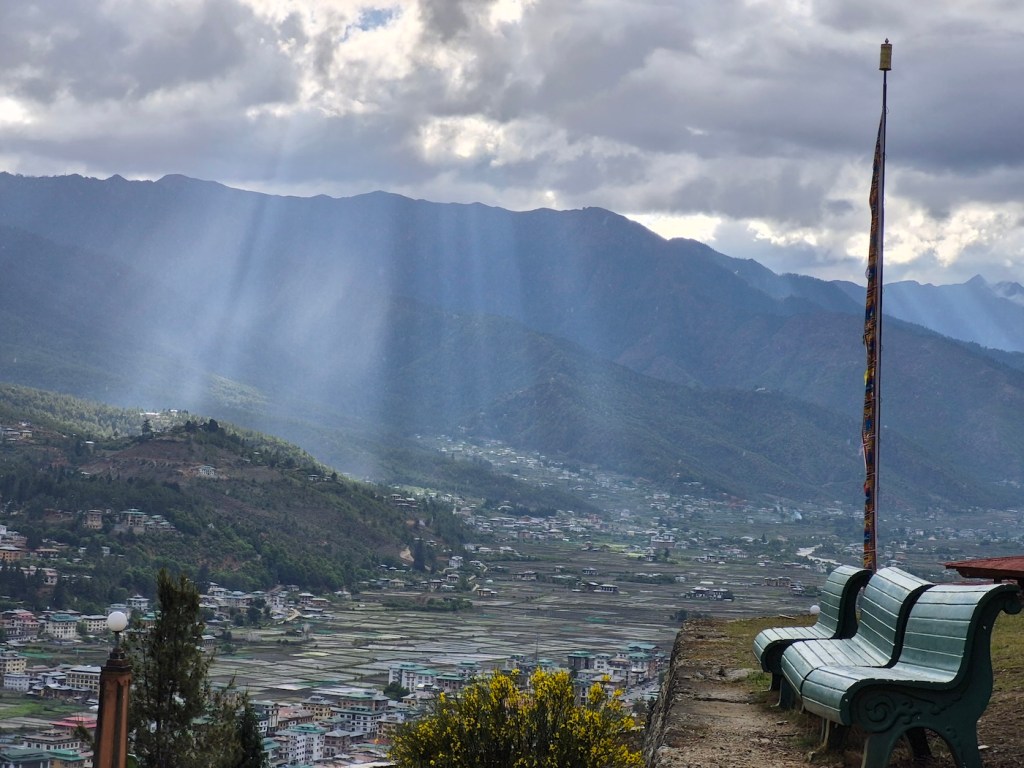
The setting was just as memorable as the collection. The museum stands above the Paro Valley, and the views from around it were beautiful. The sky was still cloudy, but shafts of sunlight were breaking through at places and falling across the valley. After the enclosed galleries, we spent some time outside simply taking in the view.
From the museum, we drove directly to our hotel.
Staying away from Paro town
We were staying at Tenzinling Luxury Villa Tent. The property itself was very good—beautiful, comfortable and considerably more luxurious than what we really needed. But it was also quite far from Paro Market.
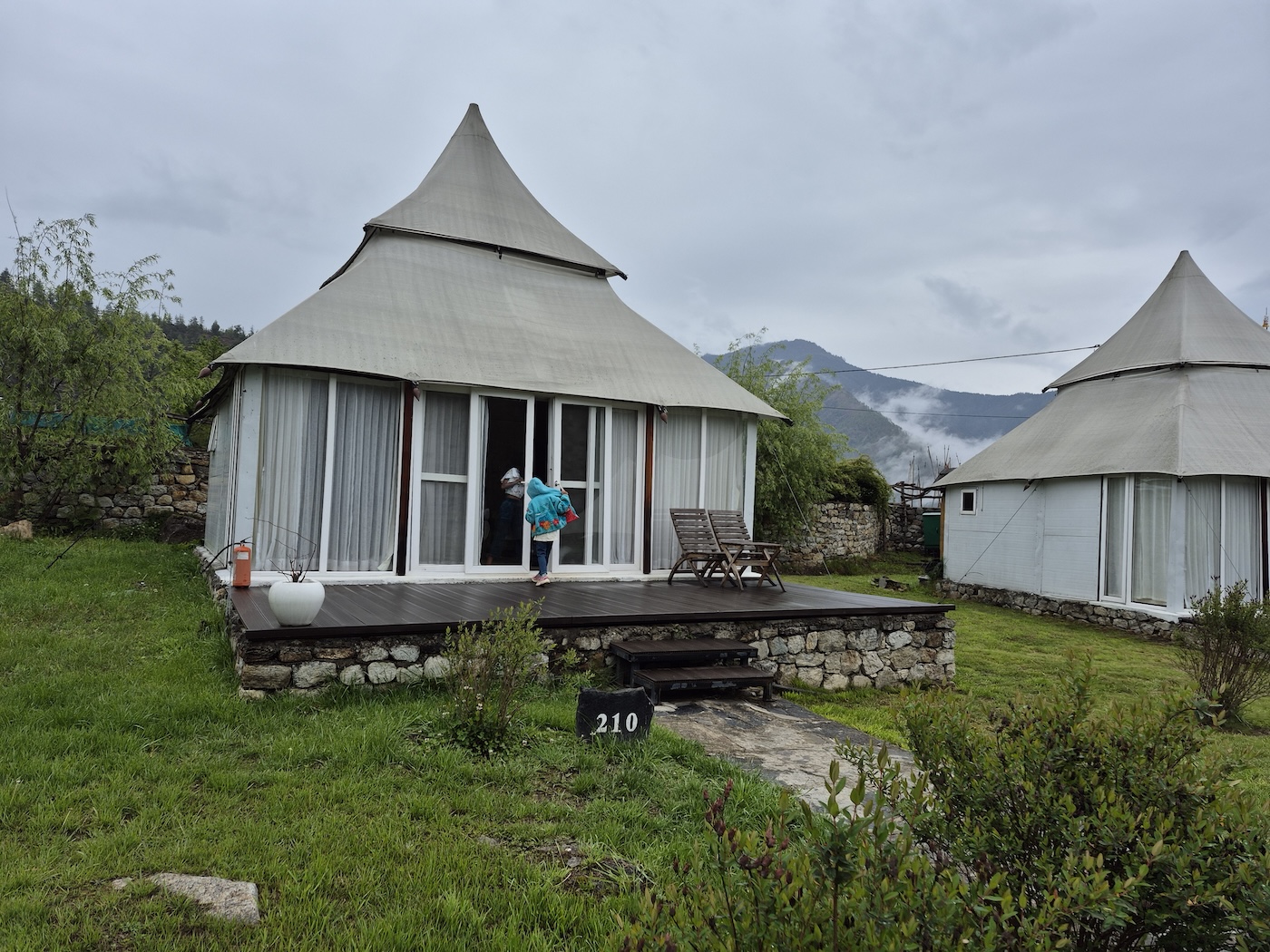
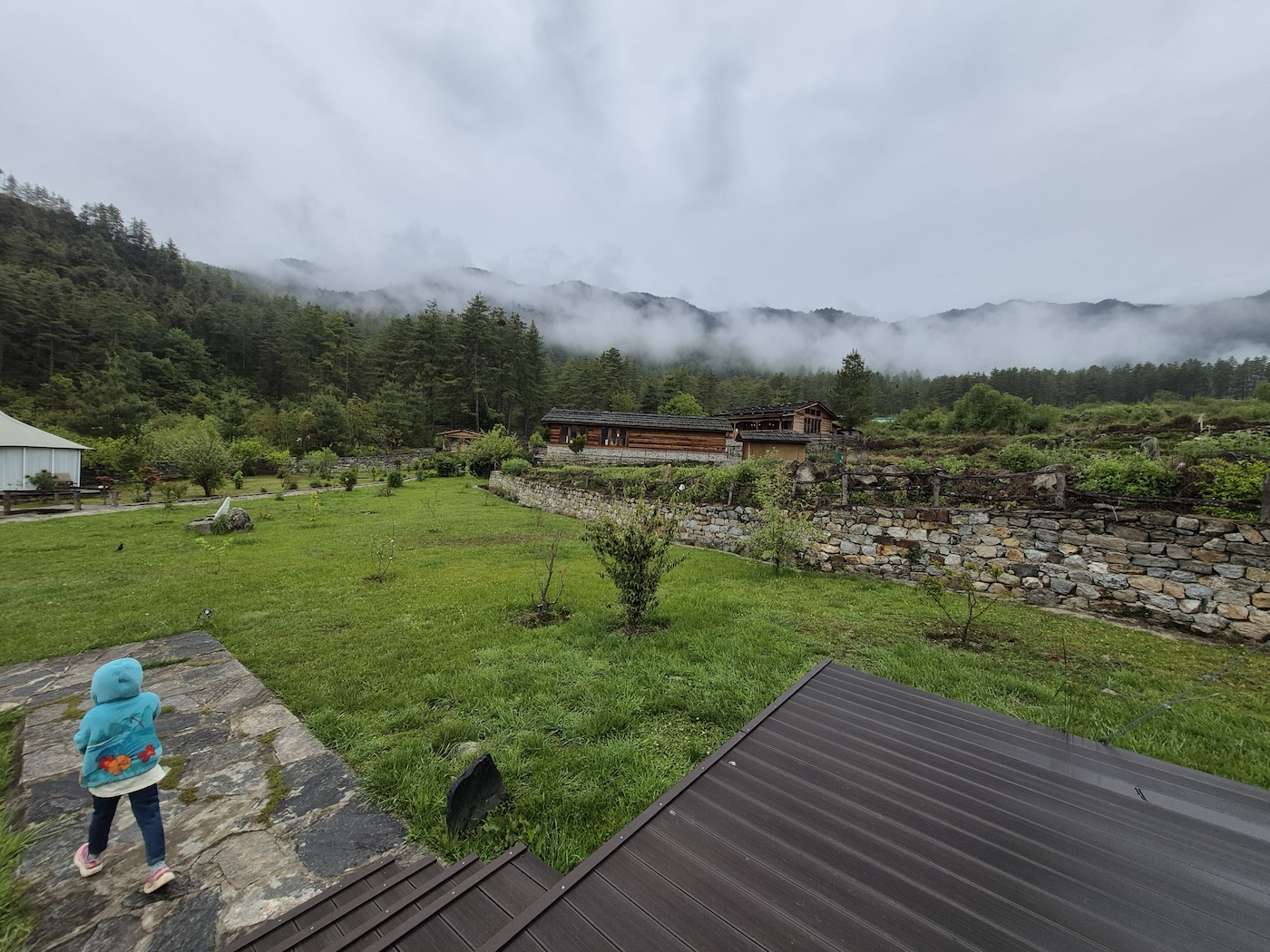
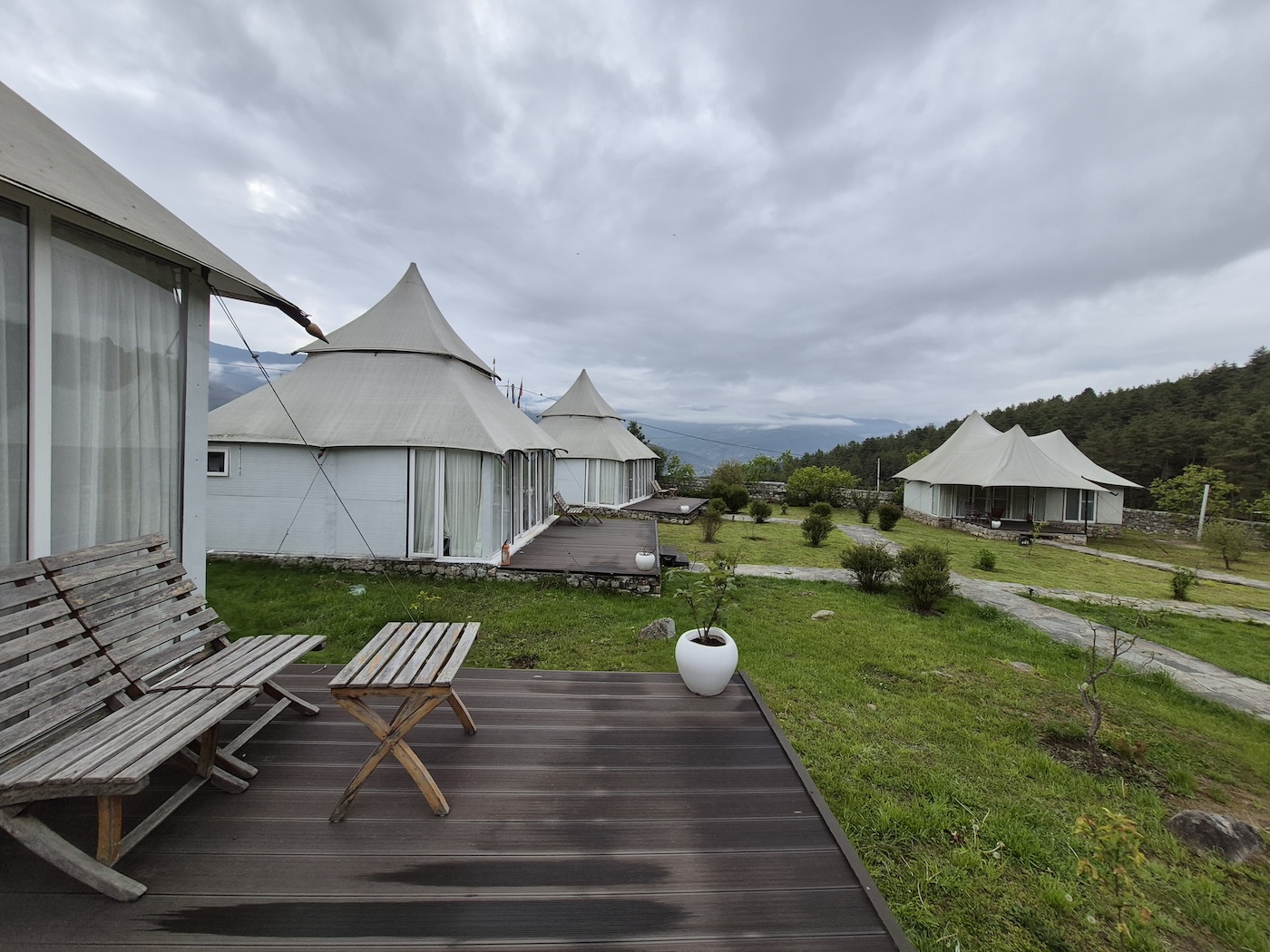
That distance mattered more in Paro than it had at some of our other stops. The town had cafés, restaurants and shops that we would have liked to explore in the evening. From our resort, however, we could not simply step outside and walk around the market.
If I could change one hotel in our Bhutan itinerary, it would probably be this one. There was nothing wrong with the property itself; in fact, it was very good. But it felt like an overkill for our needs, especially considering how expensive it was. I would rather have chosen a more economical hotel closer to Paro Market and used the location to experience more of the town.
That evening, though, we were too tired to do much. It had already been a long day, and the next morning was going to begin very early.
We were finally going to Tiger’s Nest.
The trek we were not sure we could finish
The hike to Tiger’s Nest Monastery—Paro Taktsang—was around 6.5 kilometres one way, making it roughly 13 kilometres for the complete journey. Much of the route is a continuous uphill climb, which makes the distance even more demanding. Near the monastery, there are also around 700 stone steps, first descending into a gorge and then climbing up the other side.
I was quite apprehensive about doing it with two young children. Meera was only around seven years old. My personal target was the cafeteria located roughly halfway up the trail. I had seen it in videos, and my plan was simple: I would walk up to the café with Meera and wait there.
Arun is a regular trekker, and Nandita goes on long walks with him. I was fairly certain that Arun, Sreeja and Nandita would continue to the monastery. Momita would decide depending on how she felt after reaching the café. But in my mind, Meera and I were going only up to the halfway point.
Our guide had advised us to begin as early as possible. Once the sun rises higher, the climb becomes hotter and more tiring. We woke up early, got ready, collected the packed breakfast provided by the hotel and left at around six. By seven in the morning, we were at the trailhead.
The trek began through the forest, and soon the steady climb started.
It was steep and genuinely tiring. The path kept rising, and even though there were places to stop and catch one’s breath, there was very little level ground. By the time I reached the halfway café, I was satisfied with what I had done. I was perfectly ready to sit there, rest and wait for the others to return.
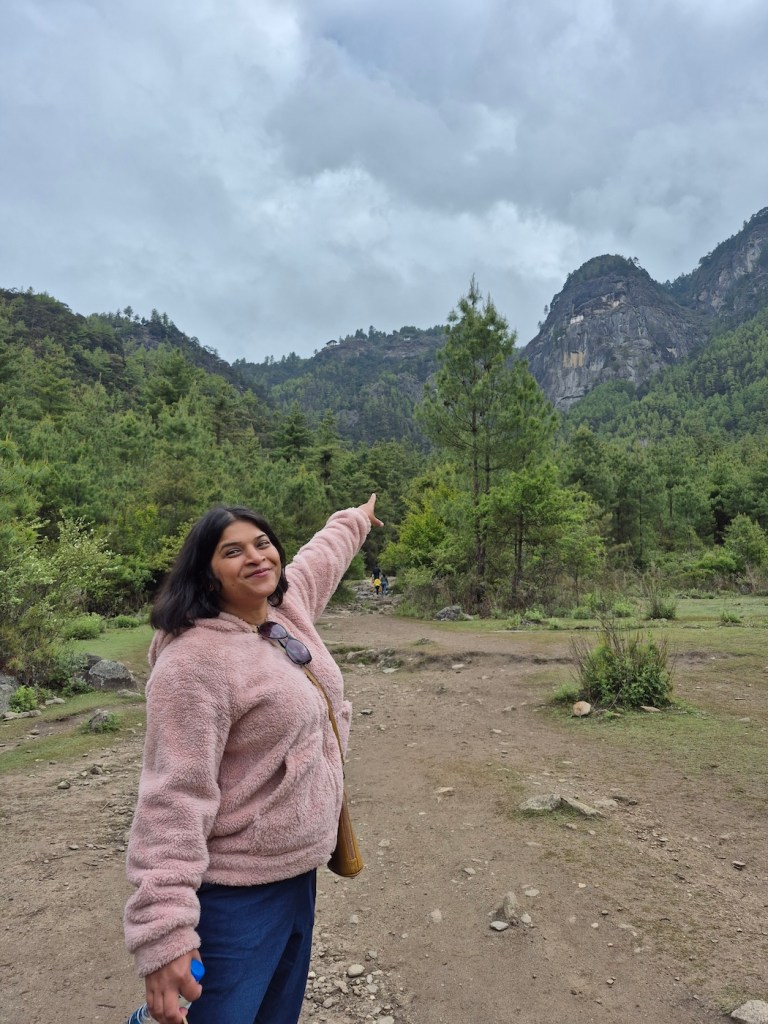
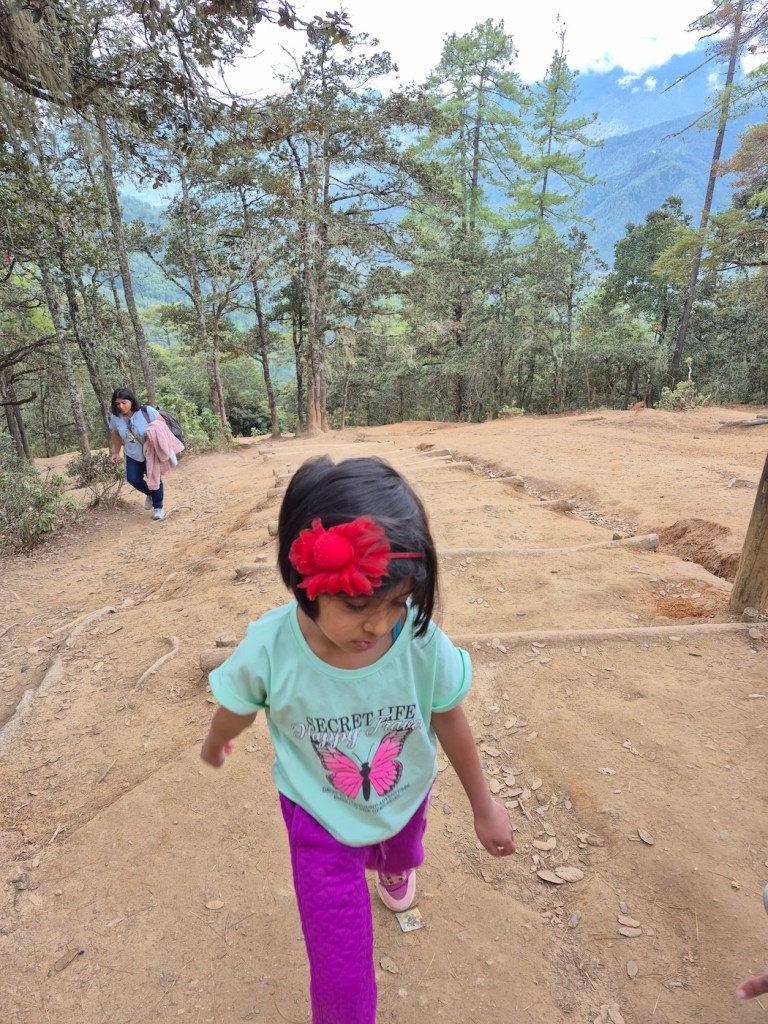
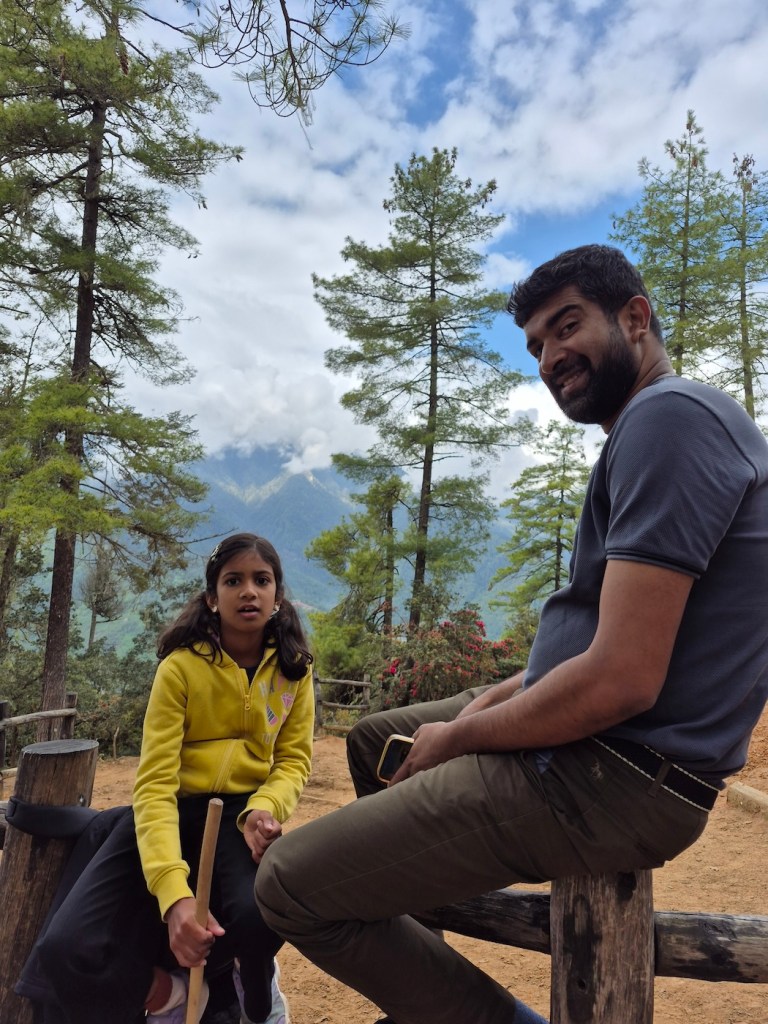
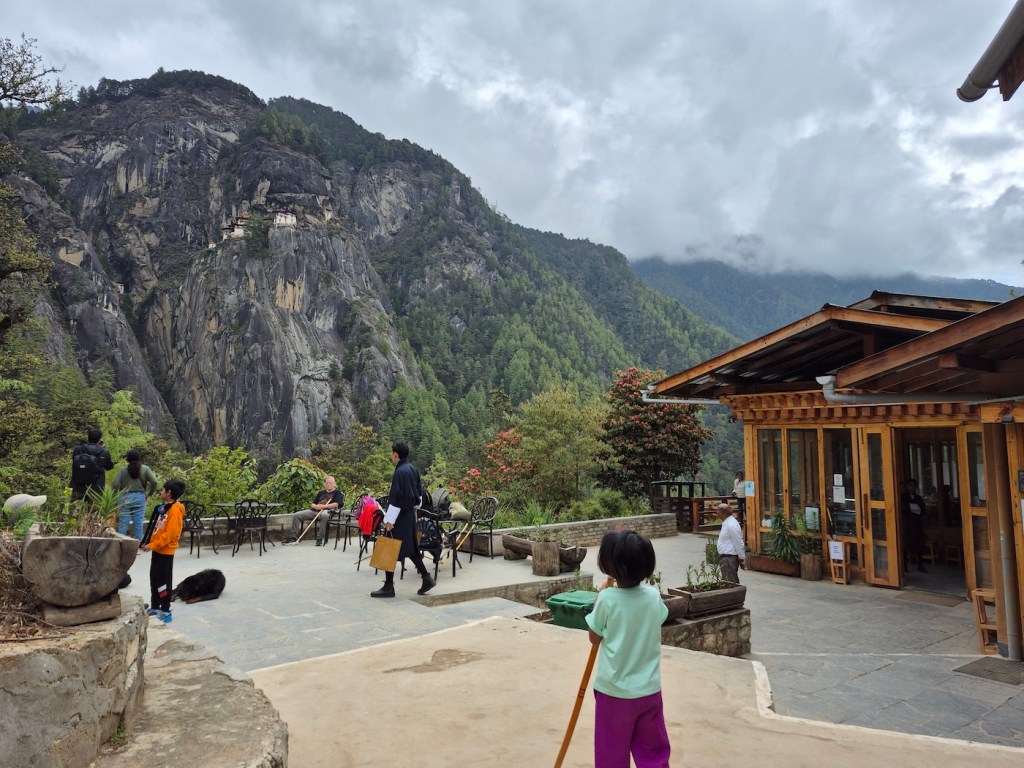
Meera, however, had a completely different plan.
She wanted to continue.
I think seeing Nandita carry on had something to do with it. Whatever the reason, there was no uncertainty in her mind. I tried gently discouraging her, explaining that the next section would be harder, but she was firm.
So we got up and continued.
The final steps to Tiger’s Nest
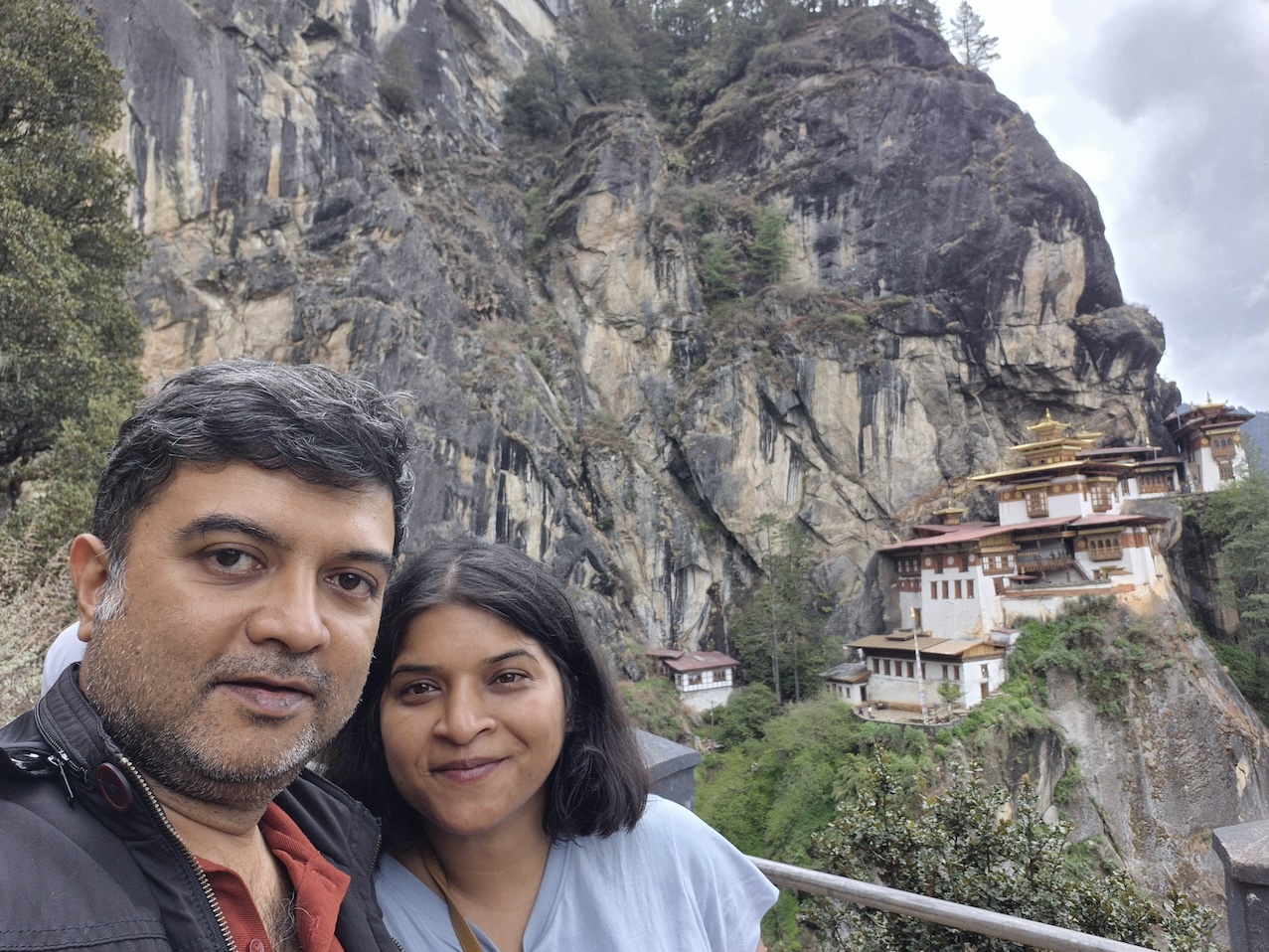
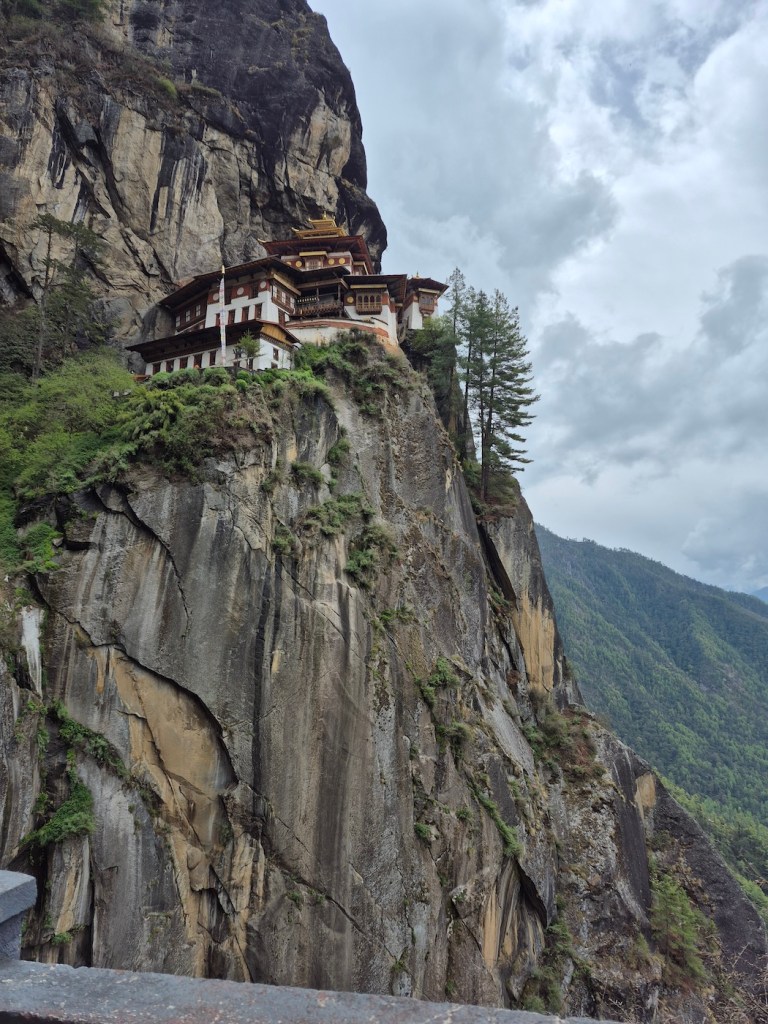
The trail becomes tougher after the café. It continues climbing through the forest until, at last, Tiger’s Nest appears across the gorge, clinging almost impossibly to the cliff.
Seeing the monastery does not mean the climb is over.
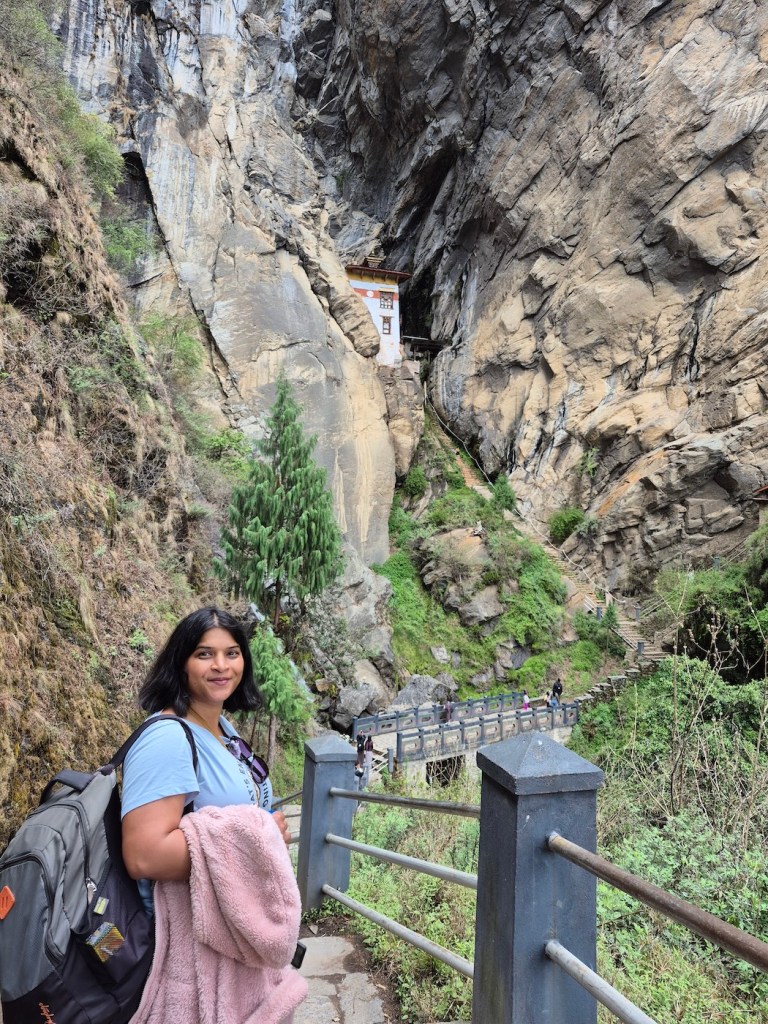
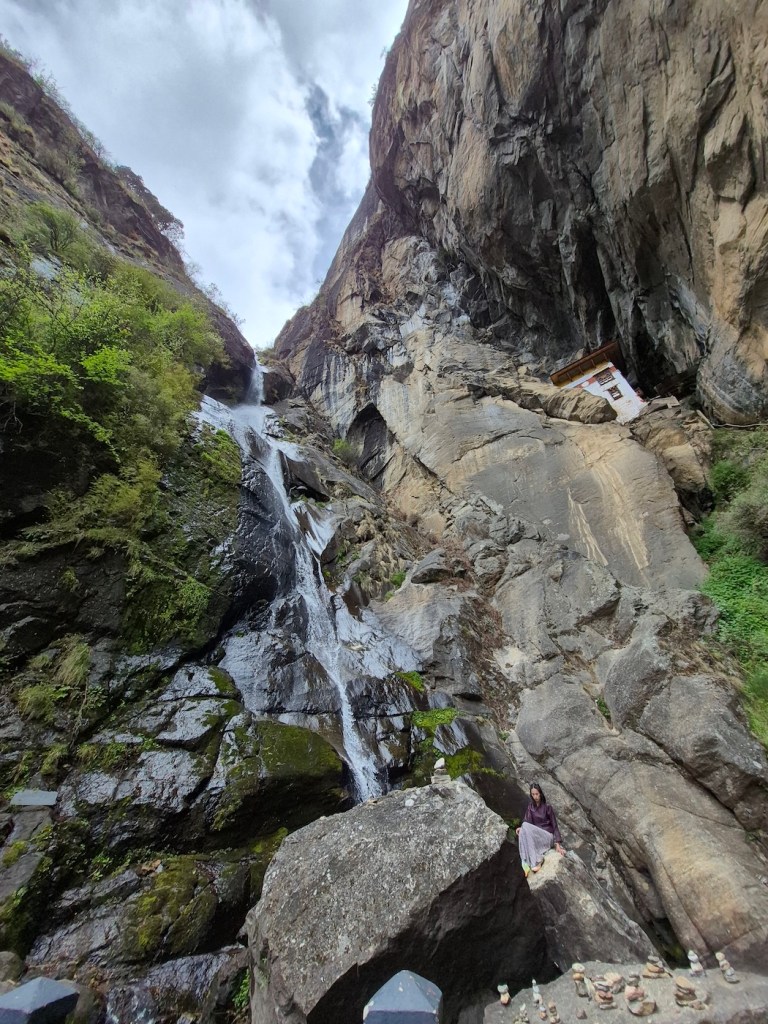
The final approach consists of roughly 700 stone steps. You first descend deep into the gorge and then climb again towards the monastery. At the lowest point, a large waterfall drops beside the path. The spray, the gorge, the steps and the monastery perched on the rock together make this the most picturesque section of the entire trek.
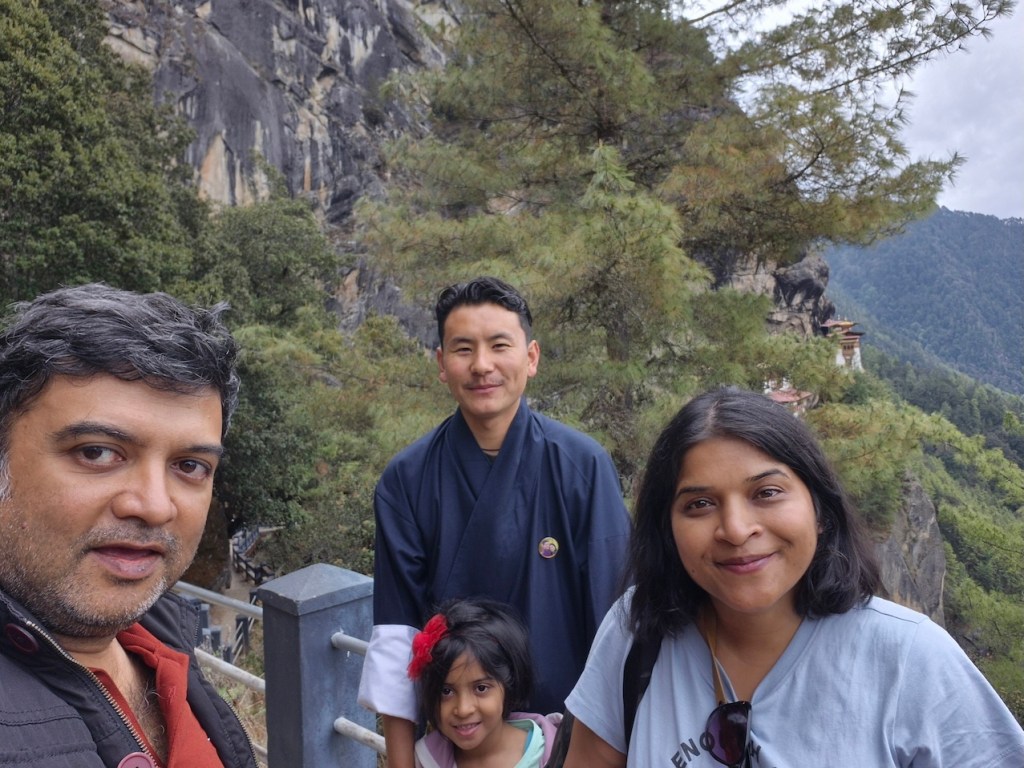
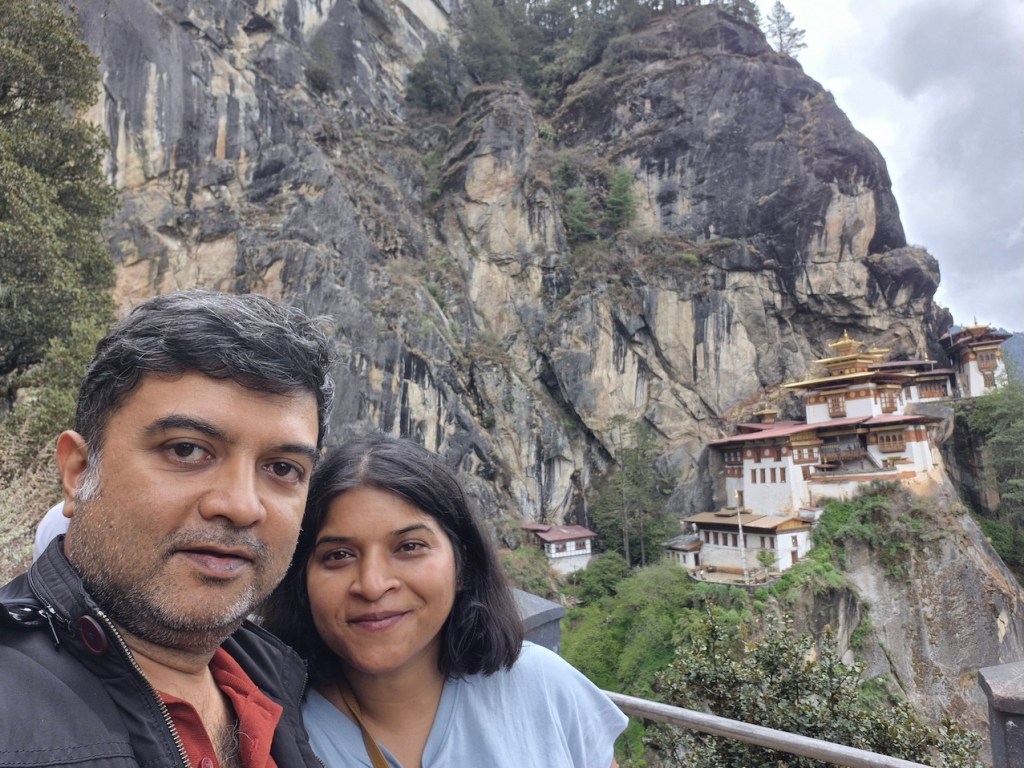
It is also extremely strenuous.
We somehow kept going—one section and one flight of steps at a time—until we finally reached the monastery.
Standing there felt like a real achievement. Tiger’s Nest is spectacular in photographs, but the experience of reaching it on foot is something else altogether. The location, the mountain, the waterfall and the knowledge that we had all climbed there together made it one of the most memorable moments of our Bhutan trip.
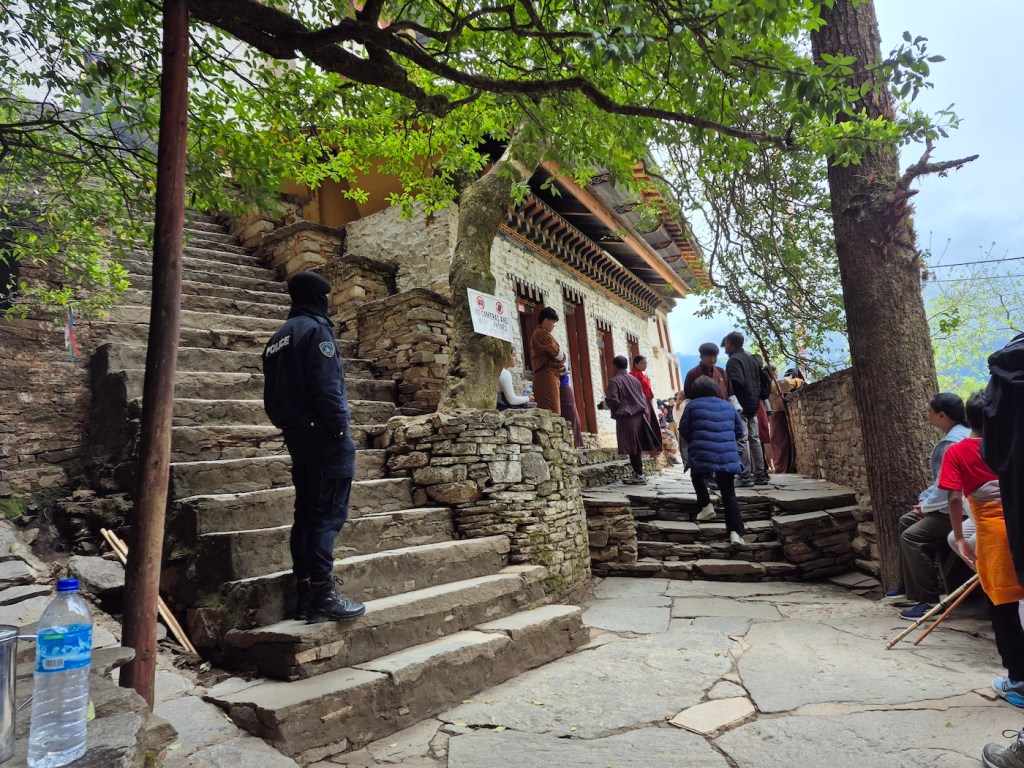
Inside the complex, we visited the main shrines that were open to us. Photography was not allowed, so there were no pictures to carry back from the interiors. We spent some time looking at the paintings and sacred spaces, and then simply rested before beginning the return journey.
Rain on the way down
While we were descending, it began to rain.
Fortunately, Momita had carried umbrellas. At one point, the rain became quite heavy. Momita and Meera shared one umbrella, while our guide and I shared another. My jacket was reasonably waterproof, so I eventually handed the umbrella over to him.
Arun and Sreeja had only one umbrella between them, and I think they had given it to Nandita. The rest of them ended up getting somewhat drenched.
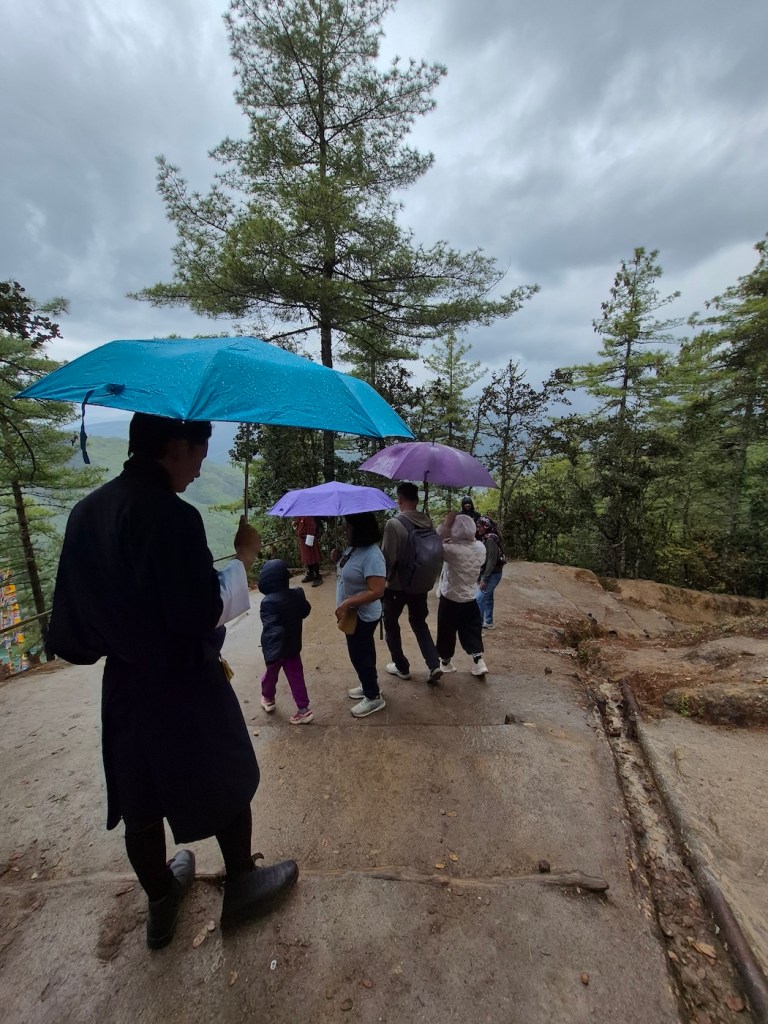
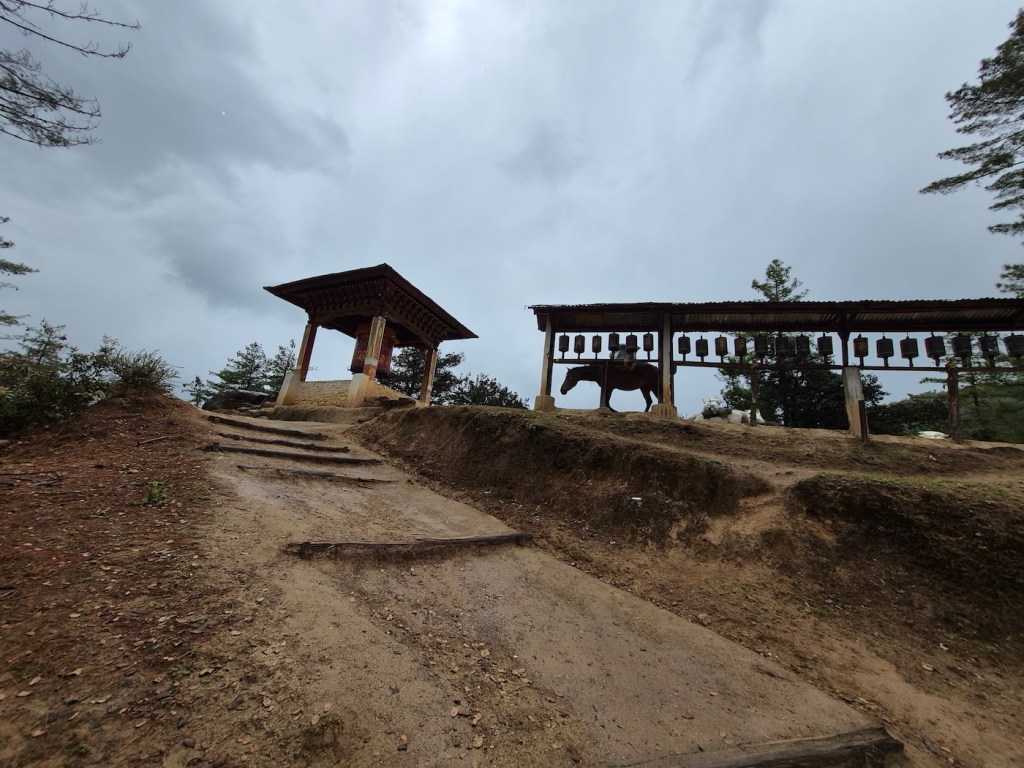
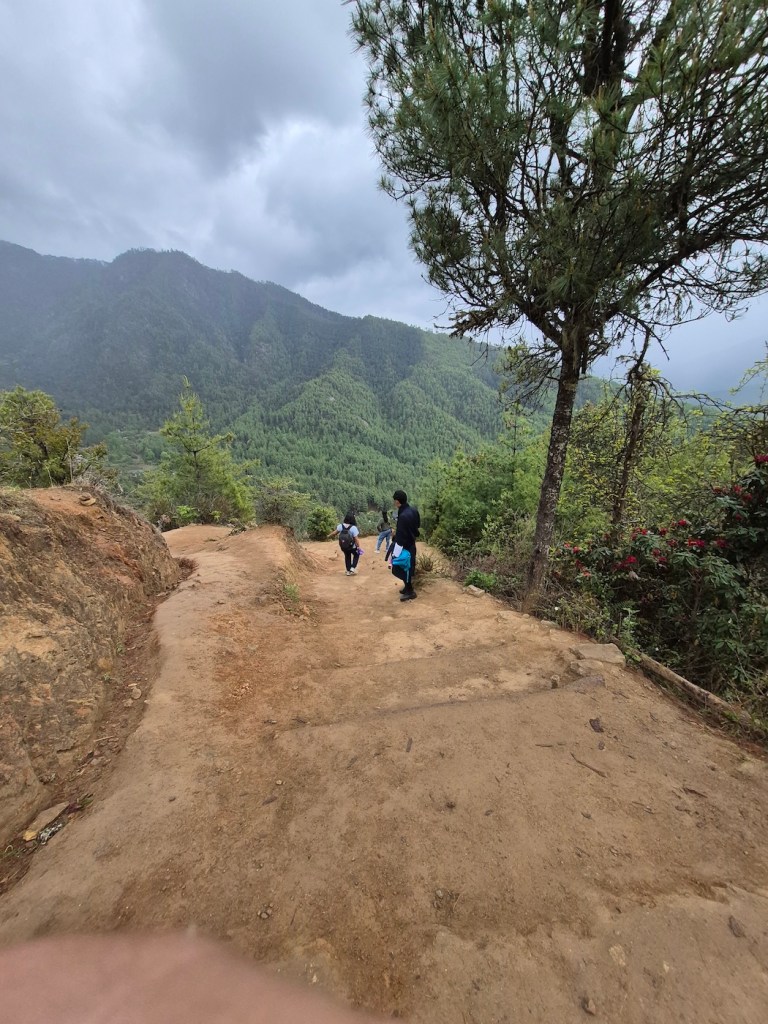
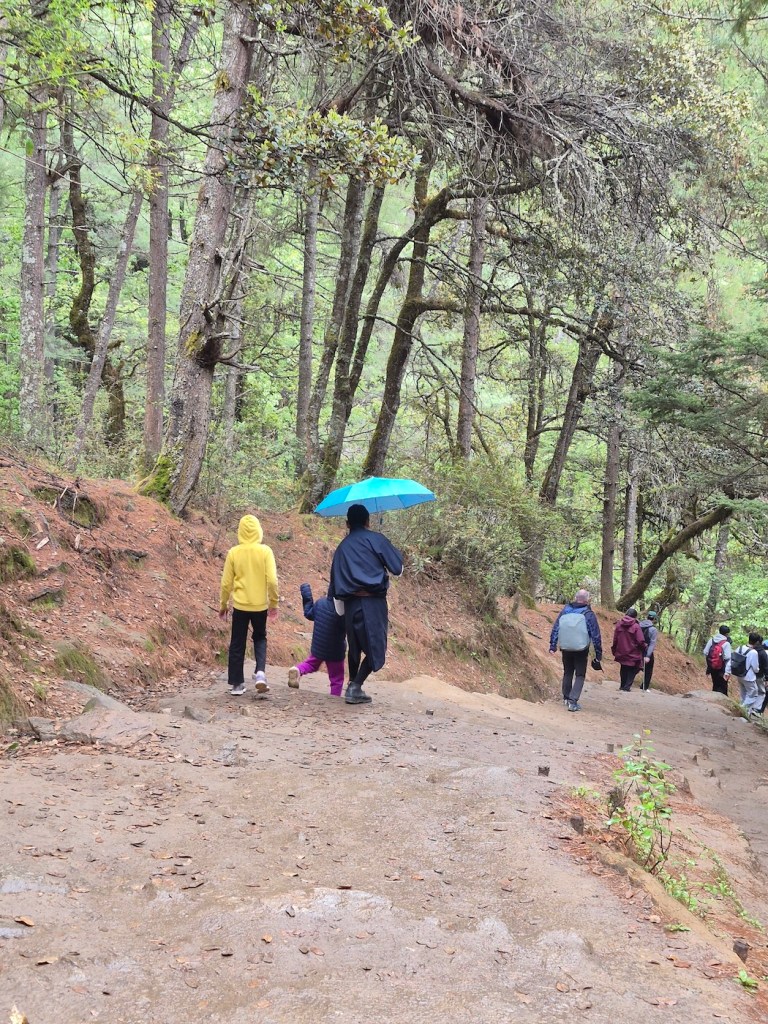
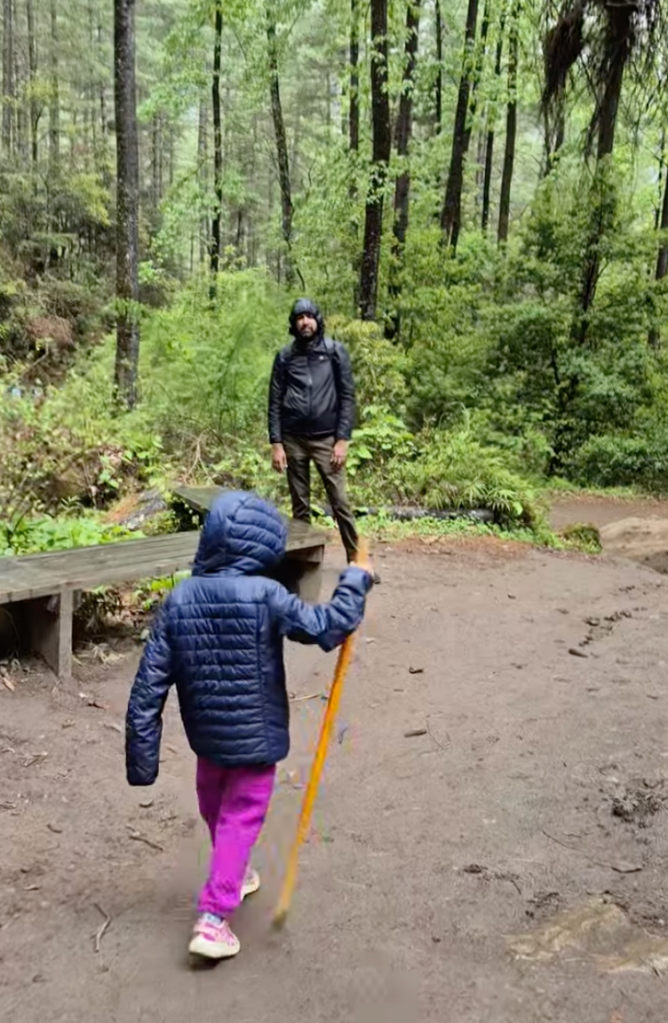
Coming down was not easy. The early part of the return journey meant climbing back up the long flight of steps we had descended on the way to the monastery. This was where Meera finally seemed to run out of energy. For a short stretch, Momita had to carry her on her back.
But apart from that very small portion, Meera completed practically the entire trek on her own feet.
For a seven-year-old to manage that steep climb, the steps, the rain and the long return was remarkable. I had begun the morning assuming that she and I would stop at the halfway café. Instead, she was the one who insisted that we continue.
Nandita was equally brave. She completed the entire trek by herself without needing to be carried even once. Both girls had walked all the way to Tiger’s Nest and back, and both thoroughly deserved to feel proud of themselves.
The descent also gave us some of the lighter moments of the trek. We sang songs as we walked, and our guide joined in with Hindi film songs. He and I also had a long conversation about his life and his plans for the future.
Before becoming a guide, he had worked as a software engineer. He was now learning Spanish because Spanish-speaking tourists, he told us, were among the best-paying guests for guides. Somewhere between the rain, the songs and the slippery downhill path, we talked about careers, choices and what he hoped to do next.
Those conversations are often what remain with you after a trip—the parts that were never written into the itinerary.
Seven hours—and a considerable achievement
By the time we finally reached the bottom, around seven hours had passed since we began.
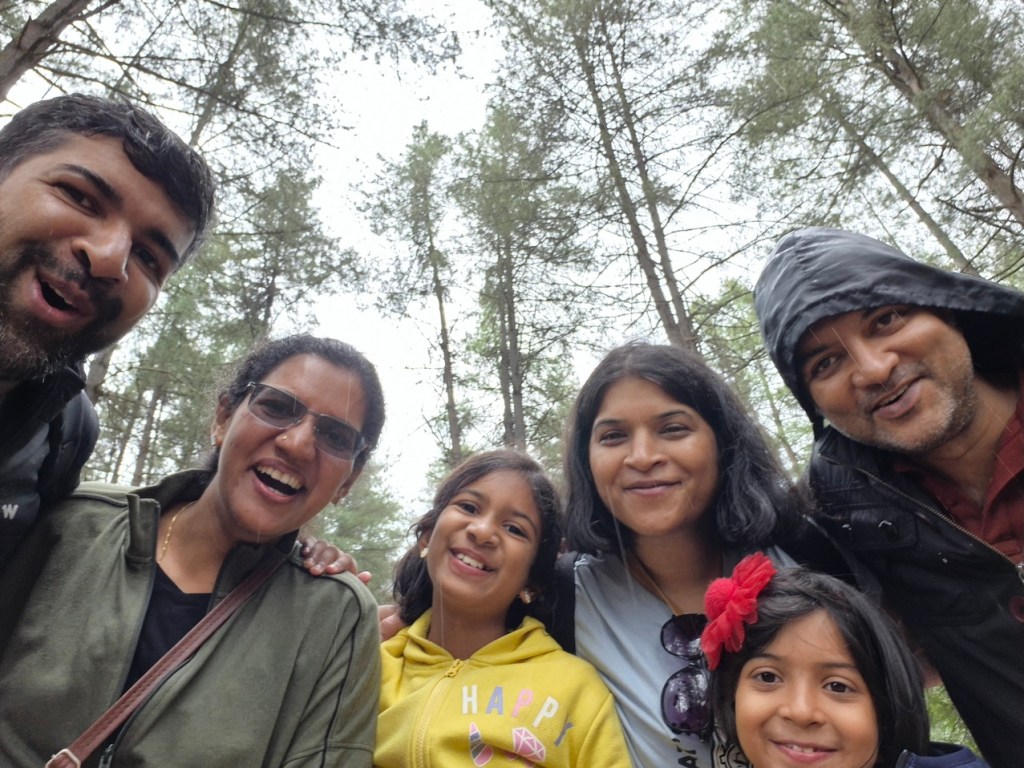
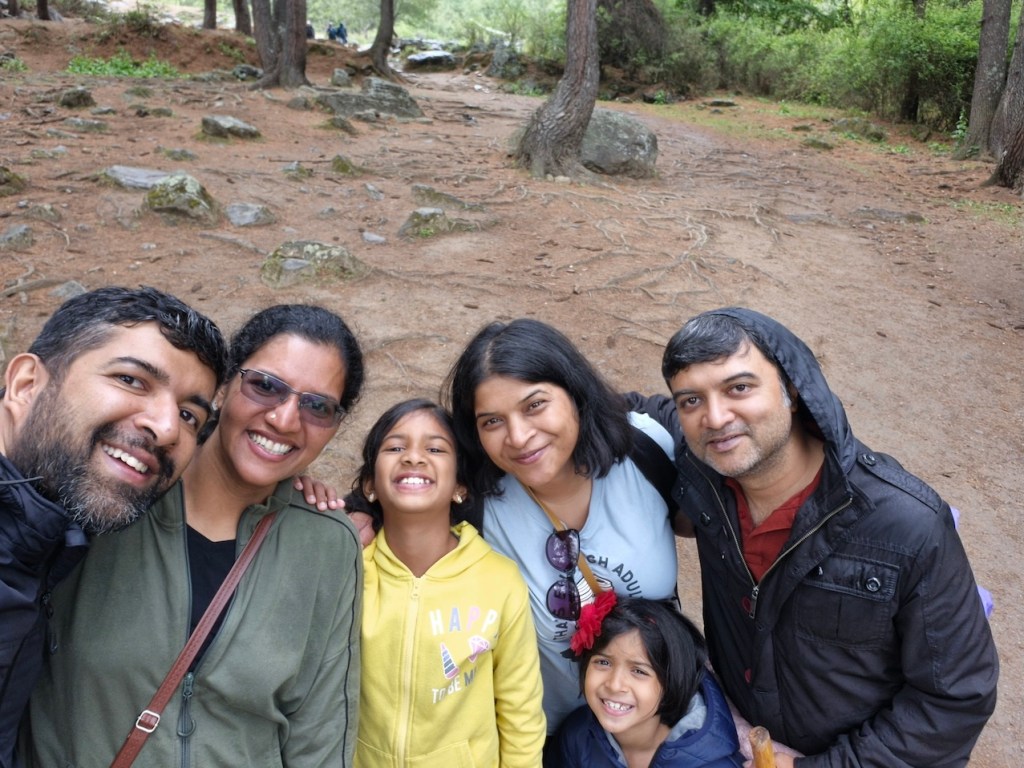
Our guide had expected the trek to take nine or even ten hours because we had two small girls with us. He was delighted that we had completed it in roughly the same time that many groups of adults take. He congratulated all of us, and especially the children.
We were exhausted, wet and extremely pleased with ourselves.
Jhol momo after the trek
By then, it was well past lunchtime, and we returned to Paro town in search of food.
Our guide initially wanted to take us to Momo Corner, but it was completely packed. There appeared to be no space to sit, with people crowded inside the small restaurant.
Directly opposite was another place called Jhol Momo. I had noticed jhol momo on menus at a few places during the trip and had wanted to try it, so this seemed like the right opportunity.
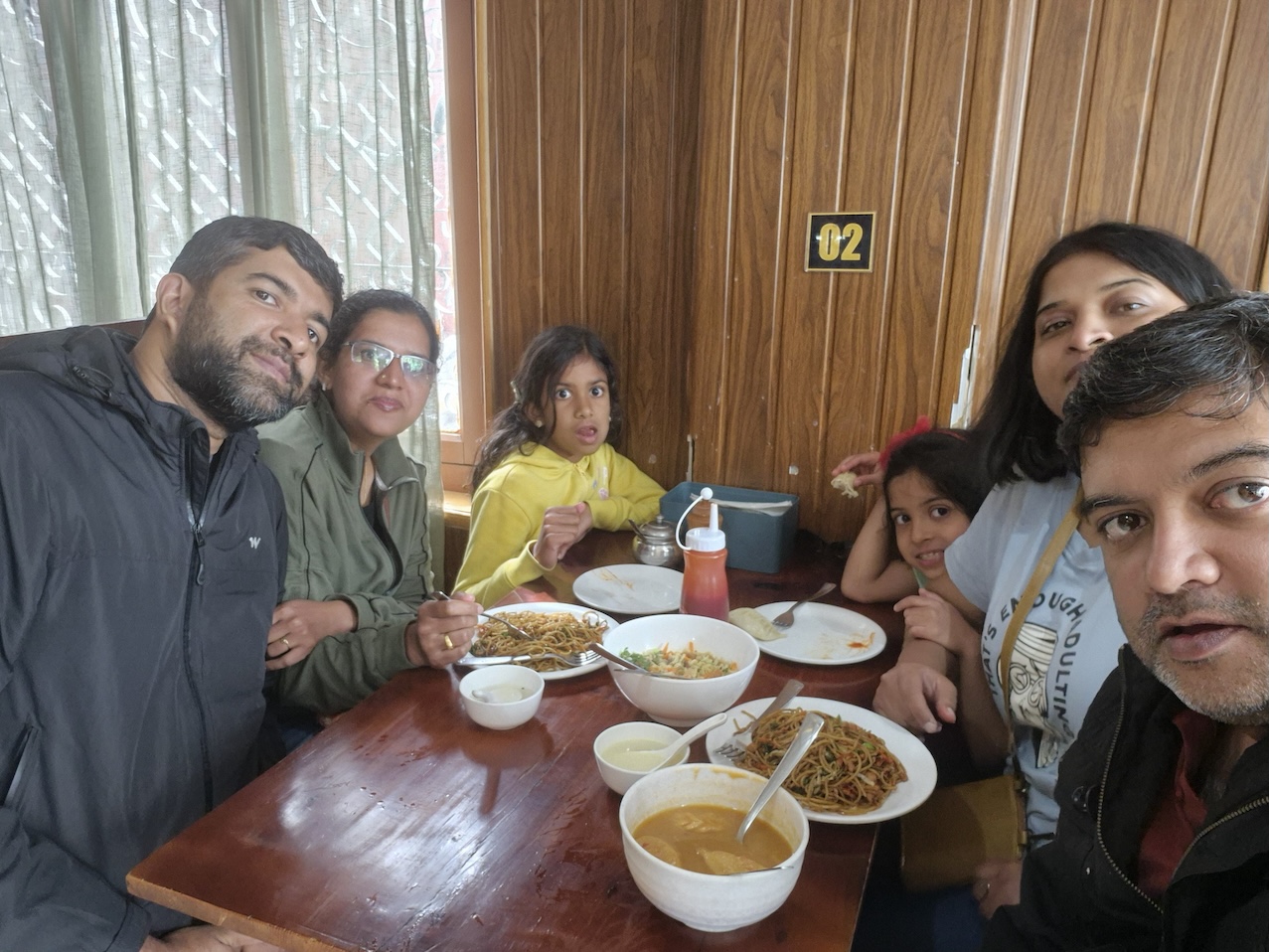
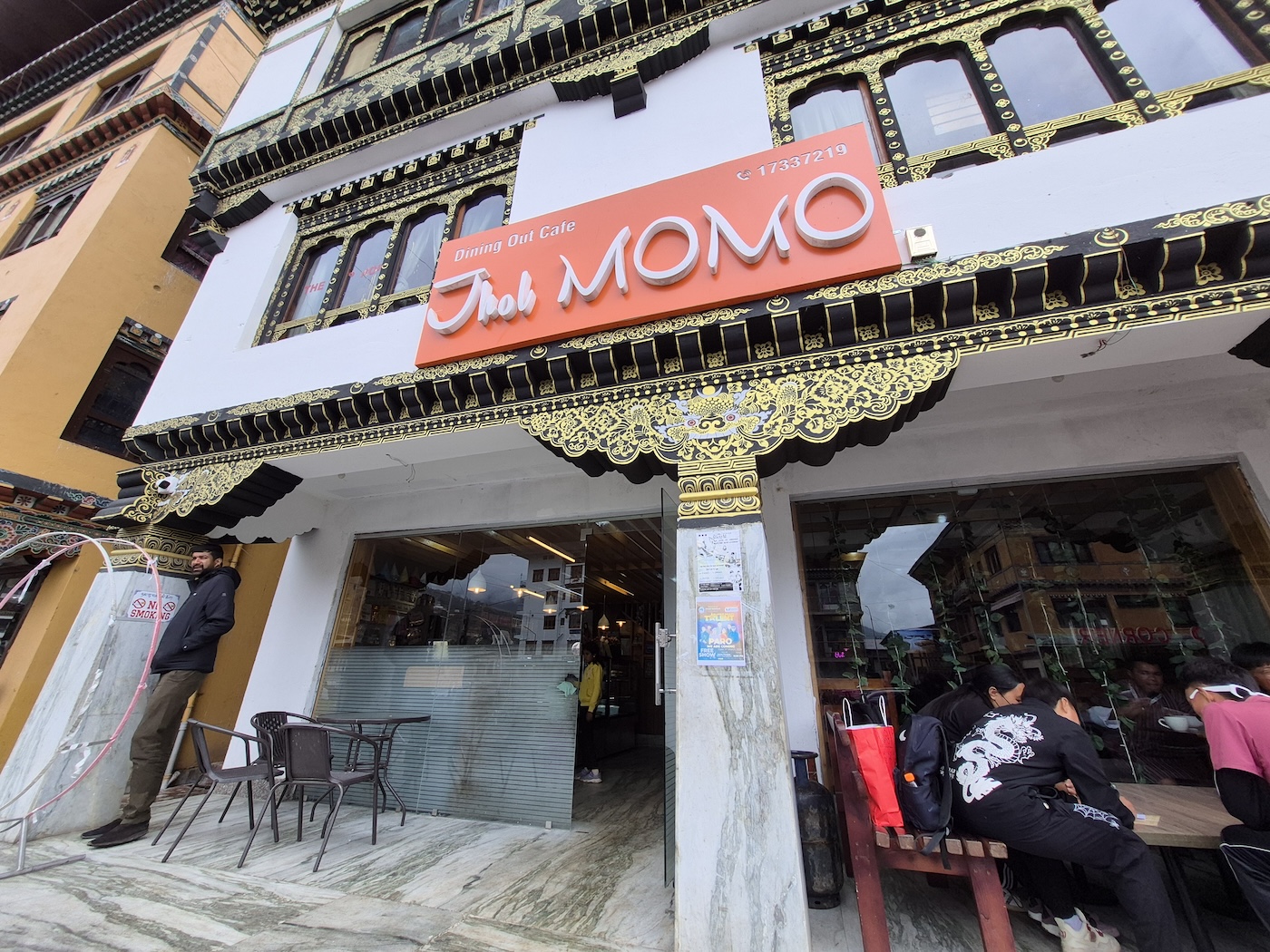
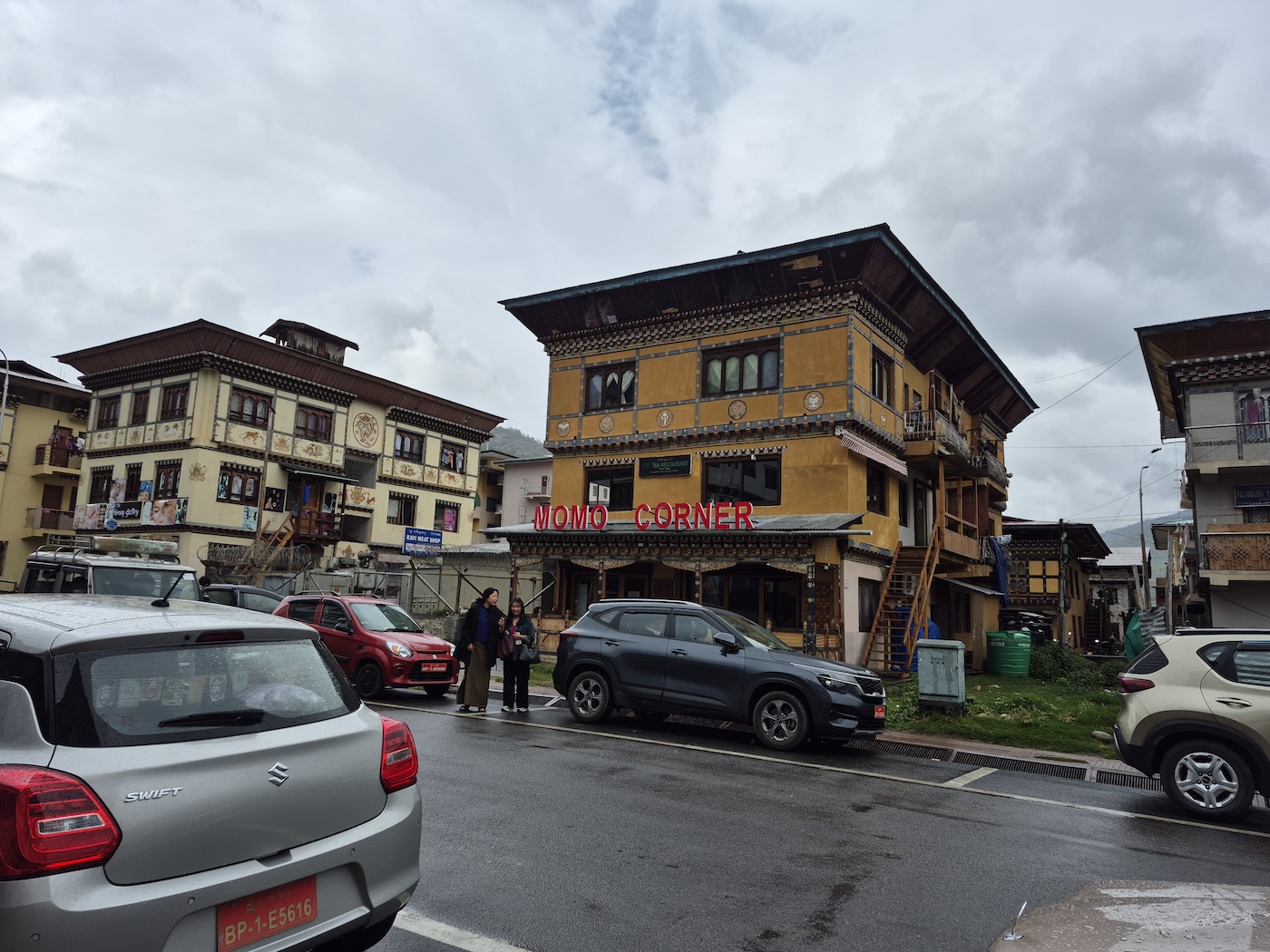
I ordered the jhol momo, while the others chose chow mein and a few other dishes. The jhol momo was excellent—soft dumplings served in a spicy, flavourful gravy that felt particularly satisfying after the long, wet trek.
Then Momita returned to one of her principal missions of the holiday: shopping.
Arun and Sreeja had reached their limit. They decided that they were too tired for serious shopping and would simply walk around for a while. Momita, however, still had energy left. She explored the shops and bought several Bhutanese dresses. I picked up some postage stamps.
Eventually, we returned to the hotel and crashed.
Meera was completely exhausted. During dinner, she vomited a little, so we took her back to the room and put her to bed. Naturally, we were concerned after the strain of the day. But the next morning she woke up absolutely fine, back on her feet and completely herself again.
Children can be astonishingly resilient.
Goodbye, Bhutan
We got ready, had breakfast and left for Paro Airport.
The airport was small and beautiful—easily one of the most charming airports I have seen. Surrounded by mountains and decorated in Bhutanese style, it felt entirely in keeping with the country we were leaving behind.
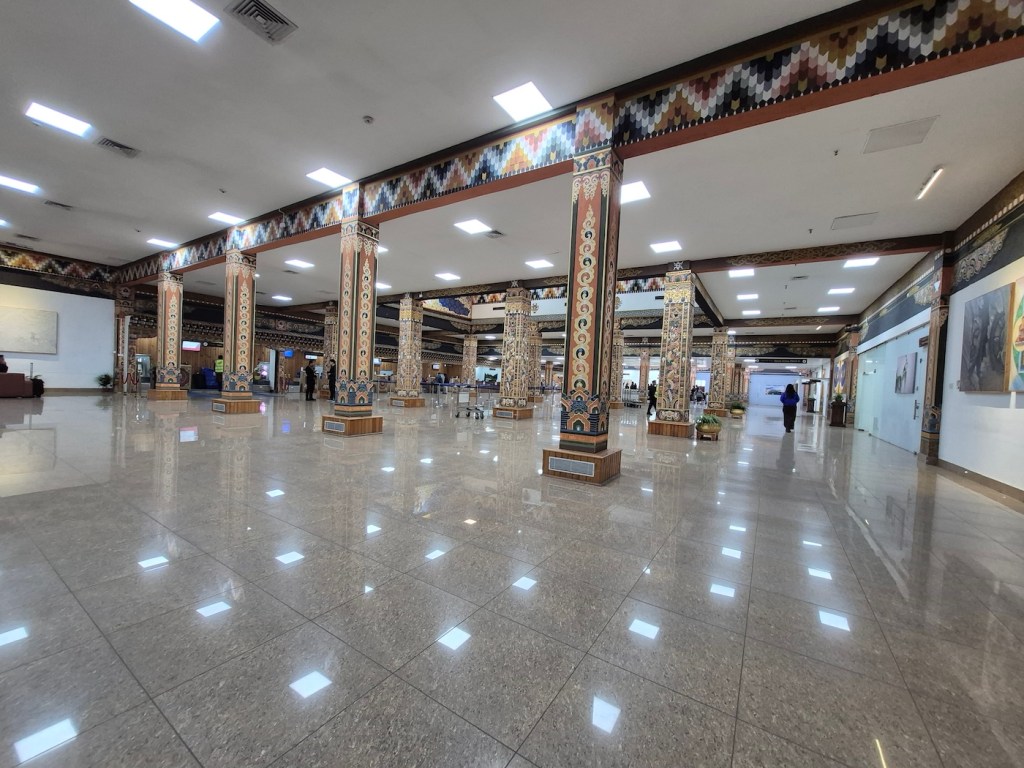
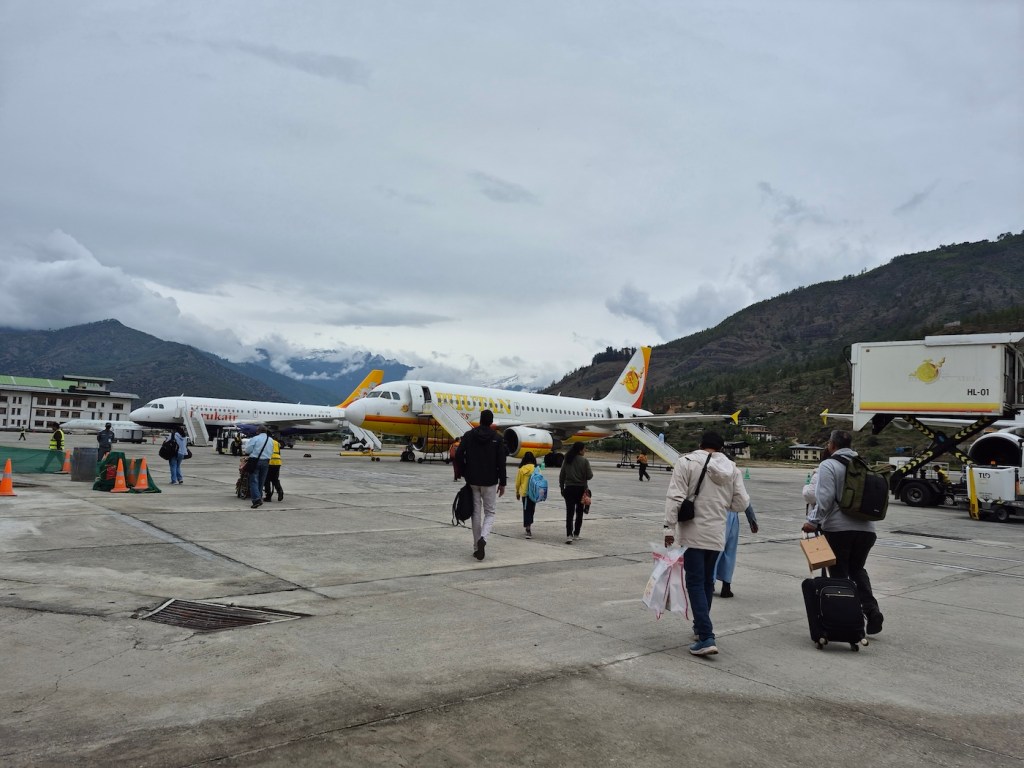
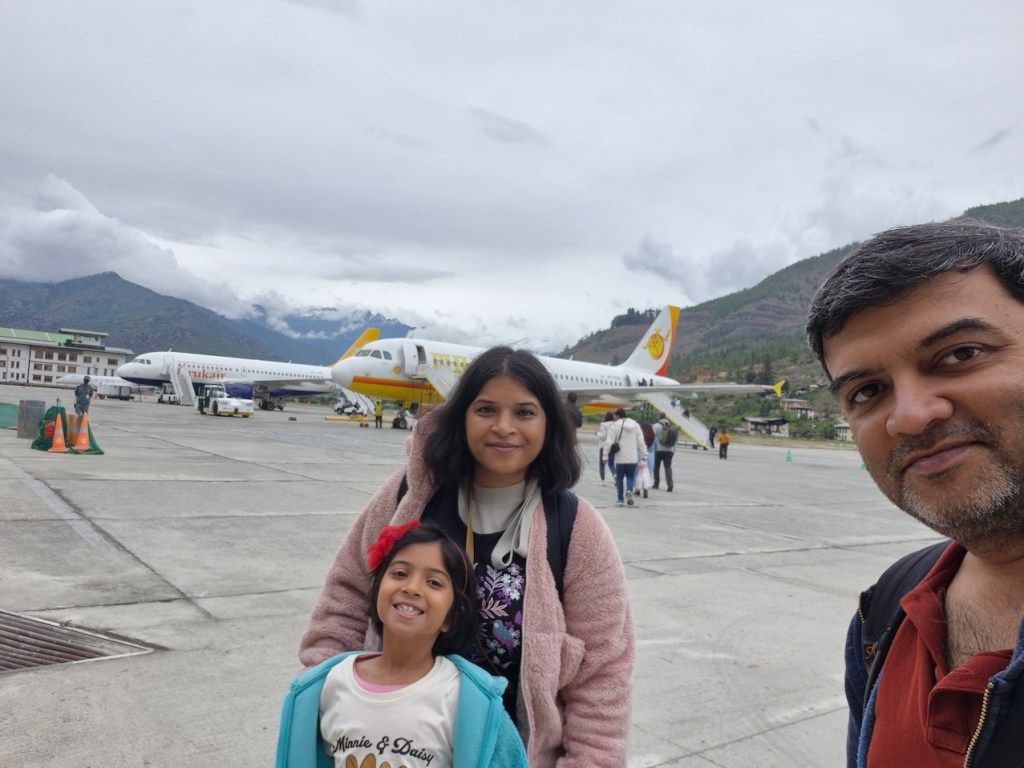
We boarded our Bhutan Airlines flight and flew back to Kolkata.
And just like that, our Bhutan journey was over.
It had been a dreamy trip: mountain roads, quiet valleys, monasteries, rivers, rain, long conversations, wonderful food and two little girls who repeatedly surprised us with what they could do.
Of all those memories, the sight of Tiger’s Nest across the gorge will remain one of the strongest. But perhaps what I will remember even more is reaching the halfway café convinced that my climb was finished—and then watching seven-year-old Meera decide that ours was not.
Bhutan is a journey I will always hold very close to my heart.
Krish


Leave a Reply